Table of Contents >> Show >> Hide
- What Was Flying Tiger 923?
- How a Routine Flight Turned Into an Emergency
- Why the Water Landing Was Considered Miraculous
- The Crash Was Only Half the Battle
- The Heroes of Flying Tiger 923
- What the Official Investigation Found
- Why Flying Tiger 923 Still Matters Today
- A Longer Look at the Human Experience of Flying Tiger 923
- Conclusion
- SEO Tags
Note: Based on real historical reporting synthesized from reputable U.S. sources. Source links omitted as requested.
Some aviation stories sound like Hollywood got a little carried away. Flying Tiger 923 is not one of them. In fact, the real story is stranger, tougher, and far less tidy than the movie version would be. There was no graceful glide toward a calm bay, no conveniently parked rescue boats, and definitely no cheerful “please remain seated” vibe. What happened instead was a brutal North Atlantic ditching in darkness, high winds, and heavy seas after a chain of engine failures turned a routine Cold War-era crossing into a survival test.
That is why the story of Flying Tiger 923 still matters. It was not simply an airplane accident. It was a case study in skill, leadership, luck, and the stubborn refusal of ordinary people to quit when the odds looked ridiculous. The aircraft did hit the water. Many people did survive the impact. And then the truly merciless part began.
What Was Flying Tiger 923?
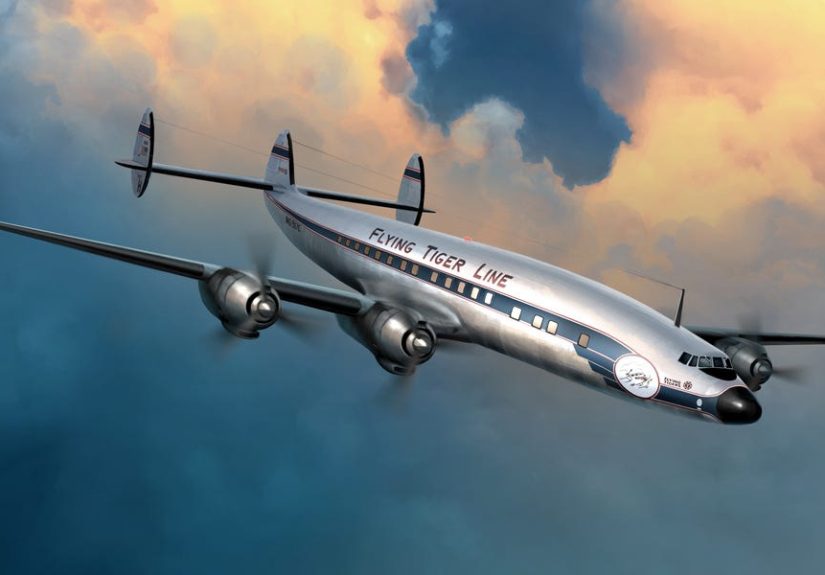
Flying Tiger Line Flight 923 was a Military Air Transport Service contract flight in September 1962. The aircraft was a Lockheed L-1049H Super Constellation, one of the great propeller-driven airliners of its era, though “great” came with an asterisk the size of the Atlantic. These aircraft were capable long-range machines, but they belonged to a period when piston engines, complicated systems, and over-water flying made reliability feel a little more negotiable than modern travelers would like.
The flight had originated in the United States, stopped in Gander, Newfoundland, and then continued east toward Frankfurt, West Germany. On board were 76 people: crew members plus military passengers and family members heading overseas. It was supposed to be another transatlantic transport run. Instead, it became one of the most gripping emergency water landing stories in aviation history.
Even the setting made the situation worse. This was the North Atlantic, not a friendly inland lake pretending to be helpful. The ocean was dark, rough, cold, and far from land. In other words, if an aircraft absolutely had to end up in water, this was very close to the “please choose somewhere else” category.
How a Routine Flight Turned Into an Emergency
The First Engine Fire
Roughly three hours after departing Gander, the crew received a fire warning for engine No. 3. That engine was shut down and feathered. So far, that was serious but manageable. Four-engine propeller aircraft were designed with redundancy for exactly this kind of moment.
Then came the kind of complication that makes investigators reach for extra paper. During the emergency sequence, engine No. 1 was effectively lost as well. The official investigation concluded that improper action involving the engine shutoff system disabled a third engine after the initial failures began. That meant the airplane went from being troubled to being deeply compromised in a hurry.
From Bad to Much Worse
Now the crew faced a classic aviation nightmare: not one dramatic catastrophe, but a cascading chain of problems. With one engine already shut down and another effectively crippled, the aircraft descended and diverted toward Shannon, Ireland. That was the practical choice, but practicality only works if the airplane cooperates.
About an hour later, engine No. 2 developed serious trouble as well. At that point, the crew was no longer managing an inconvenience. They were trying to keep a heavy transport aircraft in the air over open ocean with almost no safety margin left. If you are wondering whether everyone on board suddenly became very interested in the emergency briefing, the answer is yes. Extremely yes.
Why the Water Landing Was Considered Miraculous
The Sea Was Violent
The phrase water landing can sound oddly polite, like the airplane was simply choosing a scenic coastal experience. In reality, this was a ditching into darkness and severe ocean conditions. The seas were high, the winds were strong, and visibility was limited. Reports describe swells around 15 to 20 feet, with rough weather and no moonlight to make life easier.
That matters because ditching is not just about putting an airplane on water. It is about hitting a moving, uneven, hostile surface at high speed while trying not to break the aircraft apart instantly. Modern FAA guidance still emphasizes swell direction, wind, and touchdown angle because sea state can decide whether a ditching is survivable or catastrophic in a split second.
Captain John Murray Made a Critical Judgment Call
Captain John Murray, an experienced pilot with broad technical knowledge, made the decision that defines the story. Standard guidance generally warned pilots to avoid landing into the face of a swell. Murray, however, judged that the wind, swell spacing, and aircraft control issues made a different approach more survivable. He aimed the airplane into the conditions in a way that many considered unconventional.
Was it textbook? Not exactly. Was it informed? Absolutely. And in aviation, especially when the textbook and reality start arguing with each other, judgment can matter more than memorization.
The aircraft hit the Atlantic at around 120 mph. The impact was violent. One wing was torn away, the fuselage suffered major damage, and the cabin filled with cold water and fuel. But the truly astonishing fact is this: everyone survived the initial impact. That alone is why this event remains extraordinary.
The Crash Was Only Half the Battle
Evacuation in Darkness and Cold
Surviving the impact did not mean surviving the accident. In many ditchings, the deadliest phase comes after the aircraft reaches the water. Flying Tiger 923 proved that in heartbreaking detail.
Passengers had been briefed, life jackets were on, and the cabin crew had done what they could to prepare people for the worst. Still, when the airplane broke open and people were forced into a freezing black ocean, chaos took over. Some exits were difficult. Some seating failed on impact. The aircraft did not become a neat floating platform. It became a damaged wreck in hostile water.
The Life Raft Problem
The airplane carried multiple rafts, but the situation after impact was disastrous. Four of the five rafts were effectively lost in the storm and confusion. Only one usable raft remained, and it inflated upside down. That meant crucial emergency supplies were inaccessible, including medical items, flares, and fresh water.
Fifty-one people eventually crowded onto that single 25-person raft. Let that sink in for a second, preferably more gently than the airplane did. More than double capacity. In rough seas. At night. In the North Atlantic. Three of the people on that raft later died before or shortly after rescue.
Rescue Finally Arrived
The survivors remained exposed for roughly six hours before rescue by the Swiss freighter Celerina, which had heard the distress traffic and came to the scene. Search aircraft circled overhead. A flashlight retrieved by Captain Murray became critically important in helping rescuers spot the survivors. That tiny beam of light, in a giant black ocean, became the difference between “maybe” and “there they are.”
By the end, 48 people survived. Twenty-eight did not. That is why the phrase miraculous water landing must always be used carefully. It was miraculous because anyone survived at all. It was tragic because many did not.
The Heroes of Flying Tiger 923
Captain Murray deserves much of the attention, and rightly so. His control of the aircraft in impossible conditions prevented an immediate total loss of life. But Flying Tiger 923 was not a one-person legend. It was a team survival story.
The cabin crew worked to prepare passengers before impact, even as the situation worsened. Carol Ann Gould, the lone surviving flight attendant, became one of the most remembered figures from the ordeal because of her calm, discipline, and care for passengers both before and after the crash. On the raft, survivors also relied on medical help from Capt. Juan Figueroa-Longo, a physician who treated injuries in conditions that would have made a proper emergency room look like science fiction.
Other passengers helped launch equipment, guide evacuees, support the wounded, and keep people alive in the raft. That is one reason the story still hits so hard. Aviation history often celebrates cockpit decisions, and it should. But survival in this case also depended on cabin leadership, passenger cooperation, and plain human decency under pressure.
What the Official Investigation Found
The Civil Aeronautics Board investigation concluded that the probable cause involved the failure of two of the aircraft’s four engines and improper action by the flight engineer, which disabled a third engine and made ditching necessary. The report also documented confusion around ditching preparation, survival gear limitations, and the brutal sea conditions that turned the post-impact phase into a mass casualty event.
In other words, the accident was not caused by one cinematic lightning bolt of doom. It was a layered systems failure involving mechanical trouble, emergency procedure complexity, human factors, and the unforgiving reality of ocean operations. That makes Flight 923 especially important in aviation history because it shows how accidents often unfold: not as one giant mistake, but as several smaller failures stacking up until the margin disappears.
Why Flying Tiger 923 Still Matters Today
The legacy of Flying Tiger 923 reaches beyond the wreck itself. Later accounts and aviation history reporting connect the tragedy to changes in over-water safety, including better visibility for life-saving gear and raft design improvements such as reversible rafts. The lesson was grim but clear: surviving impact is not enough. Survival equipment must work in darkness, wind, cold, and confusion, because real emergencies do not pause for neat instruction diagrams.
The story also remains relevant because it bridges two eras of flight. It belongs to the age of piston-engine ocean crossings, paper checklists, and raw airmanship, yet its lessons still apply to modern aviation. Crew coordination matters. Judgment matters. Emergency preparation matters. And when the situation stops behaving like the training manual, experience and calm become priceless.
That is why Flying Tiger 923 continues to fascinate historians, pilots, and readers. It is a disaster story, yes, but it is also a survival story, a leadership story, and a reminder that the line between catastrophe and rescue can be terrifyingly thin.
A Longer Look at the Human Experience of Flying Tiger 923
To understand Flying Tiger 923, it helps to move beyond the technical language for a moment. Words like ditching, engine failure, and survival equipment are accurate, but they can sound strangely tidy. The lived experience was anything but tidy.
Imagine the emotional sequence. First came uncertainty. A normal flight was suddenly not normal anymore, but not everyone would have understood how serious it was at once. Then came preparation, which is its own kind of terror. The cabin crew passed out life jackets, explained positions, collected sharp objects, and tried to keep people focused. That sort of routine can be calming on a modern safety card. In a failing aircraft over the North Atlantic, it becomes a loud and unmistakable announcement that life has changed.
Then came impact. Survivors later described a violent jolt rather than a smooth cinematic skid. The cabin broke, water rushed in, lights were limited, and orientation disappeared. In a flooding aircraft, even simple decisions become difficult. Which way is out? Is that an exit or a shadow? Is someone behind me? Is the wing still there? Those are not dramatic script lines. They are survival questions measured in seconds.
What happened next may be the most revealing part of the story. People did not survive because fear vanished. They survived because fear had to work alongside duty. The crew still guided. Passengers still helped other passengers. Murray still checked the airplane. Gould still kept people moving. Figueroa still treated injuries. The survivors on the raft still made room for one another when there was almost no room left to make.
The raft itself was a brutal lesson in endurance. It was overcrowded, upside down, exposed, and soaked constantly by freezing waves. There was no warm heroic speech that fixed that. There was only time, cold, pain, and the mental struggle to keep going until rescue arrived. That matters because many aviation stories celebrate the dramatic moment of contact with the ground or water. Flight 923 reminds us that the aftershock can be the real ordeal.
There is also something deeply human in the small details that endured in memory: reassurance from the flight attendants, medical care improvised in impossible conditions, a flashlight beam in the dark, singing to hold morale together, and the stubborn instinct to help someone else before helping yourself. Those details are why Flying Tiger 923 has survived as more than an accident report. The event became a memory carried by survivors, families, and aviation historians because it exposed both the fragility and resilience of people at the exact same time.
So yes, the water landing was remarkable. But the deeper miracle was not that the airplane touched the ocean without killing everyone instantly. It was that amid darkness, fuel, wounds, cold, and loss, so many people still found the discipline to act like a crew, a community, and a lifeline for one another. That is the true story at the heart of Flying Tiger 923.
Conclusion
Flying Tiger 923 was not a clean miracle and not a simple tragedy. It was both. Captain John Murray’s decision-making helped make an almost impossible ditching survivable on impact. The crew’s preparation gave passengers a fighting chance. The survivors’ grit carried them through the freezing hours that followed. And the 28 people who died remain central to the story, because any honest retelling has to remember that survival came at a painful cost.
If the history of aviation is partly the story of better machines, Flight 923 is a reminder that it is also the story of better lessons. The accident exposed weaknesses in equipment, procedures, and over-water survival planning. It also revealed something reassuring beneath the fear: when systems failed, human beings still mattered. Skill mattered. Calm mattered. Courage mattered. In the end, that is why Flying Tiger 923 still feels unforgettable.