Table of Contents >> Show >> Hide
- Meet Jenny-Jinya, the Artist Who Turns “Aww” Into “Oh No” (In a Good Way)
- The Neglected Hamster Comic: A Story That’s Uncomfortably Common
- Why Hamsters Get Neglected So Often
- Hamster Care Basics (The Stuff That Actually Matters)
- 1) Housing: bigger, safer, and built for real hamster behavior
- 2) Bedding: dust matters, and “smells like a forest” is not a compliment
- 3) Enrichment: wheel, hides, chew items, and boredom prevention
- 4) Diet: seeds aren’t “evil,” but a seed-only diet is usually a problem
- 5) Temperature and safety: hamsters are not heat-fans
- 6) Veterinary care: yes, hamsters need vets too
- 7) Social setup: don’t assume they want a roommate
- From Tears to Action: What the Comic Is Really Asking You to Do
- Why a Hamster Comic Can Change People More Than a Fact Sheet
- Experiences People Share After Reading the Neglected Hamster Comic (And Others Like It)
- Conclusion: A Hamster Is Small, But the Lesson Isn’t
You know that feeling when you open your phone for “a quick scroll,” and thirty seconds later you’re emotionally
attached to a fictional rodent and Googling “hamster cage size” like your life depends on it? Yeah. That’s the
Jenny-Jinya effect.
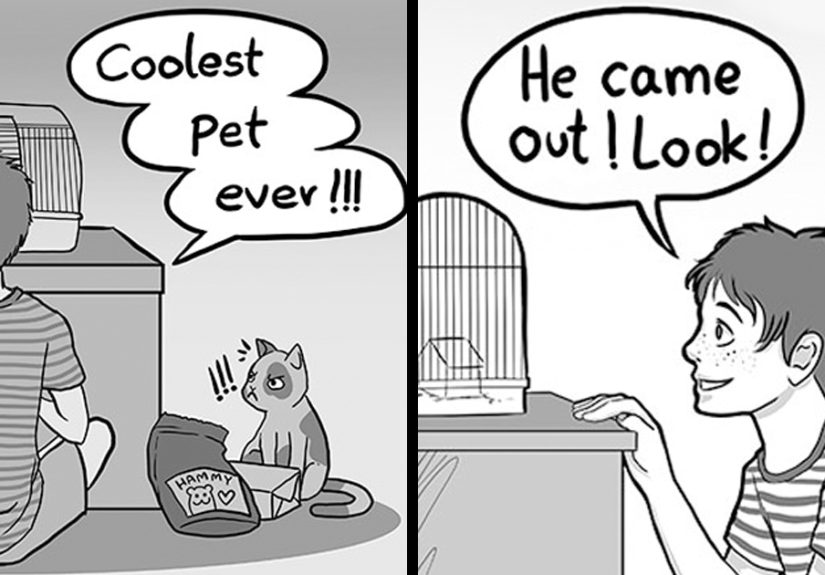
The artist behind the famously tear-jerking animal comics has shared a new story centered on a neglected hamsterone
that hits hard because it’s painfully believable. The comic isn’t just “sad for sad’s sake.” It’s an empathy trap
with a purpose: it nudges readers toward a simple point that too many people still miss.
A small pet is not a small responsibility.
Meet Jenny-Jinya, the Artist Who Turns “Aww” Into “Oh No” (In a Good Way)
Jenny Hefczycknown online as Jenny-Jinyais a freelance illustrator whose work often centers on animals,
compassion, and the uncomfortable stuff we’d rather not think about: neglect, abandonment, and what happens when
humans treat living creatures like disposable décor.
She’s widely recognized for her series “Loving Reaper”, published online as short episodes that follow a
gentle, compassionate reaper who guides animals through their final moments. The tone is bittersweetsometimes hopeful,
often heartbreakingand consistently aimed at raising awareness for animals in need. In other words: it’s like a public
service announcement, but with beautiful art and the emotional impact of a piano ballad in a movie montage.
Why her comics make people cry
The secret sauce is that Jenny-Jinya doesn’t write animals as props. She writes them like someonewith needs,
fears, routines, and a point of view. That perspective flip is powerful because neglect is frequently invisible. A dog
left outside is easy to recognize. A hamster living in a too-small cage? People argue about it in comment sections like
it’s a debate club topic instead of a welfare issue.
Her stories close that empathy gap fast. One minute you’re thinking, “It’s just a hamster.” The next you’re realizing
how often “just” is the word people use right before they stop caring.
The Neglected Hamster Comic: A Story That’s Uncomfortably Common
In this new hamster-focused comic, Jenny-Jinya tackles a reality many small-pet owners have witnessed firsthand:
hamsters are often bought on impulse, underestimated, and then quietly ignored when caring for them stops being “fun.”
The story points to a few drivers that show up again and again in real life:
- “It’s cheap, so it must be easy.” Hamsters are sometimes sold for surprisingly little money, and that
low price can trick buyers into thinking the commitment is low too. - Peer pressure and trend-pet energy. People get a hamster because friends have one, because a cute photo
went viral, or because it’s seen as a “starter pet.” - Misinformation at the point of sale. The comic’s backstory references a familiar scenario: someone posts
their setup online, others point out the cage is too small, and the owner responds with the classic shield:
“The pet store said it was fine.”
And that’s the gut punch: this story isn’t about a cartoon villain twirling a mustache. It’s about ordinary people
drifting into neglect through ignorance, defensiveness, and the false comfort of “good enough.”
Why Hamsters Get Neglected So Often
Neglect doesn’t always look like cruelty in the obvious, dramatic sense. Major animal welfare organizations define
neglect as failing to provide basic needsfood, water, shelter, and veterinary care. The hamster version of that can be
quieter: a cage that never gets cleaned, a wheel that’s unsafe, a diet that’s mostly junk, or an enclosure so small the
animal can’t behave like a hamster anymore.
Myth #1: “Hamsters don’t need much space.”
Hamsters are tiny, but their needs aren’t. They’re active, curious, anddepending on the speciesseriously territorial.
They burrow, forage, hoard, explore, and run. When you compress all of that into a cramped enclosure, what you often
get is boredom, stress, repetitive behaviors, and health problems.
Myth #2: “Hamsters are low-maintenance pets for kids.”
Hamsters can be great family pets, but they’re also fast, fragile, and prone to biting when stressed. Many veterinarians
and pet health resources note that adult supervision is important, and that adults should be the primary caregivers.
Translation: a hamster is not a “gift” so much as a household project with whiskers.
Myth #3: “If the hamster is alive, it’s fine.”
Surviving isn’t thriving. A hamster can stay alive in subpar conditions for a while, which is exactly why neglect can
go unnoticed. By the time obvious symptoms show up, you may already be dealing with a preventable crisis.
Hamster Care Basics (The Stuff That Actually Matters)
The comic works because it’s specific: it nudges readers to think about what “good care” really means for a hamster.
Here’s the practical reality checkbased on veterinary and humane-organization guidancewithout turning your life into a
hamster-themed spreadsheet. (Though honestly, a hamster spreadsheet would be extremely on-brand for 2026.)
1) Housing: bigger, safer, and built for real hamster behavior
Many modern care guides emphasize continuous floor space rather than stacked levels. Some veterinary
sources recommend a minimum habitat footprint around 450 square inches of continuous floor space for
hamsters (not counting tubes or upper platforms). Bigger is often betteras long as it’s secure and well-ventilated.
Good enclosures also support what hamsters naturally do:
burrow. Veterinary manuals note hamsters tend to prefer solid floors and relatively deep bedding with
abundant nesting material, because it better matches their instinctive behavior.
2) Bedding: dust matters, and “smells like a forest” is not a compliment
Not all bedding is created equal. Several humane and veterinary resources advise choosing clean, absorbent, low-dust
bedding and avoiding certain aromatic wood shavings. For example, cedar (and often fresh pine) is commonly discouraged
because strong oils and scents can irritate small animals’ respiratory systems. Paper-based bedding is frequently
recommended as a safer option.
3) Enrichment: wheel, hides, chew items, and boredom prevention
A hamster without enrichment is basically a tiny athlete forced to live in an empty studio apartment with no Wi-Fi.
Most care guides recommend:
- A solid-surface running wheel (wire wheels can cause injuries).
- Hideouts for security and sleep.
- Safe chew items because hamster teeth grow continuously.
- Foraging opportunities (scatter feeding, hamster-safe toys) to keep their brain engaged.
There’s also research suggesting bedding depth and environment affect welfare-related behaviors. Studies observing
hamsters in different bedding depths have found that deeper bedding supports burrowing and may reduce stress-related
behaviors like repetitive wire-gnawingan indicator often associated with suboptimal housing.
4) Diet: seeds aren’t “evil,” but a seed-only diet is usually a problem
A common mistake is feeding a hamster mostly seed mix. Some veterinary resources warn that seed-heavy diets can be high
in fat and low in balanced nutrition, increasing the risk of obesity and deficiencies. Many humane organization guides
recommend a quality pelleted diet as the main food, with small amounts of fresh vegetables offered appropriately and
treats kept limited.
Also: fresh water should always be available. It sounds obvious, but “obvious” is where neglect often
hides.
5) Temperature and safety: hamsters are not heat-fans
Some veterinary resources note that hamsters do not tolerate heat well and should be kept in a stable, comfortable
temperature rangeaway from direct sun, drafts, and dramatic temperature swings. A hamster enclosure near a sunny
window can look cozy to humans while turning into a miniature sauna for the hamster.
6) Veterinary care: yes, hamsters need vets too
A hamster doesn’t come with a “maintenance-free” warranty. Veterinary resources often recommend an initial exam shortly
after acquisition (especially if purchased from a store) and regular checkups thereafter. Some care sheets recommend
annual exams with an exotic or small-animal veterinarian to catch issues early.
7) Social setup: don’t assume they want a roommate
A lot of people interpret “small” as “needs company.” But many hamsters are territorial, and some guidance warns that
housing hamsters together can lead to fighting and injury. Species differences matter, but the safe default for many pet
owners is: one hamster per enclosure unless you have expert, species-specific guidance and the right
setup.
From Tears to Action: What the Comic Is Really Asking You to Do
The hamster story lands because it doesn’t just say “be nicer.” It implies something more challenging:
learn. Research before buying. Question pet store advice. Upgrade care when you realize you were misled.
And if you can’t provide what the animal needs, choose a responsible next step rather than letting neglect drag on.
If you’re thinking about getting a hamster
- Plan the enclosure first, then the hamsternot the other way around.
- Budget for the habitat (which often costs far more than the hamster).
- Choose vet access upfront, including who treats small exotics in your area.
- Assume the pet store setup is marketing, not a gold-standard welfare blueprint.
If you already have a hamster and you’re worried you’re “doing it wrong”
First: you’re not alone. Second: guilt is only helpful if it turns into improvements. Many cases of neglect are rooted
in misinformation and lack of educationnot cartoon-level malice. Upgrade what you can:
more space, safer bedding, better diet, a solid wheel, more enrichment, and a veterinary check if something seems off.
If you suspect an animal is being neglected
Major animal welfare organizations recommend reporting suspected neglect to local animal control or law enforcement.
The key is to do it safely and legallydocument what you can from a lawful location, and let authorities handle
investigation and follow-up.
Why a Hamster Comic Can Change People More Than a Fact Sheet
Let’s be honest: most people don’t wake up excited to read “Rodent Husbandry: A Comprehensive Guide.”
(If you do, I respect you. Slightly fear you. But respect you.)
Art reaches people differently. A comic can bypass defensiveness, make the invisible visible, and turn vague concern
into a vivid moment you can’t unsee. That’s why Jenny-Jinya’s approach works: she doesn’t just present information.
She attaches it to a feeling.
And in animal welfare, feelings matter. Empathy is often the first step toward better care, better decisions, andon a
broader levelbetter cultural norms around “small” pets.
Experiences People Share After Reading the Neglected Hamster Comic (And Others Like It)
One of the most interesting ripple effects of emotional animal comics is what happens after the crying. Across
comment sections, forums, and group chats, people tend to share the same kinds of experiencesmoments that range from
“I learned something” to “I completely changed how I care for my pets.”
Some readers talk about their first hamster as a childhood pet and how, looking back, they realize the setup was
nowhere near what a hamster needed. They describe those old starter cagestiny plastic habitats with twisty tubes and a
wheel that looked more like a medieval device than exercise equipment. The comic becomes a time machine: it takes them
back to something they didn’t understand then, and it reframes it with adult clarity. The most common reaction isn’t
defensiveness; it’s regret mixed with resolve. People say things like, “If I ever have a hamster again, I’ll do it
right,” and then they start asking specific questions: What bedding is safest? How big should the enclosure be? What’s
an appropriate wheel?
Others share a different experience: they read the comic while actively owning a hamster and immediately recognized a
problem they’d been minimizing. Maybe the cage was smaller than ideal. Maybe cleaning had slipped from weekly to “when I
remember.” Maybe the diet had slowly become snack-based because it was cute to watch the hamster pick through a seed mix.
The comic acts like an emotional flashlightsuddenly, the “not a big deal” corners of care are lit up. These readers
often describe making quick changes: upgrading to a larger enclosure, swapping bedding to something lower-dust,
introducing a solid wheel, adding more hides and chew items, or scheduling a vet check just to be safe.
A third group shares stories about confronting misinformation. They’ll mention how a pet store employee insisted a small
cage was “totally fine,” or how packaging labels made tiny enclosures look acceptable because they were designed for
convenience and sales, not welfare. After reading, these people describe doing what the comic quietly encourages:
cross-checking advice with veterinary sources, humane organizations, and experienced keepers. The most relatable part is
the emotional whiplashrealizing you trusted an “expert,” only to learn the expert was undertrained or repeating a script.
That moment can sting, but it’s also empowering, because it moves care from guesswork to informed choice.
Some of the most hopeful experiences come from families. Parents describe using the comic as a gentle way to talk to
kids about responsibility without lecturing. The conversation shifts from “clean the cage because I said so” to “this is
an animal who depends on us.” In those stories, the hamster becomes less of a toy and more of a tiny family member with
needs and routines. The comic, oddly enough, becomes a teaching toolone that sticks because it’s memorable and
emotionally honest.
And finally, many readers share a quieter experience: grief. Not just for neglected animals in the story, but for pets
they’ve lost, pets they wish they’d treated better, or animals they couldn’t save. It’s heavy, but it’s also part of why
these comics matter. They validate that loving animals isn’t “extra.” It’s normal. And sometimes, caring deeply is what
pushes people to volunteer, donate, adopt responsibly, or speak up when they see neglect being normalized.
Conclusion: A Hamster Is Small, But the Lesson Isn’t
Jenny-Jinya’s neglected hamster comic hits people in the feelings because it’s built from realities that happen every
day: impulse buys, bad advice, “it’s just a hamster” thinking, and the slow slide from ignorance into neglect. The point
isn’t to shame every person who ever owned a tiny cage in 2009.
The point is to do better nowby learning, upgrading care, taking veterinary guidance seriously, and treating small
animals like what they are: living beings with real needs. If a comic makes you cry and also makes you change something,
that’s not “being dramatic.” That’s growth. (Also hydration. Tears count. Sort of.)