Table of Contents >> Show >> Hide
- Why Learning Keyboard Is So Beginner-Friendly
- How to Play the Keyboard: 13 Steps
- Step 1: Learn the keyboard layout first
- Step 2: Find middle C and use it as home base
- Step 3: Sit correctly and fix your hand position
- Step 4: Learn finger numbers
- Step 5: Practice simple note patterns with one hand
- Step 6: Understand rhythm before you chase speed
- Step 7: Use a metronome without fearing the little click monster
- Step 8: Learn your first basic chords
- Step 9: Play with both hands in a simple way
- Step 10: Practice scales and five-finger exercises
- Step 11: Start reading very simple music
- Step 12: Learn one easy song from start to finish
- Step 13: Build a practice routine you can actually keep
- Common Beginner Mistakes to Avoid
- How Long Does It Take to Get Good?
- Real-Life Experiences Beginners Often Have When Learning Keyboard
- Final Thoughts
- SEO Tags
If you have ever looked at a keyboard and thought, “Cool, but why does it look like a parking lot made of black and white rectangles?” welcome to the club. The good news is that learning to play the keyboard is far less mysterious than it seems. You do not need to be born with concert-hall talent, dramatic hair, or a tragic backstory. You need a simple plan, steady practice, and the willingness to sound a little awkward before you sound impressive.
The keyboard is one of the best instruments for beginners because it lays music out in a way you can actually see. Notes move left to right. Patterns repeat. Chords make sense faster than many people expect. And once your fingers learn where to go, even a basic beginner keyboard can help you play melodies, chords, and full songs with real confidence.
This guide breaks the process into 13 practical steps. Whether you are using a digital keyboard in your bedroom, a full-size piano in your living room, or a borrowed instrument that has seen better days, these steps will help you build real skills without drowning in music jargon.
Why Learning Keyboard Is So Beginner-Friendly
The keyboard gives you a visual map of music. You can see repeated note patterns, recognize intervals, and understand chords faster because the layout is consistent. That is a big win for beginners. On top of that, you can start with simple one-hand melodies, then add chords, rhythm, and two-hand coordination as you improve. In other words, the keyboard lets you level up without making your brain file a complaint.
How to Play the Keyboard: 13 Steps
Step 1: Learn the keyboard layout first
Before you try to play a song, get comfortable with the pattern of the keys. The black keys are grouped in sets of two and three. That repeating pattern is your road map. Once you notice it, the keyboard stops looking random and starts looking organized.
The white keys are named A through G, and then the pattern repeats. Every time you move from one note to the next, you are moving alphabetically until the cycle starts over. Spend a few minutes pointing to groups of two black keys and groups of three black keys. That simple habit will make everything else easier.
Step 2: Find middle C and use it as home base
Middle C is the beginner’s best friend. On most keyboards, you can find it by locating the group of two black keys near the center and then finding the white key just to the left of that pair. That note is middle C.
Why does this matter? Because many beginner exercises and songs start around middle C. It helps you orient both hands and understand where the music sits on the keyboard. Think of it like the “You Are Here” dot on a mall map, except much more musical and with fewer pretzel smells.
Step 3: Sit correctly and fix your hand position
Great keyboard playing starts before you press a single note. Sit tall, keep your shoulders relaxed, and place your feet flat on the floor. Your elbows should feel loose rather than jammed into your sides, and your forearms should be roughly level with the keys.
Your hands should look naturally rounded, almost as if you are gently holding a small ball. Avoid collapsing your knuckles or lifting your wrists too high. Tension is a common beginner mistake. If your hands look like stressed-out spider legs, reset and relax. Good posture and hand shape make it easier to control tone, move smoothly, and avoid strain later.
Step 4: Learn finger numbers
Keyboard music often uses numbers to show which finger should play which note. Each thumb is 1, the index finger is 2, the middle finger is 3, the ring finger is 4, and the pinky is 5. This system is simple, but it matters a lot because fingering affects how smoothly you move across the keys.
Start by placing your right-hand thumb on middle C and resting the other fingers on the next four white keys. Then do the same kind of five-finger setup with your left hand on the notes below middle C. Practice saying the finger numbers out loud while you play. It feels a little goofy, but it works.
Step 5: Practice simple note patterns with one hand
Do not jump straight into a dramatic movie soundtrack. Start with short patterns using just five notes. Play up and down slowly with your right hand, then with your left. Try C-D-E-F-G and come back down. Focus on even sound and clean finger movement rather than speed.
This stage teaches control. Each finger should press the key with intention, not panic. Try to keep your hand relaxed and avoid lifting your fingers too far from the keys. Keyboard playing is not a boxing match. Small, efficient movement is usually better than dramatic finger gymnastics.
Step 6: Understand rhythm before you chase speed
A lot of beginners worry about playing the correct notes and completely forget that music also needs timing. A note played at the wrong time is still wrong. Rhythm is what makes a melody feel like music instead of a random keyboard accident.
Start with a steady beat. Clap quarter notes. Count “1, 2, 3, 4” evenly. Then play simple notes in that pulse. If you can clap it, count it, and tap it, you are much more likely to play it well. Fast playing is fun, but steady playing is what actually sounds good.
Step 7: Use a metronome without fearing the little click monster
Yes, the metronome can feel annoying at first. That is because it is honest. It will reveal every place where you rush, drag, or lose track of the beat. That is exactly why it is useful.
Set the metronome to a slow tempo and play a short pattern. Do not try to impress anyone. Try to line up your notes with the click. Once you can do that cleanly, increase the tempo a little. The goal is not to survive the metronome. The goal is to make it boring because your timing is so steady.
Step 8: Learn your first basic chords
This is the step where keyboard suddenly starts sounding like real music. A chord is a group of notes played together, and the most useful beginner chords are major and minor triads. Start with C major: C-E-G. Then try G major and F major. After that, test A minor and D minor.
Practice playing chords with your right hand first. Listen to the difference between major and minor. Major chords usually sound brighter and more open. Minor chords often sound more serious or emotional. Once you know a few chords, you can accompany simple songs, create progressions, and feel far more musical than you did ten minutes earlier.
Step 9: Play with both hands in a simple way
Using both hands is where many beginners feel their confidence wobble. That is normal. Your brain is suddenly being asked to run two small jobs at once. Start with something easy: play single bass notes with your left hand while your right hand plays a simple melody or chord.
For example, let your left hand play one note per measure while your right hand plays a five-note melody. Then move to block chords in one hand and melody in the other. Keep it slow. If the coordination falls apart, separate the hands again, then put them back together. This is not failure. This is how learning works.
Step 10: Practice scales and five-finger exercises
Scales are not punishment. They are training. A simple C major scale teaches you finger movement, note order, and hand coordination. Five-finger exercises help you build control without overwhelming your hands.
At first, focus more on smoothness than speed. Notice when your thumb passes under or when your fingers feel awkward. Those awkward spots are exactly where progress happens. Over time, scales improve your technique, help you recognize keys, and make real songs easier to learn. They may not be flashy, but they quietly build almost everything you need.
Step 11: Start reading very simple music
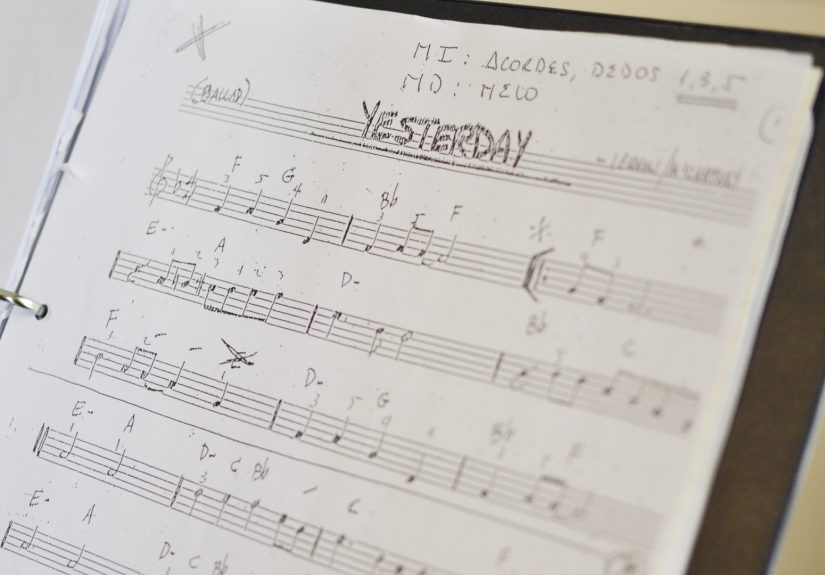
You do not need to become a theory wizard overnight, but learning basic notation helps a lot. Start with the grand staff, note names near middle C, and simple rhythms. Learn how treble clef usually works with the right hand and bass clef with the left hand.
Do not try to decode giant, complicated sheet music right away. Begin with beginner-level pieces that use repeated hand positions and short note values. Reading music is like reading words: at first you sound everything out, and later you recognize patterns quickly. The trick is to stay patient long enough to get to the second stage.
Step 12: Learn one easy song from start to finish
At some point, stop collecting exercises and actually play a song. Pick something simple that you enjoy. A beginner song with a steady beat, repeated chords, and a small note range is perfect. Folk tunes, children’s songs, or easy pop arrangements are great choices.
Break the song into small sections. Learn one phrase at a time. Play hands separately if needed. Then combine them. The goal is not just to start songs. It is to finish one. That gives you a sense of musical structure and a confidence boost that random drills cannot match.
Step 13: Build a practice routine you can actually keep
The best practice routine is not the one that looks heroic on paper. It is the one you will actually do. Twenty focused minutes every day will usually help you more than one dramatic two-hour session followed by a week of avoiding the keyboard like it owes you money.
A simple routine might look like this:
- 3 minutes: warm-up and hand position check
- 5 minutes: note or rhythm practice
- 5 minutes: scales or chords
- 7 minutes: work on your current song
Keep a pencil nearby. Mark tricky spots. Repeat short sections slowly. Record yourself once in a while. You will hear progress that you may not notice in the moment. And yes, hearing your own mistakes can be humbling, but it is also wildly effective.
Common Beginner Mistakes to Avoid
One of the biggest mistakes is trying to play too fast too soon. Speed hides sloppy rhythm, weak fingering, and uneven tone. Another mistake is practicing the whole song badly instead of practicing one small part well. Beginners also tend to play with tense shoulders, flat fingers, or wrists that bounce around like they are reacting to bad news.
Another trap is relying only on muscle memory without learning note names, rhythm, or chord patterns. Muscle memory helps, but it is much more reliable when combined with actual understanding. Learn what you are doing, not just where your fingers happened to land yesterday.
How Long Does It Take to Get Good?
That depends on what you mean by “good.” If you mean playing basic melodies, simple chords, and beginner songs with confidence, many learners can make noticeable progress in a matter of weeks with regular practice. If you mean playing advanced classical pieces, jazz improvisation, or complex two-hand arrangements, that takes much longer.
The encouraging part is that the keyboard rewards small, steady effort. You do not need years before music starts sounding like music. Even early on, you can learn chord progressions, recognizable tunes, and satisfying patterns that make practice feel worth it.
Real-Life Experiences Beginners Often Have When Learning Keyboard
Learning the keyboard is not just a technical process. It is also a weird little emotional journey. Most beginners experience a mix of excitement, confusion, pride, and occasional disbelief that two hands can belong to the same person and still refuse to cooperate.
In the first few days, many people feel a rush of confidence because the keyboard looks logical. The notes line up in order, the patterns repeat, and finding simple melodies feels possible. Then comes the classic beginner surprise: knowing where the notes are is not the same as playing them smoothly. The brain understands the task, but the fingers still need a formal invitation.
Another common experience is the awkwardness of hand independence. Your right hand may seem perfectly willing to play a melody, while your left hand behaves like it has never met music before. That can feel frustrating, but it is completely normal. In fact, almost every keyboard player remembers the moment when both hands finally worked together for a few seconds and it felt like discovering fire.
Beginners also go through a phase where they underestimate rhythm. They think the hard part is finding the notes. Then they try to play with a steady beat and realize timing is the real boss. This is often when the metronome enters the story, usually as an irritating click, and slowly becomes a very useful coach.
One of the most rewarding experiences is recognizing patterns. A learner who could barely find middle C in week one often starts spotting chord shapes, repeated intervals, and familiar note groups after a short time. That moment matters because the keyboard begins to feel less like 88 separate decisions and more like a connected system. Once that mental shift happens, progress usually speeds up.
There is also the emotional boost of playing something recognizable. It might be a nursery rhyme, a pop intro, or a simple chord progression, but hearing real music come out of your own hands is a huge deal. It turns practice from an abstract goal into proof that you are actually becoming a player.
Of course, there are less glamorous experiences too. Some days your fingers feel clumsy. Some days the same passage that worked yesterday suddenly falls apart. That does not mean you are getting worse. It usually means your brain is still organizing the skill. Learning music is rarely a straight line. It is more like a staircase with a few confusing landings.
Many beginners eventually discover that progress feels better when they stop comparing themselves to advanced players online. Watching a professional glide across the keys can be inspiring, but it can also make a beginner forget that polished playing is built from thousands of slow, imperfect repetitions. The real win is not sounding like a concert pianist in a month. The real win is sounding better this month than last month.
Perhaps the most important experience is realizing that consistency beats intensity. The students who improve are usually not the ones with the most dramatic motivation speeches. They are the ones who come back to the keyboard regularly, even when practice feels ordinary. Over time, those ordinary sessions create very non-ordinary results.
Final Thoughts
If you want to learn how to play the keyboard, do not wait for the perfect instrument, the perfect schedule, or the perfect surge of motivation. Start with the keys in front of you. Learn the layout. Find middle C. Build your rhythm. Practice chords. Play easy songs. Repeat. That is how real musicians are made.
The keyboard may look complex at first, but it becomes much friendlier once you understand its patterns. Step by step, your fingers learn where to go, your ears learn what sounds right, and your confidence begins to grow. Keep it simple, keep it steady, and let the process work. One day you will sit down, play something that actually sounds good, and think, “Well, look at that. I am doing the thing.”