Table of Contents >> Show >> Hide
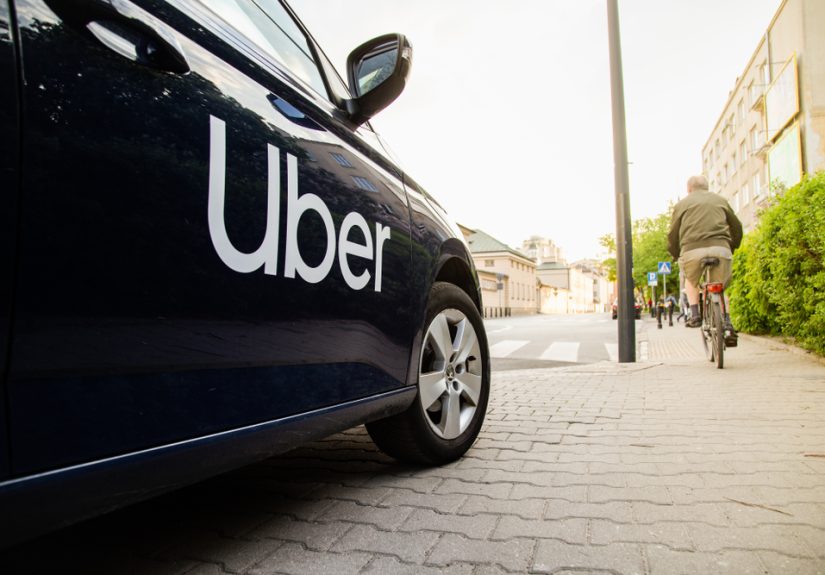
Some success stories arrive wearing a tailored blazer and a polished elevator pitch. This one shows up in a Toyota Corolla, checks the gas gauge, opens the rideshare app, and wonders whether tonight’s fares will cover tomorrow’s dream.
The journey from Uber driver to Harvard Medical School sounds almost too cinematic, like a motivational poster that somehow learned to parallel park. But what makes this story powerful is not the prestige at the end. It is the grit in the middle. It is the long, unglamorous stretch between ambition and arrival, where talent still has to negotiate with rent, airfare, application fees, and plain old exhaustion.
At the center of this story is a truth many aspiring doctors know too well: becoming a physician is not only an academic challenge. It is also a financial obstacle course. For students from low-income or first-generation backgrounds, the road to medicine can feel less like a straight shot and more like a maze built by someone who never had to worry about motel costs before an interview.
That is why the phrase From Uber driver to Harvard Medical School lands so hard. It is not just a personal triumph. It is a case study in resilience, class barriers, social mobility, and the kind of human insight that no standardized test can fully measure.
Not Your Typical Pre-Med Origin Story
Plenty of students work hard to get into medical school. That part is not unusual. What is unusual is how visible the struggle became in this case. Instead of quietly absorbing the cost of the application cycle, this future physician turned to gig work to keep the process alive. The car became a side hustle, the side hustle became survival, and survival became momentum.
That detail matters because it destroys a stubborn myth: that merit alone carries students into elite spaces. Merit helps, of course. So do strong grades, a serious work ethic, and the ability to survive pre-med chemistry without developing trust issues. But medicine also demands money long before it offers a paycheck.
There are application fees. Then secondary fees. Then test fees. Then interview costs. Then the hidden expenses that somehow multiply in the dark like socks in a dryer: travel, hotel rooms, food, professional clothing, prep materials, and lost work hours. A student with family support may call that “part of the process.” A low-income student may call it “the reason I almost had to give up.”
That is what makes this particular journey more than inspirational. It is revealing. It shows how often brilliant students are forced to improvise financially just to remain in the competition.
The Real Price of the White Coat Dream
One of the most important lessons in this story is that medicine has a front door, but getting to it can be expensive. Before students ever set foot in anatomy lab, many have already paid a steep entry fee in money, stress, and uncertainty.
For students with financial cushion, the application cycle can be hectic but manageable. For students without it, every invitation can come with a cruel twist: congratulations, you have earned the chance to spend more money you do not have. That dynamic changes behavior. It forces applicants to be strategic in ways wealthier peers may never have to be. Which interviews can I afford? Which city is cheapest? Can I miss work? Can I borrow money? Can I delay the dream one more year without losing momentum?
These are not side questions. They shape outcomes. A student who cannot attend every interview is not competing on the same playing field as a student who can book flights without blinking. The pipeline to medicine likes to talk about excellence, but excellence can be missed when it is standing outside the airport counting dollars.
Why First-Generation and Low-Income Students Often Carry More Than a Backpack
Students who are first in their families to pursue medicine often carry invisible weight. They may have less inherited knowledge about the “hidden curriculum” of professional education: how to find mentors, how to decode admissions culture, how to ask for opportunities, how to navigate networking without feeling like an uninvited guest at someone else’s reunion.
That gap is not about ability. It is about access to cultural capital. It is about whether someone in your orbit can explain the process before the process starts explaining itself to you in expensive, stressful installments.
And yet, the same students often bring strengths that medicine badly needs. They know how to adapt. They know how to read a room. They know what it means to work before sunrise and keep going after sunset. They understand systems not as abstract diagrams, but as forces that shape real lives. In other words, they do not just study inequality. They have often had to outmaneuver it.
That is why this journey feels so significant. It is not a story of a student who succeeded despite having “nothing to offer but determination.” It is a story of a student whose life experience may have made him more prepared for the human side of medicine than many traditional pathways ever could.
What Driving Uber Can Teach a Future Doctor
At first glance, Uber driving and medicine seem to have very little in common. One involves traffic, navigation, and the occasional passenger who insists the map is wrong while clearly not knowing where they are. The other involves diagnosis, treatment, and the occasional patient who has already self-diagnosed on the internet. Different uniforms, similar confidence levels.
But look closer and the overlap becomes surprisingly rich.
A good driver makes people feel safe in a short period of time. A good physician does the same. A driver learns to read tone, body language, hesitation, urgency, and silence. A doctor must do that too. A driver often hears fragments of people’s lives: work stress, family conflict, financial pressure, exhaustion, illness, immigration worries, relationship trouble, late-night fear, early-morning hope. A doctor hears those same forces, only with higher stakes and brighter lights.
In that sense, the rideshare car becomes an accidental classroom in human behavior. It teaches patience. It teaches listening. It teaches how quickly a stranger can become a story instead of a stereotype.
The Car as a Crash Course in Social Medicine
If you drive enough people around a city, you begin to understand that health does not begin in a clinic. It begins in neighborhoods, jobs, schedules, income, food access, transportation, language, housing, and stress. In public health, these are often called social determinants of health. In ordinary life, they look like a worker taking the night shift because rent is due, a parent skipping care because childcare is impossible, or a patient arriving late because two bus transfers and a missed connection turned a simple appointment into a logistical triathlon.
A future doctor who has spent years observing people move through a city from the driver’s seat may notice things others miss. Which neighborhoods seem forgotten. Which passengers are rushing to a second job. Which workers are too tired to joke. Which families carry that particular blend of pride and strain that means they are trying very hard to stay afloat.
That kind of exposure does not automatically make someone a great physician. But it can make someone more attentive, more humble, and less likely to reduce patients to lab values and billing codes. It can create a doctor who understands that illness is rarely just biological. It is logistical, social, emotional, and often economic too.
In a profession that increasingly talks about empathy, stories like this remind us that empathy is not just a personality trait. It can also be trained by experience. Sometimes that experience comes from a hospital. Sometimes it comes from a rideshare app and a long night route.
Why Harvard Medical School Fits the Arc
Yes, Harvard Medical School is the headline-grabbing destination in this story. But the real reason it matters is not brand prestige alone. It is what the institution represents in the context of this journey.
Harvard Medical School publicly emphasizes service, community, early clinical learning, and the development of physicians who can think across science, systems, and society. That framework matters because the Uber-to-medical-school story is not simply about academic achievement. It is about perspective. It is about a future physician shaped not only by textbooks, but by work, class, and contact with everyday lives.
In that light, Harvard becomes symbolically fitting. Not because it validates a person’s worth, but because it shows that elite medical education can still be reached by students whose path was far from elite in appearance. The message is larger than one school: unconventional experience is not a detour from medicine. It can be preparation for it.
This also aligns with the broader shift in admissions thinking. Medical schools increasingly talk about holistic review, which means looking beyond test scores alone to consider experiences, attributes, competencies, and mission fit. Good. They should. Because a student who has balanced full-time work, economic pressure, and a professional dream may already have demonstrated something medicine desperately needs: sustained, disciplined resilience under real-world pressure.
The Bigger Lesson: Stop Underestimating People
There is a line hidden inside this entire story that deserves its own billboard: do not confuse someone’s current job with the size of their future.
That idea reaches beyond medicine. Too often, society sorts people by visible status and temporary roles. We see a cashier, a driver, a server, a delivery worker, a night-shift employee, and we assume we understand their place in the world. We do not. We are often meeting people in the middle of a chapter and acting like we have read the whole book.
The future doctor driving an Uber is not an exception because ambition is rare. He is an exception because we are not paying attention. There are talented people everywhere, building tomorrow out of whatever tools they have today. Some are studying between shifts. Some are saving for exams. Some are translating for parents while writing personal statements. Some are one opportunity away from changing the room they are in.
Stories like this challenge institutions too. If medicine says it values diversity, grit, community insight, and service, then it must do more than applaud those qualities after students succeed. It must reduce the barriers that make such success unnecessarily punishing in the first place.
Related Experiences That Make This Story Even Bigger
What makes a journey like this unforgettable is not only the destination, but the accumulation of experiences along the way. A student who drives strangers through San Francisco traffic at night and studies for medicine by day is not just earning money. He is collecting an education that cannot be graded on a transcript.
Think about the kinds of moments that shape a person in that life. There is the quiet passenger who gets in after a hospital shift, too tired to speak, and teaches you something about burnout without saying a word. There is the anxious traveler heading to an airport before dawn, gripping a coffee like it is life support, reminding you that stress has a posture. There is the immigrant parent trying to calm a child in the back seat while juggling directions, language, and a work call. There is the older passenger who talks because nobody else has asked how their week has been. A future doctor who listens to enough stories like these starts to hear the health care system long before stepping inside it.
Then there are the private experiences no passenger sees. The calculation before every gas fill-up. The decision to keep driving one more hour because the interview bill is still not covered. The fatigue of switching identities in a single day: worker, applicant, driver, dreamer, and somehow still functioning adult. The strange dignity of staying focused while the world keeps offering reasons to postpone the goal.
That kind of life can deepen a person’s understanding of patients in powerful ways. When someone later says they cannot afford a medication, cannot take unpaid time off, cannot arrange transportation, or cannot follow a treatment plan that assumes endless flexibility, this doctor is less likely to hear “noncompliance” and more likely to hear reality. He has lived in the territory where logistics shape possibility.
There is also the emotional education that comes from occupying an in-between space. A rideshare driver is close enough to witness people’s lives, yet distant enough to remain a stranger. Medicine often works the same way. Patients may tell you something deeply personal within minutes, not because you are family, but because the moment asks for honesty. Learning how to handle that intimacy with care is part skill, part ethics, and part humility.
By the time a person with this background walks into a medical school classroom, he may already understand something essential: every person carries a hidden context. Every patient has pressures, history, fear, pride, obligations, and unfinished business that never fully show up in a chart. That recognition can make for better listening, better questions, and better care.
So yes, the title sounds dramatic. From Uber driver to Harvard Medical School. But the real substance is quieter and stronger. It is about a person who worked within the limits he had, learned from the people around him, and carried those lessons into medicine. That is not just a good story. That is the kind of formation many doctors would be lucky to have.
Conclusion
The journey from Uber driver to Harvard Medical School is compelling because it turns a familiar success narrative inside out. This is not a story about genius descending from the clouds. It is a story about labor, money, dignity, barriers, and the practical bravery of refusing to postpone a calling.
It also offers a useful reminder to readers, educators, and future applicants alike: the road to medicine is crowded with talent that does not always look polished on arrival. Sometimes excellence clocks in for a shift, drives through the night, saves for interview travel, and keeps going anyway.
And maybe that is exactly the kind of person you want in a white coat.