Table of Contents >> Show >> Hide
- Why inbound was underperforming even when demand was there
- What our AI BDR actually changed
- The playbook behind the jump from 30% to 71%
- What our AI BDR did better than the old inbound model
- What did not work, and what we had to fix
- How to know whether an AI BDR will work for your team
- The bigger lesson: inbound revenue grows when qualification becomes continuous
- Experience Notes From Running an AI BDR in the Real World
- SEO Tags
If you work in B2B revenue, you already know the old joke: marketing says the leads are hot, sales says the leads are trash, and RevOps is somewhere in the middle building dashboards that politely confirm everyone is half right. That was us, too. We had strong inbound interest, healthy traffic, solid content, and enough demo requests to look busy on paper. But “busy” is not the same as “efficient,” and it is definitely not the same as “revenue.”
So we changed one thing that turned out to change almost everything: we let an AI BDR qualify inbound leads 24/7. Not as a gimmick. Not as a shiny chatbot with the personality of a tax form. We deployed it as a real frontline qualification layer across our inbound funnel so every form fill, hand raise, chat conversation, and off-hours visitor got an immediate, useful, contextual response.
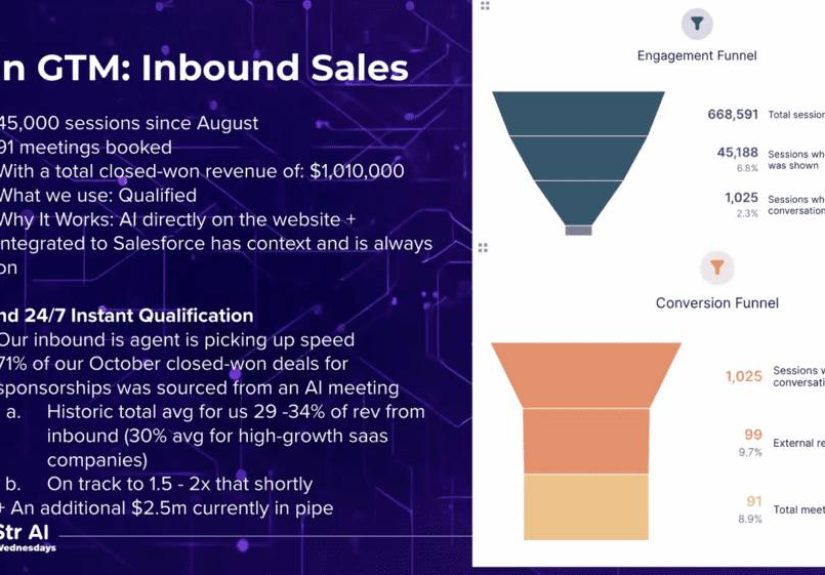
The result was not just faster replies. It was a better revenue mix. Inbound went from contributing roughly 30% of revenue to 71%. The surprising part is that this did not happen because AI “replaced sales.” It happened because AI handled the work humans are weirdly bad at doing consistently: instant response, basic qualification, routing logic, note capture, and late-night persistence without requiring coffee, a calendar intervention, or a motivational Slack post.
Why inbound was underperforming even when demand was there
Before we introduced our AI BDR, our inbound engine had a classic modern problem: top-of-funnel activity looked respectable, but the handoff between interest and action was messier than a group project. Prospects downloaded content, requested demos, started chats, and asked pricing questions. Then the experience became uneven. Some got a fast, helpful follow-up. Others waited. Some were routed to the right rep. Others disappeared into the CRM equivalent of a junk drawer.
The issue was not a lack of leads. It was a lack of consistent qualification at the speed buyers now expect. Inbound leads do not stay fresh forever. Someone who is actively researching vendors at 9:12 p.m. on a Tuesday is not thrilled to hear back Thursday afternoon with, “Just bumping this to the top of your inbox.” By then, they may have already shortlisted someone else.
The old funnel looked productive, but leaked everywhere
Here is what our pre-AI motion looked like in plain English:
- Demo requests came in at all hours, but the team only worked standard coverage windows.
- Qualification varied by rep, mood, workload, and whether lunch had happened yet.
- Low-fit leads still consumed human time, while some high-intent leads cooled off waiting for replies.
- Routing rules were technically “there,” but reality kept finding loopholes.
- Marketing generated demand, but sales only captured part of it.
That is the quiet tragedy of many inbound programs: they fail in the middle. The brand does its job. The website does its job. The content does its job. Then the handoff layer turns into a traffic jam.
What our AI BDR actually changed
We did not ask AI to close enterprise deals, charm procurement, or freestyle through legal redlines. We asked it to do what great BDRs already do at the beginning of the buyer journey, only with round-the-clock availability and zero lag.
Our AI BDR was designed to engage inbound leads immediately, ask smart qualification questions, identify intent, capture context, answer common product questions, and route or book meetings when appropriate. In other words, it became the always-on layer between “someone is interested” and “someone on our team should act.” That layer turned out to be worth a lot of money.
1. Every lead got a response right away
This was the most obvious win, and also the most important. A human team can be excellent and still miss nights, weekends, timezone mismatches, holidays, meeting blocks, and random Tuesday chaos. An AI BDR does not have those issues. It greets every serious buyer the moment they raise their hand.
That speed changed the feel of our funnel. We stopped making prospects wait for basic answers. We stopped forcing them to complete a form and then sit in silence like they had mailed a message by bottle. The first response became immediate, useful, and relevant.
2. Qualification stopped depending on who happened to pick it up
Before AI, qualification quality depended too much on individual rep behavior. One rep would ask excellent questions. Another would rush to book. Another would over-qualify and accidentally turn a buyer conversation into a customs inspection. The AI BDR standardized the basics.
It asked the same core questions every time, adapted them based on context, and collected details such as company size, use case, urgency, existing tools, buying role, and timeline. That meant we no longer had to choose between speed and rigor. We got both.
3. Sales reps received context instead of chaos
This was the part our AEs loved most. Instead of getting a calendar invite with a vague note like “Interested in learning more,” they got a clean summary of what the buyer needed, what questions had already been answered, what signals suggested urgency, and whether the account looked like a strong fit.
That changed discovery calls. Reps were not starting from zero. They were starting from context. And when reps start from context, buyers feel understood instead of processed.
4. We captured off-hours demand we used to lose
One of the sneaky truths about inbound is that some of the best signals show up when your team is offline. Buyers research at odd hours, compare vendors at home, and fill out forms after internal meetings. We had been generating that demand all along, but not fully capturing it. Once our AI BDR covered the gap, the revenue impact became hard to ignore.
Think of it this way: our website had always been open, but our qualification layer had banker’s hours. AI fixed that mismatch.
The playbook behind the jump from 30% to 71%
The percentage shift sounds dramatic, but the mechanics were refreshingly practical. No magic wand. No “we simply leveraged disruption.” Just boring, useful revenue operations done well. Here is what mattered most.
We redefined what “qualified” really meant
First, we got serious about qualification criteria. Not marketing-qualified in the fluffy sense. Not sales-qualified in the “I have a pulse and booked a call” sense. We defined what meeting-ready meant for our business, what signals indicated genuine buying intent, and what information a rep should have before stepping in.
That clarity made the AI BDR better immediately. AI is only as helpful as the operating rules it gets. If your definition of a good lead is vague, your automation will become confidently vague at scale.
We connected AI to real context, not generic scripts
Our AI BDR was not built to toss canned lines at people. It was connected to our messaging, ICP definitions, qualification logic, routing rules, product information, common objections, and scheduling workflows. That meant responses were grounded in how we actually sell.
This is the difference between a toy and a system. A toy can say hello. A system can move revenue.
We designed smart human handoffs
One mistake companies make with AI in sales is trying to automate past the point where trust matters. We did the opposite. We used AI to handle the repetitive front-end work, then brought humans in at the moment where judgment, nuance, and credibility mattered most.
The handoff rule was simple: when the buyer showed clear fit, urgency, complexity, or deal potential, the AI BDR passed the conversation to a human with a strong summary. That kept the experience smooth instead of robotic.
We measured revenue signals, not vanity metrics
Plenty of teams will celebrate chat volume, response count, or “engagement” as if those numbers pay invoices. We tracked what actually mattered: qualified meetings, speed to first interaction, progression by segment, no-show reduction, conversion by source, and revenue contribution from inbound.
That helped us identify where AI was truly adding value and where it was just making dashboards look energetic.
What our AI BDR did better than the old inbound model
To be clear, AI did not win because it was more charming than our team. It won because it was more available, more consistent, and better at not dropping the ball during the first critical minutes.
Here are the biggest gains we saw:
- Faster speed-to-lead: every inbound hand raise got attention immediately.
- Higher qualification consistency: the same logic was applied across every conversation.
- Better routing: leads reached the right owner faster.
- Cleaner CRM data: summaries, notes, and key fields were captured more reliably.
- More efficient rep time: humans focused on higher-value conversations instead of repetitive triage.
- Better buyer experience: prospects got answers when they were actually in research mode.
That last point matters more than people realize. A good AI BDR does not just improve internal efficiency. It reduces buyer friction. And in a market where buyers often want to self-educate before talking to sales, a low-friction qualification experience becomes a competitive advantage.
What did not work, and what we had to fix
This was not flawless on day one. Anyone selling AI as “set it and forget it” should be forced to manually clean CRM fields for a week. We had to tune prompts, refine qualification branches, tighten routing rules, and establish clear boundaries for when the AI should answer, when it should ask, and when it should escalate.
We learned quickly that bad inputs create polished nonsense
If your product positioning is inconsistent, your AI will mirror that inconsistency at high speed. If your routing logic is a maze, AI will run through the maze faster, but it is still a maze. We had to clean up our own operational mess first.
We also learned not to over-automate
Not every inbound lead should be pushed into a fully autonomous flow. Strategic accounts, sensitive renewals, partner conversations, and complex enterprise requests often need faster human involvement. AI should improve judgment, not replace it where nuance matters most.
So we built tiered paths. Some leads were fully qualified by AI before booking. Others were AI-assisted and routed immediately to a rep. That hybrid model worked far better than forcing every buyer through the same machine.
How to know whether an AI BDR will work for your team
If your inbound volume is tiny, your routing is simple, and your reps already respond instantly with perfect notes and consistent qualification, congratulations. You may not need this. Also, please tell the rest of us what vitamins your team is taking.
But if you have any of the following problems, an AI BDR is worth serious consideration:
- You generate inbound demand but cannot cover it in real time.
- Rep follow-up is uneven by time, territory, or workload.
- Qualification quality varies too much.
- CRM data is incomplete at the first-touch stage.
- Sales spends too much time sorting low-fit leads.
- Your website attracts intent, but your funnel converts that intent inconsistently.
In those environments, AI is not a novelty. It is an operational fix.
The bigger lesson: inbound revenue grows when qualification becomes continuous
The real breakthrough was not that AI talked to people. Plenty of software can do that badly. The breakthrough was that qualification became continuous. Not office-hours-only. Not dependent on who was available. Not interrupted by lunch, travel, pipeline reviews, or that mysterious calendar block labeled “focus.”
Once qualification became continuous, inbound stopped being a marketing number and started becoming a revenue engine. More intent got captured. More fit got identified early. More context traveled with the opportunity. More rep time went to real buying conversations. And that is how the revenue mix shifted.
So yes, our AI BDR helped move inbound from 30% to 71% of revenue. But the deeper truth is simpler: we stopped making buyers wait for our org chart to wake up.
Experience Notes From Running an AI BDR in the Real World
What surprised us most was how quickly the team stopped treating the AI BDR like a “tool” and started treating it like part of the inbound operating model. At the beginning, there was some healthy skepticism. Sales worried it would create junk meetings. Marketing worried it would sound robotic. RevOps worried it would create five new fields, seven broken workflows, and at least one weekly emergency. In fairness, RevOps was not entirely wrong. But after the first few weeks, the tone changed because the evidence changed.
The first real sign that things were working was not a dashboard. It was what reps said after meetings. They kept telling us that buyers were showing up better informed and less frustrated. Instead of starting conversations with, “So what exactly do you do?” prospects were starting with, “I already reviewed your approach, here is where I need help.” That sounds subtle, but it changes the whole sales motion. Discovery becomes sharper. Demos become more relevant. The rep is no longer playing catch-up in the first ten minutes.
We also noticed that off-hours conversations were not low-quality leftovers. In many cases, they were some of the highest-intent moments in the funnel. People would visit the pricing page late at night, ask an integration question, compare rollout timelines, and request a meeting before the workday even started. Under the old model, those leads would have waited for a human reply and cooled off. Under the new model, they were qualified immediately and routed with context. That single operational change produced a much bigger revenue effect than we expected.
Another lesson was that tone matters just as much as logic. A technically correct AI BDR can still underperform if it sounds stiff, vague, or overeager. We had to refine how it asked questions so the exchange felt helpful instead of interrogational. Nobody wants to fill out a form and then feel like they are being audited by a friendly toaster. The best-performing version was concise, direct, and conversational. It answered first, then qualified naturally, and only escalated when the buyer showed real intent.
Internally, the biggest mindset shift was understanding that AI did not reduce the importance of the sales team. It increased the value of their time. Reps spent less energy sorting through noise and more energy on active opportunities. Managers had clearer data on where inbound stalled. Marketing got better feedback on which campaigns brought genuine fit, not just clicks. Even customer-facing teams outside sales benefited because buyer questions were captured earlier and more consistently.
If I had to summarize the experience in one sentence, it would be this: the AI BDR did not create demand out of thin air; it captured the demand we were already earning but failing to convert efficiently. That is why the revenue impact felt so dramatic. The opportunity was already there. We just finally built a frontline qualification layer that could keep up with buyer behavior in the real world.