Table of Contents >> Show >> Hide
- The Parade Before the Balloons
- What Animals Appeared in the Early Macy’s Parade?
- The Atmosphere: Part Fairy Tale, Part Traffic-Stopping Circus
- Why Macy’s Stopped Using Central Park Zoo Animals
- Why This Strange Chapter Still Matters
- From Central Park Zoo to Cultural Icon
- Experiences: What It Must Have Felt Like When Zoo Animals Marched Through Manhattan
Today, the Macy’s Thanksgiving Day Parade is a polished piece of American theater: giant balloons, Broadway performances, marching bands, celebrity cameos, and Santa arriving with the timing of a man who definitely has somewhere else to be by noon. But in its earliest years, the parade had a much wilder personality. Literally. Long before oversized balloons floated above Manhattan, Macy’s borrowed live animals from the Central Park Zoo and sent them down the route with clowns, floats, bands, and costumed employees.
It sounds almost made up, like the kind of trivia fact people invent after too much pumpkin pie. Yet it is real, and it is one of the strangest, most fascinating chapters in parade history. In 1924, when the first Macy’s parade marched through New York City, the event was still called the Macy’s Christmas Parade. It was less polished spectacle and more holiday carnival on the move. The zoo animals gave it energy, danger, novelty, and a dash of “who approved this?” that modern audiences can appreciate from a safe historical distance.
This early era matters because it shows how the Macy’s Thanksgiving Day Parade became what it is now. The parade did not begin as a balloon parade. It began as a noisy, ambitious, slightly chaotic attempt to create a holiday tradition big enough to stop traffic, excite children, and send shoppers marching toward Herald Square. The live animals were not a random detail. They were central to the parade’s original identity.
The Parade Before the Balloons
The first Macy’s parade took place on Thanksgiving Day in 1924, though it was promoted as the Macy’s Christmas Parade. That name alone tells you a lot. Macy’s was not simply throwing a civic celebration out of pure generosity. The parade was a brilliant piece of holiday marketing, designed to kick off the Christmas shopping season and spotlight the store’s expanding Herald Square location.
But the parade was also something more human than a sales strategy. Many Macy’s employees were European immigrants, and they brought with them a love for public festivals, pageantry, music, and street celebration. So the company created a procession that blended retail ambition with old-world spectacle. The result was a long route packed with floats, bands, clowns, nursery-rhyme characters, and, yes, animals borrowed from the Central Park Zoo.
That first parade had the spirit of a circus, a fair, and a department store promotion all rolled into one oversized holiday experiment. Instead of floating cartoon characters, spectators saw a moving menagerie. Instead of carefully engineered inflatable icons, they got actual creatures with actual opinions about marching through Manhattan.
Why Live Animals Made Perfect Sense in 1924
From a modern point of view, zoo animals in a Thanksgiving parade sound like a lawsuit waiting for a parade permit. But in 1924, the idea made a certain kind of promotional sense. Macy’s wanted spectacle. Nothing says “bring the kids downtown” quite like promising an animal circus on city streets.
The live animals helped transform the parade from a simple march into an event people felt they had to see. New York already understood crowds, noise, and novelty. What Macy’s needed was something memorable enough to cut through all that urban competition. Borrowing animals from the Central Park Zoo did exactly that. The parade became a public attraction instead of a glorified store announcement.
It also fit the visual language of the moment. Early 20th-century parades were often more theatrical, more eccentric, and less tightly standardized than the versions we know today. A turkey balloon and a licensed cartoon icon belong to our era. In the 1920s, an elephant, a camel, or a bear fit the job description just fine.
What Animals Appeared in the Early Macy’s Parade?
Accounts of the early parades mention a small zoo-on-the-go of creatures from Central Park. Different summaries and retrospectives describe animals including elephants, camels, bears, monkeys, lions, and tigers. Some reports also refer to donkeys. In other words, Macy’s did not borrow one polite little pony and call it a day. It leaned into the whole “holiday circus” vibe with real enthusiasm.
The animal lineup made the parade feel exotic and unpredictable. That was part of the appeal. For children, seeing these creatures in the middle of Manhattan must have felt like storybook fantasy suddenly wandering off the page and onto the avenue. For adults, it was proof that Macy’s intended to do the holiday season on a grand scale. For parents trying to keep track of their kids in a dense crowd while a camel walked by, it may also have felt like character building.
And that is the key point: the animals were not decorative background. They were a headline feature. The early Macy’s Thanksgiving parade history is impossible to tell honestly without them.
The Atmosphere: Part Fairy Tale, Part Traffic-Stopping Circus
Descriptions of the inaugural parade make it sound wonderfully odd. There were Mother Goose-themed floats, costumed employees, bands, clowns, and Santa at the end. The animals added a layer of living energy that balloons can never quite match. Balloons are magical, but they do not growl. They do not snort. They do not decide, in real time, whether walking past thousands of shouting humans is beneath them.
That unpredictability gave the early parade a rougher, more thrilling edge. Spectators were not just watching a show; they were watching a show that could still surprise itself. A lion was not branding. A bear was not branding. A camel was definitely not branding. They were living, breathing pieces of spectacle.
The route itself added to the drama. Early reports describe large crowds lining the streets, with people stacked several deep to catch a glimpse of the event. Macy’s had successfully created something larger than a store promotion. It had created a public ritual, one with enough novelty to make New Yorkers stop, stare, and talk about it afterward.
Why Macy’s Stopped Using Central Park Zoo Animals
Of course, what works on paper and what works with actual zoo animals in a packed city parade are two very different things. The same quality that made the animals exciting also made them difficult. They were loud, hard to see in big crowds, and not especially built for long urban parade routes. Some later accounts note that the animals frightened children instead of delighting them. Roars, growls, and the general sensory overload of the event did not exactly create a calm, cozy holiday mood.
There was also the issue of control. Balloons do not have feelings about marching. Animals do. Even with handlers, a parade environment is full of unpredictable sounds, shifting crowds, and endless stimulation. What looked magical from the sidewalk may have looked like a terrible life choice from the elephant’s point of view.
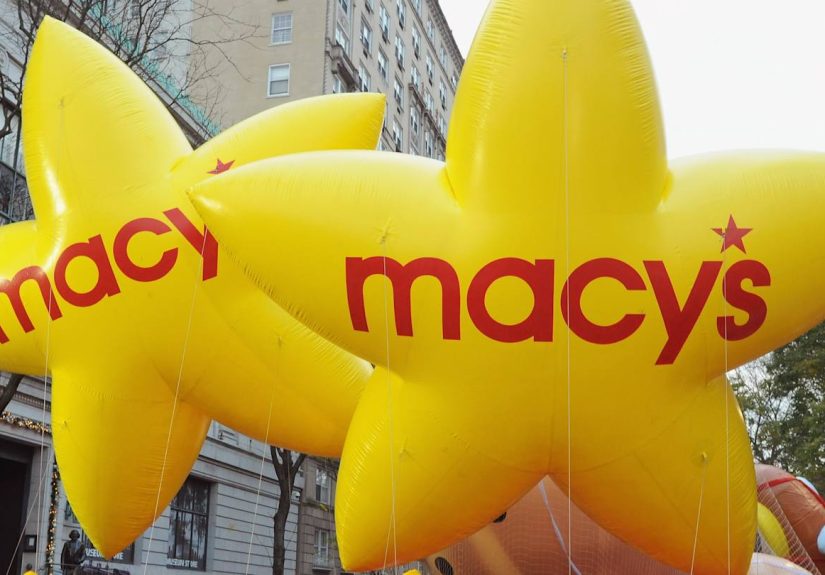
By 1927, Macy’s made a change that would redefine the parade forever. The live animals were retired from the route, and giant balloons took their place. The switch was practical, theatrical, and visionary all at once. It solved the problem of using live animals while creating a visual identity so distinctive that the parade would eventually become inseparable from balloons themselves.
Enter Felix the Cat, Exit the Camel Chaos
The first major balloon star was Felix the Cat in 1927. He did not float in the way modern parade balloons do, because helium was introduced the following year. Early balloons were carried rather than fully airborne, which feels like the perfect transitional stage between “we have zoo animals” and “we have mastered giant inflatable celebrity engineering.”
Still, the message was clear: Macy’s had found a better way to do wonder. Balloons could be bigger than life, playful without being unpredictable, and whimsical without occasionally sounding like they might bite someone. The parade kept its theatrical flair, but it swapped raw animal energy for designed fantasy.
That decision changed everything. It turned the Macy’s parade into a visual brand of its own. Instead of being remembered as the parade that once borrowed zoo animals, it became the parade of giant balloons, a status it still holds today.
Why This Strange Chapter Still Matters
The story of live animals in the Macy’s parade is not just a quirky footnote. It reveals the parade’s original purpose and personality. At its core, the parade was built to amaze. That mission has not changed. What has changed is the method.
In the 1920s, amazement came from real animals moving through real streets in real time. It was messy, noisy, and impossible to fully control. Later, amazement came from giant balloons, carefully engineered floats, and more sophisticated production. The tools evolved, but the goal stayed the same: turn Thanksgiving morning into a public fantasy everyone wants to watch.
This little slice of Macy’s Thanksgiving Day Parade history also captures something bigger about American holiday traditions. The customs we think of as timeless are often improvised, accidental, and a little weird in their earliest forms. Traditions do not drop from the sky fully formed. They get tested, revised, and occasionally rescued from ideas involving tigers on city streets.
That is part of what makes the parade so enduring. It did not begin as perfection. It began as ambition.
From Central Park Zoo to Cultural Icon
Once the live animals were gone, the parade became easier to scale, easier to repeat, and easier to recognize. Balloons made better photographs, better publicity, and better memories. They also helped Macy’s transform the parade from a local New York attraction into a national symbol of Thanksgiving and the holiday season.
But the memory of those early zoo-animal parades still lingers because it feels almost mythic now. The idea of elephants, camels, and bears moving through Manhattan under the Macy’s banner belongs to a version of America that was more improvisational, more showmanlike, and less nervous about mixing retail promotion with full-blown fantasy.
It also reminds us that the parade’s DNA has always included surprise. The giant balloons did not replace that spirit. They refined it. The modern parade may be safer, smoother, and more choreographed, but its heart still beats with the same old question Macy’s asked in 1924: how do you create a holiday spectacle nobody can ignore?
The answer used to involve live animals from the Central Park Zoo. Today it involves engineering, branding, and television magic. But the mission is unchanged. Stop the city. Delight the crowd. Bring in Santa. Start the season.
Experiences: What It Must Have Felt Like When Zoo Animals Marched Through Manhattan
To really understand this moment in parade history, it helps to stop thinking like a historian for a minute and start thinking like a person on the sidewalk in 1924. Imagine bundling up on a chilly Thanksgiving morning, squeezing into a crowd with your family, and hearing the noise before you can clearly see the parade. There is music somewhere ahead. There are clowns. There are costumes. There is shouting. Then the rumor starts moving through the crowd faster than the procession itself: the animals are coming.
That experience must have felt enormous. Manhattan was already a city of motion, but this was a different kind of movement. It was not commuters or carts or traffic. It was a holiday pageant that looked like a fairy tale had borrowed a department store budget. Children probably did what children still do at parades: craned their necks, stood on tiptoe, asked too many questions, and nearly stepped out where they should not. Adults likely tried to act composed while also privately admitting that yes, an elephant in a parade is pretty hard to top before lunch.
And then there was the soundscape. A modern parade has cheers, music, and announcers. An early parade with live zoo animals had all that plus the possibility of growls, snorts, calls, and the collective gasp of a crowd reacting in real time. It was not a silent visual wonder. It was a full-body experience. You did not merely watch it; you absorbed it.
For some spectators, the animals probably felt magical. For others, they probably felt a little alarming. That mix may be exactly why the story survived. Perfect spectacles can be beautiful, but unruly spectacles become legends. A giant balloon is memorable. A camel in midtown Manhattan on Thanksgiving morning is unforgettable.
There is also something oddly moving about the innocence of the whole enterprise. Macy’s was trying to create joy, surprise, and a sense of occasion grand enough to launch the holiday season. The methods were a bit chaotic by modern standards, but the emotional target was familiar: give families a shared memory. Give the city something cheerful. Give Santa a dramatic entrance. In that sense, the early parade is not as distant from today’s version as it first appears.
Maybe that is why this chapter continues to fascinate people. It captures the parade before it became a polished institution. Before the giant character balloons became the main event, there was a stranger version of holiday wonder: louder, less predictable, and somehow more human because it had not yet settled into a perfect formula. It still had rough edges. It still felt experimental. It still had the energy of adults saying, “What if we make this bigger?” and then continuing until the answer became “apparently, with zoo animals.”
That imagined curbside experience is the real bridge between then and now. Whether the crowd was staring at a lion, a camel, Felix the Cat, or a modern balloon soaring over Central Park West, the feeling was the same. Thanksgiving morning had turned into an event. The ordinary city had become a stage. And for a little while, wonder walked right down the street.