Table of Contents >> Show >> Hide
- First, what does “hun” usually mean?
- 8 explanations for why a woman calls you “hun”
- 1) She’s genuinely affectionate (the classic “honey” shortcut)
- 2) She’s flirting… softly (aka “I’m testing the waters”)
- 3) It’s her friendly default (customer-service warmth or social habit)
- 4) It’s cultural or regional (the “bless your heart” neighborhood)
- 5) She’s being nurturing (comfort mode: activated)
- 6) She’s signaling familiarity (or moving the relationship closer)
- 7) It’s a power move (overfamiliar, patronizing, or “I’m the adult here”)
- 8) She’s keeping things vague (distance, boundaries, or she forgot your name)
- How to tell which “hun” you’re getting
- How to respond when a woman calls you “hun”
- When “hun” is a red flag (and when it’s not)
- Conclusion
- of real-life experiences and scenarios
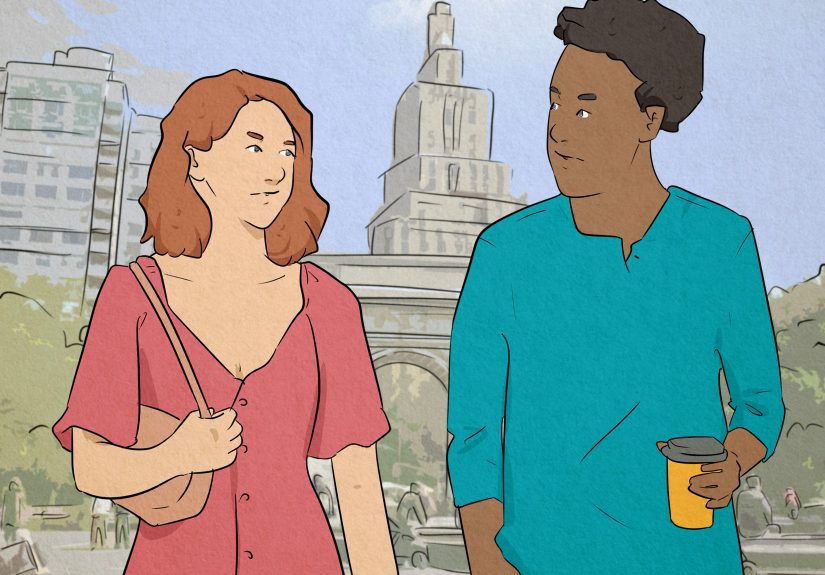
You just got called “hun.” Not your name. Not “sir.” Not even the safe, emotionally neutral “hey.” Just hunthe word that can feel like a warm cookie… or like someone just patted you on the head.
The truth is, the “hun” meaning depends on context: who’s saying it, where you are, what your relationship is, and whether it came with a smiley face or the verbal equivalent of an eyebrow raise. Below are eight common explanationsplus quick tips for reading the vibe and responding without turning it into a full-blown UN meeting.
First, what does “hun” usually mean?
In American English, “hun” is often a casual shorthand for “honey,” used as a term of endearment. It can signal affection, friendliness, familiarity, or (occasionally) mild condescension. Like many pet names in relationships, it’s a tiny word that can carry big emotional subtextkind of like “k.” but with better manners.
So if you’re wondering, “Is she flirting, being polite, or low-key roasting me?”you’re asking the right question. Let’s break it down.
One extra wrinkle: online, “hun” can also be used sarcastically (or affectionately) to describe the overly cheerful “Hey hun!” tone you’ll sometimes see in multi-level marketing DMs. If you’re not in a Facebook group being invited to “own your own business,” you can probably ignore that meaning.
8 explanations for why a woman calls you “hun”
1) She’s genuinely affectionate (the classic “honey” shortcut)
This is the most straightforward interpretation: she likes you and feels comfortable showing it. If you’re dating, in a relationship, or emotionally close, “hun” can function as a verbal hugquick, sweet, and easy to repeat.
Example: You tell her you had a rough day. She replies, “Aw hun, come here,” and suddenly you’re 40% less stressed and 60% more likely to order takeout together.
2) She’s flirting… softly (aka “I’m testing the waters”)
Sometimes “hun” is a low-risk flirt move. It’s playful and intimate without being as bold as “babe” or as on-the-nose as “I like your face.” If you’re still in the “are we flirting or are we just friendly?” phase, “hun” can be a gentle nudge toward romantic territory.
Clues: She uses it more when it’s just you two, pairs it with teasing, compliments, or lingering eye contact, and doesn’t call everyone else “hun.”
Example: “You’re trouble, hun.” Translation: “I’m enjoying this, and I’m seeing what you do next.”
3) It’s her friendly default (customer-service warmth or social habit)
Some people sprinkle pet names the way others sprinkle Parmesan: generously, automatically, and without checking if you asked for it. In customer service, hospitality, and some social circles, “hun” is a friendly filler word that keeps interactions warm and smooth.
This doesn’t mean she’s romantically interestedit may just mean she’s being personable, especially if she’s used to communicating in a comforting, upbeat style.
Example: The barista hands you your latte: “Here you go, hun.” Your love story with caffeine continues, but not necessarily with her.
4) It’s cultural or regional (the “bless your heart” neighborhood)
In parts of the U.S., terms of endearment are baked into everyday conversation. “Hun,” “hon,” “sweetie,” and “darlin’” can be common forms of addressespecially from older generations or in communities where warm, informal speech is the norm.
If she’s from a region where casual pet names are standard, “hun” might be less about you and more about her linguistic comfort zone. Think of it as conversational hospitality: the verbal equivalent of holding the door open.
Example: You’re traveling, she says “hun,” and you realize you’ve entered a zip code where everyone is either your friend or your auntie now.
5) She’s being nurturing (comfort mode: activated)
“Hun” can also signal caretaking energylike “I’m looking out for you.” This shows up when you’re sick, stressed, embarrassed, or quietly spiraling over an email you sent without proofreading.
It’s not always romantic; it can be supportive in a big-sister, mom-friend, or emotionally-attuned coworker way. The vibe is: you’re safe, you’re human, you’re allowed to breathe.
Example: You drop your keys for the third time and she goes, “Oh hun… here.” Not flirtationcompassion with a side of “please stop juggling metal.”
6) She’s signaling familiarity (or moving the relationship closer)
Sometimes “hun” is a shortcut to closeness. People use pet names to create a sense of “us,” even if you’re not officially anything. It can be her way of saying, “We’re comfortable. We have a vibe. We are not strangers.”
This can be sweet… or it can feel too familiar too fast. The key is whether the closeness feels mutual and welcome.
Relationship researchers sometimes describe couples as building a tiny “mini-culture” togethershared jokes, rituals, and yes, nicknames. A well-placed “hun” can be part of that private language: small on the surface, meaningful to the two people using it.
Example: A new friend texts, “Hun, you have to try this place.” She’s inviting you into her inner circle, not her wedding registry.
7) It’s a power move (overfamiliar, patronizing, or “I’m the adult here”)
Yes, sometimes “hun” is a little… pointed. In certain contextsespecially at work or during conflictpet names can sound like a subtle status play: “I’m calm, you’re emotional,” or “I’m in charge, you’re adorable.”
If “hun” arrives when she’s correcting you, dismissing your point, or talking down to you, it may be less endearment and more condescending nickname.
Example: You say, “I don’t think that’s right.” She replies, “Hun, I do this for a living.” That “hun” came with a tiny gavel.
8) She’s keeping things vague (distance, boundaries, or she forgot your name)
Sometimes the simplest explanation is… logistics. Pet names can be handy when someone doesn’t know (or can’t remember) your name, or when she’s intentionally avoiding intimacy while still sounding pleasant.
“Hun” can be a polite bufferfriendly enough to be kind, vague enough to keep you at arm’s length. If she uses it in a detached tone, only in public, or only when she needs something quick, it might be her way of maintaining boundaries.
Example: “Hun, can you move your car?” That’s not a love letter. It’s a neighborhood PSA.
How to tell which “hun” you’re getting
Because “hun” is context-heavy, you’ll get the best read by stacking a few clues together instead of betting everything on one syllable.
Pay attention to context
- Setting: One-on-one vs. group; date night vs. workplace; casual hangout vs. heated argument.
- Frequency: Is “hun” rare and specialor her default setting for all humans with pulses?
- Who else gets “hun”: If the Uber driver, her cousin, and the dog all get “hun,” it’s probably not a romantic signal.
Listen to tone and timing
- Warm + gentle: likely affection or nurturing.
- Playful + teasing: could be flirting.
- Sharp + corrective: could be patronizing or passive-aggressive.
Notice the “extras” (words, emojis, and body language)
In texts, a “hun 😊” lands differently than a “hun.” In person, a smile, soft voice, and relaxed posture usually signal friendliness. A tight smile and clipped delivery? That’s “hun” with an edge.
How to respond when a woman calls you “hun”
The best response matches the moment. You’re not trying to decode an ancient prophecyyou’re just responding like a normal adult who occasionally overthinks syllables (welcome to the club).
If you like it
- Mirror lightly: “Thanks, hun” or “Appreciate you” (depending on closeness).
- Turn it playful: “Is this my official nickname now?”
- Upgrade with consent: “I like when you call me that.” (Simple. Direct. Charming.)
If you’re unsure
- Ask with humor: “Okay, I have to knowam I getting ‘hun’ as a friend, or ‘hun’ as in ‘I should put on cologne’?”
- Look for consistency: If it repeats and the vibe stays warm, it’s probably positive.
If you don’t like it
- Keep it kind but clear: “Heysmall thing, I’m not a big ‘hun’ person. Could you use my name?”
- Stay calm: People often use pet names habitually, not maliciously. Give her a chance to adjust.
When “hun” is a red flag (and when it’s not)
Most of the time, “hun” is harmlesssweet, friendly, or cultural. But if it shows up as a weapon, that’s different.
Potential red-flag patterns
- It appears mainly during arguments to dismiss you (“Hun, calm down”).
- It’s paired with belittling behavior (eye rolls, sarcasm, talking over you).
- It ignores your boundaries after you’ve asked her to stop.
If any of those are happening, the issue isn’t the wordit’s the respect level behind it. In healthy communication, a nickname should feel like closeness, not control.
Also worth noting: even when pet names are affectionate, they can occasionally backfireespecially if one person loves them and the other feels infantilized, controlled, or emotionally “managed.” If the nickname doesn’t feel good, that’s useful data, not drama.
Conclusion
So what does it mean if a woman calls you “hun”? It can mean affection, flirting, friendliness, cultural habit, comfort, or (occasionally) shade. The best way to interpret it is to watch the whole message: tone, context, frequency, and how she treats you overall.
And if you’re still not sure? You can always do the bravest thing in modern dating: ask a simple, human question. Yes, it’s terrifying. No, it won’t kill you. (Probably.)
of real-life experiences and scenarios
Because “hun” is a tiny word with a surprisingly large range, the best way to understand it is to picture how it shows up in everyday life. Here are a few composite, experience-based scenariosthe kind people recognize instantly because they’ve lived some version of them.
Scenario 1: The “hun” that feels like hot cocoa
You’re on your third bad week in a row: sleep is trash, your inbox is multiplying, and your confidence is hanging on by a thread. You mention it casuallytrying to be chill, failing spectacularly. She leans in and says, “Hey, hun. You’re doing a lot. It’s okay to be tired.” The word lands softly. It’s not dramatic, not performative. It’s an emotional exhale. In moments like this, “hun” is shorthand for reassurance: I see you, and you’re not alone.
Scenario 2: The flirty “hun” that dares you to respond
You’re texting after a fun night out. You send something mildly confident (congrats on your bravery). She replies, “Sure, hun 😉.” That wink is doing cardio. The “hun” here isn’t a generic pet nameit’s a playful dare. If you match the energy, the conversation warms up. If you ignore it, it cools down. This is “hun” as a conversational breadcrumb: not a proposal, but definitely not a dead end.
Scenario 3: The customer-service “hun” that means nothing (and that’s okay)
You’re at a diner. The waitress calls you “hun” while refilling your coffee. She calls the next table “sweetie” and the couple by the window “darlin’.” It’s friendly, efficient, and meant to make the room feel welcoming. If you mistake it for flirtation, you might end up over-tipping for a fantasy you invented. (Tip well anywayjust for the pancakes.)
Scenario 4: The “hun” that’s secretly a boundary line
You ask her out. She answers warmly but doesn’t accept: “Aw, hun, you’re sweet, but I’m not dating right now.” That “hun” can be gentle distance. It softens the message while keeping the line firm. It’s her saying, “I’m being kind, but I’m also being clear.” If you respect it, you come out looking emotionally mature. If you argue with it, you become a cautionary tale she tells her group chat.
Scenario 5: The sarcastic “hun” that comes with invisible subtitles
You walk into a disagreement like it’s a casual conversationconfident, unprepared, and carrying exactly zero evidence. She looks at you, pauses, and says, “Hun… no.” The pause is the whole sentence. This isn’t affectionate. This is “I’m ending the discussion because I’m not auditioning for a debate club tonight.” If “hun” consistently shows up with that tone, it may be worth checking the dynamic: is the relationship playful, or is it sliding into disrespect?
In the wild, “hun” is usually a social shortcutwarmth, humor, or ease. When it feels good, enjoy it. When it feels off, trust that feeling and communicate. The goal isn’t to become a pet-name detective; it’s to build interactions where you both feel respected, understood, and (ideally) a little amused.