Table of Contents >> Show >> Hide
- Why Fall Is the Perfect Season for a Home Reset
- 1. Start With the Spaces That Annoy You Daily
- 2. Think Small, Specific, and Winnable
- 3. Declutter Before You Buy a Single Bin
- 4. Use Easy Decision Rules When You Get Stuck
- 5. Get the Outgoing Stuff Out Fast
- 6. Organize for the Season You Are Entering
- 7. Build Tiny Habits That Keep Clutter From Coming Back
- A Simple Fall Decluttering Plan You Can Actually Follow
- The Biggest Fall Decluttering Mistakes to Avoid
- What This Looks Like in Real Life: Fall Decluttering Experiences From Everyday Homes
- Final Thoughts
There is something about fall that makes people suddenly want to become the kind of person who owns matching baskets, remembers where the tape is, and does not have three lonely flip-flops hiding in the hall closet. Summer chaos starts fading, routines come back into focus, and your home begins whispering, “Hey, maybe now would be a great time to deal with that drawer.”
Professional organizers love this season for a reason. Fall is a natural reset. Kids are back in school, schedules tighten up, cooler weather keeps us indoors more often, and the holiday season is quietly warming up in the bullpen. In other words, this is not just a good time to declutter. It is one of the smartest times to do it.
So what do the pros actually recommend when the leaves start turning and the clutter starts glaring? The advice is refreshingly practical. No dramatic lifestyle reinvention required. No need to label your entire soul. Just smart systems, better habits, and a few ruthless decisions about those mystery cords.
Why Fall Is the Perfect Season for a Home Reset
Spring cleaning gets all the publicity, but fall might be the more useful season for real-life decluttering. In spring, people often focus on deep cleaning and freshening things up. In fall, the goal is different: make your home work better for the months ahead. That means easier mornings, less visual noise, better closet access, a pantry that does not attack you when you open the door, and an entryway that stops acting like a dumping ground for shoes, bags, mail, and whatever else rolled in with the week.
Pro organizers consistently say that seasonal transitions make it easier to decide what stays and what goes. Why? Because your habits become more obvious. You can clearly see what you wore all summer, what you ignored all season, what no longer fits your routine, and what is simply taking up premium square footage for no good reason. Fall gives you a built-in decision filter: Will I realistically use this in the months ahead?
1. Start With the Spaces That Annoy You Daily
If you begin in the attic with a box of sentimental prom accessories from 2009, congratulations: you have chosen the hardest possible route. Pro organizers usually recommend the opposite. Start where clutter interrupts everyday life.
The kitchen and pantry
Kitchens tend to collect clutter with Olympic-level talent. Water bottles multiply. Takeout packets breed overnight. Half-used bags of pasta play hide-and-seek behind expired broth. Fall is a smart time to reset this space because cooking and hosting usually ramp up as the weather cools down.
Begin by tossing expired food, wiping shelves, and grouping like items together. Baking supplies should live together. Snacks should stop living in four different zip-top bags across three shelves. Put the items you use most often at eye level, and move specialty gadgets out of the “prime real estate” zone unless you are genuinely making waffles every single Saturday.
The entryway or mudroom
If clutter had a favorite stage, it would be the front door area. This is where backpacks land, shoes pile up, keys disappear, and unopened mail develops a personality. A fall refresh here can make your whole home feel calmer in about 20 minutes.
Give each person a realistic landing zone. Not an aspirational Pinterest fantasy. A realistic one. Hooks for coats and bags, a tray or bowl for keys, a basket for shoes, and one spot for incoming paper. If your household usually drops everything on a bench, work with that habit instead of fighting it. Good organization is not about forcing perfection. It is about making the right thing the easy thing.
The closet
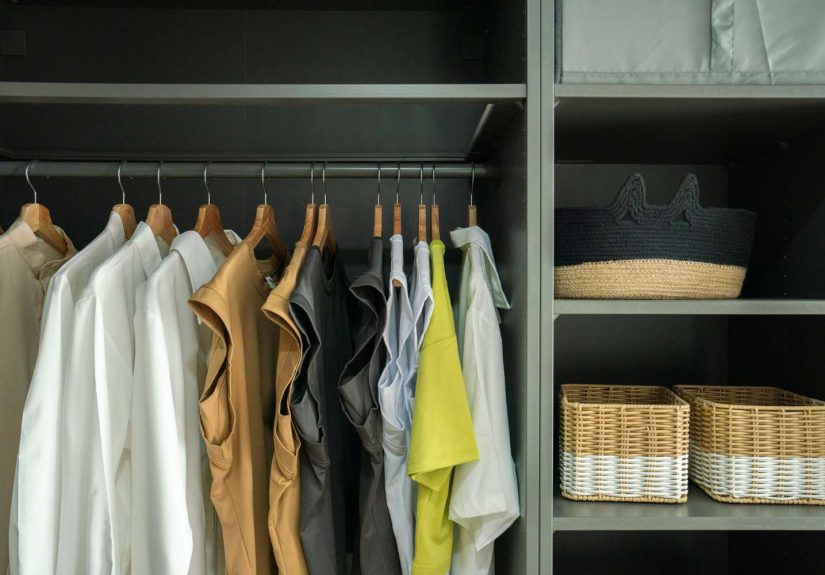
Closet decluttering in fall is basically seasonal common sense with a hanger budget. Swap out summer-heavy items, bring forward the layers you actually wear, and edit as you go. If something did not get worn this past season, does not fit, feels uncomfortable, or makes you mutter “maybe someday,” it may be time to let it go.
Be honest here. Your closet should serve the life you live, not the life where you attend weekly rooftop parties in a dress that still has tags on it.
2. Think Small, Specific, and Winnable
One of the most repeated pieces of advice from professional organizers is beautifully unglamorous: stop trying to declutter your whole house in one heroic weekend. That plan usually ends with a giant mess, sore knees, and a renewed respect for avoidance.
Instead, work in small categories or bite-size zones. Not “the kitchen.” Try “travel mugs.” Not “the bedroom.” Try “nightstand drawer.” Not “paper clutter everywhere,” which is not a category so much as a cry for help. Try “mail,” “school papers,” or “receipts.”
Small wins matter because they build momentum. You get a visible result, a little dopamine, and the confidence to keep going. Professional organizers often recommend setting a timer, too. Fifteen minutes works. Thirty minutes works. Even an hour works. The point is to stop before your brain turns into mashed potatoes. A short, focused session beats an all-day decluttering marathon every time.
3. Declutter Before You Buy a Single Bin
This one should be stitched onto a decorative pillow and placed in every home goods store: do not buy organizing products before you declutter.
Containers are helpful, but they are not magic. A cute basket filled with junk is still a basket filled with junk. Pro organizers regularly warn against buying bins too early because you do not yet know what you are keeping, how much space you actually need, or what kind of storage fits your real habits.
First, edit the stuff. Then measure the space. Then buy containers that suit what remains. This order matters. Otherwise, you are just spending money to make clutter look more coordinated.
Once you do reach the organizing-product stage, keep it simple. Use clear bins where visibility matters, labels where multiple people share a system, and uniform hangers if your closet needs an instant visual reset. But do not confuse supplies with progress. The real victory happened when you got rid of the extra stuff.
4. Use Easy Decision Rules When You Get Stuck
Decluttering gets weird when emotions show up. Suddenly you are negotiating with a chipped mug like it is a family attorney. That is why the pros love decision rules. They reduce drama and speed up the process.
The keep, donate, discard method
It is classic because it works. As you sort, put items into one of three categories: keep, donate, or discard. This keeps the process moving and prevents the dreaded “I’ll decide later” pile from becoming a side quest that lasts until Thanksgiving.
The one-in, one-out rule
If new boots come in, an old pair goes out. If you buy a new appliance, the less useful one leaves. This rule is especially effective in closets, kitchens, and kids’ spaces where items tend to accumulate without asking permission.
The last-season reality check
If you did not wear it, use it, or even think about it during the relevant season, that tells you something. Not everything has to earn its place through constant use, but items should have a clear purpose. “Just in case” is not always a purpose. Sometimes it is just clutter wearing a fake mustache.
The “can I replace it easily?” test
This is helpful for duplicates and low-stakes items. If something is inexpensive, easy to replace, and rarely used, you probably do not need five backups. Keep what is useful. Release what is crowding your space for no meaningful return.
5. Get the Outgoing Stuff Out Fast
Many decluttering efforts fail at the final step. People sort beautifully, create donation bags, and then leave those bags in the trunk for six weeks like a rotating museum exhibit called Almost Helpful.
Professional organizers often stress speed here. Once you decide something is leaving, move it out quickly. Schedule a donation pickup, drop items at a charity the same week, or list sale-worthy pieces immediately. Some organizers even recommend giving yourself a firm deadline of a few days so the outgoing pile does not boomerang back into your home.
This is especially important in fall, when the calendar fills up fast. If you wait until the holiday rush starts, those donation bags may spend the entire season sitting in your guest room looking smug.
6. Organize for the Season You Are Entering
One of the most useful things pro organizers emphasize is this: organization should reflect your current life. Not last summer’s life. Not your fantasy life. Your actual, everyday life.
In fall, that usually means putting jackets, boots, umbrellas, lunch gear, homework supplies, and cooler-weather kitchen tools within easy reach. It also means reducing friction in the places that get busy: the morning routine zone, the dinner-prep zone, the after-school drop zone, and the closet where layering season begins its annual campaign of confusion.
Labels can help here, especially in shared spaces. So can open bins, trays, and visible categories. The goal is not to make your home look like a retail display. The goal is to make it obvious where things belong so everyone can maintain the system without needing a five-slide presentation.
7. Build Tiny Habits That Keep Clutter From Coming Back
Decluttering is important. Maintenance is where the real magic lives. The pros are big on simple routines that stop clutter before it settles in and signs a lease.
A nightly 15-minute pickup can reset the kitchen, living room, and entryway before bed. A “one-touch” habit can help prevent half-finished messes, meaning you handle an item fully instead of moving it from one random surface to another. A daily paper check can keep mail from becoming a coffee-table ecosystem. And a weekly reset of your high-traffic zones can keep your home from drifting back toward chaos.
These habits are not glamorous. They are just effective. Which, honestly, is more useful.
A Simple Fall Decluttering Plan You Can Actually Follow
Weekend 1: Closet reset
Edit clothes, shoes, and accessories. Pull forward what fits the coming season. Donate what you skipped last year and what no longer suits your life.
Weekend 2: Pantry and fridge cleanup
Toss expired items, group food by category, and create easier zones for breakfast, lunch packing, snacks, and baking.
Weekend 3: Entryway and paper control
Add hooks, baskets, and a defined paper spot. Reduce what lands there in the first place.
Weekend 4: Living room and bedroom surfaces
Clear side tables, nightstands, and catchall corners. Remove anything that does not belong or no longer supports how you use the room.
The Biggest Fall Decluttering Mistakes to Avoid
Trying to do everything at once. Overwhelm is not a productivity strategy.
Buying storage too early. Edit first, then organize what remains.
Keeping things out of guilt. Your home is not obligated to store every bad purchase forever.
Ignoring daily problem zones. The messy front hall matters more than the perfectly alphabetized holiday ribbon box.
Leaving donation bags in the house. Once items are out, keep them moving.
What This Looks Like in Real Life: Fall Decluttering Experiences From Everyday Homes
In real homes, fall decluttering rarely starts with background music and a flawless set of matching containers. More often, it starts when someone opens a closet and a beach tote falls out like it has been waiting months for its dramatic scene. Or when the first chilly morning arrives and nobody can find a wearable jacket because summer gear is still hogging the front row.
A common experience is the “closet wake-up call.” You pull out sweaters, realize half of them are pilled, scratchy, or somehow no longer your style, and suddenly understand why getting dressed has felt harder than it should. Once that closet is edited down, people often say the space feels bigger even when it is exactly the same size. That is the trick of decluttering: less stuff creates more breathing room, both physically and mentally.
Another classic fall moment happens in the kitchen. You go looking for cinnamon and discover three opened containers, two mystery soup packets, and a bag of lentils with the confidence of a pantry item that knows it expired during a previous presidential administration. After a proper pantry reset, meal prep gets easier, grocery shopping gets smarter, and there is far less duplicate buying. That alone can make people feel like they suddenly have their life together, or at least their pasta shelf.
Entryways tell their own story. Families often do not realize how much stress starts at the door until the area is working better. When coats have hooks, shoes have a basket, and keys stop vanishing into the void, mornings feel less frantic. Parents spend less time saying, “Where is your backpack?” Kids learn where things go. Adults stop setting important mail on random surfaces like that is a sound long-term filing strategy. It is not a flashy transformation, but it is the kind people feel every single day.
There is also an emotional side to fall decluttering that shows up quietly. People often notice that they become more selective after one or two successful projects. Once you experience the relief of opening a tidy linen closet or a nightstand drawer that is not stuffed with old receipts and five dead pens, you begin to crave that ease elsewhere. Decisions get clearer. The question shifts from “Should I keep this?” to “Does this deserve space in my home right now?” That is a powerful mindset change.
And yes, there can be resistance. Sentimental items, hobby supplies, backup gadgets, and “good boxes” all like to make compelling speeches. But many people find that once they start sorting by category and focusing on the season ahead, the choices feel less emotional and more practical. They are not getting rid of their identity. They are making room for a home that supports real life better.
The biggest payoff usually is not that a room looks prettier, though that is nice. It is that the home feels lighter. Easier to clean. Easier to maintain. Easier to enjoy. That is what professional organizers are really helping people create in the fall: not perfection, but relief. And relief, frankly, looks fantastic in every room.
Final Thoughts
The best fall decluttering tips are not complicated. Start where life feels messy. Work in small categories. Edit before you organize. Use simple rules when decisions get sticky. Get donations out fast. And build tiny habits that keep clutter from creeping back in like an uninvited houseguest with excellent hiding skills.
Professional organizers are not selling a fantasy where no one owns a junk drawer. They are showing people how to make their homes easier to live in. That is what makes fall decluttering so satisfying. You are not just getting rid of stuff. You are clearing the runway for a calmer, more functional season ahead.