Table of Contents >> Show >> Hide
- What Makes a Fairy-tale Kitchen Feel Like a Fairy Tale?
- The Signature Ingredients of the London Storybook Look
- How to Steal This Look Without Rebuilding Your Entire Kitchen
- Mistakes That Kill the Magic
- Why This Look Keeps Winning
- Experience the Look: What It Feels Like to Live With a Fairy-tale Kitchen in London
- Final Thoughts
Some kitchens are built for cooking. Some are built for showing off. And then there are the rare, dangerous ones that make you want to bake a pie, buy wildflowers, and suddenly start referring to your wooden spoon as “my favorite old thing.” That is the energy of a fairy-tale kitchen in London: cozy but not cramped, charming without becoming costume drama, and polished enough to feel intentional rather than accidental.
The appeal of this look is simple. It blends cottage warmth, vintage character, and city-smart practicality into one deliciously layered space. You get the romance of an English country kitchen, but edited for modern life. No one is churning butter by candlelight here. There is storage. There is function. There is probably very good tea.
If you want to steal this look, the trick is not to copy every surface inch for inch. The real secret is understanding why it works. A fairy-tale kitchen feels collected, not showroom-perfect. It uses soft color, tactile materials, gentle lighting, and a few slightly whimsical details to create a room that feels lived in and loved. The magic is in the balance: practical bones, poetic finish.
What Makes a Fairy-tale Kitchen Feel Like a Fairy Tale?
A storybook kitchen is not just “cute.” Cute is a mug with a fox on it. A fairy-tale kitchen is mood, memory, and material working together. It suggests history, comfort, and a little fantasy, even if the house is in the middle of a very real city with very real parking issues.
1. A Soft, Lived-In Color Palette
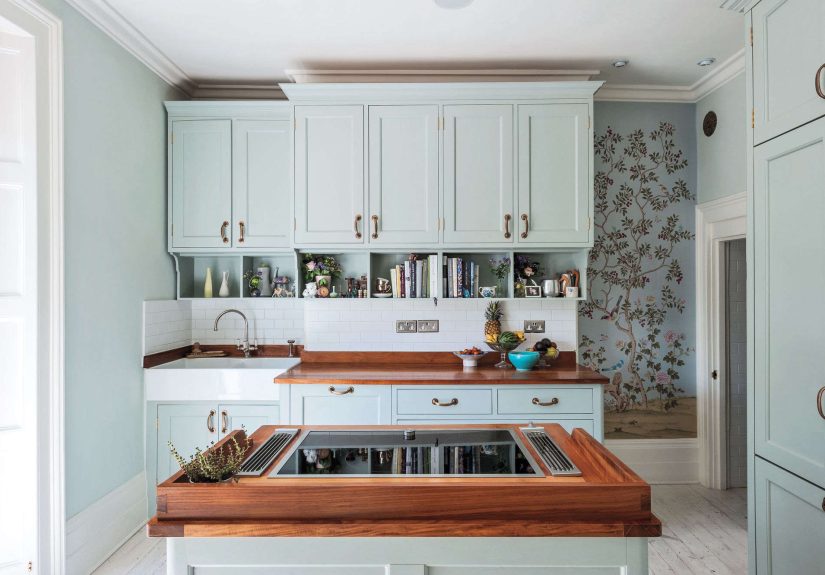
The first ingredient is color that feels hushed rather than loud. Think chalky greens, creamy whites, dusty blues, muted mushroom, soft gray, warm putty, and faded blush. These shades do not shout for attention; they create atmosphere. In a London kitchen, where natural light may be moody and ever-changing, this kind of palette feels especially right. It reflects light gently and gives the room that cloudy-day glow that makes even toast look cinematic.
If you want the look without a full renovation, start with painted cabinetry. A muted green or soft off-white can transform standard cabinets into something more layered and characterful. The goal is not crisp, sterile perfection. You want a finish that feels friendly, a little matte, and beautifully unfussy.
2. Cabinets With Good Manners
Fairy-tale kitchens do not need flashy cabinetry. In fact, the more restrained the cabinet profile, the better. Shaker-style doors are a natural fit because they are timeless, versatile, and quietly elegant. They give you structure without drama, which leaves room for the rest of the kitchen to be charming. Think of them as the straight man in a comedy duo. The wallpaper, brass, or ceramics can do the flirting.
Cabinetry should feel grounded. Floor-to-ceiling storage can work beautifully in a small kitchen, especially when painted in a single soft color that visually calms the room. If the kitchen is compact, integrating storage up high helps preserve the lower half of the room for breathing space.
3. Natural Wood That Warms Everything Up
Nothing breaks the chill of a polished kitchen faster than wood. Butcher block counters, open oak shelves, a weathered table-as-island, or a simple stool in aged timber can keep the room from drifting into preciousness. Wood introduces warmth, imperfection, and that all-important sense that this kitchen belongs to actual humans who chop herbs and misplace measuring spoons.
In a fairy-tale kitchen, wood should not feel too slick or glossy. You want grain, softness, and maybe a little patina. A kitchen that looks as though it would survive both a dinner party and a pie disaster is the sweet spot.
4. Open Shelving That Feels Curated, Not Chaotic
Open shelving is one of the fastest ways to bring cottage kitchen ideas into a city space. It opens the room visually, gives everyday objects decorative value, and lets you show off the bits that give a kitchen personality: ironstone bowls, stacked plates, amber glass, cookbooks with worn spines, a teapot that has seen things.
But let us be honest: open shelving can also become a shrine to dust and cereal boxes. To keep the fairy-tale alive, edit ruthlessly. Display pieces in useful little groups. Mix practical items with a few romantic touches like a vase of branches, a ceramic pitcher, or a brass candlestick. This is not a storage unit. It is a still life that occasionally serves soup.
5. An Apron-Front Sink With Presence
If the fairy-tale kitchen had a lead actor, the farmhouse sink would be auditioning hard. An apron-front sink adds old-world character and instantly gives the room a more rooted, heritage feel. It is practical, sculptural, and exactly the kind of detail that makes a kitchen feel designed rather than assembled.
Pair it with bridge or gooseneck faucets in aged brass, polished nickel, or even understated black if you want a slightly sharper edge. The sink area should feel useful, but it can also be a little romantic. A striped hand towel, a soap bottle in amber glass, and a tiny lamp nearby can do a lot of heavy lifting.
The Signature Ingredients of the London Storybook Look
A London kitchen with fairy-tale appeal often mixes city compactness with cottage softness. It is rarely enormous, which is part of its charm. These rooms tend to use every inch wisely, but they never feel clinical. Here are the details that create that particular magic.
Wallpaper or Paneling That Adds Whimsy
One of the most effective ways to push a kitchen from merely pretty into memorable territory is through the walls. Beadboard, tongue-and-groove paneling, or a delicate wallpaper can add instant narrative. Chinoiserie, botanical prints, tiny florals, or subtle heritage patterns all work beautifully when balanced with simpler cabinets and classic counters.
The key is restraint. One statement wall, a breakfast nook wrapped in pattern, or a backsplash area framed by painted paneling can be enough. You want a chapter of romance, not an entire novel exploding across the walls.
Layered Lighting Instead of One Sad Ceiling Fixture
Nothing ruins a dreamy kitchen faster than lighting that feels like an interrogation room. A fairy-tale kitchen needs layers: overhead task lighting, a pendant or two, under-cabinet glow, sconces if possible, and maybe even a tiny table lamp on the counter. Yes, a lamp in the kitchen. It sounds odd until you try it and suddenly your evening tea feels like a scene from a movie nobody wants to pause.
Warm bulbs make a huge difference. The goal is gentle illumination that flatters surfaces, ceramics, and people who are trying to look emotionally stable while making pasta on a Tuesday night.
Vintage or Vintage-Looking Hardware
Hardware is where small details start earning their paycheck. Cup pulls, bin pulls, unlacquered brass knobs, iron latches, or simple aged-bronze handles can shift the whole tone of the kitchen. Fancy hardware is not required. Character is.
Choose finishes that look better with age rather than worse. A fairy-tale kitchen should be allowed to soften over time. That is part of the point. It is not a museum display; it is an evolving room.
Textiles That Soften the Edges
One reason English cottage kitchens feel so welcoming is that they are not afraid of fabric. Café curtains, a pleated shade, a runner, a seat cushion, or even a skirt below a sink can add softness and visual warmth. In a room with lots of hard surfaces, textiles make the space feel inhabited.
Stick to simple patterns: ticking stripes, small florals, faded checks, or soft solids. You want the fabric to whisper, not yell.
How to Steal This Look Without Rebuilding Your Entire Kitchen
The good news is that you do not need a London townhouse, a fairy godmother, or a catastrophic renovation budget to get close to this vibe. A lot of the charm comes from styling, materials, and better choices at the detail level.
Start With the Cabinets
If your cabinets are structurally sound, paint them. This gives the biggest visual payoff for the least emotional damage. Choose a quiet, earthy tone and swap out hardware for something more classic. Suddenly your kitchen has a backstory.
Replace One Hard Surface With Something Warmer
If your whole kitchen feels cold, change one major material. Add butcher block to an island. Install wood shelves. Bring in a freestanding wooden hutch. Mix stone with wood instead of leaning entirely on glossy finishes. Contrast is what makes the room feel layered.
Style Open Shelves Like a Human, Not a Catalog
Use pieces you genuinely love and actually touch. Stacked dishes, wooden boards, a crock of utensils, a bowl of lemons, a framed little print, and a vessel with seasonal branches will always look better than twelve identical fake props pretending to be spontaneous.
Soften the Lighting Immediately
Put overhead lights on dimmers if you can. Add a small lamp. Swap harsh bulbs for warm ones. Bring in a shaded sconce. This is one of the quickest ways to make a kitchen feel expensive, calm, and just slightly enchanted.
Let Imperfection Stay in the Room
The biggest mistake people make when chasing a storybook kitchen is over-correcting. If every item is brand new, perfectly matched, and aggressively coordinated, the room loses its soul. Keep the old stool. Use the inherited bowl. Let your wooden board show knife marks. A fairy-tale kitchen should feel discovered, not mass-produced.
Mistakes That Kill the Magic
Even the prettiest English cottage kitchen can lose its charm with a few wrong turns.
Too Much Clutter
Collected does not mean crowded. When every counter is packed and every shelf is overloaded, the room stops feeling cozy and starts feeling tired. Edit regularly. The romance needs breathing room.
Too Many Trendy Finishes
A fairy-tale kitchen works because it feels timeless. If you pile on five trend-forward features at once, the look dates itself fast. Choose classic forms first, then add personality through paint, textiles, lighting, and objects.
Ignoring Function
Pretty is great. Pretty that makes you hate making coffee is not. Make sure your prep zones work, your storage is sensible, and your lighting is useful. A magical kitchen should still be able to handle Tuesday breakfast and Sunday roasting without a meltdown.
Why This Look Keeps Winning
The reason people keep falling for the fairy-tale kitchen in London aesthetic is that it answers two needs at once. It gives us beauty, yes, but it also gives emotional comfort. In a world full of hard edges, fast scrolling, and rooms designed mainly to photograph well, this style offers something gentler. It invites staying. It rewards routine. It turns ordinary domestic life into something a little more cinematic.
And that may be the real trick worth stealing. Not just the shelves or the sink or the aged brass tap, but the idea that a kitchen can be efficient and still feel personal. Useful and still whimsical. Grown-up and still a tiny bit enchanted.
Experience the Look: What It Feels Like to Live With a Fairy-tale Kitchen in London
Living with this kind of kitchen is less about décor and more about atmosphere. In the morning, the room does not blast you awake. It eases you into the day. Light hits the painted cabinets softly. The kettle starts muttering from the stove. A wooden counter feels warmer under your hands than stone ever could. Even before breakfast is made, the room feels like it is on your side.
That is the strange genius of a storybook kitchen. It turns routine into ritual. Slicing sourdough feels mildly heroic. Washing berries becomes a visual event. Stirring soup on a gray afternoon suddenly has emotional range. You are not just reheating leftovers; you are participating in a small domestic masterpiece with very good shelving.
There is also something deeply reassuring about the way a fairy-tale kitchen ages. A brass handle darkens a little. A cutting board collects marks. The mug rack becomes home to favorites rather than random purchases. Nothing feels too precious to use, which is exactly why the room becomes more lovable over time. It gains memory instead of losing value.
Guests notice it immediately, even if they cannot explain why. They linger. They lean against the counter longer than they planned to. They ask where you found the lamp, or the pitcher, or the little shelf rail, but what they really mean is: why does this room feel so good? The answer is that it feels human. It does not try too hard. It is polished, yes, but it still leaves room for steam on the windows and a cookbook open to a page with butter stains.
For families, this look works because it is forgiving. Open shelves can display beautiful dishes, but they can also hold cereal bowls that get used every day. A farmhouse sink handles real mess. Painted cabinets hide fingerprints better than glossy ones. A kitchen runner softens footsteps. Hooks, rails, baskets, and ledges make the room more functional without stripping out the charm. It is not just pretty for photographs; it is good at being lived in.
For people in smaller homes or apartments, the style is especially appealing because it proves that coziness can be a strength. A compact London kitchen does not need to pretend it is a grand suburban showroom. In fact, the tighter footprint often makes the romance stronger. Every shelf counts. Every light source matters. Every object has to earn its place. The result is a room with intimacy, which is something many oversized kitchens would frankly kill for.
Emotionally, the experience is part nostalgia and part escape. The kitchen feels rooted in the past, but not stuck there. It may borrow from farmhouse traditions, cottage details, and vintage finishes, yet it still supports modern life. You can hide the toaster, charge your phone, unload groceries, and still feel as though you are living in a slightly more poetic version of reality. That blend is rare.
Most of all, this kind of kitchen changes how you move through your day. You light a candle before dinner, not because you are entertaining, but because the room invites the gesture. You buy flowers more often because there is always a pitcher that would love them. You tidy the counter because you actually want to see the wood. The kitchen teaches you to pay attention, and in return it gives you a space that feels calm, expressive, and unexpectedly restorative.
So yes, steal this look. Borrow the painted cabinets, the shelf styling, the soft colors, the apron sink, and the warm little lamp. But steal the feeling, too: the sense that a kitchen can be the coziest room in the house without giving up function, and the prettiest room in the house without becoming fussy. That is the real fairy tale. And unlike most fairy tales, this one can start with a can of paint and better light bulbs.
Final Thoughts
A fairy-tale kitchen in London works because it mixes romance with restraint. It has charm, but it also has discipline. It uses timeless forms, warm materials, and a little whimsy to make everyday life feel better. Whether you borrow one detail or the whole mood board, the lesson is the same: the most memorable kitchens are not the ones that look the newest. They are the ones that feel the most alive.