Table of Contents >> Show >> Hide
- The Plot Twist: It’s Not “Just Stress”
- What the Data Actually Says (And Why It Matters)
- How We Got Here: A Tour of the Pressure Cooker
- The Hidden Bill: What Burnout Costs Patients and Health Systems
- What Helps: From “Wellness Posters” to Real Fixes
- If This Were a Podcast Episode: A Simple Run-of-Show
- What Patients and Communities Can Do (Yes, You’re in This Episode Too)
- Field Notes: Composite Experiences from the Front Lines (Added Section)
- 1) The ICU nurse who stopped feeling anythinguntil she got home
- 2) The resident who learned “work-life balance” is sometimes a scheduling myth
- 3) The emergency physician who dreaded the waiting room more than the trauma bay
- 4) The primary care clinician buried under clicks
- 5) The quiet moment that changed the tone of a whole unit
- Conclusion: The Point of the Episode (and the Plan)
Picture a job where you’re expected to be calm during chaos, compassionate under pressure, and accurate while running on
the kind of sleep schedule that would make a toddler file a complaint. Welcome to modern health carewhere the
mental health crisis in health care isn’t a side story anymore. It’s the main plot, the B-plot, and the
post-credits scene.
This article reads like podcast show notesbecause that’s the point. If you’re producing, pitching, or listening to a
“clinician well-being” episode, you need more than generic “self-care” tips and a scented candle budget. You need the
data, the drivers, and the fixes that actually reduce healthcare worker burnout, depression, anxiety,
and the quiet “I can’t do this forever” that’s pushing people out of the field.
We’ll pull from major U.S. public health agencies, professional medical associations, nursing workforce research, and
peer-reviewed journals. Then we’ll translate it into plain Englishwith just enough humor to keep us all from crying
into our badge reels.
The Plot Twist: It’s Not “Just Stress”
When people say “health care is stressful,” they often mean it the way they say “airports are crowded.” True, but also
wildly insufficient.
Burnout is realand it’s not a personality flaw
Clinician burnout is usually described as emotional exhaustion, cynicism (or depersonalization), and a
reduced sense of effectiveness. It’s not “you’re weak.” It’s “the system is asking humans to function like
interchangeable parts.”
But burnout isn’t the only mental health issue on the table
In health care workplaces, burnout often overlaps with clinical conditions like depression,
anxiety, sleep disorders, and trauma-related symptomsespecially after repeated exposure to suffering,
death, violence, and moral dilemmas.
Moral injury: when the job breaks your values, not your stamina
Many clinicians describe something deeper than exhaustion: moral injury. That’s what happens when
clinicians know the right thing to do for a patient but can’t do it because of constraints like staffing, time, access,
insurance barriers, or administrative rules. It feels less like “I’m tired” and more like “I’m trapped.”
If this were a podcast, this is where you’d hear a long pause. Because it’s hard to joke about values colliding with
reality.
What the Data Actually Says (And Why It Matters)
The good news: there are signs of improvement in some groups. The bad news: “improvement” can still mean “nearly half
the workforce is struggling.”
Physicians: burnout has eased from peak levels, but it’s still high
National survey results reported by major U.S. physician organizations show that physician burnout declined from
pandemic-peak levels. Still, a large share of physicians continue to report at least one symptom of burnout, and
burnout remains higher than in many other U.S. occupations. Translation: the house fire is smaller, but the kitchen is
still on fire.
Nurses: workforce recovery is unevenand many are eyeing the exits
Nursing workforce research in the U.S. has shown that while some indicators (like emotional exhaustion and workloads)
may have moderated compared with the worst pandemic years, a substantial portion of nurses report plans to leave the
profession or retire within the next few years. Even when staffing “stabilizes,” the aftershock can last for years.
Harassment and threats are mental health accelerants
Public health reporting has linked workplace harassment to significantly higher rates of self-reported anxiety,
depression, and burnout among health workers. When the workplace becomes hostile, “resilience training” starts to sound
like telling a swimmer to hydrate while the lifeguard actively throws bricks.
Workplace violence isn’t rareand it changes how people show up to work
Federal workplace safety guidance recognizes that health care and social service workers face significant risk of
job-related violence. Even the anticipation of violence“Will someone scream at me? spit? threaten me?”adds a layer of
hypervigilance that erodes well-being fast.
How We Got Here: A Tour of the Pressure Cooker
A mental health crisis doesn’t appear because clinicians suddenly forgot how to cope. It appears when chronic strain
becomes normalized and the system treats “barely functioning” as “fine.”
1) Staffing shortages + churn = constant moral triage
Understaffing forces clinicians to make impossible choices: Which patient gets attention first? Who waits? Which
documentation gets done now, which gets done later, and which gets done after your shift… on your couch… with your
“relaxing” laptop glow?
When turnover rises, the load shifts to the people who remain. That’s a special kind of cruel math: fewer people, same
patient needs, more complexity, and a side of “can you precept a new hire today?”
2) Documentation and EHR burden: the invisible second job
Many clinicians will tell you the hardest part isn’t the medicineit’s the paperwork disguised as “clicks.” Research
in U.S. medical journals continues to connect electronic health record (EHR) usability and documentation demands with
burnout and dissatisfaction.
Newer tools like ambient documentation (using AI to draft notes from clinician-patient conversations) are being studied
for whether they reduce documentation burden and burnout. But technology can’t just add another dashboard. If it’s not
saving time, it’s just a different kind of noise.
3) Administrative friction: when “health care” becomes “health paperwork”
Prior authorization, coverage rules, phone calls, appeals, and “try the cheaper option first” policies can delay care
and drain clinicians. The emotional toll is real: clinicians often feel responsible for barriers they didn’t create.
Patients feel abandoned. Everyone gets angry at the person who happens to be closest to the exam room.
4) Training environments: long hours plus high stakes
Residency and fellowship are designed for learning, but they can also be designed like an endurance sportexcept the
“course” includes death notifications and the occasional pager that screams at 2:07 a.m. like it’s auditioning for a
horror movie.
U.S. graduate medical education standards include duty-hour limits and explicit expectations that programs address
trainee well-being. That’s progress. The challenge is making “well-being” a real operational priority, not a slide on
orientation day followed by 79.9 hours of work.
The Hidden Bill: What Burnout Costs Patients and Health Systems
Burnout isn’t only a personal tragedy. It’s a patient safety issue, a retention issue, and an organizational finance
issue wearing a lab coat.
- Quality and safety: exhausted teams are more prone to communication breakdowns and errors, especially
in complex, high-pressure settings. - Access: when clinicians reduce hours or leave, patients wait longer and travel farther.
- Continuity and trust: constant staff turnover makes care feel fragmented. Patients repeat their
story. Clinicians lose the long-term relationships that often make medicine meaningful. - Cost: replacing experienced clinicians is expensive, and it doesn’t even count the cost of lost
mentorship and team stability.
In podcast terms: this is the moment you’d drop a stat, then let it hang in the air long enough for listeners to
realize it’s not “someone else’s problem.” It’s everyone’s.
What Helps: From “Wellness Posters” to Real Fixes
Let’s be clear: yoga is lovely. So is journaling. But if the workplace is unsafe, understaffed, and drowning in
administrative burden, wellness tips become a distraction.
1) Make mental health care truly confidential and easy to access
Clinicians avoid care for many reasons: time, stigma, fear of professional consequences, and licensing or credentialing
worries. National initiatives and legislation in the U.S. have aimed to reduce stigma and improve access to
confidential mental health and substance-use support for health care workers.
The practical version: fast appointments, flexible scheduling, protected time, and policies that don’t treat “seeking
help” like a character defect.
2) Build peer support programs that don’t feel like punishment
After adverse events, clinicians can become “second victims,” carrying guilt, shame, and intrusive memories. Peer
support programsrun by trained colleagues and backed by leadershipcan help clinicians process events without fear.
The key is culture: support should feel normal, not like being escorted to the principal’s office.
3) Redesign work, not just feelings
Many expert groups emphasize a systems approach to clinician well-being: staffing models, team
workflows, role clarity, schedule design, and realistic workloads. Real fixes often look boring on paperuntil you
realize they change daily life:
- Guaranteed meal breaks and coverage (radical concept: humans eat).
- Smarter staffing and float pools that reduce constant crisis scheduling.
- Team-based care that aligns tasks with training (top-of-license practice).
- Protected time for documentationso it doesn’t invade evenings and weekends.
4) Fix the tech and the clicks
EHR optimization matters: better templates, fewer redundant steps, improved usability, and team support (scribes,
nurses, pharmacists, care coordinators) can reduce cognitive load. Emerging solutions like ambient documentation may
help some cliniciansif implemented thoughtfully, with attention to privacy, workflow fit, and accuracy.
5) Treat workplace violence and harassment like the safety emergency it is
Safety guidance for health care settings recommends comprehensive violence-prevention programs: leadership commitment,
reporting systems that staff trust, training, environmental design (like panic buttons or safe room layouts), and a
zero-tolerance approach that actually has follow-through.
“Be nicer to patients” is not a violence prevention plan. It’s a hope-and-pray strategy with a badge clip.
If This Were a Podcast Episode: A Simple Run-of-Show
Want your podcast to land with listenerswithout turning into a doom spiral? Structure matters. Here’s a clean
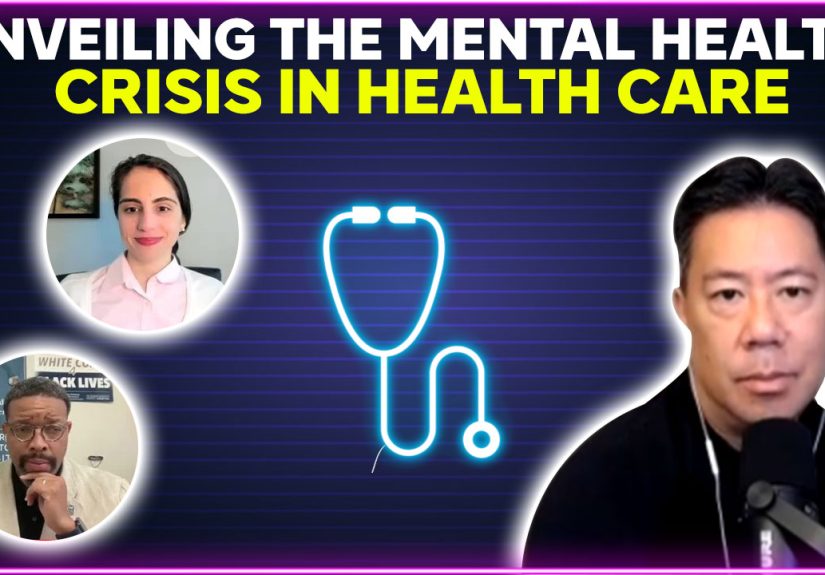
run-of-show that works for an episode titled “Unveiling the mental health crisis in health care.”
Segment 1: Cold open (60–90 seconds)
A short story: an ER nurse describing the emotional whiplash of going from a code blue to a family yelling about wait
times. Or a resident explaining the “charting after midnight” routine that isn’t in any brochure.
Segment 2: The reality check (5–7 minutes)
Bring in key trends: burnout levels, intention-to-leave signals, harassment and safety concerns, and the everyday
drivers (staffing, documentation, admin friction). Keep it human, not just statistical.
Segment 3: Expert lens (8–12 minutes)
Interview a clinician well-being leader, occupational health expert, or nursing workforce researcher. Ask:
“What’s actually driving this?” and “What has evidence behind it?”
Segment 4: The fix list (8–10 minutes)
Focus on what organizations can do this quarternot in five years. Think: staffing changes, EHR improvements, peer
support, protected time, safety upgrades, and confidential counseling access.
Segment 5: Listener takeaway (2–3 minutes)
Give listeners something actionable:
patients can show respect and patience; leaders can measure workload and fix obvious
friction points; clinicians can check in on peers and use confidential support early.
What Patients and Communities Can Do (Yes, You’re in This Episode Too)
A mental health crisis in health care is not solved only inside hospitals. Communities shape the environment clinicians
work in.
- Choose respect over rage: frustration is understandable; threats and harassment are not.
- Support safer workplaces: back policies that reduce violence in health settings.
- Advocate for system improvements: better staffing, primary care access, and streamlined insurance
processes reduce downstream overload. - Normalize mental health support: clinicians are humans with brains. Brains sometimes need help.
And if you’re a listener who works in health care: you deserve support that goes beyond “hang in there.” If you’re in
immediate crisis or need urgent help in the U.S., you can call or text 988 for the Suicide & Crisis
Lifeline.
Field Notes: Composite Experiences from the Front Lines (Added Section)
The stories below are compositesthey combine common themes reported by clinicians and health systems
into realistic snapshots. No single vignette represents one identifiable person. The goal is to translate patterns
into something you can feel, not just measure.
1) The ICU nurse who stopped feeling anythinguntil she got home
She didn’t notice the numbness at first. It felt like “professionalism.” In the ICU, she moved from ventilator checks
to med passes to family updates with the efficiency of a well-trained air traffic controller. But somewhere between
understaffed shifts and constant alarms, her emotions filed for unpaid leave. At work, she was steady. At home, she
either cried at commercials or stared at the wall like it had a treatment plan.
What helped wasn’t a motivational poster. It was a manager who built real coverage so she could take a full meal break,
plus a peer support check-in after a particularly rough case. The turning point was hearing a colleague say, “You’re
not brokenthis is a normal response to abnormal stress.” For the first time in months, she slept longer than four
hours.
2) The resident who learned “work-life balance” is sometimes a scheduling myth
He entered residency with the classic mix of idealism and caffeine tolerance. Then came the reality: night float,
relentless pages, and documentation that multiplied like it was earning commission. He joked about “charting as a
hobby,” but the joke got old when he realized he couldn’t remember the last time he ate dinner without a laptop open.
His program talked about well-being, but the biggest relief came when leadership fixed a workflow bottleneck: a new
cross-coverage system reduced unnecessary pages, and attending physicians backed residents who needed to step out for a
therapy appointmentno guilt, no interrogation. He didn’t need perfection. He needed permission, time, and a culture
that meant what it said.
3) The emergency physician who dreaded the waiting room more than the trauma bay
Trauma cases were intense, but the team knew what to do. The waiting room was different. It was a pressure chamber of
delays, crowding, and anger aimed at whoever was visible. She became hyper-aware of exits, tone changes, and the moment
a complaint might become a threat. That constant vigilance didn’t turn off at the end of the shift; it followed her
into grocery stores and school pickups.
When the hospital invested in violence-prevention measuresclear reporting, security staffing, de-escalation training,
and leadership follow-throughher anxiety eased. Not because the job became easy, but because she stopped feeling
alone. Safety isn’t a luxury. It’s a prerequisite for mental health.
4) The primary care clinician buried under clicks
She loved continuity care: the long arc of helping patients manage diabetes, depression, blood pressure, and life. But
the inbox was a second clinic that never closedrefill requests, forms, prior authorizations, portal messages, lab
follow-ups, and “quick questions” that weren’t quick. She felt like she spent more time satisfying software than
serving patients.
Her breakthrough came with team redesign. Medical assistants handled standardized outreach. Pharmacists supported
medication refills. The clinic improved EHR templates and piloted documentation support for certain visits. Suddenly,
“going home” meant going home. Her mood liftednot because she became more resilient, but because the work finally fit
into the day.
5) The quiet moment that changed the tone of a whole unit
After a tough shift, a charge nurse started a simple ritual: a two-minute debrief. What went well? What was hard? Who
needs backup tomorrow? At first it felt awkward, like emotional small talk. Then it became normal. People began naming
the load instead of carrying it silently.
The unit didn’t transform overnight. But the culture shifted. And sometimes, culture is the difference between
“I’m failing” and “this is heavy, and I’m not carrying it alone.”
Conclusion: The Point of the Episode (and the Plan)
“Unveiling the mental health crisis in health care” isn’t about blaming clinicians for struggling. It’s about naming a
system that has demanded more emotional labor, more documentation, more resilience, and more tolerance for harmwhile
offering too little protection in return.
The fix is not one magical wellness app. It’s a stack of practical changes: confidential support, safer workplaces,
realistic staffing, better workflows, smarter technology, and leadership that treats well-being like patient safety
because it is.
If you’re building a podcast episode, aim for honesty plus solutions. Let listeners hear what’s realand what can be
repaired. Because “health care heroes” deserve more than applause. They deserve a work system that doesn’t break them
to prove they’re strong.