Table of Contents >> Show >> Hide
- What Is Uncombable Hair Syndrome?
- Why Hair Won’t Lie Flat: A Quick Tour Inside the Hair Shaft
- Causes: The Genetics Behind Uncombable Hair Syndrome
- Symptoms: What Uncombable Hair Syndrome Looks and Feels Like
- Diagnosis: How Doctors Confirm Uncombable Hair Syndrome
- Treatment: What Helps (and What Usually Doesn’t)
- Prognosis: Does Uncombable Hair Syndrome Go Away?
- When to See a Dermatologist (or Ask More Questions)
- Living With UHS: Confidence, Photos, and Letting Hair Be Hair
- Experiences: What Families Often Notice (and What Helps)
- Conclusion
If your child’s hair seems to have its own agendastanding up, sticking out, and refusing to be “tamed” no matter how gentle the brushthere’s a chance you’re dealing with something more specific than “wild hair.” Uncombable Hair Syndrome (UHS) is a rare hair-shaft condition where scalp hair grows outward in multiple directions and won’t lie flat. The good news: UHS is usually harmless, mainly cosmetic, and often improves on its own as kids get older.
This article breaks down what Uncombable Hair Syndrome is, what causes it, how it’s diagnosed, what can help (and what usually won’t), and how families can make daily hair care feel less like a tiny morning wrestling match.
What Is Uncombable Hair Syndrome?
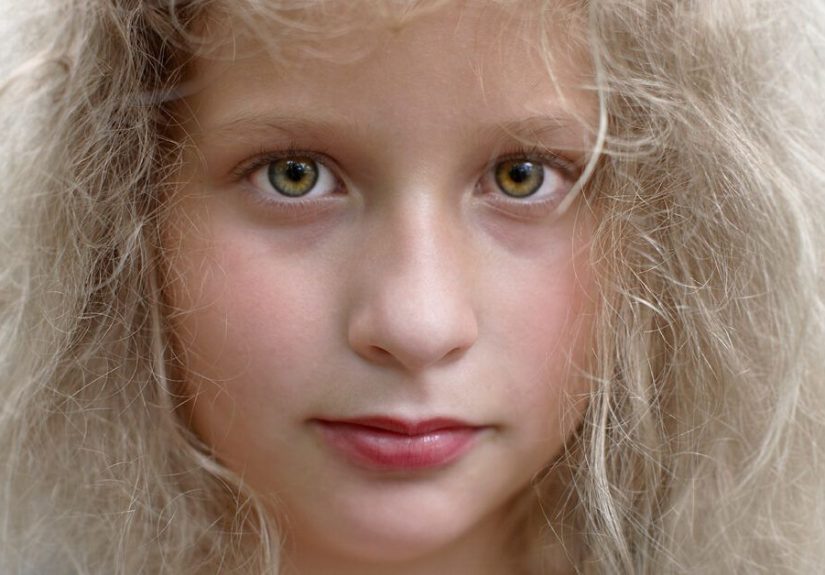
Uncombable Hair Syndrome is a condition that affects the structure of the hair shaft on the scalp. Instead of growing mostly downward and sitting neatly alongside neighboring strands, UHS hair often grows in multiple directions, creating a “stands-away-from-the-head” look. Many people describe the hair as dry, frizzy, wiry, or “spun-glass” in appearanceshiny, light-colored, and stubbornly unruly.
Other Names You Might See
UHS has a few aliases, which can make it sound like three different conditions when it’s really the same idea in different outfits:
- Pili trianguli et canaliculi (describing the hair’s shape and grooves)
- Spun-glass hair syndrome
- Cheveux incoiffables (French for “uncombable hair”)
Who Does It Affect, and When Does It Show Up?
UHS usually appears in early childhoodoften between infancy and age 3, but it can show up later, even closer to age 12. It primarily affects scalp hair, while eyebrows, eyelashes, and body hair are typically normal. Hair quantity is usually normal too; the issue is mainly how the strands are shaped and how they behave.
Why Hair Won’t Lie Flat: A Quick Tour Inside the Hair Shaft
Here’s the simplest way to understand UHS: most hair shafts are shaped more like tiny cylinders. Cylinders stack and slide together neatly, which helps hair lie flat. In Uncombable Hair Syndrome, many strands aren’t perfectly cylindrical. Instead, they can have angular shapeslike triangular or heart-like cross-sectionsand may have long grooves running along the strand.
Those angles make strands reflect light differently (hello, extra shine) and make it harder for hairs to “agree” on a shared direction. Picture trying to neatly stack a bunch of smooth straws versus a pile of tiny, ridged, triangular tubes. The pile still exists, but it’s not going to behave like a tidy stackno matter how convincing your comb tries to be.
Causes: The Genetics Behind Uncombable Hair Syndrome
In many cases, Uncombable Hair Syndrome is linked to changes (mutations) in genes involved in building and shaping the hair shaft. The most commonly associated genes are:
- PADI3
- TGM3
- TCHH (which helps form a key structural protein in hair)
These genes help produce proteins that support the hair shaft’s structure. When the proteins don’t function normally, the hair shaft can develop irregular shapes instead of forming a smooth cylinder. Importantly, not every person with UHS has an identifiable mutation in these genesso researchers believe other genes may also be involved.
How Is It Inherited?
UHS is often described as autosomal recessive when it’s caused by mutations in PADI3, TGM3, or TCHHmeaning a child inherits a changed copy of the gene from each parent, and the parents are usually unaffected carriers. But some families appear to show patterns that look more like autosomal dominant inheritance, where one changed copy can be enough. Genetics can be a little messy in real life, which is why a dermatologist or genetic counselor can be helpful if you’re trying to understand family risk.
Symptoms: What Uncombable Hair Syndrome Looks and Feels Like
While every head of hair has its own personality, UHS tends to share a recognizable set of traits:
- Hair that sticks out and resists being brushed flat
- Dryness and frizz that doesn’t fully respond to typical smoothing products
- Coarse or rough texture (often described as wiry)
- Light color (commonly blond, silver-blond, or straw-likethough not always)
- Shiny or “glistening” appearance
Despite its dramatic styling preferences, UHS hair is often not unusually fragile, and growth can be normal or only slightly slower. The biggest impact tends to be practical (hair care takes longer) and emotional (kids may feel different).
Diagnosis: How Doctors Confirm Uncombable Hair Syndrome
UHS is often suspected based on appearance and history aloneespecially when parents describe a pattern of “we can’t brush it down, and it grows in every direction.” A clinician may then confirm it using one or more of the following:
1) Hair Shaft Microscopy
A provider can examine hair under a microscope to look for characteristic structural changes. Some cases may require more advanced imaging (like electron microscopy) to clearly see the grooves and shape changes that match UHS.
2) Genetic Testing
Genetic testing can sometimes identify a mutation in one of the known genes associated with UHS. Testing isn’t always necessary for day-to-day management, but it can help confirm the diagnosis, guide counseling, and check for rare associations with other conditions.
3) Ruling Out Look-Alikes
Several hair shaft disorders can cause unusual texture or breakage (for example, certain brittle hair disorders). A dermatologist may consider other possibilities, especially if there are signs beyond the scalp hairlike skin, teeth, nail, or sweating differencesor if hair breakage or hair loss is prominent.
Treatment: What Helps (and What Usually Doesn’t)
There’s no “cure” that permanently changes the genetic blueprint of hair shaft formation. But the good news is that UHS often improves naturally during late childhood or adolescence, especially around puberty, when hair characteristics can change over time.
Hair Care Strategies That Tend to Make Life Easier
- Go gentle, not intense: Use a soft brush or wide-tooth comb and avoid aggressive detangling.
- Reduce friction: Microfiber towels, satin/silk pillowcases, and gentle drying can help cut frizz.
- Keep it simple: Regular trims can reduce bulk and make hair feel more manageable.
- Use conditioner strategically: Some families find leave-in conditioner or detangling spray helps reduce snagging, even if it doesn’t “flatten” the hair completely.
- Style with cooperation, not combat: Braids, twists, soft headbands, and protective styles can control the “halo effect” without damaging the hair.
What to Avoid
Treatments that rely on heavy chemicals or high heat often don’t play nicely with UHS hairand can make dryness and breakage worse:
- Frequent blow-drying or high-heat tools
- Chemical relaxers, perms, and harsh dyes
- Over-brushing or “fixing it by force” (tempting, but usually backfires)
Biotin and Supplements: A Quick Reality Check
You may see biotin (vitamin B7) mentioned online as a possible helper for hair quality. A few case reports suggest it might improve appearance for some people, but evidence is limited and it’s not a guaranteed solution. If you’re considering supplementsespecially for a childtalk with a healthcare provider first. “Natural” can still interact with lab tests or be unnecessary in someone who isn’t deficient.
Prognosis: Does Uncombable Hair Syndrome Go Away?
In many cases, yesat least partially. A common pattern is that symptoms are most noticeable in early childhood and gradually improve later, often around puberty. Hair may start to lie flatter and feel more typical over time. Some people continue to have a unique texture into adulthood, but the “impossible to comb” phase often becomes much less dramatic.
When to See a Dermatologist (or Ask More Questions)
Consider getting a professional evaluation if:
- Your child’s hair changes suddenly or comes with patchy hair loss
- Hair breaks extremely easily or seems unusually fragile
- There are other symptoms involving nails, teeth, skin, sweating, or growth
- Your child is distressed or being teased and you want support and documentation for school
Even when UHS is purely cosmetic, a dermatologist can confirm the diagnosis, rule out other conditions, and help you build a hair routine that’s realisticbecause nobody needs a 45-minute detangling saga before the school bus arrives.
Living With UHS: Confidence, Photos, and Letting Hair Be Hair
The hardest part of Uncombable Hair Syndrome often isn’t the hair itselfit’s the social stuff around it. Kids may get comments, questions, and the occasional uninvited head-pat from well-meaning adults who have never met a boundary they couldn’t casually step over.
Small shifts can help:
- Give it a name: Some kids feel better once they understand it’s a real condition, not a “problem.”
- Reframe the uniqueness: “My hair is rare” can feel empowering compared to “my hair is wrong.”
- Make styling a choice: Let kids pick headbands, clips, or braidscontrol helps confidence.
- Talk to school early: If teasing happens, looping in teachers or counselors can stop it fast.
Experiences: What Families Often Notice (and What Helps)
Families who live with Uncombable Hair Syndrome often describe a similar “aha” moment: the day they realize the hair isn’t just stubbornit’s structurally different. Many parents start with the usual playbook: better brush, better conditioner, a new detangler that smells like tropical optimism. But after enough mornings where the hair springs right back up like it’s powered by tiny trampoline springs, they begin to suspect this isn’t a standard “bedhead” situation.
One common experience is that effort doesn’t equal results. In other hair types, brushing longer and harder can smooth things out. With UHS, too much brushing often increases frizz and static, leaving everyone frustrated. Families frequently report that once they switch from “make it flat” to “make it comfortable,” mornings improve. That might mean finger-detangling with conditioner in the bath, using a wide-tooth comb on damp hair, or doing quick protective styles that reduce tangling without demanding perfection.
Another pattern families notice: products behave differently. Some parents say heavy creams weigh the hair down for about seven minutesand then the hair pops back up, undefeated. Others find that lighter leave-in conditioners, anti-friction routines (like microfiber towels), and satin pillowcases help more than a shelf full of styling gels. The goal shifts from “smooth like a commercial” to “less friction, less breakage, and fewer tears.” That’s a win.
Social experiences matter too. Many families mention that strangers comment on the hairsometimes kindly, sometimes awkwardly. Kids can feel singled out, especially in group photos or on school picture day when the photographer tries to “fix” the hair like it’s a misplaced lamp shade. Parents often find it helps to prepare a simple explanation their child can use, like: “My hair grows differently, but it’s healthy.” Some kids even enjoy the attention once they feel in control of the storyturning an unusual feature into a fun fact instead of a worry.
Over time, a lot of families also describe a hopeful shift: the hair often becomes more manageable as kids grow. Parents may notice gradual changeshair lying a bit flatter, tangling less, or responding slightly better to gentle stylingespecially as children approach adolescence. That slow improvement can feel like a long-awaited plot twist: the hair’s still unique, but daily life stops revolving around it.
If there’s one consistent “lived experience” takeaway, it’s this: the best routines are the ones that respect the hair instead of fighting it. UHS hair may not follow the rules, but it can still be cared for, styled, and celebratedwithout turning every morning into an epic battle between a small human, a brush, and the laws of hair physics.
Conclusion
Uncombable Hair Syndrome is a rare condition that changes how scalp hair is formed, leading to hair that grows outward, looks frizzy or shiny, and resists being combed flat. It’s often linked to genetic changes involving hair-shaft structure, and it typically shows up in early childhood. While there’s no single treatment that “cures” UHS, it’s usually harmless and often improves with age. The most helpful approach is gentle, low-friction hair care and supportive strategies that protect both the hair and the child’s confidence.