Table of Contents >> Show >> Hide
- Where Did the Chastity Belt Story Come From?
- Why Real Medieval People Would Have Hated Metal Underwear
- How the Victorians Fell in Love with the Chastity Belt Myth
- Satire, Sex, and the Birth of a Historical Meme
- Chastity Belts as “Fake News” from the Middle Ages
- How to Spot Historical Fake News
- Modern Experiences with an Old Myth
If you grew up thinking medieval husbands locked up their wives in iron underwear
before trotting off on crusade, congratulations: you’ve been punked by one of
history’s most successful hoaxes. The chastity belt, as we picture it today –
heavy metal briefs, scary padlocks, zero airflow – wasn’t some everyday part of
life in the Middle Ages. It was mostly a dirty joke that later generations took
way too seriously and then turned into “museum fact.”
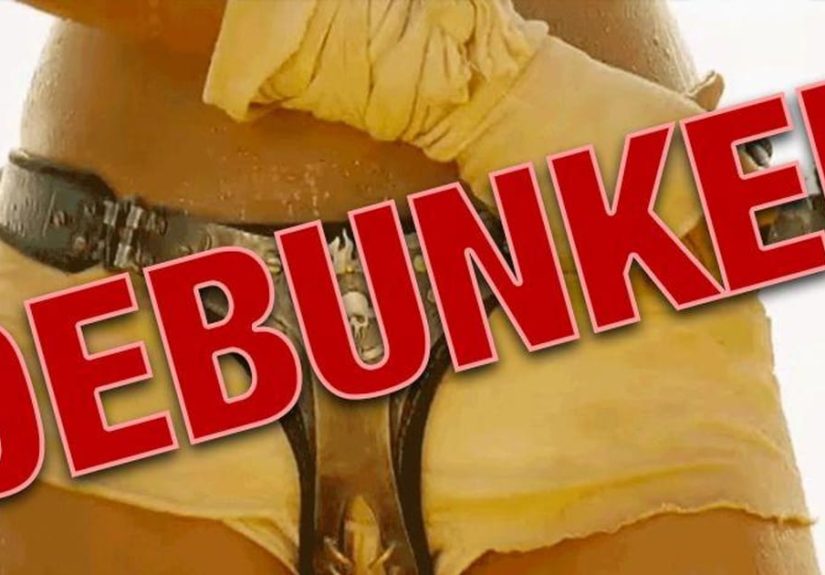
In reality, the myth of the medieval chastity belt says more about Victorian
anxieties, modern clickbait, and our obsession with weird sex trivia than it does
about actual knights and ladies. So let’s lift the metaphorical padlock, look at
where this story really came from, and see why chastity belts are a perfect case
study in historical fake news.
Where Did the Chastity Belt Story Come From?
The crusader husband and his “iron guarantee”
The classic version of the tale goes like this: a jealous knight is about to ride
off to the Holy Land. Terrified that his wife might be unfaithful while he’s gone,
he straps her into an iron chastity belt, locks it, pockets the key, and gallops
away feeling very smug about his DIY security system.
It’s a great story – dramatic, a little kinky, and very easy to imagine in a
cartoon or a movie. That’s exactly the problem. When historians started digging
into the evidence, they discovered that the crusader-and-chastity-belt scenario is
basically a medieval urban legend that hardened into “fact” over centuries of
retelling, illustration, and satire.
What the actual evidence says (spoiler: not much)
When researchers comb through medieval records, they find plenty of talk about
chastity – sermons, poems, moral lessons – but almost nothing about literal
metal underwear. References to “girdles of chastity” in early religious texts are
metaphorical, meant to describe spiritual self-control, not hardware you could
buy from your local blacksmith.
The earliest image that looks anything like a real chastity belt shows up in the
early 1400s, and even that example is more of a curiosity than proof of everyday
use. Most of the famous “medieval” belts in European museums turned out, under
closer scientific and stylistic analysis, to be products of the 18th or 19th
centuries – made long after the Middle Ages were over and then retroactively
labeled as medieval.
In short, the “evidence” for widespread medieval chastity belt use collapses under
scrutiny. The story hangs on jokes, illustrations, and later forgeries more than
on any real documentation of women walking around in locked steel shorts.
Why Real Medieval People Would Have Hated Metal Underwear
The hygiene problem no one talks about
Let’s say, just for the sake of argument, that you tried to keep someone in a
closed metal belt for months while you were off fighting wars. The human body
would immediately like to speak to the manager.
Skin needs to breathe. Bodily fluids exist. Medieval Europe did not have modern
antibiotics, disposable liners, or stainless steel. A tight, closed iron device
pressing against the groin for long periods would be a pretty decent recipe for
infection, painful sores, and possibly even life-threatening complications.
Some later devices designed to prevent masturbation were lined or padded and
intended for short-term wear. But a full-coverage, 24/7, “try-not-to-die-from-
sepsis” style chastity belt for months or years? That’s more horror movie than
history.
Metalwork is expensive, labor is expensive – rumors are cheap
There’s also the awkward economic reality: commissioning a custom-fitted iron belt
with intricate locks would have been costly. Wealthy households certainly spent on
clothing and jewelry, but a device that made your heir-producing spouse sick or
infertile would have been a very bad investment.
What was cheap, however, was gossip. Telling a juicy story about some jealous
guy who “locked up” his wife? That cost nothing and traveled far. Over time,
jokes and caricatures hardened into “facts,” and those facts slipped into
popular imagination as part of the Middle Ages’ greatest hits, along with
witch-burnings, plague, and alleged flat-earth believers.
How the Victorians Fell in Love with the Chastity Belt Myth
The Middle Ages, as redesigned by the 19th century
If the story is mostly fake, how did chastity belts become such a big deal in our
mental picture of the medieval world? A lot of the blame sits with the Victorians.
Nineteenth-century Europe and the United States were obsessed with the Middle
Ages. Gothic novels, pseudo-medieval architecture, jousting shows, and “ancient”
curiosities were incredibly fashionable.
In that context, a supposed medieval chastity belt was the perfect object: it was
shocking, moralistic, and just naughty enough to be irresistibly marketable. It
reinforced Victorian stereotypes of the Middle Ages as brutal and backward while
also letting people gawk at a sexually charged artifact under the safe cover of
“education.”
Museum displays, forgeries, and very selective labeling
Museum collections in the 1800s and early 1900s happily acquired chastity belts
labeled as medieval, often without asking too many questions about where they
came from or when they were actually made. Curators displayed them alongside
genuine armor and weapons, creating a visual “proof” that these devices must have
been real tools of medieval control.
Decades later, metallurgical analysis and stylistic studies started to reveal an
uncomfortable truth: many of these belts dated from centuries after the Middle
Ages. Some were likely created as jokes or erotica. Others functioned as
short-term restraints or anti-masturbation devices in the 19th century. They
were then backdated – intentionally or not – into the medieval period.
But by the time historians started debunking the myth, the damage was done.
Tourists had seen the belts. Postcards had been printed. Cartoonists and
filmmakers had run with the concept. The story of the medieval chastity belt was
simply too good to give up.
Satire, Sex, and the Birth of a Historical Meme
From bawdy jokes to “serious” history
The chastity belt is a classic example of how satire can accidentally become
“real” history. Early images of belts often appear in comic scenes where the
punchline is a jealous husband, an unfaithful wife, or a clever lover with a spare
key. The humor depends on exaggeration: the idea that someone would actually try
to enforce fidelity with a literal lock and key on the body.
Over time, the joke lost its wink. Later audiences took the images at face value,
assuming they depicted real devices used all the time, on real women. Once
museums started displaying physical objects labeled as chastity belts, the myth
gained a kind of physical credibility. Now there wasn’t just a story – there was
something you could stand in front of, photograph, and show your friends.
Anti-masturbation devices and moral panics
While the medieval backstory was fake news, later centuries did produce real
devices that resemble chastity belts. In the 1800s and early 1900s, Western
medicine briefly panicked over masturbation. Doctors and moral reformers blamed
it for everything from nervous disorders to insanity, and a small industry
developed around gadgets designed to make the habit difficult or painful.
Some of these devices, aimed mostly at women and girls, resemble chastity belts,
though they were marketed for “health” rather than crusader-era fidelity. They
were meant for short-term use, and they belong firmly in the modern period, not
the Middle Ages. Still, their existence made it easier for people to believe that
similar devices had existed hundreds of years before.
Chastity Belts as “Fake News” from the Middle Ages
Why the myth stuck
The chastity belt myth checks a lot of boxes that help bad information spread:
-
It’s sensational. “Jealous husband locks wife into iron
underwear” is a far juicier headline than “Medieval marriage was complicated
and shaped by social norms.” -
It feels plausible. People already imagine the Middle Ages as
cruel, misogynistic, and unhygienic, so a horrifying little gadget like this
fits neatly into that mental picture. -
It’s visual. Photographs of museum pieces and detailed drawings
are incredibly persuasive, even if the objects are misdated or mislabeled. -
It’s funny and shocking. Humor helps stories spread. A joke
repeated often enough can start to sound like a fact.
In other words, chastity belts went viral centuries before social media existed.
They became a historical meme: repeated, remixed, and rarely fact-checked.
What the myth reveals about us
The obsession with chastity belts isn’t just about medieval women. It’s also
about how later societies – especially the Victorians and modern pop culture –
think about sex, control, and the past. Focusing on an extreme, almost cartoonish
device lets us talk about real issues, like jealousy and sexual double standards,
at a safe distance.
There’s also a comforting element: if we can point to the Middle Ages as “the
barbaric time when people locked women into metal underwear,” we can feel better
about our own era. The myth becomes a kind of moral contrast filter: look how
far we’ve come! (Even if, in reality, controlling women’s bodies has just taken
new forms.)
How to Spot Historical Fake News
Questions to ask before you believe the hype
The chastity belt story is a useful reminder that history, like your social media
feed, needs active fact-checking. The next time you encounter a wild claim about
the past – whether it’s about torture devices, bizarre medical treatments, or
ancient “life hacks” – try asking:
-
What’s the original source? Is the story based on a primary
document, or just on something a museum label or meme claimed? -
Do historians agree? When specialists study the topic, do they
find consistent evidence, or are they skeptical? -
Does it fit too perfectly into stereotypes? If a story matches
exactly what we already imagine about an era – “the Middle Ages were gross and
cruel” – be extra cautious. -
Who benefits from the story? Museums, media outlets, and
influencers all profit from attention. Shocking stories get clicks, tickets, and
shares.
When you apply those questions to chastity belts, the myth falls apart. That’s
not a failure of history – it’s a sign that the discipline is working.
Modern Experiences with an Old Myth
Walking through a “medieval torture museum” with new eyes
Imagine you’re on vacation and you duck into one of those “medieval torture
museums” tucked away in a European side street or an American tourist town. The
lighting is dim, the audio track is dramatic, and every corner features spikes,
chains, and lurid stories about what “they used to do” back in the day.
Then you turn a corner and there it is: a chastity belt in a glass case, labeled
“Medieval device used by knights to ensure their wives’ fidelity.” Ten years ago,
you might have snapped a photo, shuddered, and posted it to your feed with a
caption like, “Yikes, people were wild back then.”
But once you know the real history – that most of these belts are 19th-century
inventions or misattributed curios – the experience changes. That display is no
longer proof of medieval barbarism; it’s an artifact of how modern people have
chosen to imagine the Middle Ages. The museum becomes less a window into the
1200s and more a mirror reflecting 1800s anxieties and 2000s marketing strategies.
Suddenly, instead of just recoiling, you start asking questions: When was this
object actually made? Who labeled it? How many visitors walk past it believing
they’re learning “real history” when they’re actually consuming a curated
fantasy?
Pop culture, cosplay, and the “fun” of fake medieval facts
The chastity belt myth also pops up in lighter settings: renaissance fairs,
costume parties, comedy sketches, even cartoons. It’s part of the pop-culture
costume closet – the same mental drawer where we keep horned Viking helmets and
witches flying on broomsticks. People wear fake belts as props or punchlines,
rarely realizing they’re referencing a rumor that never really belonged to the
medieval world at all.
For creators and fans of historical fiction, learning the truth is both annoying
and freeing. Annoying, because the chastity belt is such an easy visual shorthand
for “controlling husband” that it can feel like a loss to give it up. Freeing,
because it pushes writers and designers to dig deeper into how power and control
actually worked in the past instead of leaning on a metal punchline.
Personal “aha” moments: rethinking what school never questioned
Many people can recall their first encounter with the idea of chastity belts in a
textbook sidebar, a random history comic, or a conversation with a teacher who
cited them as a colorful example of “how different things were.” Finding out as
an adult that this detail was, at best, wildly exaggerated and, at worst,
completely fabricated can be jarring.
That “aha” moment is powerful. It trains you to look back at your mental
scrapbook of historical “facts” – everything from Columbus and the flat Earth to
supposedly universal customs and traditions – and ask, “What else did I absorb
without checking?” It also gives you some empathy for your teachers, textbooks,
and even museum curators. Many of them inherited the same stories and never had
the time or resources to run them through the historian’s lie detector.
Using the chastity belt myth as a modern media lesson
Finally, the chastity belt myth offers a surprisingly practical takeaway for life
in the digital age. The pattern behind it – a sensational claim, widely shared,
rarely checked, supported by misleading visuals – is exactly how misinformation
spreads online today.
When you realize that earlier generations fell for centuries-long versions of
clickbait about the Middle Ages, it becomes easier to see how we fall for
24-hour versions of the same thing now. A headline grabs us, a shocking image
convinces us, and before we verify anything, we’ve already hit “share.”
Treating chastity belts as historical fake news turns them into a teaching tool:
the next time a story perfectly confirms your assumptions and comes with a
dramatic photo, pause. Ask where it came from. Look for historians, experts, or
credible sources. Remember that if an iron belt around someone else’s body in the
1400s might be fake, that viral tweet about today’s world might need a second
look too.
In the end, the chastity belt myth is less about shaming past societies and more
about challenging ourselves. If we can learn to laugh at this piece of “medieval
fake news” and let it sharpen our skepticism, then all those museum forgeries and
mislabeled relics have accidentally done us a favor.