Table of Contents >> Show >> Hide
- What Makes a “Traditional” British Apple Crumble?
- Ingredients You’ll Need
- Step-by-Step: How to Make Traditional British Apple Crumble
- Baking Tips for the Perfect Apple Crumble
- How to Serve and Store Your Apple Crumble
- Variations on the Classic (That Still Feel British)
- Real-Life Apple Crumble Experiences & Pro Tips
- Conclusion
If autumn had a mascot in dessert form, it would absolutely be a warm, bubbling
traditional British apple crumble. Golden, buttery crumbs on top, soft cinnamon-scented
apples underneath, and a scoop of vanilla ice cream slowly melting down the side… it’s
the kind of dessert that makes you forgive cold weather, gloomy evenings, and pretty
much everything else.
This traditional British apple crumble recipe keeps things old-school: a simple
filling, a classic streusel-style crumble topping made from just flour, sugar, and
butter, and no oats in sight. It’s easy enough for a weeknight but special enough to
serve at a holiday dinner. Along the way, we’ll talk about the best apples to use,
how to get that perfect crumbly topping, and a few clever variations that still feel
wonderfully British.
What Makes a “Traditional” British Apple Crumble?
While the words apple crumble and apple crisp are
often used interchangeably, they’re not exactly the same dessert. A traditional
British apple crumble usually has:
- A simple topping made from flour, sugar, and butter.
- No oats in the topping (oats are more common in “crisps”).
- Tart cooking apples that hold their shape when baked.
- Served warm with custard, cream, or ice cream.
Apple Crumble vs. Apple Crisp
Here’s the quick cheat sheet:
- Apple crumble: Crumbly streusel topping made with butter, flour,
and sugar. No oats by default. The topping can be clumpy and cookie-like once baked. - Apple crisp: Similar, but usually includes oats (and sometimes
nuts) for a more textured, crunchy, “crisp” topping.
For this recipe, we’re leaning into the classic British crumble style: no oats, just
pure buttery crumbs and soft baked apples.
Ingredients You’ll Need
For the Apple Filling
This makes an 8-inch (20 cm) square baking dish or a medium oval gratin dish, enough
for about 6 generous servings.
- 2 ½ to 3 pounds apples (about 6–8 medium apples), peeled, cored, and sliced
- 3–4 tablespoons granulated sugar (adjust to taste and apple sweetness)
- 1–2 tablespoons light brown sugar (for a caramel note, optional)
- 1–2 teaspoons ground cinnamon
- ¼ teaspoon ground nutmeg (optional)
- 1–2 teaspoons fresh lemon juice
- 1–2 tablespoons all-purpose flour (to lightly thicken the juices)
- Pinch of salt
- 1 teaspoon vanilla extract (optional but delicious)
For the Crumble Topping
- 1 cup (130 g) all-purpose flour
- ½ cup (100 g) granulated sugar
- ¼ cup (50 g) light brown sugar (for flavor and color)
- ½ teaspoon ground cinnamon (optional)
- ¼ teaspoon fine sea salt
- ½ cup (115 g) cold unsalted butter, cut into small cubes
Optional Add-Ins & Simple Swaps
- Apples: Traditional British recipes use tart cooking apples like
Bramley. In the U.S., use Granny Smith, Braeburn, Honeycrisp, or a mix of tart and
sweet apples. - Spice blend: Add a pinch of cloves, allspice, or ginger if you like
your crumble cozy and spicy. - Nuts: A handful of chopped walnuts, pecans, or almonds in the
topping adds a bit of crunch while still keeping that crumble feel.
Step-by-Step: How to Make Traditional British Apple Crumble
1. Prep the Apples
- Preheat the oven to 350°F (175°C). Grease your baking dish lightly
with butter. - Peel, core, and slice the apples into about ¼-inch (0.5 cm)
slices. If you’re not a perfectionist, “chunky rustic” pieces work just fine. - In a large bowl, toss the apples with granulated sugar, brown sugar, cinnamon,
nutmeg, lemon juice, flour, salt, and vanilla. Taste one sliceif it makes you
smile, you’re on the right track. - Tip the apples into the prepared baking dish and spread them into an even layer.
2. Make the Crumble Topping
- In another bowl, whisk together the flour, granulated sugar, brown sugar, cinnamon,
and salt. - Add the cold butter cubes. Use your fingertips or a pastry cutter to rub the butter
into the dry mixture until it forms crumbs. You’re aiming for a mixture of small
sandy bits and larger pea-sized clumps. - Don’t overmixif the butter starts to melt in your hands, pop the bowl in the fridge
for a few minutes to firm it back up. Cold butter = better crumble.
3. Assemble and Bake
- Scatter the crumble mixture evenly over the apples, making sure there are no big
gaps. You want complete coverage so the juices bubble up around the edges. - Place the dish on a baking sheet (to catch any bubbly overflow) and bake for
35–45 minutes. - The crumble is ready when the topping is golden and crisp, and you can see the
apple filling bubbling up around the sides. The apples should be tender when
pierced with a knife. - Let the crumble rest for 10–15 minutes before serving. This is torture, but it
helps the juices settle and prevents molten-apple tongue burn.
Baking Tips for the Perfect Apple Crumble
Choosing the Best Apples
For a traditional British apple crumble, you want apples that stay sturdy and don’t
collapse into applesauce as they bake. Tart, firm apples give contrast to the sweet
topping and keep the texture interesting.
Great options in the U.S. include:
- Granny Smith: Very tart and firm, a classic choice.
- Honeycrisp: Sweet, juicy, and crisp. Wonderful in a mix.
- Braeburn or Pink Lady: Balanced sweet-tart flavor and good structure.
- Fuji or Jonagold: Sweeter, so pair with something tart.
A mix of tart and sweet apples gives the most complex flavor. For example, try half
Granny Smith and half Honeycrisp or Braeburn.
Getting the Crumble Texture Right
- Use cold butter: If the butter melts before baking, the topping
can turn greasy instead of crumbly. - Don’t compact it: Sprinkle the topping loosely over the apples.
If you press it down, it bakes into a solid lid instead of a crumbly layer. - Adjust sugar based on apples: Very tart apples may need a little
extra sugar in the filling; very sweet apples may need less.
How to Know When It’s Done
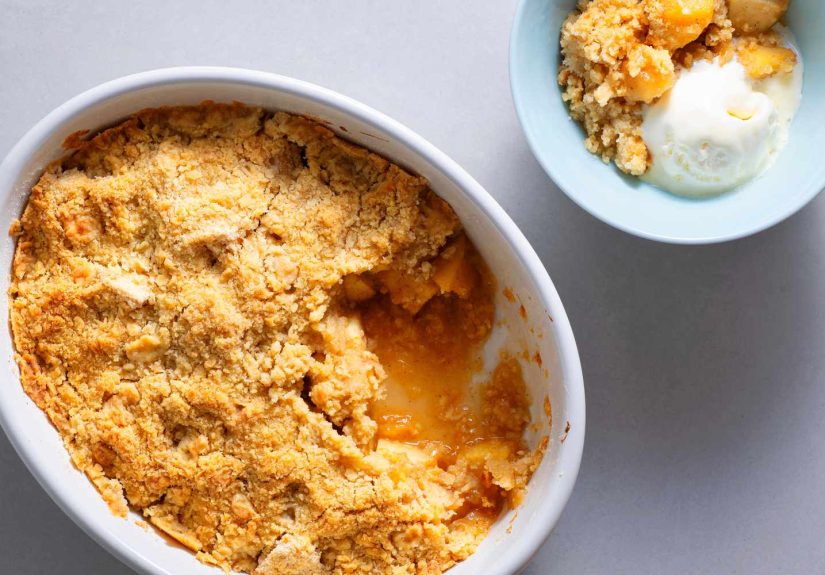
Visual cues are your best friend with a traditional British apple crumble:
- The crumble topping is golden brown in spots, not pale.
- The edges are bubbling with thickened apple juices.
- A knife slides into the apples with little resistance.
If the topping browns too quickly while the apples are still firm, loosely cover the
dish with foil and continue baking until the apples are tender.
How to Serve and Store Your Apple Crumble
In true British style, this apple crumble is a champion of cozy, no-fuss desserts.
Serve it:
- Warm with custard (very British).
- With a scoop of vanilla ice cream for hot-and-cold contrast.
- With lightly whipped cream if you like things a bit lighter.
Leftovers (if they exist) can be cooled, covered, and refrigerated for up to 3–4
days. Reheat individual portions in the microwave, or warm the whole dish gently in a
300°F (150°C) oven until heated through and the topping is crisp again.
Variations on the Classic (That Still Feel British)
- Apple & berry crumble: Add a handful of blackberries,
blueberries, or raspberries to the apples for extra color and flavor. - Apple & pear crumble: Mix in a couple of ripe but firm pears
for a softer, more fragrant filling. - Nutty topping: Replace ¼ cup of the flour with finely chopped
almonds, pecans, or hazelnuts. - Light spice twist: Add ground ginger or cardamom for a subtle
twist that still feels traditional rather than “dessert on vacation.”
Real-Life Apple Crumble Experiences & Pro Tips
The beauty of a traditional British apple crumble is that it’s almost impossible to
separate the recipe from the memories that come with it. Ask anyone who grew up with
it, and you’ll hear some version of: “My mom (or gran) made this when the weather
turned cold, when guests came over, or when we had too many apples rolling around in
the kitchen.”
One of the most common “real life” discoveries people make is that crumble is
ridiculously forgiving. Maybe you mis-measured the sugar, used a weird mix of apples,
or cut the butter a little too big. Most of the time, the dessert still turns out
delicious, which is why it’s such a beloved comfort food. As long as you’ve got
decent apples, some butter, and sugar, you’re 90% of the way there.
Many home cooks find their “signature” crumble by accident. Maybe you always slice
your apples a bit thicker because you like them to have more bite. Maybe you’re
heavy-handed with cinnamon because that’s how your family likes it. Or maybe your
secret is a tiny splash of vanilla or a squeeze of lemon that no one can quite put
their finger on. Over time, those tweaks become part of your family’s version of
traditional British apple crumble, passed along with casual instructions like “just
add enough sugar until it tastes right.”
Serving style also tells a story. In some homes, it’s always eaten piping hot with
custard, poured generously right over the crumble so everything turns into a creamy,
saucy bowl of comfort. In others, ice cream is non-negotiableideally the kind that
starts to melt the second it hits the warm topping. Some people swear that cold
leftover crumble straight from the fridge is a top-tier breakfast, especially with a
spoonful of Greek yogurt on the side. (Is it dessert? Is it breakfast? The answer is
yes.)
Another real-world tip: crumble is a fantastic “bring a dish” dessert. It travels
well, doesn’t require fancy presentation, and can be easily scaled up for a crowd by
using a larger baking dish. If you show up to a potluck carrying a big, bubbling
traditional apple crumble and a tub of ice cream, you’ll instantly become everyone’s
new favorite person. You also don’t need to worry about slicing neat wedges like a
piejust grab a spoon and scoop.
Finally, people often discover that crumble becomes part of their seasonal rhythm.
First chilly day of fall? Make crumble. Guests in town? Make crumble. Too many apples
from a picking trip or a grocery sale? Definitely make crumble. Over time, this
classic British dessert stops being “just a recipe” and turns into a small ritual:
peel, slice, toss, crumble, bake, share. The process itself is calming and familiar,
and the reward at the end is a dish that tastes like warmth, home, and a little bit
of nostalgia in every bite.
Conclusion
A traditional British apple crumble recipe doesn’t need fancy techniques or
hard-to-find ingredients. It’s all about good apples, a simple buttery topping, and
the magic that happens when everything bakes together into something warm, fragrant,
and deeply comforting. Whether you follow this recipe to the letter or use it as a
starting point for your own signature version, you’ll end up with a dessert that
feels timeless and welcoming.
So grab some apples, turn on the oven, and let your kitchen smell like fall. By the
time your crumble is golden and bubbling, you’ll understand exactly why this classic
British dessert is loved around the world.