Table of Contents >> Show >> Hide
- First: Make Sure It’s Actually Chickweed
- Why Chickweed Loves Your Lawn (No Offense)
- How to Get Rid of Chickweed in Your Lawn: 5 Ways to Eradicate It
- 1) Hand-Pull or Dig It Out (Best for Small Patches)
- 2) Fix the Conditions That Invite Chickweed (The “Make Your Lawn Uncomfortable” Method)
- 3) Smother It: Overseed + Topdress (Great for Patches and Post-Removal Recovery)
- 4) Use a Pre-Emergent in Fall (Stop Chickweed Before It Starts)
- 5) Spot-Treat With a Post-Emergent Broadleaf Herbicide (When Chickweed Is Already Here)
- Common Mistakes That Keep Chickweed Coming Back
- Quick FAQ
- Real-World Experience: 5 Lessons From Actual Chickweed Battles (Extra )
Chickweed is the lawn weed equivalent of that friend who “just stops by for a second” and then
somehow ends up living on your couch, eating your snacks, and multiplying into a tiny green
village. It forms dense mats, loves cool weather, and pops up right when your grass is trying to
nap. The good news: chickweed is beatable. The great news: you don’t need to declare chemical
warfare on your entire yard to do it.
In this guide, you’ll learn how to identify chickweed, why it’s thriving in your lawn, and the five
most effective ways to eradicate itplus a chunk of real-world “been there, pulled that” experience
at the end so you can avoid the classic mistakes (like yanking it out, feeling victorious, and watching
it return like a sequel nobody asked for).
First: Make Sure It’s Actually Chickweed
“Chickweed” usually refers to common chickweed (Stellaria media), but people also
call mouse-ear chickweed (Cerastium spp.) chickweed because lawns are confusing
and weeds love identity theft.
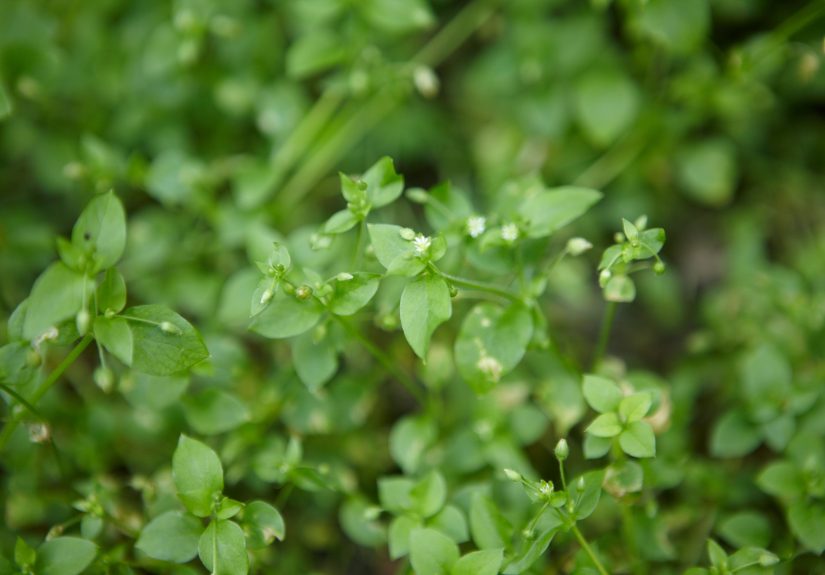
Common chickweed quick ID
- Growth: Low, sprawling, mat-forming; stems often root where they touch soil.
- Leaves: Small, oval, opposite on the stem; generally smooth.
- Flowers: Tiny white “stars” (five petals that can look like ten because they’re split).
- Season: Often a winter annualgerminates in fall, thrives in cool/wet weather, flowers in spring.
Mouse-ear chickweed quick ID
- Hairy look: Leaves and stems are noticeably hairy (like they’re wearing a tiny sweater).
- Darker green: Often deeper green than common chickweed.
- Growth: Dense mats or mounds; can behave more like a short-lived perennial depending on species and site.
Why bother distinguishing? Because timing and persistence matter. Common chickweed usually responds
well to fall prevention and early post-emergent treatments, while mouse-ear types can be more stubborn
and may need repeat attention.
Why Chickweed Loves Your Lawn (No Offense)
Chickweed doesn’t show up because it hates you personally. It shows up because it loves the conditions.
Most chickweed outbreaks are basically a sign that your turf has openingsthin grass, compacted soil,
excess moisture, shade, or a “mow it like a golf green” habit that leaves the lawn stressed and patchy.
Chickweed is especially happy in cool, moist, nutrient-rich situations. In many regions,
it germinates in the fall when temperatures drop, hangs out through winter (especially in milder climates),
then explodes in spring before summer heat knocks it back. That lifecycle is your strategic advantage:
you can either prevent germination in fall or attack early while it’s small and tender.
How to Get Rid of Chickweed in Your Lawn: 5 Ways to Eradicate It
1) Hand-Pull or Dig It Out (Best for Small Patches)
If chickweed is only in a few spots, the simplest solution is also the most satisfying:
pull it out of the ground like you’re removing a bad idea from your life.
- Time it right: Pull after rain or watering when soil is damp. Dry soil = snapped stems and leftover roots.
- Go for the crown: Grab near the base where stems meet soil and pull steadily.
- Remove rooted nodes: Chickweed can root along stems. Lift mats gently and trace runners.
- Bag it: If it’s flowering or seeding, don’t compost it unless your compost runs hot and fast.
Pro tip: use a narrow weeding tool for dense turf so you disturb less grass. Any bare spots you create?
Patch them quicklybare soil is basically a welcome mat for new chickweed.
2) Fix the Conditions That Invite Chickweed (The “Make Your Lawn Uncomfortable” Method)
Think of this as changing the locks. Chickweed thrives where grass struggles, so your long-term win comes
from improving turf vigor. This is the least dramatic method and also the most effective over time.
Target these common chickweed-friendly problems
- Thin turf: Overseed cool-season lawns in late summer/early fall. A thicker canopy blocks light from weed seedlings.
- Compacted soil: Core aerate to improve drainage and root growth. Compaction favors shallow-rooted weeds.
- Excess moisture: Water deeply but less often. Fix drainage low spots. Chickweed loves constantly damp soil.
- Shade: If your lawn is shaded, pick a shade-tolerant grass type and raise mowing height a bit.
- Mowing too low: “Scalping” stresses grass and exposes soil. Follow the one-third rule and keep a healthy height.
This method doesn’t kill chickweed instantly, but it prevents the encore performance. If you only spray
without improving turf health, chickweed often returnsbecause the stage is still set.
3) Smother It: Overseed + Topdress (Great for Patches and Post-Removal Recovery)
Chickweed is a mat-former. You can return the favor by giving it a mat it can’t breathe under:
healthy grass coverage and light topdressing.
- Remove the bulk: Hand-pull, rake, or spot-treat (see methods below).
- Loosen soil lightly: Scratch the surface so seed makes contact (don’t till your whole lawn into a dust bowl).
- Overseed appropriately: Match seed to your region and light conditions.
- Topdress lightly: A thin layer of compost/soil improves seed-to-soil contact and moisture retention.
- Water correctly: Keep the top layer moist until germination, then transition to deeper, less frequent watering.
This approach is especially useful after you remove chickweed mats that left bare spots. The goal is to
fill gaps fast so chickweed seedlings don’t sneak back in during the next cool, wet window.
Important: If you plan to use a pre-emergent herbicide (next method), you must coordinate timing because many
pre-emergents can also inhibit grass seed germination. In other words: you can’t tell seeds “welcome home”
and “do not enter” at the same time.
4) Use a Pre-Emergent in Fall (Stop Chickweed Before It Starts)
If chickweed is a recurring problem, fall prevention is your secret weapon. Many chickweed seeds
germinate as temperatures cool, so applying a pre-emergent at the right time can dramatically reduce
the next wave.
How to get the timing right
- General window: Late summer to mid-fall in many areasbefore consistent cool weather settles in.
- Practical signal: When nights cool down and lawn growth slows, chickweed germination is gearing up.
- Read the label: Choose a product labeled for chickweed/winter annual broadleaf prevention and for your turf type.
Seeding warning: If you’re overseeding in fall, a traditional pre-emergent can block your new grass too.
If you must do both, consider prioritizing turf thickening (overseeding) first and then using targeted
post-emergent control later, or consult local extension guidance for compatible strategies in your region.
5) Spot-Treat With a Post-Emergent Broadleaf Herbicide (When Chickweed Is Already Here)
When chickweed is established, pre-emergent products won’t help muchyou need a post-emergent
that’s labeled for chickweed and safe for your grass species. For many lawns, the workhorses are
selective broadleaf herbicides (they target broadleaf weeds while leaving turfgrass relatively unharmed when used correctly).
Common options you’ll see (and why they work)
- “Three-way” broadleaf mixes: Often combinations of active ingredients like 2,4-D, MCPP (mecoprop), and dicamba.
These are widely used for broadleaf weeds in turf and commonly list chickweed on the label. - Other selective broadleaf actives: Products containing triclopyr or fluroxypyr are also used in turf broadleaf control.
- Iron-based selective herbicides: Chelated iron formulations (often marketed as “mineral-based” or “iron” weed killers) can
burn down certain broadleaf weeds while sparing grasses, though results vary by weed maturity and conditions.
Best practices for successful chickweed control
- Spray when young: Seedlings and small plants are easier to kill than thick, flowering mats.
- Pick good weather: Calm wind, no rain expected for the label’s recommended window, and moderate temperatures.
- Spot-treat first: Treat patches rather than blanket-spraying unless infestation is widespread.
- Expect a follow-up: Dense infestations often require a second application per label directions.
- Protect your grass: Use only products labeled for your turf type and follow rate/season restrictions.
Safety note (because your lawn isn’t worth a trip to urgent care): always follow label instructions, wear protective
gear, and keep kids and pets off treated areas for the label-specified time.
Common Mistakes That Keep Chickweed Coming Back
- Mowing too short: Short turf exposes soil and sunlight, giving chickweed seedlings a perfect launchpad.
- Overwatering “a little every day”: That keeps the soil surface moistexactly what chickweed wants.
- Ignoring the fall window: Fighting chickweed only in spring is like trying to stop a parade after it’s already downtown.
- Not repairing bare spots: Chickweed loves open real estate. Fill gaps with seed/sod and proper care.
- Using the wrong product: Not all weed killers work on chickweed, and some can injure certain turf types. Labels matter.
Quick FAQ
Will chickweed die on its own?
Often, common chickweed declines in hot summer weather, but it usually leaves seeds behind or survives in
cool/shaded/moist pockets. If you do nothing, it tends to returnespecially after a mild winter.
Is chickweed a sign of “bad soil”?
Not necessarily “bad,” but it can point to compaction, moisture issues, shade, or thin turf. Think of it as a lawn
report card: chickweed shows up where grass performance is slipping.
Can I use “natural” sprays like vinegar?
Non-selective burn-down options can damage grass and often don’t kill roots reliably. They may make the lawn look
worse while chickweed quietly regroups. If you want a lower-toxicity route, consider iron-based selective products
labeled for turf and combine them with the turf-thickening steps above.
Real-World Experience: 5 Lessons From Actual Chickweed Battles (Extra )
Let’s get practical. Chickweed control sounds straightforward until you’re standing in the yard with a sprayer in one
hand, a coffee in the other, and the creeping suspicion that the chickweed is somehow watching you plan your next move.
Here are five experience-based lessons that save time, money, and the emotional rollercoaster of “I fixed it!” followed
by “Why is it back?”
Lesson 1: The “One Big Pull” Myth
The first time most people attack chickweed, they try the heroic approach: grab a mat and rip it out like peeling a sticker.
It workskind of. The catch is that chickweed stems can root at multiple points, and small fragments can remain tucked into
the turf. A week later, you see green again and think it’s “new growth,” when it’s actually leftovers you missed. The better
method is slower but cleaner: pull after rain, lift mats gently, and run your fingers along the surface to feel for rooted nodes.
Then rake lightly and patch the spot. It’s less dramatic, more effective.
Lesson 2: Fall Is When You Win, Spring Is When You Notice
Chickweed has an annoying superpower: it often germinates in the fall and hangs out quietly while you’re busy with holidays
and pretending the yard doesn’t exist. Then spring arrives andboomyour lawn looks like it’s growing a green quilt. The lesson:
if chickweed is a yearly visitor, put a reminder on your calendar for late summer/early fall to evaluate thin areas, overseed if needed,
and consider a labeled pre-emergent strategy. Spring treatments can help, but fall is where the long-term results come from.
Lesson 3: Watering Habits Can Undo Everything
People often water lawns the way they “water” houseplants: frequent, shallow, and based on vibes. Chickweed loves that because
it keeps the soil surface consistently moist. Switching to deep, less frequent watering sounds boring, but it changes the game.
Grass roots go deeper, turf thickens, and chickweed loses its favorite conditions. The experience-based trick: if your soil is staying
damp on top all week, you’re basically running a chickweed spa.
Lesson 4: Spot-Treating Is Your Friend (Especially Early)
When chickweed first appears, it’s tempting to nuke the entire yard. In practice, spot-treating early patches is usually smarter.
It’s cheaper, reduces risk to desirable plants, and keeps you from over-applying products. Early on, chickweed is small and easier
to control. Waiting until it’s flowering and thick means you’re more likely to need repeat treatments. One of the best “experienced”
habits is a quick weekly scan during cool seasonsfive minutes that can save you a weekend later.
Lesson 5: The Lawn Doesn’t Need Perfection, It Needs Density
The most consistent chickweed-free lawns aren’t the ones with the fanciest gadgets. They’re the ones with dense, healthy grass.
That density comes from fundamentals: correct mowing height, appropriate fertilizer timing, aeration if compacted, and overseeding
where grass is thin. Chickweed is an opportunist. When grass is thick, chickweed seedlings don’t get enough light to establish, and
you stop fighting the same battle every year. If you remember one thing from real-life lawn struggles, let it be this:
healthy turf is the best weed control.
Put it all together and you get a realistic, repeatable plan: remove what you can now, spot-treat what remains, fix the conditions
that invited chickweed, and protect your lawn during the fall germination window. That’s how you stop the cyclewithout turning your
weekends into a never-ending weed opera.