Table of Contents >> Show >> Hide
- So… what exactly is a “space horse”?
- How the Space Force ended up with horses in the first place
- Meet Ghost: the mustang that made the internet say “wait, what?”
- What military working horses actually do at a space launch base
- Why a horse sometimes beats an ATV (and it’s not just the aesthetics)
- The bigger point: space is futuristic, but bases are… extremely Earth
- The meme factor: why this story stuck
- Do they still have a “space horse” today?
- What the “space horse” says about the Space Force’s identity
- Quick FAQ about the Space Force’s “space horse”
- Experiences related to “The Space Force Has a Space Horse” (extra section)
- Conclusion
- SEO Tags
If you’ve ever wondered whether the United States Space Force is “all satellites, all the time,” allow a hoofbeat to gently interrupt your mental image of glowing control rooms and dramatic space music. YesAmerica’s newest military branch really did have a “space horse.” Not a horse in space (please do not picture a tiny helmet), but a military working horse on Earth, assigned to a very real mission: helping protect the land and coastline that make space launches possible.
The story went viral because it’s wonderfully unexpected: a high-tech service branch that tracks objects in orbit also employed a four-legged patrol partner named Ghost at Vandenberg, the sprawling California installation now known as Vandenberg Space Force Base. It’s funny on the surfaceand surprisingly smart underneath. Because even the most futuristic space mission still starts somewhere very un-futuristic: a giant piece of land with fences, beaches, hills, wildlife, and people who occasionally ignore “area closed” signs like it’s a personal challenge.
So… what exactly is a “space horse”?
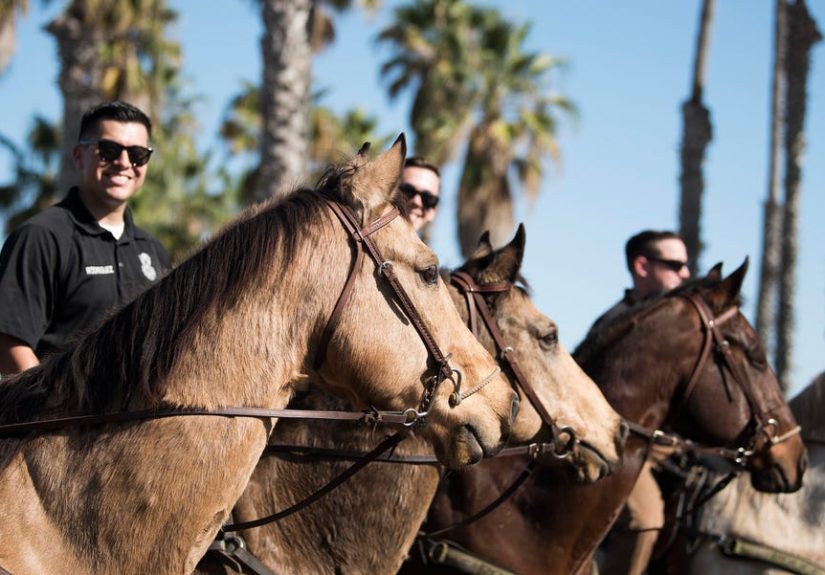
“Space horse” is the internet’s shorthand for a military working horse assigned to a Space Force installationspecifically Vandenberg on California’s Central Coast. In 2020, the Space Force highlighted a horse named Ghost as part of the base’s Conservation Military Working Horse program. Ghost wasn’t training for a lunar landing. He was training for patrolsmoving quietly across terrain where trucks, SUVs, and even ATVs struggle, while helping conservation-focused law enforcement do their job.
If that sounds like a contradiction“Space Force” plus “horse”it’s mostly because the name “Space Force” makes people imagine only orbital stuff. In reality, space operations require real-world infrastructure: launch complexes, safety zones, restricted coastlines, and large ranges where environmental rules matter because the land is part of the mission. That’s where a horse can be more practical than a vehicle… and a lot less likely to get stuck in wet sand.
How the Space Force ended up with horses in the first place
The short version: the Space Force didn’t wake up one day and say, “Let’s add cavalry vibes.” It inherited the working horse mission through the base structure that shifted from the U.S. Air Force to the U.S. Space Force. Vandenberg has long supported space launch operations, and its Security Forces conservation and law-enforcement role has included mounted patrols for decades.
Vandenberg is hugearound 99,600 acres of coastline, hills, and rough terrain. That scale creates two big challenges: covering ground efficiently and doing it in a way that protects sensitive habitats. The mounted unit helped bridge both problems by reaching remote areas with less environmental disruption than motor vehicles in certain locations.
Meet Ghost: the mustang that made the internet say “wait, what?”
In July 2020, the Space Force introduced the public to Ghost, described as a five-year-old mustang acquired through the Bureau of Land Management’s wild horse program. The announcement landed exactly the way the universe intended: half the internet laughed, the other half asked if Ghost had a callsign, and nearly everyone clicked “play” on the video.
Under the jokes was a straightforward reality: Ghost’s job was to become a reliable patrol partner for conservation law enforcement. That means training, conditioning, bonding with handlers, and learning to stay calm around everything from wildlife to loud vehicles to the general chaos that happens when humans are near fences and signs. (If you’ve ever tried to keep a straight face while telling someone “No, you cannot go past the closure,” you already understand at least 5% of this mission.)
What military working horses actually do at a space launch base
1) Conservation law enforcement (yes, that’s a thing)
Vandenberg isn’t just a launch site; it’s also a home for sensitive ecosystems. Conservation law enforcement helps protect those habitats, enforce rules on restricted areas, and keep the base’s environmental responsibilities aligned with operational needs. Mounted patrols can move through creeks, over steep hills, and across rough ground where vehicles can’t safely or easily operate.
2) Protecting threatened wildlife and nesting areas
One of the best examples is the Western snowy plover, a threatened shorebird that nests on parts of the coastline. During nesting season, certain beach areas are closed off to reduce disturbance. Mounted patrols helped monitor these zones and handle violations while minimizing “biological footprint” concerns that come with vehicle traffic on beaches.
3) Patrols, perimeter sweeps, and access to “nope, not driving that” terrain
A horse can quietly cover ground that’s awkward for wheels: soft sand, narrow trails, uneven slopes, and places where an ATV might be loud, disruptive, or simply impractical. Mounted patrols also provide visibilitypeople tend to notice a horsemaking it easier to deter violations and engage with the public in a calm, approachable way. It’s hard to argue with a sign. It’s harder to argue with a sign when there’s a horse next to it looking like it’s personally disappointed in you.
4) Community presence and base culture
Beyond practical patrol duties, the horses became part of the base’s community identity. They appeared at events and parades, and they helped give a very human face to a mission most people only think about when a rocket launch makes the news. When people feel connected to a place, they’re more likely to respect itand that matters for both safety and conservation.
Why a horse sometimes beats an ATV (and it’s not just the aesthetics)
It’s tempting to file “Space Force horse” under “delightful chaos,” but mounted patrols can make operational senseespecially on a coastal installation with sensitive habitats. Here’s why horses have been used in similar conservation and patrol roles for a long time:
- Access: Horses can traverse steep, narrow, or muddy areas that would stop vehicles cold.
- Lower impact in specific environments: In certain beach or habitat contexts, a horse can be less disruptive than a vehicle.
- Quiet presence: Less engine noise can help reduce wildlife disturbance and improve observation.
- Visibility and deterrence: Mounted patrols are highly noticeable and can discourage rule-breaking.
- Relationship-building: Horses make interactions feel less confrontational, which can help with compliance.
In other words, the horse wasn’t a gimmick. It was a toolone that fit a specific set of terrain, conservation constraints, and patrol needs. The internet joked about “space cowboys,” but the mission was grounded: protect the installation, protect the coastline, protect the conditions that keep launch operations safe and sustainable.
The bigger point: space is futuristic, but bases are… extremely Earth
There’s a funny mismatch between how people picture the Space Force and how military space operations actually work. Space is the domain, but Earth is the platform. Satellites need ground stations. Launch systems need ranges. Ranges need security. Security at a place like Vandenberg includes environmental responsibility, because it’s a massive stretch of land with protected species, seasonal closures, and public interest.
So while “space horse” sounds like a punchline, it’s also a reminder that the Space Force’s work is tied to real geography and real logistics. Sometimes the best way to protect a high-tech mission is surprisingly low-tech. That’s not backwardsthat’s just smart operations meeting real-world conditions.
The meme factor: why this story stuck
The Space Force has had a branding challenge since day one: it’s new, it’s unfamiliar, and it’s easy for people to treat it like science fiction. The “space horse” story cut through that in a way a press release never could. It made people curious, made them laugh, and thenalmost by accidenttaught them something real about what the Space Force actually does on the ground.
It also humanized the people behind the mission. Conservation patrol, wildlife protection, and law enforcement aren’t exactly the first things that come to mind when someone says “Guardians.” But once you’ve seen a mounted patrol unit protecting a coastal range, the word “Guardian” starts to feel less like branding and more like a job description.
Do they still have a “space horse” today?
This is where the timeline matters. The viral “Ghost” moment happened in 2020. In 2022, Vandenberg’s military working horse program was retired, with coverage noting that horses would go to new homes and that the base would shift toward drone aircraft for certain patrol needs. A long-running mounted unit can be meaningful and effective, but operational realities changebudgets change, mission requirements change, and technology changes.
In a very Space Force twist, part of the replacement plan involved small unmanned aerial systemsdronesto cover ground and gather intelligence in areas that are hard to reach. So if you came for “space horse,” the ending is “space drone.” That’s not a betrayal; that’s just a modern base choosing the right tools for the next chapter.
What the “space horse” says about the Space Force’s identity
The most interesting part of this story isn’t that a horse wore the Space Force brand by association. It’s that the story reveals how military missions are layered: the glamorous part is rockets and satellites, but the enabling part is land stewardship, safety zones, training, patrols, and making sure the range is secure.
The “space horse” was a symbol of that enabling missionan odd-but-perfect illustration that national security space is not just about what happens above the atmosphere. It’s also about the people and processes that keep launch sites functioning, keep ecosystems protected, and keep the public safe. Sometimes that looks like a console screen. Sometimes it looks like hoofprints in wet sand.
Quick FAQ about the Space Force’s “space horse”
Was the horse actually going to space?
No. The horse worked on Earth as part of a conservation and patrol program at a Space Force base.
Why use horses instead of vehicles?
Terrain access and environmental considerations. Horses can traverse areas that are difficult or undesirable for vehicles, especially in sensitive habitats.
Was it a real program or just social media?
It was a real, long-running mounted patrol program at Vandenberg, publicized widely in 2020 because the Space Force angle was unexpected.
Experiences related to “The Space Force Has a Space Horse” (extra section)
One reason the “space horse” story has such staying power is that it taps into a very specific kind of modern experience: discovering that reality is weirder (and often more practical) than the headlines make it sound. People don’t just learn this fact and move onthey feel it, because it collides with expectations in the funniest way possible.
A common experience starts online. You see the phrase “Space Force has a horse,” assume it’s a joke, and click out of pure disbelief. Then you watch a perfectly serious video where handlers explain patrol duties like it’s the most normal thing in the world. That whiplashmeme energy on the outside, real operational purpose on the insideis exactly why it spreads. It’s the same feeling as finding out that some of the most advanced organizations in the world still rely on simple, time-tested solutions when conditions demand it.
Another experience is the “suddenly, the mission makes sense” moment. As soon as you picture Vandenberg as a massive coastal range instead of a single launch pad, the horse stops being random. You start imagining long perimeter stretches, sandy access routes, steep terrain, and protected beach zones where engines aren’t ideal. Then you picture a mounted patrol moving quietly along the coastline, able to stop, look, listen, and approach people in a less tense way than a vehicle rolling up in a cloud of dust. It reframes the whole story from “Space Force is quirky” to “Space Force is dealing with real-world constraints.”
For people who live near large public lands, the story can also feel familiar in a surprising way. If you’ve ever seen rangers on horseback, mounted park police, or conservation patrols in protected areas, you recognize the logic immediately: horses belong where the terrain is unpredictable and the environment is delicate. What’s new is the label “Space Force,” which makes the same old tool seem new again. It’s a reminder that the boundaries between “space” and “Earth” are blurrier than we thinkspace missions are built on Earth first.
There’s also the “morale and identity” experience, especially for military families and people who follow defense culture. Stories like this create a shared inside joke that isn’t mean-spiritedit’s affectionate. “Space horse” becomes a shorthand for the idea that service is often a mix of high seriousness and absurd moments that keep people human. Even the retirement news in 2022 carries that feeling: people don’t react like it’s a minor administrative change. They react like a beloved chapter of base life is closingbecause the horses had become a visible symbol of the community, not just a patrol asset.
Finally, the “space horse” experience often turns into a conversation starter that sticks around. Teachers use it to talk about how organizations choose tools. Leaders use it to talk about mission support versus mission glamor. Friends use it to test whether someone is gullible (“No, seriously, look it up”). And writers use it because it’s a perfect example of how a single vivid imagea horse associated with a space servicecan carry a whole lesson about logistics, conservation, public perception, and modern military life. You don’t have to be a space nerd or a horse person to get it. You just have to enjoy the moment when the world surprises you and then, somehow, makes perfect sense.
Conclusion
“The Space Force has a space horse” sounds like a punchline because it’s unexpected. But the real story is a grounded one: a conservation and patrol mission at a massive coastal space launch base, where a horse could reach places vehicles couldn’t and do it with less disruption in sensitive areas. The fact that it went viral is almost a bonusbecause it pulled attention toward a part of space operations most people never consider: the Earthbound work that protects access to space.
Whether you remember Ghost as the internet’s favorite “recruit” or as a practical patrol partner doing real work, the space horse story is a reminder that the future isn’t always sleek and metallic. Sometimes the future is a rocket launch supported by boots, badges… and hoofprints.