Table of Contents >> Show >> Hide
- Why Remodelista’s “Quick Takes” Format Works (Especially for Small-Space People)
- Who Is Marianne Evennou (And Why Her Spaces Feel Like Jewel Boxes)
- The Big Lesson From Her Signature Moves: Depth Beats Square Footage
- Color, But Make It Useful: Evennou’s Bedroom Advice and the “Calm-But-Alive” Palette
- The Anti-Trend Take: Why She’s Over Curved Sofas (and What to Do Instead)
- Her Pet Peeves Are Actually a Floor Plan: TVs and Massive Fridges
- The Micro-Kitchen Masterclass: What Her Paris Kitchens Teach Any American Apartment
- Her First Design Love: A Hong Kong Dinner That Explains Her Style DNA
- The Host Gift Philosophy: Make the Giving Feel as Good as the Gift
- Tea, Books, and a Peaceful Mind: The Human Side of a “Designed” Life
- How to Apply “Quick Takes” Energy in Your Own Home (Without Moving to Paris)
- Experience Notes (Extra): What It Feels Like to Live With These Ideas
- 1) The “Depth Test” in a Studio: When One Mirror Changes Your Mood
- 2) The “Color Melody” Moment: You Stop Picking Paint Like It’s a Legal Contract
- 3) The Tiny Kitchen Reality Check: You Don’t Need More StorageYou Need Fewer Ghost Gadgets
- 4) Hosting “Like a Designer”: The Gift Is Nice, But the Moment Is the Point
- Conclusion: The Real “Quick Take” Is a Mindset
Some designers make a room look bigger. Marianne Evennou makes a small room feel betterlike it has a backstory, a soundtrack, and a secret door you haven’t found yet.
In Remodelista’s “Quick Takes” interview series, the Paris-based (and, as the site puts it, Paris-and-Senlis-based) designer answers rapid-fire questions that reveal her signature
mix: clever spatial tricks, unexpected color, and a refusal to treat tiny living as a punishment.
This article breaks down the most useful ideas tucked inside that short Q&Aand then zooms out to connect them with what American design sources have been emphasizing lately:
smarter storage, flexible furniture, light-bouncing moves, and kitchens that work even when they’re basically a hallway with a sink. The goal isn’t to copy a “French look.”
It’s to steal the mindset: make the constraints do something interesting.
Why Remodelista’s “Quick Takes” Format Works (Especially for Small-Space People)
“Quick Takes” is the design equivalent of a great espresso: small, strong, and oddly motivating. You don’t get a 3,000-word manifestoyou get the distilled preferences
that shape a designer’s decisions when nobody’s watching. That matters because most real-life decorating happens in those micro-moments:
choosing a paint color that won’t haunt you at 2 a.m., buying a sofa that fits through the door, or deciding whether your TV is going to be a shrine or a piece of furniture.
Evennou’s answers are especially helpful for anyone living in limited square footage because she doesn’t treat “small” as “less than.”
Her work has been featured as a masterclass in compact planningmini kitchens, multipurpose rooms, and layouts that feel layered rather than cramped.
And in the “Quick Takes” interview, her dislikes are as informative as her likes. (Sometimes the fastest way to improve a home is to stop doing the one thing you keep doing.)
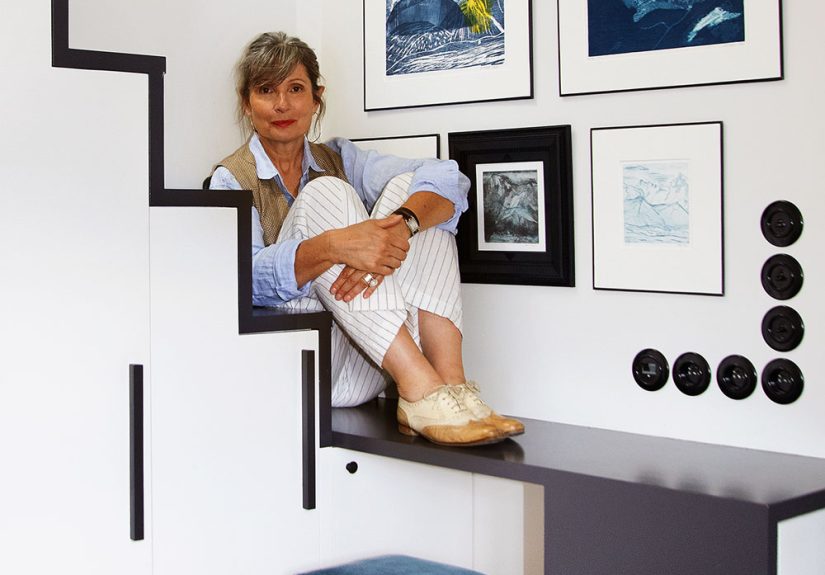
Who Is Marianne Evennou (And Why Her Spaces Feel Like Jewel Boxes)
Marianne Evennou is known for reconfiguring small Paris interiors with a combination of practicality and poetic detailspaces that function hard but still feel personal.
Her first design book, Un intérieur à soi, frames her approach as an “ode to color,” and spotlights projectsmany under about 80 square meterswhere flaws become features
and “impossible” rooms (dark kitchens, tiny baths, awkward corners) get treated with real attention.
That last part is the secret sauce: attention. In a small home, you notice everything.
The wrong cabinet swing can start a daily feud. The wrong light can flatten a whole room. The wrong “statement” sofa can become the emotional support boulder you trip over forever.
Evennou’s work consistently shows how to turn those high-stakes details into advantagesby controlling sightlines, using color as architecture, and designing transitions between “zones.”
The Big Lesson From Her Signature Moves: Depth Beats Square Footage
1) “Play with depths” (a.k.a. stop decorating like everything must sit flush)
In the Remodelista Q&A, Evennou describes her signature moves as playing with depth, transparencies, colors, and materialsand “crossbreeding” pieces in different styles.
Translated into normal-people language: don’t let your rooms become flat diagrams.
Depth can be literal (a niche, a ledge, a layered curtain) or visual (a darker lower wall that “anchors” the room, a glass panel that borrows light, a mirror that shifts the horizon).
This idea lines up with what many American small-space guides keep repeating: small rooms feel chaotic when every surface is doing the same job.
Storage that hides, furniture that multitasks, and vertical space that carries the load can make the room feel calmer and therefore bigger.
The Spruce, for example, emphasizes using multipurpose furniture and vertical space as core small-apartment strategies, not “nice extras.”
2) Transparencies: borrowed light is basically free square footage
Evennou is known for interior windows and see-through moments that let the eye travel.
Whether it’s a glass partition, an opening above a counter, or an internal “atelier-style” window between rooms, the effect is psychological:
you’re not staring at a wall; you’re looking through a story.
If you live in an American rental and you’re thinking, “Cool, I’ll just install a French interior window tomorrow,” here’s the practical workaround:
use semi-transparent layersreeded glass inserts in a cabinet door, sheer curtains, a bookcase with negative space, a mirror placed to “extend” a line of sight.
The goal is the same: reduce visual dead ends.
Color, But Make It Useful: Evennou’s Bedroom Advice and the “Calm-But-Alive” Palette
In “Quick Takes,” her favorite bedroom paint direction is refreshingly simple: a clear color“a touch of blue or green with white.”
That’s not a viral “dopamine decor” commandment. It’s an emotional temperature setting.
Why does this matter for small spaces? Because paint is one of the only tools that can change a room’s mood without taking up a single inch.
If you can’t move the walls, you can still change the feeling of distance, softness, and light. A whispery blue-green plus white reads clean, but not sterile.
It’s “hotel fresh” without the vibe of an airport Marriott.
Designers often recommend keeping bedrooms calmer than social rooms, but Evennou’s twist is that calm doesn’t have to mean blank.
The right cool color can make the room feel like it inhales and exhales.
If you want to riff on her idea, try:
- Soft blue-green + warm white for a coastal-but-grown-up look (no seashell signs required).
- Blue-green + creamy off-white to reduce harsh contrast in rooms with cooler daylight.
- Blue-green + light wood for an airy Scandinavian/French crossover that still feels homey.
Bonus small-space trick from mainstream American outlets: reflective surfaces help small rooms feel more expansive because they bounce light.
Martha Stewart’s design guidance on small spaces explicitly calls out mirrors and glass as common “missing” movessimple additions that expand a room visually.
The Anti-Trend Take: Why She’s Over Curved Sofas (and What to Do Instead)
When asked what trend needs to go, Evennou votes: “all the curved canapés.”
If you love your curvy sofa, no judgmentlive your best croissant life. But her point is practical:
trendy silhouettes can bully a small room. A big curve often demands extra clearance, which is exactly what you don’t have.
A good small-space sofa behaves like a polite houseguest:
it shows up, looks great, and doesn’t insist everyone rearrange their entire personality to accommodate it.
That’s why so many small-room roundups (including major American shelter titles) stress that each piece should “work hard” in limited square footagestorage, scale, flexibility, or all three.
Try these sofa swaps if your room is tight:
- Clean-lined loveseat with higher legs (visual lift, easier cleaning, less bulk).
- Modular sectional sized for your wall (not your dreams) so you can reconfigure as life changes.
- Bench + chairs instead of a single sofa if you need traffic flow more than lounging sprawl.
Her Pet Peeves Are Actually a Floor Plan: TVs and Massive Fridges
Evennou names a television and an oversized fridge as design annoyances. That’s not snobberyit’s proportion.
In a small home, giant black rectangles and bulky appliances become the room’s main character… whether you cast them or not.
Here’s how to use that critique without turning into the person who says “we don’t own a TV” at parties:
Hide the screen (without pretending you don’t watch anything)
- Place the TV in a cabinet or behind sliding panels.
- Use a projector if your wall allows it (and if you’re okay living like a gentle tech gremlin).
- Anchor it with art and books so it’s one element, not the altar.
Right-size the fridge (or at least de-bulk the feeling)
- Go counter-depth if possible; it reduces the “appliance protrusion” effect.
- Use panels or surround cabinetry to integrate the mass.
- Declutter the door. Magnets multiply like rabbits.
This matches what small-kitchen advice from American outlets tends to prioritize: reset first, pare down what you don’t use, then build storage around real habits.
Better Homes & Gardens explicitly frames decluttering as the first step before adding organizersbecause you can’t “bin” your way out of owning three waffle irons.
The Micro-Kitchen Masterclass: What Her Paris Kitchens Teach Any American Apartment
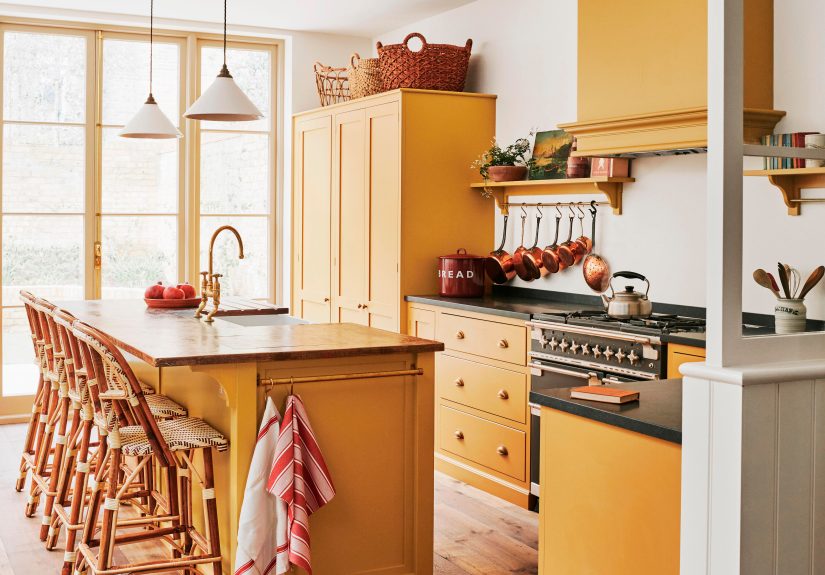
Remodelista’s feature on her tiny Paris kitchens reads like a love letter to constraints.
Evennou uses repeatable strategies: custom cabinetry (sometimes with cost-saving IKEA cabinet frames where it works), induction cooktops for a streamlined look,
compact sinks, and layouts that treat transitions as emotional moments“each passage from one universe to another must be felt,” she says.
Steal These Four “Tiny Kitchen” Principles
- Build to the room you have, not the kitchen you want.
If your kitchen is the size of a generous closet, give it closet-level discipline:
keep what you use, store vertically, and stop buying “someday” appliances. - Use a counter like a window.
One of her standout ideas is a partially enclosed kitchen where the counter/partition acts as a viewing openingletting the space breathe.
In American apartments, this can be replicated with a pass-through shelf, a peninsula, or even a narrow console aligned to sightlines. - Choose sleek function: induction, compact fixtures, dual-purpose appliances.
Evennou’s preference for induction in small kitchens makes sense: it reads clean, and it supports the “less visual clutter” goal. - Create zones even when you have one room.
The best small spaces don’t feel like one big rectangle. They feel like a sequence.
HGTV’s small-space guidance often includes simple dividers and “room within a room” ideas for this reason.
And if you want a simple American-friendly checklist for kitchen sanity, it overlaps with BHG’s approach:
declutter, assign a home to essentials, and make even tiny corners work instead of becoming dead space.
Her First Design Love: A Hong Kong Dinner That Explains Her Style DNA
Evennou’s “first design love” isn’t a chair or a lamp. It’s a memory: a dinner in Hong Kong at the China Cluban environment she describes as colorful, personal,
and a brilliant mix of past and present that makes your mind travel.
That’s a powerful clue: she’s not chasing “minimal” or “maximal.” She’s chasing transportive.
In small spaces, transportive design is the antidote to sameness.
If you can’t expand your square footage, you can expand your references:
a vintage textile used as a bedcover, an antique chest with history, art that isn’t “matching” but meaningful, and colors arranged like music.
The Host Gift Philosophy: Make the Giving Feel as Good as the Gift
Her go-to host gifts are handmade: ceramics, notebooks, basketsplus seasonal gestures like cherry branches or beautiful chocolates.
The detail that stands out is her emphasis on the experience of buying: the process should feel as pleasant as the offering.
That’s secretly a design rule, too. A home is not just what it looks like; it’s how it feels to move through it.
If you want your space to feel “designed,” make the daily actions feel intentional:
where you drop keys, where tea happens, where guests set a glass, where you hide the stuff you don’t want to see.
Tea, Books, and a Peaceful Mind: The Human Side of a “Designed” Life
Evennou names the teapot and kettle as her go-to kitchen tools. She says she can’t live without the basics (bed, shower, toilet)and then adds books, paintings, and sculptures.
She doesn’t leave the house without checking the lights and making sure her cat is inside. And the thing she’s coveting? Time and a peaceful mind.
This is where the “Quick Takes” interview becomes bigger than decor.
Great interiors aren’t built from trends; they’re built from rituals.
If tea is your anchor, design a tea moment. If reading is your calm, make the reading corner realeven if it’s one chair, one sconce, and one shelf.
If you crave peace, reduce visual noise: fewer objects, better storage, softer lighting, clearer zones.
That’s also why small-space advice from major American sources leans so hard on storage systems and multipurpose pieces:
organization isn’t just tidiness; it’s mental breathing room.
The Spruce highlights solutions like slim hangers, vertical storage, and baskets; Dwell points to multifunctional pieces that make small-space living more livable.
How to Apply “Quick Takes” Energy in Your Own Home (Without Moving to Paris)
Step 1: Pick one “signature move” for the next 30 days
- Depth: add a narrow ledge shelf, a layered curtain, or a mirror that extends a sightline.
- Transparency: swap an opaque piece for something visually lighter (open shelving, glass-front cabinet, lucite side table).
- Color melody: choose 2–3 colors that “sing” together and repeat them subtly across rooms.
Step 2: Declare one trend “not for your floor plan”
Evennou has curved sofas on her chopping block. Your version might be:
giant sectionals, overstuffed recliners, glass coffee tables in a house with toddlers, or open shelving if you don’t actually live like a catalog.
The best trend is the one that doesn’t make your daily life harder.
Step 3: Fix the two biggest “unsightlies”
In small homes, eliminating one eyesore can feel like doubling your space.
Hide the cables. Edit the countertop. Give the TV a real “place.” Make the fridge feel intentional.
Start there before you buy anything new.
Step 4: Make one ritual look beautiful
If your kettle is your love language, give it a station. If books are your oxygen, give them light.
If hosting matters, make the entry moment easy: hooks, a tray, and a spot that says, “You can exhale now.”
Experience Notes (Extra): What It Feels Like to Live With These Ideas
The most convincing part of Evennou’s approach is that it shows up in everyday lifenot just “after photos.” Below are experience-based scenarios (the kind you can actually
run into on a Tuesday) that translate her “Quick Takes” energy into real habits. Consider this your extra field guide for making small-space design feel less like a makeover
and more like a relationship you’re actually happy to be in.
1) The “Depth Test” in a Studio: When One Mirror Changes Your Mood
Imagine you’re in a studio where the bed is visible from the front door. Everything feels a little too exposedlike your private life is on display the moment the pizza arrives.
You try Evennou’s “play with depths” idea by placing a tall mirror where it catches daylight and reflects something calming (a plant, art, even a softly lit wall).
The first thing you notice isn’t that the room “looks bigger.” It’s that your nervous system relaxes. The eye has somewhere to go. You stop staring at the bed like it’s
the only landmark in town.
Over the next week, you naturally start editing clutter because the mirror makes mess feel louder. It’s not judgmental; it’s just honest. That’s the weird magic of good
depth moves: they don’t just decorate the roomthey influence your behavior in it.
2) The “Color Melody” Moment: You Stop Picking Paint Like It’s a Legal Contract
You’ve probably had this experience: you pick a “safe” white, paint the whole room, and suddenly it feels like living inside a blank email draft. Evennou’s bedroom suggestion
(a clear blue or green touched with white) offers a different emotional goal: calm with personality. You try a soft blue-green on one wall or in a small sleeping nook.
The first night, the room feels quieter. The second night, you notice the light looks bettermorning light feels gentler, and evening lamps feel warmer against the color.
Then something else happens: you start choosing objects that harmonize instead of match. A textile with a hint of the same tone suddenly “belongs.”
A piece of art feels intentional. You’re composing, not decorating. That’s what “color like musical notes” means in daily life: less panic, more rhythm.
3) The Tiny Kitchen Reality Check: You Don’t Need More StorageYou Need Fewer Ghost Gadgets
One weekend you decide to tackle the kitchen. You want organizers. The internet wants to sell you organizers. But the smartest move (echoed by mainstream kitchen advice)
is to do the reset first: everything out, then only back in what you actually use. This is where Evennou’s mini-kitchen logic hits:
if the room is tiny, the system must be strict.
You ditch the gadgets that only shine twice a year. You pick one compact kettle/teapot setup that makes your daily ritual feel good.
You hang what you can vertically. You keep the counter clearer because in a small kitchen, the counter is also your sanity.
And suddenly, the kitchen feels less like a storage unit and more like a place where life happensfast, efficiently, and without drama.
4) Hosting “Like a Designer”: The Gift Is Nice, But the Moment Is the Point
The next time you’re invited to dinner, you try her host-gift philosophy: something handmade or seasonal, something with a story.
Instead of grabbing a random bottle-shaped object at the last minute, you pick a small ceramic dish, a beautiful notebook, or even branches in spring.
The gift lands differently because it feels consideredlike you’re bringing part of a place with you.
Back home, you realize the lesson isn’t “buy artisanal things.” It’s “make the experience pleasant.”
So you upgrade your own entry ritual: a tray for keys, a hook for bags, a spot for shoes that doesn’t look like a surrender flag.
Friends walk in and immediately feel the differencenot because your home is fancy, but because it’s thoughtful. That’s the most repeatable luxury there is.
Conclusion: The Real “Quick Take” Is a Mindset
Marianne Evennou’s Remodelista “Quick Takes” reads like a checklist of preferencesdepth, transparency, color harmony, handmade gifts, no giant fridges, fewer curvy sofas.
But the deeper theme is consistency: she designs from lived experience. She wants rooms that hold rituals (tea), support culture (books and art), and protect peace (calm zones,
fewer eyesores, better transitions).
If you take one thing from her approach, let it be this: small spaces don’t need to be minimized. They need to be composed.
When you treat color like music, light like movement, and storage like mental health, your home starts to feel less like a boxand more like a place you can actually live in.