Table of Contents >> Show >> Hide
- Why Restaurants Feel Better Than Most Home Kitchens
- 1. Start With Lighting, Because Overhead Glare Is the Enemy
- 2. Declutter Like a Restaurant Owner Who Pays Rent by the Square Foot
- 3. Create a Mini Service Station
- 4. Borrow Chef Habits, Not Just Chef Aesthetics
- 5. Make the Kitchen Smell Clean, Warm, and Slightly Irresistible
- 6. Bring in Texture So the Room Feels Designed, Not Just Equipped
- 7. Give Yourself a “Best Seat in the House” Moment
- 8. Style the Table Like Service Actually Matters
- 9. Use Sound and Routine to Sell the Illusion
- Common Mistakes That Kill the Restaurant Vibe
- The Bottom Line
- What This Looks Like in Real Life: Everyday Experiences That Make the Difference
You know that feeling when you walk into your favorite restaurant and instantly relax? The lighting is flattering, the room smells amazing, every tool seems to be exactly where it should be, and even a glass of water somehow arrives looking more glamorous than anything in your own house. It is not magic. It is also not a $40,000 renovation.
If you want your kitchen to feel more like a beloved neighborhood bistro, cozy wine bar, polished café, or stylish open-kitchen restaurant, the secret is not demolition. It is atmosphere, flow, and editing. In other words: less “rip out the cabinets,” more “act like a clever restaurant owner with taste and a budget.”
This guide breaks down how to create a restaurant-style kitchen at home using practical changes you can make right now. No contractor. No backsplash-induced emotional breakdown. No eating takeout on a folding chair for six weeks. Just smart upgrades that improve the way your kitchen looks, feels, smells, and functions.
Why Restaurants Feel Better Than Most Home Kitchens
Restaurants are designed to do two things at once: work hard and feel good. That balance matters. A great restaurant kitchen or dining area is never only pretty. It is organized, intentional, and easy to move through. The visual clutter is controlled. Lighting is layered. Useful objects are within reach. Decorative choices support the mood instead of shouting over it.
That is exactly the formula you can borrow at home. If your kitchen feels chaotic, sterile, or a little too “appliance showroom at 2 p.m.,” the fix is usually not more stuff. It is better selection, better placement, and better rituals.
1. Start With Lighting, Because Overhead Glare Is the Enemy
If your kitchen is lit like an interrogation room, nothing else will save it. Restaurants understand what many homes forget: mood comes from layered light, not one blazing ceiling fixture doing the work of a small sun.
Use three kinds of light
Think in layers. You want bright enough light for prep, softer light for dining, and a little glow for atmosphere. That might mean keeping your main ceiling light for cooking, adding a small lamp on a counter or shelf, and using pendants or a nearby dining fixture to create a focal point.
A kitchen that feels like a restaurant usually has contrast. The prep area is functional, while the eating area feels warm and inviting. Even in a tiny apartment kitchen, this works. A single rechargeable lamp, a plug-in sconce, or a soft table lamp on a sideboard can shift the entire mood from “weekday scramble” to “table for two, please.”
Swap bulbs before you swap furniture
Warm, softer-looking light usually feels more flattering and intimate than harsh cool light. If your current bulbs make your countertops look like a hospital corridor, try warmer lighting in areas where you eat or entertain. A dimmer is even better. Restaurants rarely blast every corner at full brightness unless someone is actively filleting a fish the size of a canoe.
2. Declutter Like a Restaurant Owner Who Pays Rent by the Square Foot
One reason restaurant spaces feel polished is that the visible zone is edited. Not empty. Edited. There is a difference. A beautiful kitchen does not require bare counters, but it does require intention.
Clear the counters strategically
Leave out only what earns the space every day: maybe your coffee setup, a wooden cutting board, a crock for utensils, salt, olive oil, and one attractive bowl of fruit. That is probably enough. The popcorn machine you used once during a movie marathon in October can go into storage without filing a complaint.
When counters are crowded, even a clean kitchen feels messy. When they are edited, the entire room looks more expensive, calmer, and more service-ready. That is a huge part of the restaurant effect.
Display what is both useful and attractive
Open shelving can look charming, airy, and restaurant-inspired, but only if you resist the urge to turn it into a museum of mugs. Display stacks of plates, glassware, cookbooks, a ceramic bowl, or a few wood pieces. Keep the styling tight. Think “curated trattoria,” not “yard sale with espresso cups.”
If you have cabinets and no open shelving, you can still create the same effect by leaning a cutting board against the backsplash, placing a tray under oils and seasonings, and grouping objects by color or material. Restaurant kitchens make repetition look elegant. Steal that trick shamelessly.
3. Create a Mini Service Station
Restaurants are all about zones. There is a place for prep, a place for plating, a place for drinks, and a place for cleanup. Your home kitchen will instantly feel more thoughtful if you copy that structure on a smaller scale.
Pick one “experience” corner
Set up a coffee station, aperitivo corner, tea shelf, or dessert zone. It does not have to be large. A bar cart, console table, rolling cart, or even a dedicated tray can do the job. Add cups, napkins, spoons, and whatever makes that station feel complete.
This is where the restaurant vibe gets real. Instead of pulling sugar from one cabinet, mugs from another, and coffee from a mystery shelf above the fridge, you create a small ritual area that feels organized and generous. Suddenly, making a latte feels less like survival and more like a scene from a place with very confident playlists.
Use trays like a professional stylist
Trays are one of the easiest ways to make a kitchen feel intentional. Put oils, salt, pepper, and a small vase on one. Put coffee gear on another. Put dish soap, hand soap, and a sponge by the sink on a third. A tray turns random objects into a vignette, and a vignette always looks more expensive than “I set this here and hoped for the best.”
4. Borrow Chef Habits, Not Just Chef Aesthetics
A kitchen that feels like a restaurant is not only about brass fixtures and mood lighting. It is also about how the room works. Professional kitchens rely on systems. Home cooks can borrow the same mindset without becoming terrifying about parsley.
Practice mise en place
“Everything in its place” is one of the most useful restaurant habits you can bring home. Before you cook, set out ingredients, chop what needs chopping, and gather your tools. This makes your kitchen feel more controlled, more spacious, and much less chaotic.
It also changes the emotional temperature of the room. Instead of racing around looking for soy sauce while onions burn and someone asks where the forks are, you look like a person who absolutely knows what they are doing. Even if you are making grilled cheese.
Keep a scraps bowl nearby
This is one of those gloriously simple restaurant-inspired tricks that makes life instantly easier. While cooking, toss peels, wrappers, herb stems, and little bits of waste into one bowl instead of trekking to the trash every 40 seconds. Your counters stay cleaner, your movements are smoother, and the whole cooking process feels less frantic.
Label leftovers and prep smarter
Restaurants are good at reducing confusion. You can do the same by using matching containers and labeling leftovers or prepped ingredients. This is not about becoming aggressively organized. It is about making your fridge feel like a place where good decisions go to live.
5. Make the Kitchen Smell Clean, Warm, and Slightly Irresistible
Scent is one of the fastest ways to change how a space feels. The goal is not to make your kitchen smell like a fake vanilla candle had a disagreement with a cinnamon broom. The goal is to make it smell gently appealing and genuinely clean.
Ventilation matters more than people think
If stale grease or yesterday’s fish tacos are hanging around longer than invited guests, your kitchen will never feel restaurant-fresh. Use your range hood when cooking, and keep it maintained. Clean filters regularly so the space feels lighter, less greasy, and easier to keep polished.
Choose subtle scent, not perfume warfare
A small candle in an adjacent dining nook, fresh herbs on the counter, lemon by the sink, or something simple simmering on the stove can create atmosphere without overpowering the room. Restaurants rarely smell like “Mountain Berry Thunderstorm.” They smell like bread, citrus, herbs, coffee, and dinner you are excited about.
Fresh air helps too. Crack a window when you can. The difference between “cozy kitchen” and “mysterious lingering sauté cloud” is often one fan and five minutes.
6. Bring in Texture So the Room Feels Designed, Not Just Equipped
Many home kitchens feel cold because they are full of hard surfaces doing hard-surface things. Stone, metal, glass, and tile all have a place, but restaurants usually soften the experience with texture.
Add fabric where it makes sense
Try a runner, café curtain, washable seat cushion, linen towel, or cloth napkins. These details absorb visual harshness and make the kitchen feel more layered. A tablecloth or simple runner can instantly turn an ordinary table into a place that feels intentionally set, even on a Tuesday night when dinner is pasta and a heroic amount of grated cheese.
Use wood and ceramics to warm things up
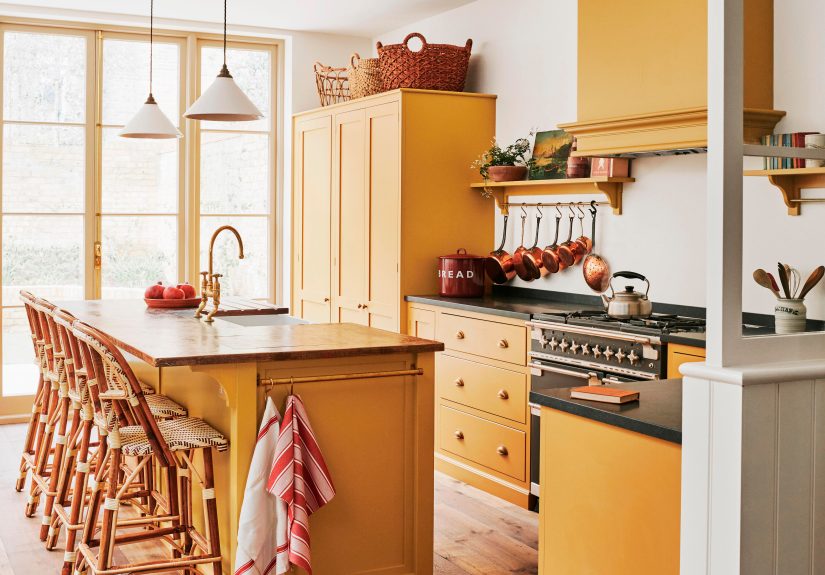
Wooden boards, ceramic bowls, stoneware mugs, and woven baskets add the kind of tactile comfort restaurants use all the time. Even one oversized cutting board leaning against the wall can make a kitchen feel more grounded and less like a sterile box full of beep noises.
7. Give Yourself a “Best Seat in the House” Moment
Favorite restaurants are memorable because they have one little moment you love: the booth by the window, the corner banquette, the marble bar, the tiny candlelit table that makes everyone look like they sleep eight hours a night. Your kitchen needs a version of that.
Create one cozy anchor spot
If you have room, make a small nook feel special with cushions, art, a pendant light, or a bench. If you do not, focus on one stool by the counter, one café table, or one shelf nearby where you can perch with coffee. A kitchen becomes restaurant-like when it invites you to linger, not just complete tasks and leave.
Hang art that belongs to the mood
Not every piece of kitchen decor needs to be a sign announcing that this is, in fact, a kitchen. Art can do more heavy lifting than novelty lettering ever will. A framed menu, black-and-white photo, vintage food illustration, or moody painting can help the room feel personal and layered.
8. Style the Table Like Service Actually Matters
Restaurants know presentation changes everything. Water tastes fancier in the right glass. Bread looks more generous in a basket. A folded napkin quietly tells people, “Yes, this evening has standards.”
Use real serving pieces
Bring food to the table on platters, boards, or bowls instead of leaving it in a random saucepan when possible. Keep a carafe of water ready. Put out cloth or cloth-look napkins. Light a candle if it is safe for your setup. Add salt and pepper that look nice enough to stay on the table.
You do not need formal entertaining gear. You need a few hardworking pieces that make dinner feel like an event instead of a pit stop.
Let repetition do the decorating
Matching glasses, a set of simple plates, or a consistent metal finish can make a kitchen feel more polished immediately. Restaurants rely on repetition because it creates calm. The same is true at home. A little uniformity is surprisingly luxurious.
9. Use Sound and Routine to Sell the Illusion
Yes, sound matters. Some restaurants would be dramatically less charming if you removed the music and left only the clink of forks and one aggressively loud ice machine.
Create a signature soundtrack for your kitchen. Jazz, soul, acoustic, old-school pop, mellow Italian café vibes, low-key bossa nova, whatever suits your dream restaurant energy. Then pair that sound with a few repeat rituals: lighting a lamp before dinner, setting out a small snack board while you cook, wiping the counters before guests arrive, or serving sparkling water in proper glasses instead of whatever cup survived the dishwasher.
Rituals are what make a space feel intentional. A restaurant is basically a building full of well-managed rituals with decent lighting and better bread.
Common Mistakes That Kill the Restaurant Vibe
- Too many things on display: Pretty chaos is still chaos.
- Only one overhead light: Functional, yes. Inviting, not exactly.
- No visual zone for dining or serving: Everything blends into one giant task area.
- Strong artificial scents: A kitchen should smell clean and appetizing, not like a perfumed ambush.
- Ignoring comfort: Hard stools, harsh light, and nowhere to set a drink do not exactly scream “stay awhile.”
The Bottom Line
You do not need a remodel to make your kitchen feel like your favorite restaurant. You need better atmosphere, clearer zones, more thoughtful storage, warmer lighting, and a little bit of restraint. Clear the counters. Layer the light. Add texture. Build one ritual station. Plate dinner like you mean it. Let the room support both cooking and lingering.
That is the real secret: restaurants do not just feed people. They shape the experience around the food. When your kitchen starts doing that too, it feels less like a utility room and more like a place you actually want to be.
And honestly, that is the dream. Not a perfect kitchen. A kitchen with charm, rhythm, and a seat you want to return to. Bonus points if someone asks for the house special and you point to the fridge with confidence.
What This Looks Like in Real Life: Everyday Experiences That Make the Difference
The funniest part about trying to make a kitchen feel more like a restaurant is that the transformation usually starts with something tiny and almost suspiciously unglamorous. Not a marble counter. Not imported tile. Usually it begins when you remove the pile of unopened mail from the island, put the toaster away, and realize the room suddenly has shoulders again. Space appears. Breathing room appears. Your kitchen stops looking like it has been through a mild emotional event.
Then the good stuff starts to happen. You turn on one small lamp near the corner of the counter at dusk, and the whole room softens. You put your olive oil, flaky salt, and pepper in a tray instead of leaving them scattered like confused tourists. You slice lemons and toss them in a glass pitcher of water. Nobody in the house says, “Ah yes, the ambiance strategy is working,” but people linger. That is how you know.
One of the most noticeable changes is how cooking feels. In a cluttered kitchen, making dinner can feel like participating in a game show where the prize is pasta and the challenge is locating the colander in under 40 seconds. In a more restaurant-inspired kitchen, even simple meals feel smoother. You chop first. You set ingredients out. You keep a bowl nearby for scraps. Suddenly you are not spinning in circles. You are moving. Maybe not like a Michelin-starred chef, but at least like someone whose life is not being controlled by a runaway garlic clove.
Guests notice different things than you do. They notice that the room feels warm. They notice there is a place to sit with a drink while you finish dinner. They notice the music. They notice that when you hand them a napkin and a proper glass, the evening feels put together. Nobody ever says, “I really appreciate your improved zoning strategy,” but they will say, “Your kitchen feels so cozy,” which is basically the civilian version of the same compliment.
Even mornings improve. A dedicated coffee or tea station can turn a groggy routine into something nicer. Instead of opening five cabinets before caffeine, everything is in one spot: mugs, beans, sugar, spoons, maybe a little jar of biscotti if you are feeling optimistic. It feels less like you are surviving the morning and more like the morning has been professionally curated on your behalf.
The best part is that these changes do not only work for entertaining. They make ordinary life better. Weeknight leftovers feel less sad on a table with a candle and cloth napkins. Saturday pancakes feel more special when the batter is mixed in a calm, uncluttered room with music playing. A bowl of pasta eaten at the counter can feel oddly luxurious when the light is soft and the kitchen smells like garlic, citrus, and clean wood instead of dish soap and stress.
That is why this approach works. It is not about pretending your house is a restaurant. It is about borrowing the parts restaurants do well: comfort, rhythm, mood, readiness, and care. Once your kitchen gets those things, it does not need to be bigger or fancier. It just needs to be yours, set up in a way that makes everyday meals feel like they deserve a little ceremony.