Table of Contents >> Show >> Hide
- Why Venus, and Why Now?
- Meet the Missions: DAVINCI and VERITAS
- What We Know So Far (and What We Don’t)
- The Big Questions DAVINCI and VERITAS Can Answer Together
- Timeline: When Are These Missions Actually Happening?
- Why These Missions Are Built for the “Venus Problem”
- Conclusion: Venus Is a Warning, a Mystery, and a Mirror
- Experiences: How to “Do Venus” Like a Mission Team (Without Needing a Heat Shield)
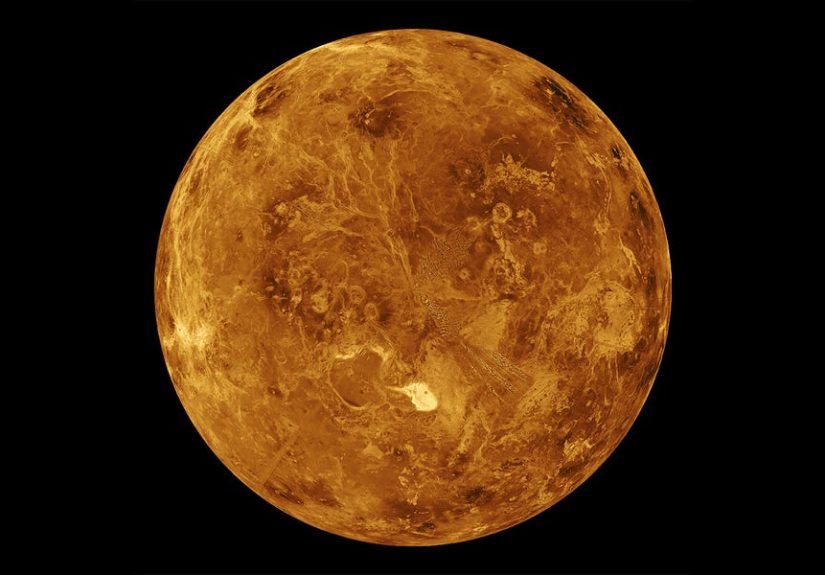
Venus has a talent for looking like Earth’s glamorous twin in photosthen immediately reminding everyone it’s more like a cosmic pressure cooker wearing a
permanent acid-cloud hoodie. And yet NASA is heading back. Not because anyone wants a tan that melts lead, but because Venus may be the most important
“what happened here?” story in our solar system.
After decades in the scientific waiting room, Venus is finally getting the kind of attention usually reserved for Mars rovers with Instagram-worthy selfies.
NASA’s two upcoming missionsDAVINCI and VERITASare designed to answer the big questions: Did Venus ever have oceans?
Why did it evolve so differently from Earth? Is it geologically alive today? And what can this inferno teach us about rocky planets everywhere, including
the ones orbiting other stars?
Why Venus, and Why Now?
The short version: Venus is a cautionary tale with receipts. It’s close, it’s similar in size to Earth, and it may once have been more Earth-like than it is
today. If Earth is a carefully balanced recipe, Venus is what happens when you crank the oven to “forever” and lose the recipe card.
The longer version is even more tempting. New analyses of old data have been pointing to signs that Venus could still be volcanically activemeaning the
planet may not be a dead rock, but a changing world. If you’re trying to understand a planet’s atmosphere, climate history, and habitability, active geology
is basically the “plot twist” that forces you to reread every chapter.
Venus also matters beyond our neighborhood. Astronomers keep finding Earth-size planets around other stars, and many of them likely sit closer to their suns
than Earth does. If “Earth-like” planets can turn into “Venus-like” planets, then Venus becomes a field guide for the line between habitable and hostile.
Meet the Missions: DAVINCI and VERITAS
NASA’s return to Venus isn’t a single grand tourit’s a two-part strategy. One mission goes deep into the atmosphere and snaps close-up images on the way
down. The other maps the surface from orbit with radar sharp enough to transform our understanding of Venusian geology.
DAVINCI: The Atmospheric Detective (With a One-Way Ticket Down)
DAVINCI (Deep Atmosphere Venus Investigation of Noble gases, Chemistry, and Imaging) is built to answer the kinds of questions you can’t
solve from far awayespecially questions about what Venus is made of and how it got that way.
The headline moment is the descent probe: a compact, tough-as-nails sphere that will plunge through Venus’ thick atmosphere, sampling gases and
photographing the surface as it drops below the clouds. Think of it as a high-speed elevator ride through a planet’s entire climate systemexcept the
elevator is on fire, the air is corrosive, and the “lobby” is a furnace.
What will DAVINCI actually measure? The mission is designed to collect detailed atmospheric chemistryespecially noble gases and isotopesbecause
those are the fingerprints that can reveal a planet’s origin story. If Venus once had significant water, if it lost that water over time, and if it experienced
major atmospheric upheavals, the evidence should be hiding in those chemical ratios.
DAVINCI also targets a particularly intriguing kind of terrain: tesserae, rugged highland regions found mainly on Venus. One key site is
Alpha Regio. Tesserae are often treated like Venus’ “ancient continents”not because we know they are continents, but because they look old,
complex, and different from the smoother volcanic plains. If Venus has preserved any deep-time record of a more temperate past, tesserae are a top suspect.
On the way down, DAVINCI’s instruments are expected to measure atmospheric structure (temperature, pressure, winds) and analyze gases layer by layer.
Meanwhile, the descent imager aims to capture high-resolution views of the highlandsimages that could connect radar-based maps to real geology in a way
we’ve never had for Venus.
VERITAS: The Planet-Scale Mapper (Radar Vision Included)
If DAVINCI is the atmospheric detective, VERITAS (Venus Emissivity, Radio Science, InSAR, Topography, and Spectroscopy) is the world-class
cartographer.
Venus is famously difficult to see. Its thick, global cloud layer blocks most traditional imaging of the surface. That’s where radar comes in. VERITAS is
designed to create dramatically improved global maps, using advanced radar techniques to reveal the planet’s topography and surface features in far more
detail than earlier missions.
The science payoff is huge:
- Geology and tectonics: VERITAS will help scientists interpret Venus’ crustal featuresridges, fractures, mountain belts, and possible
subduction-like structuresasking whether Venus ever had plate tectonics, or some Venus-only version of it. - Volcanism: With repeated radar imaging and a better global baseline, VERITAS can help identify signs of recent or ongoing volcanic activity
and link those changes to Venus’ climate and atmosphere. - Surface composition clues: By measuring emissivity and using spectroscopy approaches, VERITAS can help infer differences in rock type and
weathering processesespecially useful for understanding whether some regions are older, fresher, or chemically unusual. - Interior structure: Radio science and gravity data can reveal how mass is distributed inside Venus, which informs models of the mantle and
coreand how the planet generates heat.
In other words, VERITAS is how you turn Venus from “mysterious beige ball” into a geologically readable world mapone where you can finally compare regions,
interpret processes, and pick future landing sites with confidence.
What We Know So Far (and What We Don’t)
We’ve visited Venus beforejust not recently by NASA standards. Past missions, including orbiters and probes, revealed a world with extreme surface heat,
crushing pressure, and an atmosphere dominated by carbon dioxide. Radar mapping missions showed wide volcanic plains, massive volcanoes, and puzzling
highlands that look like they’ve been heavily deformed.
But those discoveries also sharpened the mysteries. Venus doesn’t show Earth-like plate tectonics today, yet it has plenty of tectonic-looking features. It
has signs of widespread volcanism, but the timing and current activity level are still debated. And the biggest question remains: how did two similar-sized
planets end up with such different climates?
The recent excitement about possible volcanic activity is a perfect example of why new missions matter. When old radar data can still surprise scientists,
it’s a strong hint that Venus is holding backand that better tools could rewrite the story.
The Big Questions DAVINCI and VERITAS Can Answer Together
1) Did Venus ever have oceansor even a “habitable era”?
If Venus once had liquid water, the planet’s atmospheric chemistry should carry clues about how that water was lost. DAVINCI’s measurements of noble gases
and isotopes are especially valuable because they serve as long-lived tracers of atmospheric evolution. Pair that with VERITAS’ global view of ancient
terrains, and scientists can test whether Venus’ surface record supports a wetter, more temperate past.
2) Is Venus geologically active today?
Active volcanism would mean Venus is still venting gases and reshaping its surfaceboth of which can influence the atmosphere. VERITAS can hunt for
surface-change signatures and identify volcanic regions worth deeper study. DAVINCI can connect atmospheric chemistry to potential sources and sinks,
especially in the lower atmosphere where interactions with the surface are strongest.
3) Why did Venus and Earth diverge so dramatically?
This is the “Earth science, but with higher stakes” question. Earth and Venus likely started with similar building blocks. If Venus underwent a runaway
greenhouse effect, the missions can help reconstruct how the shift happened and what feedback loops locked it in. That’s not just triviait’s a boundary
condition for understanding climate stability on rocky planets.
4) What are tesserae, and why are they so weird?
Tesserae are some of Venus’ most ancient-looking real estate, and Alpha Regio is one of the best-known examples. DAVINCI’s descent imaging of this area can
provide ground-truth context for the orbital radar maps. VERITAS, in turn, can expand that understanding globallyshowing how tesserae fit into the planet’s
overall geologic framework.
Timeline: When Are These Missions Actually Happening?
Space missions are long gamesmore chess than sprinting. When NASA selected DAVINCI and VERITAS, the early expectation was a late-2020s to around-2030
launch window. Since then, schedules have shifted. VERITAS in particular was delayed, with NASA indicating a launch no earlier than the early 2030s.
DAVINCI has also been described as launching in the early 2030s timeframe.
The upside of longer timelines is that they can allow for sharper engineering, better coordination with international partners, and more time to refine science
plansespecially when the planet you’re visiting tries to dissolve your instruments and crush your probe like a soda can.
Why These Missions Are Built for the “Venus Problem”
Venus forces creativity. You can’t just point a normal camera and call it a day. You need radar to see the surface, and you need hardy systems to survive
the atmosphere long enough to measure it properly. That’s why the two-mission approach is so powerful:
- DAVINCI tackles the chemistry and vertical structure of the atmosphere with direct sampling.
- VERITAS tackles the geology and interior signals with comprehensive orbital mapping and gravity science.
Together, they connect the dots between the sky and the groundexactly where Venus’ biggest mysteries live.
Conclusion: Venus Is a Warning, a Mystery, and a Mirror
NASA isn’t going back to Venus because it’s easy. NASA is going back because Venus is the best nearby laboratory for understanding how rocky planets evolve,
how climates collapse or stabilize, and how geology and atmosphere co-author a world’s fate.
With DAVINCI, we get the chemical backstorywhat Venus is made of and how that composition hints at oceans, loss, and transformation. With VERITAS, we get
the global maphow the planet’s surface tells the tale of volcanism, tectonics, and internal heat. Put them together and you get something rare in planetary
science: a chance to read an entire planet more like a biography than a postcard.
Venus may be inhospitable now, but it’s still a neighbor with lessons to teach. And this time, we’re bringing better toolsand better questions.
Experiences: How to “Do Venus” Like a Mission Team (Without Needing a Heat Shield)
You don’t have to be on a NASA flight team to have Venus-related experiences that feel surprisingly hands-on. In fact, the run-up to DAVINCI and VERITAS is
a great time to become the kind of person who casually says “tesserae” at brunch and watches everyone blink twice. Here are a few ways to make the mission
story real, memorable, and genuinely funno rocket required.
1) Go outside and meet Venus the old-fashioned way: with your eyeballs. Venus is often one of the brightest objects in the sky and can show
up as the “Morning Star” or “Evening Star.” Try a simple observing routine: pick two evenings a week for a month, step outside at roughly the same time, and
note where Venus is relative to the horizon and nearby stars. You’ll feel Earth’s orbit in your bones. If you have binoculars (and safe viewing conditions),
you may even notice Venus’ phaselike a tiny Moon. It’s a reminder that these missions aren’t abstract: they’re aimed at a real world you can literally see
from your driveway.
2) Recreate the “cloud problem” with a kitchen experiment. Venus’ clouds block normal surface imaging, which is why radar is essential.
Here’s a playful analogy: put an object at the bottom of a clear container, then obscure it with something visually opaque (like a layer of milk in water).
You’ll still know something is there, but the details vanish. Now imagine “seeing” it with a different kind of signallike tapping the container and
listening, or using a phone’s flashlight at different angles. It’s not radar, but it gets the point across: Venus forces you to switch senses.
3) Follow the missions like a season of prestige TV. NASA mission development has story arcs: selection, design reviews, instrument
milestones, schedule changes, and science-team debates about priorities. Make a “Venus notebook” (digital or paper) and track major updates every month.
Jot down what the missions are trying to measure (noble gases, emissivity, topography), and write one sentence on why each measurement matters. After a few
months, you’ll notice you’re building a mental model of Venusexactly what scientists do, just with fewer meetings.
4) Try a mini “mission design” challenge with friends or students. Give yourself constraints: you can send either (a) one probe that goes
down through the atmosphere for about an hour, or (b) one orbiter that maps from above for years. What instruments do you pick? What questions do you
prioritize? Then compare your choices to DAVINCI and VERITAS. This exercise makes the missions feel less like announcements and more like deliberate,
tradeoff-heavy engineering decisions. Bonus points if someone in your group plays the role of Venus and refuses to cooperate.
5) Turn Venus into an exoplanet lesson. If you enjoy astronomy content, look for discussions of “Venus zones” (regions around stars where a
planet is more likely to become Venus-like). Then connect that concept back to what DAVINCI and VERITAS measure. Once you start linking Venus chemistry and
geology to the bigger search for habitable worlds, you’ll realize these missions aren’t only about our neighborthey’re about interpreting thousands of
distant dots of light with a lot more humility.
The best part of these experiences is that they scale. You can do them casually (a few notes, a few skywatching sessions), or you can dive deep and build a
serious understanding of Venus as a system. Either way, by the time DAVINCI and VERITAS send back their results, you won’t just be reading headlinesyou’ll
actually understand why the data is a big deal. And that’s the closest most of us will ever get to being in mission control, minus the caffeine budget.