Table of Contents >> Show >> Hide
- What Happened, Exactly?
- Why the “Contradiction” Hit So Hard
- South Park’s Timing Advantage Is Still Elite
- “Irrelevant” Is a Risky Word in the Attention Economy
- Why ICE and DHS Recruitment Became Part of the Story
- South Park’s Real Target Was Bigger Than One Post
- What This Means for Political Satire in 2025 and Beyond
- Final Take
- Experiences Related to the Topic: How This Kind of Satire-Government Clash Feels in Real Life (Extended Section)
Editor’s note: This article synthesizes reporting and analysis from multiple U.S.-based outlets and official sources, including AP News, Newsweek, the Los Angeles Times, Entertainment Weekly, TVLine, TheWrap, Business Insider, Variety, The Hollywood Reporter, Deadline, People, The Daily Beast, DHS materials, and USAJobs. No source links are included in this publication-ready draft.
If you had “federal agency uses a cartoon screenshot to recruit for immigration enforcement” on your media bingo card, congratulationsyou are either psychic or you work in modern communications.
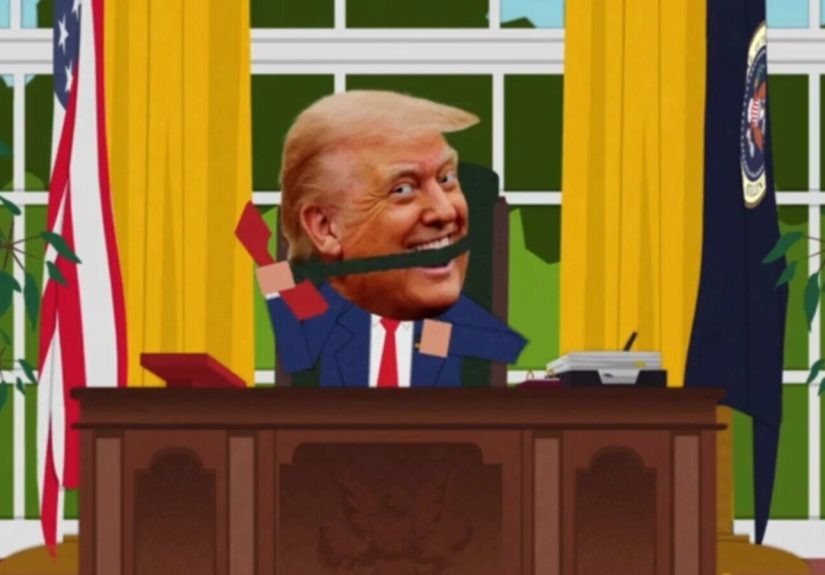
In one of the strangest (and most on-brand) pop-culture-government collisions of the year, South Park publicly mocked the White House and DHS/ICE after a messaging mismatch became impossible to ignore: the president’s team had dismissed the show as “irrelevant,” while the Department of Homeland Security appeared to use South Park imagery to promote ICE recruitment.
That contradiction gave Trey Parker and Matt Stone’s long-running satire machine exactly what it loves most: a self-own delivered by someone else. And when South Park sees a self-own, it doesn’t just point and laughit builds a whole episode around it.
What Happened, Exactly?
Let’s rewind. South Park Season 27 came out swinging with a headline-grabbing premiere, “Sermon on the ’Mount,” which lampooned President Donald Trump, Paramount, and the broader media-political ecosystem. The episode drew immediate backlash from the White House, including a statement that called the show outdated and accused it of chasing attention.
That statement is where the now-famous “irrelevant” line entered the chat.
Then, as anticipation built for the next episode (“Got a Nut”), the Department of Homeland Security’s social media presence reportedly used an image from a South Park teaser featuring vehicles marked “ICE,” along with recruitment-style messaging directing people to join ICE. In other words: one part of the administration was publicly shrugging off the show, while another part was borrowing its imagery for a recruitment push.
South Park (via its social media voice) did what South Park doespointed out the contradiction and mocked the idea that the show was supposedly irrelevant while government accounts were amplifying its visuals.
Why the “Contradiction” Hit So Hard
To be fair, this was not a formal policy contradiction. The White House and DHS are not the same communications office, and government messaging often moves fast, inconsistently, and with more coffee than coordination.
But in political communications terms, it was a real contradiction in tone and strategy:
- White House message: “This show doesn’t matter.”
- DHS/ICE-adjacent recruitment message: “This show is useful enough to borrow from.”
That gap matters because satire feeds on inconsistencies. Once an institution says, “Ignore them, they’re irrelevant,” while also using the same “irrelevant” property for visibility, the satire writes itself. It’s the communications equivalent of saying, “I’m not mad,” in all caps.
South Park’s Timing Advantage Is Still Elite
One reason this story landed so loudly is that South Park remains unusually fast for an animated show. Parker and Stone have long been known for pushing episodes close to airtime, which lets them respond to current events with a speed most scripted TV can’t touch.
That production model turns headlines into fresh material instead of historical references. By the time many series are still in rewrites, South Park is already animating the punchline, adding a secondary punchline, and debating whether a network note can be turned into a third punchline.
This speed also explains why the show still drives conversation even after decades on air. The joke isn’t just that it’s offensive or outrageous (though yes, it remains aggressively South Park); the joke is that it often arrives while everyone else is still deciding what the official talking points are.
“Irrelevant” Is a Risky Word in the Attention Economy
Calling a show irrelevant is a classic rhetorical move. It tries to minimize the opponent while signaling confidence. The problem? In the internet era, “irrelevant” often functions as free marketingespecially when the target is a controversy-proof brand with a giant cultural footprint.
In this case, the label looked even shakier because the season premiere drew major attention and strong viewership discussion across platforms. That matters for SEO, headlines, and public perception. It’s hard to sell “nobody cares” when everyone is already arguing about it at lunch, online, and in Slack channels that were supposed to be for work.
Why the word backfires
When institutions call a cultural product irrelevant while simultaneously reacting to it, commenting on it, or repurposing it, audiences tend to read that as evidence of the opposite. The reaction itself becomes proof of relevance.
That’s exactly why this South Park-ICE exchange became more than a one-day entertainment story. It turned into a case study in modern messaging: the government tried to project strength, but mixed signals handed a satire brand a cleaner punchline than anything it could have invented from scratch.
Why ICE and DHS Recruitment Became Part of the Story
The recruitment angle also mattered because it landed during a period of expanded federal attention on immigration enforcement staffing and capacity. Coverage around ICE and DHS hiring efforts, including recruiting campaigns and incentives, gave the social post a broader policy contextnot just a meme context.
That means the visual wasn’t floating in a vacuum. It was attached to a real institutional goal: hiring and public-facing recruitment. When a federal agency borrows pop-culture imagery for that purpose, it changes the stakes. A joke image becomes part of an official persuasion effort.
And once that happens, media outlets stop treating it as “just a tweet” and start treating it as a communications strategy. That’s when the story grows legs, gets cross-covered by entertainment and political desks, and becomes exactly the kind of thing South Park can weaponize.
South Park’s Real Target Was Bigger Than One Post
It would be easy to reduce this whole episode to “cartoon trolls government account.” Funny? Yes. Accurate? Only partly.
South Park was doing something broader: attacking the ecosystem where politics, government branding, social media virality, and pop-culture language all blur together. The show’s point (underneath the chaos and the very obvious effort to shock people) is often that institutions increasingly behave like content creatorsexcept with more power and fewer consequences.
That’s why this clash resonated. It wasn’t just about Trump, ICE, or one quote. It was about the weirdness of the moment:
- Government agencies posting like brands
- Entertainment shows covering policy as satire
- Political spokespeople trying to downplay the same content their ecosystem engages with
- Audiences watching all of it in one scrolling session
In short: the line between governance and performance got blurry, and South Park showed up with a magnifying glass and a flamethrower.
What This Means for Political Satire in 2025 and Beyond
Whether you love South Park, hate it, or only hear about it when your group chat starts typing in all caps, this controversy highlighted something important: political satire still works when it spots a contradiction faster than official communications teams can patch it.
That doesn’t mean satire changes policy. It usually doesn’t. But it can shape perception, expose messaging gaps, and create a shorthand that sticks. A press statement may say one thing, but if the public remembers the contradiction as “you called them irrelevant while using their clip,” that’s the version that wins the attention battle.
And attentionlike it or notis now part of governance, media strategy, and public trust.
Also, let’s be honest: if you hand South Park a contradiction this obvious, you are basically dropping off groceries at the chef’s house.
Final Take
The headline clash between South Park and ICE/DHS wasn’t just another outrage cycle. It was a revealing moment about how modern institutions communicateand miscommunicateunder pressure.
The White House line painted the show as a desperate relic. DHS/ICE-adjacent recruitment messaging, by contrast, suggested the show’s imagery was relevant enough to use for visibility. South Park recognized the mismatch instantly and turned it into a meta-joke about power, image management, and the internet’s favorite sport: catching people saying two things at once.
In that sense, the show’s clapback wasn’t just a roast. It was an audit.
Experiences Related to the Topic: How This Kind of Satire-Government Clash Feels in Real Life (Extended Section)
One reason stories like this spread so fast is that they match experiences people already have with modern media. Even if someone never watches South Park, the pattern feels familiar: one official voice says “this is nonsense,” another official account posts something that validates it, and the internet notices before lunch.
For everyday viewers, the experience is often less about ideology and more about whiplash. You open your phone expecting weather updates or sports scores, and suddenly you’re reading a debate about whether a federal agency just used a cartoon teaser to recruit for immigration enforcement. Then a comedy show account posts a response. Then a news outlet reports on the response to the response. By then, you’re six tabs deep and somehow know more about TV episode scheduling than you ever intended.
For media workers and content teams, moments like this feel very different: they feel like deadline lightning. Entertainment reporters, political reporters, social editors, and audience teams all jump on the same story because it lives in every lane at once. The experience becomes a race to explain context quickly: What did the White House say? What did DHS post? What episode is this tied to? Is this a real policy announcement, a teaser, a joke, or all three at the same time? (Spoiler: usually all three.)
For communications professionals, this kind of incident is a reminder that consistency matters more than ever. In a previous era, disconnected messages from different offices might have passed unnoticed. Today, audiences compare screenshots in real time. The experience of watching a message contradiction go viral is brutal because it often doesn’t matter what the original intent was; people respond to the visible mismatch. Once that happens, the cleanup message can sound like an afterthought.
For fans of satire, the experience is almost the opposite: it feels like vindication. They see a show doing what satire is supposed to dospotting hypocrisy, amplifying contradictions, and turning institutional language into comedy. Even people who don’t agree with every joke can recognize the mechanics. The laugh comes from the inconsistency, not just the insult.
And for people personally affected by immigration policy, the experience may be more complicated than “this was funny” or “this was offensive.” A lot of coverage around the episode and the recruitment messaging existed alongside very real debates about enforcement, detention, staffing, and public trust. That means the media spectacle can feel strange: while everyone else is analyzing the meme strategy, some people are living the policy reality behind the meme. That tension is part of why this story carried more weight than a standard celebrity clapback.
Ultimately, the shared experience around this controversy was one of compression: politics, bureaucracy, entertainment, internet culture, and public emotion all collapsed into a single scrolling moment. And that’s exactly the kind of compressed reality South Park has built its brand on for decadesmessy, loud, sometimes crude, but often uncomfortably accurate about how public life now works.