Table of Contents >> Show >> Hide
- Why Boil Sweet Potatoes Instead of Bake or Roast?
- Before You Start: Sweet Potatoes, “Yams,” and Picking the Right Ones
- Boil Whole or Cubed? Choose Based on Your End Goal
- What You’ll Need
- How to Boil Sweet Potatoes Whole (Step-by-Step)
- How to Boil Sweet Potatoes Cubed (Step-by-Step)
- How Long to Boil Sweet Potatoes (Timing Chart)
- How to Tell When They’re Done (Without Guessing)
- Flavor Upgrades That Don’t Require a Culinary Degree
- How to Peel Sweet Potatoes Easily After Boiling
- Common Mistakes (and How to Fix Them)
- Storing, Meal Prep, and Reheating
- Easy Ways to Use Boiled Sweet Potatoes
- FAQ: Boiling Sweet Potatoes
- Kitchen Experiences: 10 Little Lessons from Boiling Sweet Potatoes (Extra Tips & Stories)
- 1) The pot size matters more than you think
- 2) “Gentle simmer” is not a suggestionit’s the whole vibe
- 3) The fork test saves more dinners than any timer
- 4) The “steam-dry” step is the secret to great mash
- 5) Cutting evenly feels annoyinguntil you don’t do it
- 6) Salt early, season smart, and don’t confuse “sweet” with “finished”
- 7) Whole sweet potatoes are a peeling cheat code
- 8) Boiled sweet potatoes are meal prep that doesn’t taste like punishment
- 9) Cooling them isn’t just for storageit changes how you use them
- 10) The best “upgrade” is contrast
- Conclusion
Boiling sweet potatoes sounds almost too basiclike it belongs in the “How to Make Ice Cubes” chapter of life. But here’s the twist: boiling is one of the fastest ways to get sweet potatoes tender, mashable, meal-prep ready, and (bonus) surprisingly easy to peel. If your goal is creamy texture without turning your kitchen into a smoky sauna, boiling is your low-drama hero.
In this guide, you’ll learn how to boil sweet potatoes whole or cubed, exactly how long to boil sweet potatoes based on size, how to keep them from getting watery, and how to upgrade the flavor so they don’t taste like “orange starch vibes.” You’ll also get a timing chart, troubleshooting tips, and a big section of real-world “what I’d tell you if we were standing at the stove together” experiences at the end.
Why Boil Sweet Potatoes Instead of Bake or Roast?
Roasting makes sweet potatoes taste extra sweet because high heat encourages caramel-like flavors. Boiling doesn’t do that. What boiling does give you is speed, moisture, and consistencyespecially when you want soft sweet potatoes for:
- Mashing (classic side dish, casseroles, or baby food-style smoothness)
- Meal prep (quick lunches, grain bowls, salads)
- Soups (blending is easier when they’re already tender)
- Quick weeknight sides (because not every day deserves a 60-minute baking commitment)
From a nutrition angle, boiling can help with moisture retention and often requires less added fat than roasting. For some people, boiled sweet potatoes can also feel gentler on digestion. And if you cool cooked sweet potatoes, you may increase resistant starch (a “fiber-like” starch) which some folks like for blood-sugar-friendly meals. (More on that in the storage section.)
Before You Start: Sweet Potatoes, “Yams,” and Picking the Right Ones
In most U.S. grocery stores, what’s labeled “yam” is usually still a sweet potato (true yams are a different plant). For boiling, the best choice is simply the one that fits your plan:
- Orange-fleshed sweet potatoes: creamy, mash well, great for classic comfort food.
- White or pale sweet potatoes: a bit firmer, slightly less sweet, often hold shape nicely.
- Purple sweet potatoes: denser and drier; boiling works, but they may take longer and stay firmer.
Pick sweet potatoes that feel firm and heavy for their size, with minimal soft spots. If they’re already wrinkly and bendy, they’re not “bad,” but they’re basically waving a little flag that says: “I might cook unevenly.”
Boil Whole or Cubed? Choose Based on Your End Goal
Boil sweet potatoes whole when:
- You want easy peeling (skin slips off more easily after cooking)
- You’re making mash and don’t want to chop raw sweet potatoes
- You want less water absorption than small cubes
Boil sweet potatoes cubed when:
- You want speed (cubes cook faster)
- You need even cooking for salads or bowls
- You’re blending into soup and want them tender quickly
There’s no wrong answerjust match the method to your plan. If your plan is “I want dinner soon,” cubes are the move. If your plan is “I don’t want to wrestle a raw sweet potato with a peeler,” go whole.
What You’ll Need
- Sweet potatoes (as many as your pot can comfortably hold)
- Water
- Salt (optional, but recommended for better flavor)
- A large pot with a lid
- Colander or strainer
- Fork or paring knife for doneness checks
How to Boil Sweet Potatoes Whole (Step-by-Step)
- Scrub first. Rinse and scrub the skins under running water. Even if you plan to peel them later, you don’t want to cook “dirt tea” into your dinner.
- Optional: trim uneven ends. If one end is skinny and the other is a potato boulder, you can slice off the skinny tip so it cooks more evenly. Not required, just helpful.
- Start in cold water. Place whole sweet potatoes in a pot and cover with cold water by about 1 inch. Starting cold helps them heat through more evenly (less mushy outside, hard inside).
- Salt the water (optional but smart). Add a generous pinchthink “pleasantly seasoned soup,” not ocean water. This seasons the potato lightly from the outside in.
- Bring to a boil, then reduce to a simmer. Bring the water to a boil over high heat, then lower to a steady simmer. A raging boil can bounce them around and cause splitting.
- Cook until fork-tender. Check by piercing the thickest part with a fork or paring knife. It should slide in with little resistance.
- Drain and steam-dry. Drain in a colander, then return the sweet potatoes to the warm pot (off heat) for 1–2 minutes to let steam escape. This helps prevent watery mash.
- Peel (if you want) and use. Once cool enough to handle, the skin often rubs or pulls off easily.
How to Boil Sweet Potatoes Cubed (Step-by-Step)
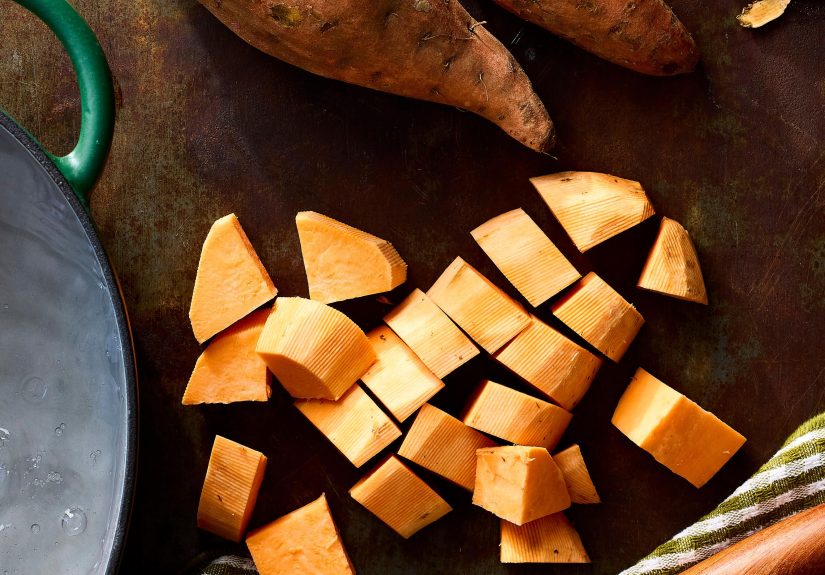
- Peel (optional) and cut evenly. For fastest cooking and best texture, cut into uniform chunks. 1-inch cubes cook quickly; 2-inch chunks hold shape better.
- Use cold water again. Put cubes in a pot and cover with cold water by about 1 inch. Cold water helps the center cook at the same pace as the outside.
- Add salt if desired. Same deal: a generous pinch helps the flavor.
- Bring to a boil, then simmer gently. Keep it calmaggressive boiling can break cubes apart.
- Test early. Sweet potatoes can go from “not ready” to “oops, soup” quickly if cut small. Fork-tender means the fork slides in easily, but the cube still has some structure.
- Drain well. For mash, let the cubes steam-dry for a minute or two before adding butter, milk, or seasonings.
How Long to Boil Sweet Potatoes (Timing Chart)
Cooking time depends on size, variety, and how aggressively your water simmers. Use this as a reliable starting point, then trust your fork more than your clock.
| Cut / Size | Typical Boil Time (after reaching a simmer) | Best For |
|---|---|---|
| 1-inch cubes | 10–15 minutes | Mash, quick meal prep, soups |
| 2-inch chunks | 18–25 minutes | Salads, bowls, hold-shape sides |
| Whole small | 20–30 minutes | Easy peel, mash |
| Whole medium | 30–40 minutes | Classic whole boiled sweet potato |
| Whole large | 40–50 minutes | Big batches, casseroles |
Pro note: If you live at high elevation, water boils at a lower temperature, so potatoes can take longer. Just add time and keep testing.
How to Tell When They’re Done (Without Guessing)
Sweet potatoes are done when they’re fork-tender:
- For mash: the fork slides in effortlessly, and the potato feels soft all the way through.
- For cubes you want to hold shape: tender, but not collapsing; a fork should pierce easily without crumbling the cube.
If the outside is soft but the center is still firm, your pieces are likely uneven in sizeor the pot came to a boil too fast and the exterior cooked before the interior had a chance to catch up. Next time: start in cold water and cut more evenly.
Flavor Upgrades That Don’t Require a Culinary Degree
Boiling is neutral, which means it’s a blank canvas. Here are ways to make boiled sweet potatoes taste intentional:
Simple savory
- Butter + salt + black pepper (boring on paper, great in real life)
- Olive oil + garlic powder + smoked paprika
- Chopped herbs (parsley, chives, cilantro) + a squeeze of lemon
Cozy sweet (not dessert-casserole sweet)
- Cinnamon + pinch of salt + a tiny drizzle of maple syrup
- Brown sugar + butter + a drop of vanilla (for mash)
- Orange zest + cinnamon (surprisingly bright)
Add-ins for mashed sweet potatoes
- Greek yogurt or sour cream for tang + creaminess
- Warm milk (or oat milk) to loosen texture
- A pinch of cayenne for sweet-heat balance
How to Peel Sweet Potatoes Easily After Boiling
If you boiled them whole with the skin on, peeling can be almost suspiciously easy:
- Drain and let cool until you can handle them safely.
- Slice off one end.
- Make a shallow slit down the length (just through the skin).
- Pull or rub the skin awayoften it slides off in sections.
If the skin clings, the potato may be slightly undercooked. Give it a few more minutes, then try again.
Common Mistakes (and How to Fix Them)
Mistake: Waterlogged sweet potatoes
This usually happens when pieces are cut small and cooked too long, or when you mash immediately without letting steam escape. Fix: Drain thoroughly and steam-dry in the warm pot for 1–2 minutes. For mash, add warm butter first, then adjust with milk little by little.
Mistake: Outside mushy, center firm
Often caused by adding potatoes to already-boiling water, or uneven chunk sizes. Fix: Start in cold water and cut pieces uniformly.
Mistake: Bland results
Sweet potatoes are sweet, but “sweet” isn’t the same as “seasoned.” Fix: Salt the water lightly, then finish with salt + fat (butter or olive oil) and one strong flavor (herb, spice blend, citrus).
Mistake: Splitting skins on whole sweet potatoes
High, aggressive boiling can make the potato bump around and split. Fix: Keep it at a gentle simmer once boiling.
Storing, Meal Prep, and Reheating
Boiled sweet potatoes are meal-prep gold because they store well and adapt to sweet or savory meals.
How to store cooked sweet potatoes
- Refrigerator: Cool completely, then store in an airtight container for 3–5 days.
- Freezer: Mash or cube, cool completely, then freeze in freezer bags or containers for up to 3 months.
Reheating tips
- Microwave: Fastest. Add a tiny splash of water and cover to prevent drying.
- Stovetop: Reheat mash with a little milk/butter over low heat, stirring often.
- Oven: Spread cubes on a sheet pan and warm at a moderate temperature until hot.
If you’re interested in a lower “blood sugar bump” approach, some sources suggest cooling cooked potatoes before eating (or cooling and reheating) to increase resistant starch. Whether you do that for nutrition reasons or because cold sweet potato chunks make a great salad ingredient, the fridge can be your friend here.
Easy Ways to Use Boiled Sweet Potatoes
- Sweet potato mash: butter + salt + cinnamon (or garlic + herbs for savory)
- Taco filling: cube and toss with chili powder, cumin, salt, and lime
- Breakfast bowl: warm cubes + eggs + salsa + avocado
- Quick soup: blend boiled sweet potatoes with broth, ginger, and coconut milk
- Salads: chilled cubes + greens + feta + walnuts + balsamic
FAQ: Boiling Sweet Potatoes
Do you peel sweet potatoes before boiling?
You can, but you don’t have to. For whole sweet potatoes, many people boil with the skin on, then peel afterward because it’s easier. For cubes, peeling first gives a smoother texture (especially for mash).
Should you boil sweet potatoes in salted water?
It’s optional, but recommended. Salt helps with overall flavor so you don’t end up dumping extra salt later trying to “fix” bland potatoes.
Can you overboil sweet potatoes?
Absolutely. Overboiled cubes can turn into a mash while you’re still pretending you’re making a salad. Start checking early, especially for 1-inch pieces.
Why start sweet potatoes in cold water?
Starting in cold water helps the potato heat more evenly from the outside to the center. It reduces the odds of an overcooked exterior with an undercooked middle.
Are boiled sweet potatoes healthy?
Generally, yessweet potatoes provide fiber and important nutrients, and boiling is a simple method that doesn’t require added oil. The healthiest “version” depends on what you add afterward (a little butter is one thing; a marshmallow mountain is… a lifestyle).
Kitchen Experiences: 10 Little Lessons from Boiling Sweet Potatoes (Extra Tips & Stories)
The internet loves “perfect” instructions, but real kitchens are messy, loud, and occasionally full of people asking, “Is this done yet?” Here are practical, experience-based lessons that show up again and again when people learn how to boil sweet potatoesespecially if you’re cooking for family, meal prepping, or just trying to get dinner on the table before everyone becomes a dramatic hunger poet.
1) The pot size matters more than you think
If you cram sweet potatoes into a pot like you’re trying to win a suitcase-packing contest, they cook unevenly. The water temperature drops hard when you add a huge load, and the pieces can end up cooking at different speeds. A roomy pot keeps things calmer and more consistent. If you’re doing a big batch, it’s often better to use two pots than one overcrowded one.
2) “Gentle simmer” is not a suggestionit’s the whole vibe
A rolling boil looks impressive, but it can bash cubes into ragged edges and split whole sweet potatoes. A gentle simmer gives you tender potatoes that still behave like potatoes. Think “small bubbles and steady heat,” not “hot tub party for root vegetables.”
3) The fork test saves more dinners than any timer
People ask for an exact sweet potato cooking time, but the truth is: size varies, varieties vary, and even freshness varies. A potato that’s been sitting around longer can feel a little drier and denser. Your fork tells you the truth faster than your phone timer. Check early, then check again in a couple of minutes. This simple habit prevents the classic tragedy: “I only needed two more minutes, and now it’s baby food.”
4) The “steam-dry” step is the secret to great mash
If you drain sweet potatoes and mash immediately, extra surface moisture can sneak in and make your mash taste watery. Letting them sit in the warm pot (off heat) for a minute or two lets steam escape. It’s a small step that makes mash thicker, creamier, and more “restaurant side dish” than “I panicked and added water.”
5) Cutting evenly feels annoyinguntil you don’t do it
Uneven chunks guarantee uneven results: tiny pieces turn mushy while big pieces stay firm. If you’re making a salad or bowl, that’s especially frustrating because you want cubes that hold their shape. The best practical approach is to cut everything to roughly the same thickness, even if the shapes aren’t perfect cubes. Your goal is consistent cooking, not geometry homework.
6) Salt early, season smart, and don’t confuse “sweet” with “finished”
Sweet potatoes have natural sweetness, but they still need seasoning. A little salt in the cooking water plus a flavorful finish (butter and pepper, olive oil and herbs, cinnamon and a pinch of salt) makes them taste intentional. The funniest mistake is when someone says, “It tastes like nothing,” while staring at a plain boiled potato like it betrayed them personally. It didn’t betray youyou just haven’t introduced it to salt yet.
7) Whole sweet potatoes are a peeling cheat code
Many home cooks discover the joy of boiling whole sweet potatoes when they’re tired of peeling raw ones. After boiling, skins can slip off in big sections. It’s oddly satisfying, like removing a sticker in one perfect sheet. The key is letting them cool just enough to handle safely, then making one shallow slit down the length and peeling from there.
8) Boiled sweet potatoes are meal prep that doesn’t taste like punishment
A lot of meal prep fails because it’s bland and repetitive. Boiled sweet potatoes avoid that problem because they’re neutral and adaptable. One batch can become: savory cubes with taco seasoning, mashed sweet potato with cinnamon, or a blended soup base with ginger. The “experience” takeaway is simple: prep the potato plain, then change the flavor direction later so you don’t get bored by Wednesday.
9) Cooling them isn’t just for storageit changes how you use them
Warm boiled sweet potatoes are comforting. Chilled boiled sweet potato cubes are excellent in salads and bowls because they stay intact and absorb dressings well without falling apart. People also like cooling cooked potatoes for potential resistant-starch benefits. Either way, it’s a useful trick: cook once, eat warm today, eat chilled tomorrow, reheat later if you want.
10) The best “upgrade” is contrast
Boiled sweet potatoes are soft and sweet. The most satisfying dishes add contrast: something crunchy (toasted nuts, pepitas), something tangy (lemon, yogurt, vinegar), something salty (feta, parmesan, bacon bits if that’s your thing), or something spicy (cayenne, chili flakes). Once you notice this pattern, your sweet potatoes stop being “a side” and start being “the thing people keep stealing off your plate.”
Conclusion
If you’ve been sleeping on boiling, consider this your gentle wake-up call (not an alarm clockyou deserve peace). When you know how to boil sweet potatoes the right waystarting in cold water, simmering gently, testing for doneness, and letting them steam-dryyou get consistent texture, easy peeling, and a base ingredient that works in everything from mash to salads. Keep the timing chart handy, season with confidence, and remember: sweet potatoes are forgiving. Your fork test is the real boss.