Table of Contents >> Show >> Hide
- Why the C64 Keeps Getting Rebuilt (and why we’re fine with it)
- FPGA vs Emulation: the “Is It Real?” Debate, Explained Without Throwing Joysticks
- The New Wave: C64 on Small, Cheap FPGAs (Tang Nano and friends)
- The Full-Size Comeback: Commodore 64 Ultimate and the “New C64” Moment
- Motherboard Replacements and Power-User Gear: Ultimate 64, 1541 Ultimate, and MiSTer
- Video and Audio Upgrades: VIC-II Kawari, HDMI mods, and SID survival
- Choosing Your Best “Commodore 64 on FPGA” Setup
- Conclusion: the C64 isn’t “back”it never left
- Practical Experiences You Can Expect with “Commodore 64 on New FPGA” (Extra )
The Commodore 64 refuses to stay in the past. You can put it in an attic, a closet, or that mysterious “box of cables” you swear you’ll organize somedayand it still finds a way to boot up in our collective imagination. In 2025–2026, the C64’s comeback tour got a shiny new instrument: modern FPGAs. Not “software pretending to be hardware,” but reconfigurable silicon you can program to behave like the original machine’s logic at a gate-and-timing level.
And here’s the twist: “Commodore 64 on new FPGA” doesn’t mean just one product. It’s a whole spectrumeverything from tiny, inexpensive dev boards that can run a proof-of-concept C64 core, to premium “new C64” machines that look like 1982 but plug into HDMI like it’s 2026 (because it is). Let’s tour the landscape, decode what FPGA C64 actually buys you, and figure out which route fits your retro personalitycollector, tinkerer, demo-scene purist, or “I just want to play Impossible Mission without recapping a motherboard.”
Why the C64 Keeps Getting Rebuilt (and why we’re fine with it)
The C64 isn’t just nostalgiait’s an ecosystem. The machine’s sound (SID), video (VIC-II), and weirdly wonderful timing quirks fueled decades of games, music tools, and demo-scene wizardry. People still write new productions that depend on cycle-level behavior, edge-case raster tricks, and that delightfully cranky relationship between the CPU and video chip.
Original hardware is aging: chips fail, power supplies can be risky, and “it worked yesterday” is not a diagnostic plan. FPGA recreations exist because they preserve the experience while reducing the “please don’t let the magic smoke out” anxiety. Plus, modern add-onsfast loading, storage images, digital video, networkingcan coexist with the classic feel if the implementation is done right.
FPGA vs Emulation: the “Is It Real?” Debate, Explained Without Throwing Joysticks
What an FPGA is doing (in plain English)
A field-programmable gate array (FPGA) is a chip you can configure into custom digital circuits. Instead of running a program that imitates a 6510 CPU, you can build a CPU-like circuit (and the surrounding glue logic) inside the FPGA. That’s why you’ll hear phrases like “hardware-level recreation” or “cycle-accurate behavior.”
Why cycle accuracy matters on the Commodore 64
The C64’s personality comes from timing: the CPU shares memory access with the VIC-II video chip; raster interrupts and badlines are not folklorethey’re how many classic effects work. Plenty of software emulators are excellent, but FPGAs can reduce latency and replicate those “this shouldn’t work but it does” timing interactions in a way that makes picky demos and hardware expansions happier.
When emulation is totally fine (and when FPGA wins)
If you’re playing common games, writing BASIC, or exploring classics casually, software emulation can be perfect. FPGA tends to shine when you want: (1) tighter input latency, (2) closer hardware compatibility with cartridges and peripherals, (3) more confidence with timing-sensitive demos, and (4) a “feels like a machine, not an app” experienceespecially when the FPGA is inside a device with real ports and a real keyboard.
The New Wave: C64 on Small, Cheap FPGAs (Tang Nano and friends)
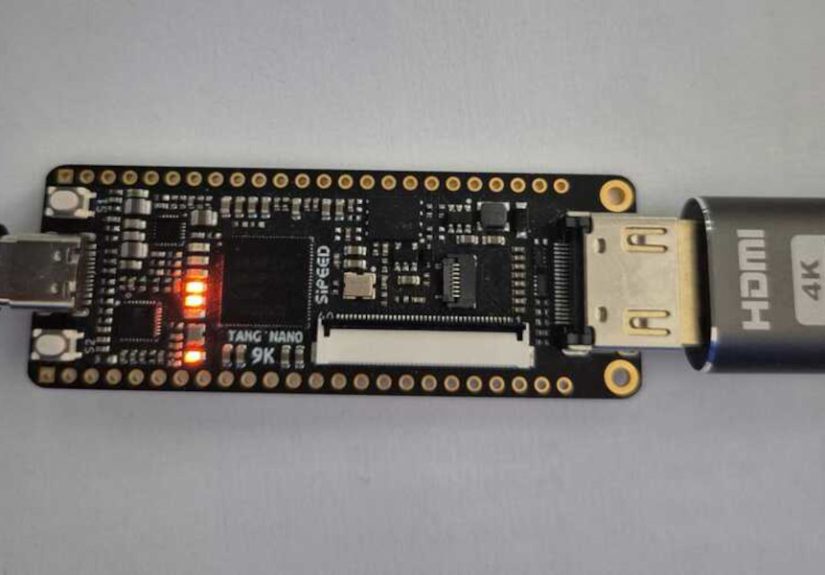
VIC64-T9K: the “hey, this works!” proof-of-concept on Tang Nano 9K
One of the most fun recent trends is seeing the C64 land on smaller, inexpensive FPGA boards. A notable example is a proof-of-concept C64-style build designed to run core componentsthink VIC-II-ish video behavior alongside a 6502-family CPUon a budget-friendly Tang Nano 9K board. The point isn’t to replace every last feature from a fully expanded breadbin; it’s to prove you can get meaningful C64 compatibility and behavior on modern low-cost FPGA hardware.
This is where “Commodore 64 on new FPGA” gets spicy: it’s not only about premium recreations. It’s also about democratizing the hardware experience so more people can build, learn, and iterate. Today it’s a proof-of-concept; tomorrow it’s a community core with better compatibility, better video output options, and a growing list of supported cartridge images.
What you gainand what you give upon tiny FPGA boards
Smaller FPGA boards can be brilliant for learning, experimentation, and portable builds. But you usually trade off some combination of: perfect compatibility with edge-case expansions, exact analog “feel,” and the convenience of an all-in-one commercial device. Think of it like cooking: a $10 frying pan can make a great egg, but you may not want to host Thanksgiving with it.
The Full-Size Comeback: Commodore 64 Ultimate and the “New C64” Moment
What it is (and what makes it different)
The headline-grabber in the FPGA C64 world is the Commodore 64 Ultimate: a new, official-branded C64-style computer built around an FPGA implementation rather than software emulation. The pitch is direct: classic form factor, modern internals, and broad compatibility with original games, peripherals, and cartridgesplus modern conveniences like HDMI and USB storage.
Modern features without breaking the spell
The interesting part is how these devices walk a tightrope: add modern video output, networking, and storage supportwithout losing the “this is a Commodore 64” vibe. Reviews and spec breakdowns describe configurations that include modern memory, HDMI output, and multiple connectivity options while still preserving legacy ports for joysticks, cartridge use, and classic peripherals.
It’s also a reminder that “new FPGA” doesn’t just mean “new chip.” It means new design philosophy: keeping the original experience intact while packaging it in something you can actually use daily without hunting for a 35-year-old monitor and a working disk drive.
Who this is for
If you want a living-room-friendly C64 that boots fast, connects to modern displays, and still talks to vintage hardware, this category is compelling. If you prefer the ritualwarming up a real breadbin, listening to a drive chatter like a mechanical woodpeckerthere are FPGA options that preserve the ritual too. The good news is you can choose your flavor of authenticity.
Motherboard Replacements and Power-User Gear: Ultimate 64, 1541 Ultimate, and MiSTer
Ultimate 64: a replacement motherboard that thinks it’s 1982 (in a good way)
Before “new C64” became a mainstream headline, the community already had serious FPGA-based hardware like the Ultimate 64 linereplacement motherboards that implement the C64 in FPGA while adding modern ports and quality-of-life improvements. This route is popular if you want to keep a classic case/keyboard look while upgrading the guts to something reliable and feature-rich.
In practical terms, replacement boards are the “ship of Theseus” approach: same case, same vibe, far fewer failure points. They often integrate storage and peripheral features that normally require multiple add-onsso your desk looks less like a science fair and more like a purposeful retro workstation.
1541 Ultimate II+: the floppy drive you don’t have to apologize for
The Commodore disk drive experience is iconic… and objectively slow. FPGA-powered peripherals like the 1541 Ultimate line exist to preserve compatibility while letting you load disk images and cartridge images from modern media. Some variants emphasize cycle-accurate drive behavior, support multiple image formats, and add networking-friendly featuresall while plugging into the C64 ecosystem like it belongs there.
Think of it as keeping the language of the original hardware (IEC serial behavior, drive timing, cartridge compatibility), but letting the “storage” be a USB stick instead of a stack of floppies that smell faintly like 1987.
MiSTer FPGA: the “one box, many machines” approach (with a strong C64 core)
If you want flexibility, MiSTer is a powerhouse: an FPGA platform where you load different “cores” (hardware recreations) for different systems. The Commodore 64 core is widely used and feature-rich, supporting common disk image formats, many cartridge formats, and multiple operating modes. For a lot of people, MiSTer becomes the daily-driver way to experience FPGA-based retro computing because it’s modular: today you’re in C64 land, tomorrow you’re booting something completely different.
The MiSTer C64 core’s feature lists commonly include disk image support (including GCR-style images), cartridge image support, and options that help reproduce classic behaviors while adding modern conveniences. It’s not “a new C64 in a box,” but it is a remarkably practical FPGA C64 setupespecially if you also enjoy other classic systems.
Video and Audio Upgrades: VIC-II Kawari, HDMI mods, and SID survival
VIC-II Kawari: an FPGA replacement for the VIC-II video chip
One of the coolest FPGA applications in the C64 world isn’t “replace the whole computer.” It’s “replace one legendary chip.” VIC-II Kawari is an FPGA-based replacement for the VIC-II that can add modern digital video output and additional video features while keeping the broader machine authentic. It’s the kind of mod that makes you feel like you’ve upgraded your C64 into a secret “developer edition” without turning it into something unrecognizable.
HD-64-style solutions: “sniff the signals, keep the original chip”
There are also HDMI upgrade approaches that keep the original VIC-II installed and “sniff” its signals to generate a clean digital output. This can preserve compatibility while delivering modern display friendliness. The main idea is simple: don’t mess with the original behaviorjust translate what it’s already doing into a format your 2026 TV won’t treat like an alien transmission.
SID: the sound that makes people argue on the internet (lovingly)
Audio is where the C64 gets emotional. SID isn’t just a sound chip; it’s a culture. Because original SID chips are finite and aging, FPGA-based SID recreations and “multi-SID” solutions exist to keep the music alive. Some setups mix real SID sockets with configurable FPGA-based SID emulation options, giving users choices: real chip authenticity, FPGA convenience, or a blend of both depending on your goals and hardware availability.
Choosing Your Best “Commodore 64 on FPGA” Setup
The best option depends less on ideology (“FPGA good, emulation bad”) and more on your real-life habits. Here’s a practical cheat sheet:
- You want an all-in-one, modern-output C64 experience:
Look at a dedicated FPGA C64 computer with HDMI, USB, and legacy portssomething designed to feel like a new Commodore 64 while still talking to vintage peripherals. - You have a beloved C64 case and want reliability:
A replacement FPGA motherboard can preserve the exterior while upgrading the internals and adding quality-of-life features. - You want the most flexible FPGA playground:
MiSTer is hard to beat if you like switching systems and experimenting with different cores. - You love original hardware but want modern video:
Consider VIC-II replacement solutions or HDMI “signal capture” mods that keep the machine’s behavior intact. - You’re a builder who likes living on the edge:
Tiny FPGA boards running C64 proof-of-concepts are a great way to learn and contribute to the communityjust expect some limitations and tinkering.
Conclusion: the C64 isn’t “back”it never left
“Commodore 64 on new FPGA” is really a story about preservation and play. FPGA-based C64 projects protect the machine’s quirksthe timing, the sound, the compatibility with oddball cartridgeswhile making it easier to use in a modern world. Whether you want a polished, official-feeling C64 computer with HDMI, a replacement motherboard inside a classic shell, a MiSTer setup that doubles as a retro computing buffet, or a tiny FPGA proof-of-concept that you can learn from and improve… the C64 is thriving because people keep rebuilding it with love.
And honestly, that’s the most Commodore 64 thing imaginable: a machine that inspired a generation to hack, tinker, and createstill inspiring people to do exactly that, just with newer silicon and fewer blown capacitors.
Practical Experiences You Can Expect with “Commodore 64 on New FPGA” (Extra )
If you’re considering an FPGA-based C64 setup, here’s what the experience tends to feel like in real lifethe good, the funny, and the “why is this menu option named like a spaceship part?”
1) The first boot is oddly emotional. Even with a modern FPGA device, the C64 vibe hits fast: that familiar BASIC prompt, the keyboard layout that makes your fingers remember things your brain forgot, and the sudden urge to type LOAD"*",8,1 even if you’re loading from USB. FPGA systems often boot more reliably than aging originals, so you get the nostalgia without the ritual of reseating chips like you’re performing tiny CPR.
2) HDMI changes your relationship with the C64. With classic hardware, video can be a whole side questcables, converters, blurry composite, and the eternal hunt for “a TV that still has that one port.” FPGA-based C64 computers (and video-focused mods) can make the machine feel suddenly modern. Crisp pixels are great… but you might also realize that some old games were designed for the softness of CRTs. That’s not a problemmany setups offer scaling and display optionsbut it’s a reminder that “accuracy” includes how the picture was seen, not just how it was generated.
3) Loading speed becomes a philosophical debate. The C64 is famous for slow disk loading, and some FPGA devices preserve that “authentic” timing. Meanwhile, cartridge/drive emulation and fast-load features can make things dramatically quicker. The funny part is how quickly you adapt: at first you’ll say, “Yes! Instant loading!” Then a day later you’ll miss the drive noises and start toggling settings like you’re choosing between “espresso” and “hand-poured pour-over.” Many people end up with two modes: fast for testing and browsing, authentic for immersion.
4) Compatibility is usually excellentuntil it isn’t. Most mainstream games and tools behave beautifully on FPGA C64 solutions, especially those designed for broad compatibility. But the C64 world is full of edge cases: weird demos, odd timing tricks, obscure cartridges. When something fails, you’ll learn a new vocabulary: PAL/NTSC differences, raster timing, cartridge mapper types, drive image formats, and “why this one intro doesn’t like my settings.” The upside is that FPGA communities are typically active, and updates can improve behavior over timesomething your original 1980s motherboard never got unless you broke out a soldering iron.
5) The best part is how “physical” it feels again. A real keyboard, real joystick ports, and hardware-oriented menus make the experience feel like using a machine, not launching an app. If you grew up with the C64, that’s comfort food. If you didn’t, it’s a fun kind of “digital detox”: fewer distractions, more focus, and a surprising amount of joy in making a simple program run.
In short: an FPGA C64 setup can feel like time travel with better lighting. You still get the charm, the quirks, and the culturebut with modern stability and options. And once you have it on your desk, don’t be surprised if you start saying things like, “I’ll just test one more disk image,” and suddenly it’s 2 a.m. again. The Commodore 64 has always been powerful. It just didn’t always have HDMI.