Table of Contents >> Show >> Hide
- Brain cancer vs. brain tumor: What do these words actually mean?
- Types of brain cancer (and common brain tumors)
- Symptoms of brain cancer: Why they can be sneaky
- How brain cancer is diagnosed
- Treatments for brain cancer: The “combo meal” approach
- What affects prognosis?
- Living with brain cancer: Practical next steps
- FAQ
- Experiences people often share (patient and caregiver perspectives)
- Conclusion
The phrase “brain cancer” can sound like a single, clear-cut diagnosis. In real life, it’s more like an umbrella termcovering several different cancers
that start in the brain or spread to the brain from somewhere else. And because your brain runs… basically everything (movement, speech, memory,
mood, balance, breathing, the ability to laugh at bad puns), symptoms and treatment plans can look wildly different from one person to the next.
This guide breaks down the most common types of brain cancer, the symptoms people notice (and why they can be confusing), how doctors diagnose brain tumors,
and what treatment options usually involve. It’s in-depth, but readablelike a helpful friend who happens to be holding a medical textbook (and a highlighter).
Brain cancer vs. brain tumor: What do these words actually mean?
“Brain tumor” is the big category
A brain tumor is an abnormal growth of cells in or around the brain. Tumors can be benign (not cancer) or
malignant (cancer). Even benign tumors can cause serious problems if they press on critical areasbecause the skull isn’t exactly known for
its flexibility.
“Brain cancer” usually means malignant tumors
When people say brain cancer, they often mean a malignant primary brain tumor (a cancer that starts in the brain) or
brain metastases (cancer that started elsewherelike the lung, breast, melanoma, kidney, or colonand spread to the brain).
Primary vs. metastatic: Two very different situations
- Primary brain tumors start in the brain or spinal cord. Many are not cancer; some are cancer.
- Metastatic brain tumors (brain metastases) come from cancers elsewhere in the body and are common in advanced cancer.
Types of brain cancer (and common brain tumors)
Brain tumors are classified by the type of cell involved, where they’re located, and how aggressive they look under the microscope (often described as a
grade). Here are the most common categories you’ll hear about.
Gliomas (tumors from glial cells)
Gliomas begin in glial cells, which support and protect neurons. Gliomas include several subtypes, and they can range from slower-growing
to very aggressive.
- Astrocytomas: from astrocytes; can be low-grade or high-grade.
- Oligodendrogliomas: often associated with specific genetic features; can respond well to certain therapies.
- Ependymomas: arise from cells lining fluid-filled spaces in the brain and spinal cord.
Glioblastoma (GBM)
Glioblastoma is typically a high-grade, fast-growing malignant glioma in adults. It’s known for infiltrating normal brain tissue, which
can make complete surgical removal difficult. GBM treatment usually involves a combination approach (more on that below).
Meningioma (often not cancer, but can be)
Meningiomas arise from the meninges, the layers covering the brain and spinal cord. Many meningiomas are benign and slow-growing, but some
are atypical or malignant and may require more intensive treatment or follow-up.
Primary CNS lymphoma
Primary central nervous system (CNS) lymphoma is a type of lymphoma that starts in the brain, spinal cord, or eye. It’s more common in
people with weakened immune systems, but it can occur in others too. Treatment often relies on systemic therapies rather than surgery alone.
Medulloblastoma and other embryonal tumors
These are more common in children but can occur in adults. Treatment often includes surgery and radiation, sometimes combined with chemotherapy, depending on
age, tumor subtype, and spread within the CNS.
Pituitary tumors and other sellar region tumors
Many pituitary tumors are benign, but they can still cause big issues by affecting hormone production or pressing on nearby structures (like the optic nerves).
Treatment may involve medication, surgery, radiation, or observation.
Metastatic brain tumors (brain metastases)
Brain metastases are cancers that spread to the brain from another site. The “type” is defined by the original cancer (for example, metastatic lung cancer to
the brain). Treatment depends on how many metastases there are, where they’re located, symptoms, and what’s happening with the cancer elsewhere in the body.
Symptoms of brain cancer: Why they can be sneaky
Brain tumor symptoms depend on location, size, and whether there’s swelling or increased pressure inside the skull.
Some symptoms are general (headaches, nausea). Others are tied to specific brain regions (speech changes, weakness on one side).
Common symptoms
- Headaches that are new, persistent, or changing in pattern (especially with nausea/vomiting).
- Seizuresparticularly a first-time seizure in an adult.
- Weakness or numbness (often on one side of the body).
- Vision changes, such as blurred vision, double vision, or visual field loss.
- Speech or language trouble: finding words, understanding, slurred speech.
- Balance problems, dizziness, clumsiness, or trouble walking.
- Personality, mood, or memory changes that are new and persistent.
- Confusion or changes in alertness.
Examples of location-based symptoms (the “where” matters)
- Frontal lobe: personality changes, poor judgment, difficulty planning, weakness.
(This is why a brain tumor can sometimes look like “just stress” or “just burnout” at first.) - Temporal lobe: memory problems, language issues, seizures.
- Parietal lobe: trouble with sensation, spatial awareness, coordination.
- Occipital lobe: visual disturbances.
- Cerebellum: balance issues, unsteady walking, coordination problems.
- Brainstem: swallowing problems, facial weakness, serious neurologic symptoms.
When symptoms need urgent evaluation
Call emergency services or seek urgent care for new seizure, sudden severe headache, sudden weakness or speech difficulty, severe confusion,
fainting, or rapidly worsening neurologic symptoms. Time matters when the brain is sending distress signals.
How brain cancer is diagnosed
Diagnosis is usually a step-by-step process. The goal is to identify what the tumor is, where it is, how aggressive it appears, and what treatment options
are realistic and safe.
Medical history and neurologic exam
Clinicians look at symptom patterns (when they started, how they’ve changed), then do a neurologic examchecking strength, reflexes, coordination, sensation,
speech, vision, and mental status.
Imaging: MRI is usually the star
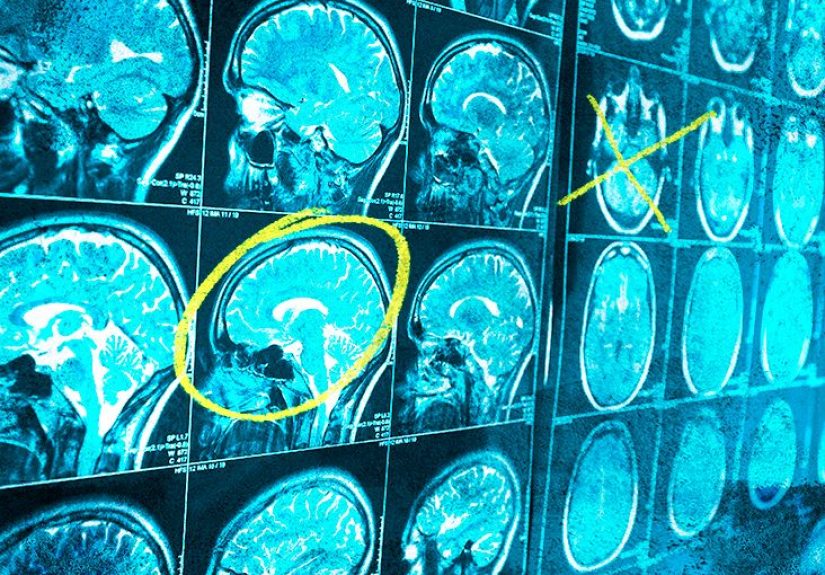
Brain tumors are commonly evaluated with MRI (often with contrast). MRI provides detailed images of brain tissue and helps doctors estimate
tumor boundaries, swelling, and involvement of nearby structures. CT scans may be used in emergencies or when MRI isn’t possible.
Biopsy or surgical removal: Getting the real diagnosis
Imaging can strongly suggest a diagnosis, but the most definitive answers often come from examining tumor tissue. This may happen through:
- Surgical resection (removing as much tumor as safely possible), or
- Stereotactic biopsy (a targeted tissue sample when full removal isn’t safe).
Grading and molecular testing: The “fine print” that changes treatment
Tumors are graded based on how abnormal the cells look and how aggressively they’re likely to behave. Increasingly, tumor classification also uses
molecular markersgenetic and epigenetic features that help predict behavior and guide therapy. For gliomas, tests may include markers such as
IDH mutation, 1p/19q codeletion, and MGMT promoter methylation, among others.
If it might be metastatic
When brain metastases are suspected, doctors look for the primary cancer site (if it isn’t already known) and evaluate the rest of the body. Treatment planning
often involves both oncology and neuro-oncology teams.
Treatments for brain cancer: The “combo meal” approach
Treatment depends on tumor type, grade, location, size, how many tumors exist, the person’s overall health, and personal priorities. Many plans use multiple
treatments togetherbecause brain cancer rarely plays fair, so doctors don’t either.
Surgery
Surgery may be used to remove the tumor, reduce pressure, confirm diagnosis, and relieve symptoms. The goal is often maximal safe resection:
remove as much as possible without causing unacceptable neurologic harm. In some locations, complete removal isn’t safe, and surgeons may remove part of the
tumor or do a biopsy instead.
Radiation therapy
Radiation can target remaining tumor cells after surgery or treat tumors that can’t be removed. Common approaches include:
- External beam radiation: delivered over multiple sessions.
- Stereotactic radiosurgery (SRS): highly focused radiation in one or a few sessions (often used for certain metastases or small lesions).
- Whole-brain radiation therapy: sometimes used for multiple brain metastases, depending on the situation.
Chemotherapy
Chemotherapy for brain cancer depends on tumor type. For glioblastoma and some other gliomas, temozolomide is a commonly used drug, often
paired with radiation and then continued afterward. Some tumor types may use other regimens (for example, combinations like PCV for specific gliomas), and
primary CNS lymphoma typically uses chemotherapy-based approaches designed for CNS involvement.
Targeted therapy (when the tumor has a target)
Targeted therapy uses drugs aimed at specific changes in tumor cells. These treatments aren’t universal for all brain cancers; they depend on finding a
relevant molecular feature. This is one reason molecular testing matters: it can open (or close) certain treatment doors.
Immunotherapy (selected cases and clinical trials)
Immunotherapy has transformed care for some cancers. In brain tumors, its role varies by tumor type and individual factors, and it may be used in certain
settings or through clinical trials. Some cancers that metastasize to the brain may also be treated with systemic immunotherapy depending on the primary cancer.
Tumor Treating Fields (TTFields)
Tumor Treating Fields are low-intensity, alternating electric fields delivered through a wearable device placed on the scalp. TTFields are used
in certain cases of glioblastoma, often along with temozolomide after initial surgery and radiation in appropriate patients. It’s not the right
tool for every tumor type, but it’s a notable option in modern GBM care.
Clinical trials
Clinical trials may offer access to new therapies, new combinations of existing therapies, or new approaches like vaccines, novel targeted drugs, or advanced
radiation techniques. Trials can be considered at diagnosis or recurrence, depending on eligibility.
Supportive care (including palliative care)
Supportive care focuses on symptom relief and quality of lifeduring treatment and beyond. This can include:
- Medications to reduce swelling (like steroids), manage seizures, nausea, or pain.
- Rehabilitation: physical, occupational, and speech therapy.
- Cognitive and emotional support, counseling, and caregiver resources.
- Palliative care to help with complex symptoms and decision-makingat any stage, not only end-of-life.
What affects prognosis?
Prognosis depends on many variables, and two people with “brain cancer” can have very different outlooks. Key factors often include:
- Tumor type and grade (what it is and how aggressive it appears).
- Molecular features (which can predict response to therapy in some tumors).
- Location (some areas are harder to operate on safely).
- Extent of resection (how much can be removed without harm).
- Age and overall health.
- Response to treatment and whether the tumor recurs.
A quick reality check: the internet is good at many things, but it is famously terrible at giving individualized prognoses. Your care team, with your imaging,
pathology, and clinical details, is the best source for what to expect.
Living with brain cancer: Practical next steps
Build your “team sheet”
Brain tumor care is often multidisciplinary. You may see neurosurgeons, neuro-oncologists, medical oncologists, radiation oncologists, neurologists,
rehabilitation specialists, and palliative care clinicians. Keeping a running list of names, roles, and contact numbers can save your future self a lot of stress.
Track symptoms (without letting them run your life)
A simple notebook or phone note can help: headaches, seizures, new weakness, memory changes, medication side effects, sleep, appetite. Patterns can be
medically usefuland emotionally reassuring (“I’m not imagining this; it’s changing.”).
Plan for safety
Some patients may face driving restrictions after seizures, need fall-prevention strategies, or benefit from home adjustments during treatment.
Ask your care team what precautions fit your situation.
FAQ
Is every brain tumor cancer?
No. Many brain tumors are benign. But benign doesn’t always mean harmlesslocation and size can still cause serious symptoms.
What’s the difference between a brain tumor and glioblastoma?
“Brain tumor” is a broad category. Glioblastoma is one specific type of malignant brain tumor (a high-grade glioma) and tends to be aggressive.
What’s usually the first test for suspected brain cancer?
Brain imagingmost commonly an MRI with contrastis a standard first step. Diagnosis is typically confirmed with tissue sampling when possible and appropriate.
Can brain metastases be treated?
Yes. Treatments may include surgery, stereotactic radiosurgery, radiation, systemic therapies for the primary cancer, and supportive caredepending on the
number of metastases and the overall cancer situation.
Should I consider a second opinion?
Many people do, especially for complex diagnoses like brain tumors. A second opinion can confirm the pathology, clarify options, and help you feel confident
about your plan.
Experiences people often share (patient and caregiver perspectives)
Every brain cancer story is unique, but certain themes come up again and againespecially when people talk about the road from “something feels off” to
diagnosis, treatment, and daily life afterward.
One common experience is how non-specific the earliest symptoms can be. Some people describe weeks of headaches that feel like stress or
sinus problems, or a subtle “brain fog” that makes work harder. Others notice personality shifts: irritability, impulsive decisions, or a shorter fuse that
doesn’t match who they normally are. Families sometimes say, “We thought it was burnout,” until a sudden eventlike a first-time seizureforced a fast trip to
the ER and an imaging scan that changed everything.
The diagnostic phase can feel like speed-running a new language. People often remember the day they learned what an MRI “with contrast” is, or why doctors keep
repeating words like “mass effect,” “edema,” and “midline shift.” Many also describe the emotional whiplash of hearing that a tumor can be “benign” yet still
require surgery, or that a tumor can be malignant but treatable with a long-term plan. It’s also common to hear about the relief of finally having an
explanationbecause uncertainty is exhausting in a way that doesn’t always show up on a scan.
During treatment, the most frequent “surprises” people mention aren’t only about the tumorit’s also about side effects and logistics.
Radiation schedules can become a full-time job with commutes, appointments, and fatigue that builds gradually. Some patients talk about steroid medications as
a double-edged sword: they can reduce swelling and improve symptoms, but they may also affect sleep, appetite, or mood. Caregivers often describe learning to
spot patternslike which times of day are best for conversations, exercise, or paperworkbecause energy and attention can fluctuate.
Many patients describe rehabilitation as a turning point. Physical therapy, occupational therapy, and speech therapy can help people regain balance, strength,
word-finding, and confidence. The emotional side matters too: people often talk about grief for “how life used to be,” mixed with pride in small milestones
(walking farther, remembering a list, cooking a meal). Support groupsonline or localare frequently described as unexpectedly powerful, because talking to
someone who truly “gets it” can make the experience feel less isolating.
Another theme is decision-making. People commonly say the hardest moments weren’t always medicalthey were personal: whether to pursue a clinical trial,
how to weigh side effects against quality of life, how to keep working or when to take leave, and how to talk with kids or family members about what’s
happening. Many families describe creating a “question list” before appointments and bringing a second person to take notes, because it’s easy for key details
to disappear under stress. Over time, many patients and caregivers develop a rhythm: scan days, symptom tracking, recovery days, and moments of normal life
intentionally protectedbecause joy is not a luxury; it’s part of coping.
If you’re navigating brain cancer right now, it’s completely reasonable to feel overwhelmed. Asking for clarity, requesting written summaries, seeking a second
opinion, and leaning on supportive care are not signs of weaknessthey’re signs you’re playing this incredibly hard game with strategy.
Conclusion
Brain cancer isn’t one diagnosisit’s a category that includes multiple tumor types, each with its own behavior, treatment approach, and outlook. The most
important takeaways are: symptoms vary by location and can be subtle at first; MRI and tissue diagnosis guide classification and grading; and treatment often
combines surgery, radiation, and medicationssometimes with advanced options like targeted therapy, immunotherapy, Tumor Treating Fields, or clinical trials.
With the right specialist team and support, many people can manage symptoms, pursue treatment goals, and protect quality of life through every stage of care.