Table of Contents >> Show >> Hide
- How Do You Even Measure a “Worst” Vice President?
- A Quick Reality Check: The Vice Presidency Is Built for Awkwardness
- The “Worst” List Hall of Fame: Vice Presidents Who Became Cautionary Tales
- 1) Aaron Burr (1801–1805): A Vice President Who Became a National Crisis
- 2) John C. Calhoun (1825–1832): A VP Who Undermined the Administration He Served
- 3) John C. Breckinridge (1857–1861): From Vice President to Confederate Officer
- 4) Richard Mentor Johnson (1837–1841): Controversy, Weak Standing, and an Unusual Election
- 5) Elbridge Gerry (1813–1814): The VP Whose Name Became a Political Insult
- 6) William Rufus King (1853): The Most Absent Vice PresidentThrough No Fault of Politics
- Modern-Era “Worst” Vice Presidents: When the Office Meets Scandal and Media
- Patterns: What the “Worst” Vice Presidents Have in Common
- So… Are “Worst VP” Lists Fair?
- Experiences People Have When Learning About the Worst US Vice Presidents (Extra Section)
“Worst” is a strong word. But if you’ve ever fallen into a late-night rabbit hole of American history, you already know the vice presidency has produced a few legendary facepalmssome tragic, some corrupt, some just wildly out of step with the country they were supposed to help lead. The tricky part is that the job itself is… weird. A vice president can be one heartbeat away from the presidency, yet also spend years doing ceremonial duties and waiting for the phone to ring.
So when people talk about the worst US vice presidents, they usually don’t mean “bad at cutting ribbons.” They mean the VPs most associated with scandal, disloyalty, extremism, incompetence, or lasting damageor who became symbols of political dysfunction. This article breaks down the names that consistently show up on “worst of” lists, explains why they’re criticized, and adds context so this doesn’t turn into a drive-by roast of history.
How Do You Even Measure a “Worst” Vice President?
Vice presidents don’t all have the same job description. Some are powerful partners in governing; others are intentionally kept at arm’s length. That makes any ranking subjective. Still, historians and major publications tend to evaluate vice presidents using a few repeatable yardsticks:
- Integrity and legality: Did the VP use the office ethically, or did prosecutors end up getting involved?
- Loyalty to constitutional order: Did the VP support the government they servedor undermine it?
- Competence and preparedness: If the president couldn’t serve, would the VP be ready?
- Impact: Did their choices create long-term harm (policy, stability, norms), or did they merely embarrass the administration?
- Public trust: Did the VP strengthen confidence in governmentor fuel cynicism and division?
In other words: being “worst” isn’t just about being unpopular. It’s about leaving a mark for the wrong reasons.
A Quick Reality Check: The Vice Presidency Is Built for Awkwardness
The vice president is simultaneously:
- the backup president,
- the presiding officer of the Senate,
- anddepending on the administrationeither a key adviser or a human “Do Not Disturb” sign.
That structural awkwardness matters. Some VPs earn a rough reputation because they were ineffective in a job that often limits effectiveness. Others earned it the old-fashioned way: by doing things that should have come with a siren and a flashing “Are you sure?” warning.
The “Worst” List Hall of Fame: Vice Presidents Who Became Cautionary Tales
Below are several vice presidents who appear frequently in historical criticism and popular “worst VP” lists. The goal here isn’t to dunk on the pastit’s to understand how a supporting role can still create major consequences.
1) Aaron Burr (1801–1805): A Vice President Who Became a National Crisis
Aaron Burr is the rare VP whose name can turn a history classroom into instant drama. His vice presidency is often remembered less for governing and more for the political collapse that followed his personal and partisan conflicts. Burr’s feud with Alexander Hamilton ended in a duel in 1804 in which Hamilton diedan event that shattered Burr’s political future and cemented his notoriety.
After leaving office, Burr became entangled in a controversial scheme in the West that led to a high-profile treason trial. He was ultimately acquitted, but the damage to public trust was lasting. When modern writers reach for “worst US vice presidents,” Burr is frequently near the top because his story blends personal ambition, violence, and national instability into one messy package.
Why he’s often labeled among the worst: lasting scandal, public distrust, and behavior that made the office look dangerous instead of dependable.
2) John C. Calhoun (1825–1832): A VP Who Undermined the Administration He Served
John C. Calhoun served as vice president under two presidentsJohn Quincy Adams and Andrew Jacksonand managed to clash with both. Calhoun’s influence on American politics was huge, but much of it is tied to divisive ideas: states’ rights arguments used to resist federal authority and an increasingly explicit defense of slavery.
During the rising conflict over tariffs and federal power (the Nullification Crisis era), Calhoun’s positions pushed him into open conflict with President Jackson. He ultimately resigned the vice presidency in 1832 to return to the Senatean extraordinary move that reinforced the sense that he saw the vice presidency as a stepping stone, not a duty. Calhoun appears on “worst” lists because he is viewed as a vice president who actively worked against the administration’s direction while amplifying forces that deepened sectional tension.
Why he’s often labeled among the worst: disloyalty to presidential leadership, escalation of constitutional conflict, and association with the intellectual defense of slavery.
3) John C. Breckinridge (1857–1861): From Vice President to Confederate Officer
John C. Breckinridge is historically striking for one blunt reason: he went from vice president to serving the Confederacy during the Civil War. That trajectory put him in the category of national leaders seen as turning against the Union at the moment it needed stability.
Breckinridge was young, prominent, and positioned as a future leader. Yet his post–vice presidency choices overshadow his time in office. Even if the vice presidency itself was constrained, the broader arc of his public life causes many historians and commentators to view him as one of the most damaging figures to hold the roleparticularly because the office is supposed to represent continuity of national government.
Why he’s often labeled among the worst: association with rebellion against the United States and the symbolism of abandonment of constitutional continuity.
4) Richard Mentor Johnson (1837–1841): Controversy, Weak Standing, and an Unusual Election
Richard Mentor Johnson is a name many Americans don’t recognizeuntil they learn that he’s the only vice president chosen by the Senate under the Twelfth Amendment after failing to secure an Electoral College majority. That alone hints at the political baggage around him.
Johnson carried heavy controversy, including scandal-driven attacks that weakened his public standing. In an era when the vice presidency was already politically fragile, Johnson became an example of how personal life, partisan strategy, and public perception can collide. He’s frequently included in “worst VP” discussions because he was seen as a liability to the administration and a symbol of political chaos rather than a stabilizing second-in-command.
Why he’s often labeled among the worst: persistent controversy, limited effectiveness, and becoming a political burden rather than an asset.
5) Elbridge Gerry (1813–1814): The VP Whose Name Became a Political Insult
Elbridge Gerry is one of those historical figures who did many serious thingsyet became most famous for a word that makes democracy nerds groan: gerrymandering. The term traces back to a district map approved during his time as Massachusetts governor, and Gerry’s name became permanently attached to the practice.
As vice president, Gerry served briefly and died in office. Whether he “deserves” worst-VP status depends on how much weight you put on the symbolism of gerrymandering and the way reputations stick. Some “worst VP” lists include him because his name became shorthand for manipulation of electionsan ironic legacy for a founding-era leader.
Why he’s often labeled among the worst: enduring association with gerrymandering (even though the vice presidency itself was short and limited).
6) William Rufus King (1853): The Most Absent Vice PresidentThrough No Fault of Politics
William Rufus King is often mentioned in “worst vice presidents” lists for a reason that feels less like criticism and more like tragic circumstance: he was too ill to serve effectively. King took the oath of office on foreign soil due to poor health and died shortly after. That meant the vice presidency offered almost no governance impactno agenda, no legacy-building, and no chance to prove readiness.
Calling him one of the “worst” can feel unfair, because the story is not corruption or incompetence; it’s the risk of choosing a VP who cannot realistically perform the job. In terms of outcomes, though, his tenure is a reminder that the vice presidency is first and foremost an insurance policyand insurance is only useful when it’s actually there.
Why he’s often labeled among the worst: inability to fulfill the office’s core purpose (preparedness and continuity), even if the cause was illness.
Modern-Era “Worst” Vice Presidents: When the Office Meets Scandal and Media
In the modern eraespecially after the Great Depression and World War IIthe vice presidency became more visible, more involved in policy, and far more scrutinized. That also means modern failures can be louder, faster, and permanently recorded in high-definition.
7) Spiro T. Agnew (1969–1973): The Corruption Benchmark
If you ask scholars to name a modern vice president who most clearly fits the “worst” label, Spiro Agnew is a frequent answer. Agnew resigned in 1973 after a major corruption investigation and entered a plea deal connected to tax evasion, ending his vice presidency in disgrace. His resignation created a vacancy that became the first major real-world test of the Twenty-Fifth Amendment’s process for filling the vice presidencyan unforgettable way to become a constitutional footnote.
Agnew’s case matters because it damaged trust in government during an already fragile era. With Watergate unfolding, the country didn’t just see a scandal; it saw the executive branch look structurally unstable. For many historians, that’s the definition of a disastrous vice presidency: not merely embarrassing, but destabilizing.
Why he’s often labeled among the worst: resignation under corruption pressure, lasting damage to public confidence, and forcing a constitutional crisis atmosphere.
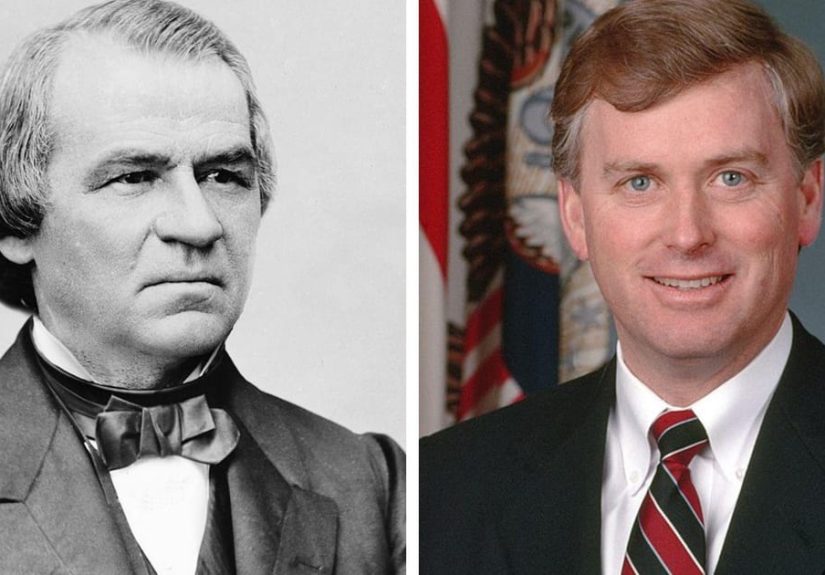
8) Dan Quayle (1989–1993): A Reputation Built on Doubts About Readiness
Dan Quayle’s vice presidency is a case study in how perception can become a political reality. Quayle was frequently mocked for verbal missteps and “gaffes,” and critics questioned whether he seemed prepared to step into the presidency if needed. That skepticism became part of his brand, fair or not.
Interestingly, some scholarly accounts argue Quayle performed the traditional duties of the office adequately and that his influence was limited by design. Still, modern expert surveys and popular lists often place him near the bottom because the vice presidency’s core job is readinessand doubts about readiness can be politically fatal.
Why he’s often labeled among the worst: persistent questions about competence and preparedness, amplified by the media environment.
9) Dick Cheney (2001–2009): “Worst” for Some, “Most Powerful” for Nearly Everyone
Dick Cheney is one of the most polarizing vice presidents in American history. Many historians describe him as exceptionally powerfularguably redefining the modern vice presidency. But the same influence that made him effective as a governing partner also tied him to some of the era’s most controversial decisions and debates about executive power after 9/11.
That’s why Cheney can land on “worst” lists even when his defenders argue he was competent and decisive: the criticism is about impact and norms, not whether he knew how to run meetings. If a vice president helps expand government power in ways the public later views as excessive, the historical verdict can be harsheven if the VP believed they were protecting the country.
Why he’s often labeled among the worst: association with controversial expansions of executive authority and divisive national security policies.
Patterns: What the “Worst” Vice Presidents Have in Common
Across two centuries of examples, a few themes keep showing up:
- The scandal spiral: When legal trouble hits, it doesn’t just hurt the VPit shakes faith in the entire administration.
- Undermining the president: A VP who actively sabotages the White House creates dysfunction at the top of government.
- Extreme disloyalty: When a former VP is linked to rebellion or treason accusations, the office’s promise of continuity collapses.
- Preparedness doubts: The VP is the “break glass in case of emergency” leader. If the public thinks the glass is empty, confidence drops fast.
- Reputation stickiness: A single story (a duel, a resignation, a notorious word like “gerrymandering”) can become the whole legacy.
So… Are “Worst VP” Lists Fair?
Sometimes yes, sometimes no. Lists can oversimplify complicated lives and complicated eras. They can also ignore that many vice presidents had limited power by design. Still, these stories matter because they show how a supposedly “secondary” office can become central to national stability, constitutional order, and public trust.
And if you want one practical takeaway for modern politics, it’s this: vice presidents are not just campaign accessories. They are a test of judgmentbecause history has repeatedly shown that the job can go from “supporting role” to “main character” in a hurry.
Experiences People Have When Learning About the Worst US Vice Presidents (Extra Section)
Most people don’t wake up one morning and announce, “Today, I’m going to emotionally process the vice presidency.” It usually starts innocently: a podcast episode on early American politics, a documentary clip in class, or a random trivia question that sends you searching for “Which vice president resigned?” The next thing you know, you’re deep into stories that feel like they were written by a screenwriter who refuses to delete any plot twists.
One common experience is the whiplash effectrealizing how different the vice presidency has been across eras. You might read about a founding-era VP whose main job was presiding over the Senate, then jump forward to a modern VP shaping national security policy. That contrast can feel like discovering the same job title in two different universes. It also changes how you interpret “worst”: sometimes it’s about active harm, and sometimes it’s about being chosen despite obvious risk factors, like health or instability.
Another experience is what you could call the civic trust gut-check. When you learn about a resignation tied to corruption, it can feel less like ancient history and more like a warning sign blinking from the past: “This is what happens when accountability and power collide.” People often describe feeling frustrated, then oddly fascinatedbecause the constitutional system has to keep functioning even when the humans inside it are making spectacularly bad choices.
There’s also the history-is-personal moment when you realize these aren’t abstract characters. For example, reading about a duel involving a VP isn’t just “fun trivia.” It’s a reminder that political conflict once spilled into personal violenceand that the country had to keep moving forward anyway. Or learning how the term “gerrymandering” became glued to a vice president’s name can make modern debates about elections feel less new and more like an argument Americans have been replaying for generations, just with better printing technology and worse comment sections.
Plenty of people run into these stories through family conversations, tooespecially around major political events. A parent or grandparent might mention a scandal from the 1970s, and suddenly you’re looking up why a vice president resigned and how the government filled the vacancy. That’s when the vice presidency stops being a line in a textbook and becomes a real piece of “how the system survives stress.” The experience tends to leave people with two reactions at once: relief that the Constitution has backup plans, and anxiety that the backup plan still depends on human judgment.
Finally, there’s the oddly motivating experience of learning by contrast. Reading about the worst US vice presidents often makes people appreciate the quiet competence that doesn’t trend online. You start noticing which VPs focused on boring-but-important taskscoalition building, crisis management, policy coordinationand how rare it is for a vice presidency to be remembered as “fine, steady, and prepared.” The “worst” stories linger because they’re dramatic, but the experience of studying them can push you toward a more serious view of leadership: character matters, readiness matters, and the people just offstage can end up holding the whole show together.