Table of Contents >> Show >> Hide
- First, a quick reality check: some water is normal
- The 8 most common reasons your window AC leaks water inside
- 1) It’s not tilted correctly (or it’s tilted the wrong way)
- 2) Drain holes or channels are clogged with gunk
- 3) The air filter is dirty, restricting airflow
- 4) The evaporator coil is freezing (then thawing)
- 5) Coils are dirty (evaporator and/or condenser)
- 6) The drain pan is cracked, rusted, or warped
- 7) It’s actually rainwater, not condensation
- 8) Extreme humidity or heavy run conditions overwhelm marginal drainage
- A fast troubleshooting checklist (most people finish in 15–30 minutes)
- DIY fixes that actually work (without summoning chaos)
- When to call a pro (and why it’s not “giving up”)
- How to prevent window AC leaks in the future
- Important health note: standing water can mean mold risk
- Conclusion
- Real-Life Experiences: What People Learn the Hard Way (So You Don’t Have To)
- SEO Tags
Your window AC is supposed to take moisture out of the air. That’s literally part of the job. So if you’re seeing
water somewhere, it’s not automatically a crisisit might just mean your unit is dehumidifying like a champ.
But if that “somewhere” is your windowsill, wall, or floor… congrats, your AC has started an indoor water feature.
Let’s shut that down.
Below is a clear, real-world guide to why window air conditioners leak water, what’s normal, what’s not,
and exactly what to check before you call for backup (or start Googling “how to remove mildew from baseboards”).
First, a quick reality check: some water is normal
Window air conditioners pull warm, humid air over a cold evaporator coil. Moisture condenses on that coil (like
a cold soda can sweating in July), then drips into a base pan. Many window units are designed to hold some water
in that pan and use it to improve efficiency by splashing it against the outdoor coil to help cool it down.
Translation: a bit of water in the panand even dripping outsidecan be totally normal.
So when is it a problem?
It’s a problem when the water can’t drain the way the unit was designed to drainso it backs up and spills
inward. If you notice any of the following, it’s time to troubleshoot:
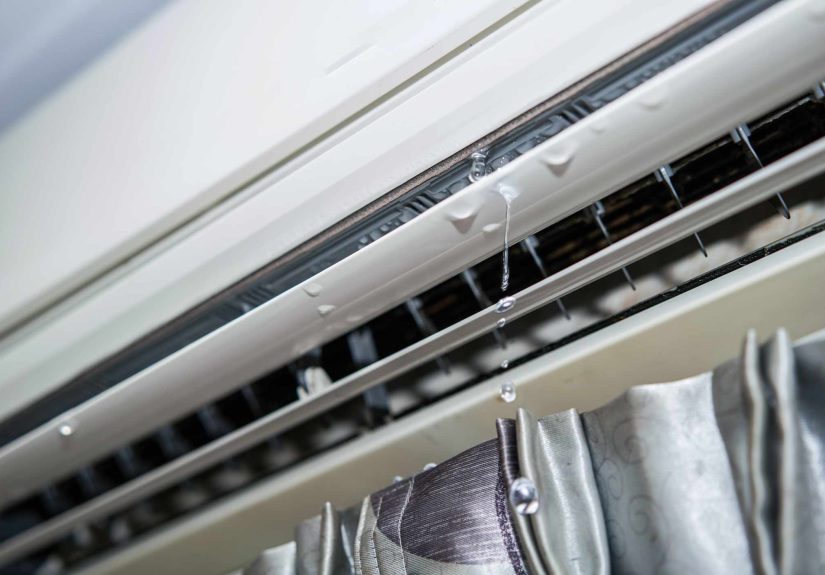
- Water dripping from the front grille or inside edge of the unit
- Water pooling on the windowsill or running down the wall
- A musty smell (hello, moisture + dust = funk factory)
- Ice forming on the coil, followed by a sudden “melt event”
The 8 most common reasons your window AC leaks water inside
1) It’s not tilted correctly (or it’s tilted the wrong way)
This is the #1 classic: the unit should usually sit with a slight downward slope toward the outdoors so
condensation flows to the backnot into your living room. If it’s level or (worse) pitched inward,
water collects in the wrong spot and spills inside.
A small tilt is often enoughthink “barely noticeable,” not “ski slope.” If you’ve got a storm window frame
or weird sill geometry, it can prevent proper tilt and trap water on the indoor side.
2) Drain holes or channels are clogged with gunk
Dust, pollen, tiny leaves, and mystery lint can clog the drain path. Even if your model doesn’t have an obvious
“drain hole,” it still has a designed route for water to move through the base pan and toward the outdoor side.
If that pathway is blocked, water backs up and takes the easiest exit routewhich might be: your floor.
Common culprits: cottonwood fluff, pet hair, dead bugs (RIP), and grime that turns into sludge when wet.
It’s gross, but fixable.
3) The air filter is dirty, restricting airflow
When airflow drops, the evaporator coil can get too cold and start freezing. Eventually the unit cycles off,
the ice melts, and you get a sudden rush of water that overwhelms the pan or runs somewhere it shouldn’t.
A clogged filter can also cause uneven condensation and dripping.
If you can’t remember the last time you cleaned the filter, that’s your answer. (No judgment. We all have
that one household task we pretend doesn’t exist.)
4) The evaporator coil is freezing (then thawing)
Freezing isn’t a “quirk.” It’s a symptom. The big reasons window units freeze up are:
- Restricted airflow (dirty filter, blocked vents, filthy coils)
- Low refrigerant from a leak (not a DIY fix)
- Running the unit when outdoor temps are low, depending on model
When the ice melts, you can get more water than the normal drainage flow can handle, and the unit may leak inside.
5) Coils are dirty (evaporator and/or condenser)
Dirty coils don’t just reduce coolingthey can affect how condensation forms and drains. A grimy evaporator coil
encourages icing, and a dirty condenser coil makes the whole unit work harder and longer, increasing condensate.
More runtime + more moisture + weak drainage = indoor drip drama.
6) The drain pan is cracked, rusted, or warped
If your unit has a damaged base pan, it may collect water but fail to contain it. Older units are more likely to
rust through or crack after years of vibration and temperature swings. If you see obvious corrosion or a hairline
crack, the leak may be structuralnot a clog.
7) It’s actually rainwater, not condensation
Wind-driven rain can sneak in if the unit isn’t sealed well around the frame, side panels, or top sash.
If the “leak” shows up during storms or heavy wind, and not during normal dry operation, suspect the seal.
Gaps can also let humid outdoor air in, increasing condensation and making the unit feel clammy.
8) Extreme humidity or heavy run conditions overwhelm marginal drainage
On very humid days, window ACs can generate a surprising amount of water. If drainage is even slightly compromised
(mild clog, slightly wrong tilt, pan partially blocked), that extra condensate can push the system over the edge.
Sometimes the unit doesn’t have a “new problem”it has an old small problem that finally got big enough to notice.
A fast troubleshooting checklist (most people finish in 15–30 minutes)
Safety first (seriously)
- Turn the unit off and unplug it before opening panels or cleaning.
- If water is near an outlet or power strip, cut power at the breaker until things are dry.
- Don’t poke around internal electrical areas unless you know what you’re doing.
Step 1: Confirm what “leaking” means
- Outside dripping? Often normal.
- Inside dripping? Not normalmove to Step 2.
- Only during rain? Jump to Step 6 (sealing).
- Water after the unit shuts off? Could be ice meltingcheck Step 4.
Step 2: Check the tilt
Use a small level if you have one. Most window units are designed to tilt slightly downward toward the outdoors.
If it’s level or sloping inward, add a shim on the indoor side of the support bracket or adjust the mounting
hardware according to the installation instructions.
Step 3: Pull and inspect the filter
If it’s gray, fuzzy, or looks like it’s been storing dust for the winter, wash or replace it (depending on type).
Then run the unit and see if leaking improves over the next several hours. Airflow fixes often reduce freezing and
water issues quickly.
Step 4: Look for ice
Signs include weak airflow, the unit “working” but not cooling, or visible frost behind the front grille.
If you suspect freezing:
- Turn the AC off (or switch to fan-only if your model allows).
- Let it thaw completelythis can take hours.
- After thawing, clean the filter and check for blocked airflow.
If freezing keeps happening, especially with decent airflow, refrigerant or mechanical issues may be involved,
which usually means professional service.
Step 5: Inspect the base pan and drain path
With the unit off and unplugged, check for sludge, leaves, or debris in the lower areas. Some models have drain
holes; others use internal channels. Either way, clear visible debris gently. Avoid drilling random holesmany units
are designed to keep a certain water level for efficiency.
Step 6: Seal the window opening properly
If you see gaps around the side panels or along the top sash, seal them using foam panels, weatherstripping,
or the manufacturer’s included insulation. This helps keep rain and humid air out and improves performance.
Also check that the unit is firmly supported and not sagging over time.
DIY fixes that actually work (without summoning chaos)
Clean the filter on a schedule
During heavy use, check it every couple of weeks. A clean filter improves airflow, reduces coil icing risk,
and often prevents “mystery leaks” before they start.
Clear debris and clean the pan area
Vacuum dust and debris from accessible areas (gently). If you can safely remove the outer cover, you can clean
visible dirt from coils with a soft brush and careful vacuuming. Bent fins and aggressive scrubbing can do more harm
than good, so go easy.
Re-level or re-shim the unit
If your window sill or storm window frame prevents the correct slope, use a properly secured wood strip or shim on
the sill as described in many installation guides. The goal is a stable, slight outward pitch, not a wobbly unit that
shakes like it’s dancing to a bass drop.
Upgrade your sealing game
Proper sealing reduces rain intrusion and keeps the unit from fighting hot, humid outdoor air. That means less
condensation overload and better comfort.
When to call a pro (and why it’s not “giving up”)
Call a qualified HVAC technician if:
- The unit repeatedly freezes even with a clean filter and good airflow
- You suspect a refrigerant leak (hissing, oily residue, weak cooling)
- The pan is cracked/rusted through and replacement isn’t straightforward
- You see electrical issues (tripped breakers, burning smell, sparking)
Refrigerant handling isn’t a casual weekend hobbybeyond safety, there are legal and environmental rules around it.
If the issue points to refrigerant or sealed-system repairs, a pro is the right move.
How to prevent window AC leaks in the future
- Monthly: Clean/replace the filter during the cooling season.
- Start of season: Clean dust from coils and check for proper tilt and support.
- Mid-season: Inspect for debris in the pan area and confirm the unit still slopes outward.
- After storms: Check seals and side panels for gaps or shifting.
- End of season: Clean and dry the unit to reduce mold risk before storage.
Important health note: standing water can mean mold risk
If water sits where it shouldn’t, mold can grow inside the unit. If you notice a musty smell, visible buildup,
or recurring moisture problems, address them quickly. In recent years, there have even been recalls involving
drainage issues that allowed pooled water and mold growth in certain window AC models. It’s worth checking whether
your unit is affected if you own a model that’s known for drainage complaints.
Conclusion
A window air conditioner leaking water inside usually comes down to one of three things: bad tilt,
blocked drainage, or freezing/thawing from airflow problems. The good news is that
most fixes are straightforwardlevel it correctly, clean the filter, clear debris, and seal the window.
If the unit keeps freezing or you suspect refrigerant issues, call a pro and save yourself a longer (and wetter)
headache.
Real-Life Experiences: What People Learn the Hard Way (So You Don’t Have To)
If you’ve ever owned a window air conditioner, you’ve probably had at least one moment where you stared at a puddle
and thought, “Is my AC… crying?” You’re not alone. The most common real-world leak story starts with a perfectly
fine installation in May, followed by gravity doing its slow, sneaky thing all summer. The bracket loosens a touch,
the unit settles a fraction of an inch, and suddenly that “slight outward tilt” turns into “basically level.”
Nothing seems wrong until a humid day hits, the pan fills faster than usual, and the easiest escape route becomes
the indoor edge. The fix is almost insulting in its simplicity: re-secure the support and add the tiniest shim.
But you have to know to look for it.
Another classic: the “cottonwood apocalypse.” People install the unit, run it for weeks, and everything is great
until the neighborhood trees start snowing fluff. That fluff gets pulled toward vents, sticks to damp grime, and
slowly forms a felt blanket in exactly the place water needs to pass through. The leak seems “random” because the
clog is partial at first. Then one day you turn the AC up, it runs longer, makes more condensate, and the backup
finally spills inside. The lesson: if your area gets pollen storms, linty seed fluff, or you have pets who shed
like it’s their full-time job, you’ll want to check the filter and pan area more often than you think is fair.
Then there’s the “ice melt ambush.” This is the one where the unit leaks after it’s been running a while,
and you swear it was fine an hour ago. Usually, airflow has been reduced (dirty filter, blocked front by curtains,
or a couch shoved too close), so the coil starts freezing quietly behind the grille. When the compressor cycles off,
the ice melts quicklysometimes all at onceand you get a burst of water that overwhelms the normal drainage path.
People often respond by cranking the temperature lower, which is like trying to put out a candle by throwing more
candles at it. The better move is boring but effective: restore airflow, thaw it, and keep the coil clean.
Some experiences are less about condensation and more about weather. In heavy rain with wind, a poorly sealed unit
can act like a tiny roof leak. Water sneaks in around side panels, then runs down the inside wall, making it look
like the unit itself is leaking. Folks may tear apart the AC looking for a “drain problem” when the real fix is
weatherstripping, foam insulation, and ensuring the top sash is tight. Bonus: sealing also helps your AC cool better
because it’s not fighting hot, humid air leaking in from outside.
Finally, there’s the “I should’ve checked recalls” story. Most of the time, leaks are maintenance or installation
issues. But occasionally a specific design or drainage behavior becomes a known problem across certain models, and
consumers start reporting mold or standing water concerns. When that happens, manufacturers and safety agencies may
issue repair programs or recalls. The practical takeaway is simple: if your unit has chronic pooling, a musty smell
that returns after cleaning, or you’ve heard chatter about your model line, it’s worth a quick recall lookup. It’s
not paranoiait’s basic home hygiene. Plus, nothing ruins “fresh, cool air” like the suspicion that your AC is
growing a science project behind the grille.