Table of Contents >> Show >> Hide
- Why TikTok Keeps Feeding You “Which ___ Are You?” Quizzes
- What Is a “Niche AI Fruit,” Exactly?
- The TikTok-Inspired Quiz
- Your friend asks what you do with AI. You say…
- Your ideal AI output is…
- Pick a TikTok caption for your AI era:
- You’re handed a messy project brief. Your first move:
- Now your vibe shifts. Choose your “fun” mode:
- When the AI gives a wrong answer, you…
- Your group chat asks you to “make it go viral.” You contribute:
- Pick your AI “comfort task”:
- What’s your biggest AI pet peeve?
- Last one: your AI superpower is…
- Your Results
- How to Turn Your Result Into a TikTok That Actually Pops
- Conclusion: Your Fruit Is a Mirror, Not a Box
- Extra: Experiences People Have With the “Niche AI Fruit” Trend (500+ Words)
Welcome to the internet’s favorite genre: “Which oddly specific thing am I?” But instead of “Which 2007 indie sleaze handbag are you,”
we’re going full 2026 and asking the only question that truly matters:
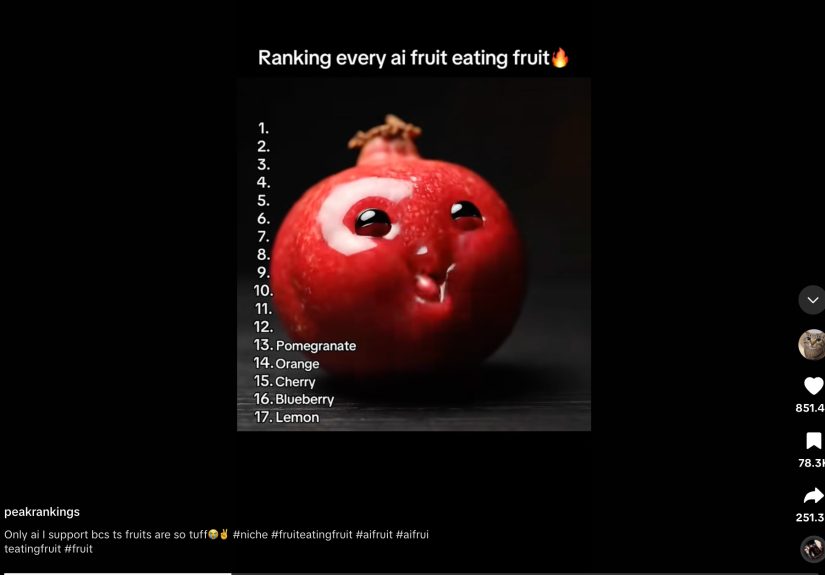
Which niche AI fruit are you?
This is a TikTok-inspired personality quiz with a purpose: it’s fun, shareable, andsneakilyteaches good generative AI habits while you’re busy
picking a “vibe” like it’s a lunch order.
Why TikTok Keeps Feeding You “Which ___ Are You?” Quizzes
The “which one are you” format is a perfect social snack: quick to take, easy to share, and weirdly comforting. It gives your brain a neat label,
a tiny story about yourself, and a built-in conversation starter. (Translation: instant comment fuel.)
TikTok turns this into rocket fuel because micro-trends move fast, identities get remixed into aesthetic “cores,” and the platform rewards
participation. You’re not just consumingyou’re joining. Post your result, stitch someone else’s, argue about it in the comments, and
boom: community.
Now add AI to the mix: generative tools are everywhere, and everyone is figuring out their “type.” Are you the one who writes immaculate prompts?
The one who automates everything? The one who asks, “Okay, but is this ethical?” before clicking “Generate”?
That’s how we get here: a personality quiz where the results are fruity little archetypes of how you use AI in real lifeat work, for school,
for content, or for the deeply serious task of making a meme that hits exactly right.
What Is a “Niche AI Fruit,” Exactly?
A niche AI fruit is an archetype: a playful label for your default style of working with AIhow you think, what you prioritize, and what you
accidentally overdo (because we all have a setting that’s stuck on “extra”).
This quiz isn’t diagnostic and it won’t reveal your destiny. But it will give you a funny, specific mirrorand a few practical tips you
can steal immediately.
The 8 Niche AI Fruits
- Prompt Pineapple structured, clear, a little intense (in a helpful way)
- Dataset Dragonfruit curious, evidence-driven, obsessed with “show me the source”
- Automation Avocado smooth workflows, fewer clicks, maximum efficiency
- Ethics Elderberry thoughtful, cautious, always asking the grown-up questions
- Creativity Kiwi playful, surprising, thrives on weird prompts and bold swings
- Product Pear practical, user-first, ships things (and then ships better things)
- Collaboration Clementine team glue, great at translating “AI-ish” into human
- Security Soursop privacy-first, threat-model brain, allergic to oversharing
The TikTok-Inspired Quiz
How to play: For each question, pick the answer that feels most like you. Each answer tells you which fruit gets a point.
Keep a quick tally (notes app, mental math, back of a receiptno judgment).
Scoring: Your top fruit wins. If you tie, pick the fruit you’d most happily put in your bio for 24 hours.
Your friend asks what you do with AI. You say…
- “Give me a goal and constraints; I’ll craft the perfect prompt.” (+1 Prompt Pineapple)
- “I test outputs and compare sources. Vibes are not enough.” (+1 Dataset Dragonfruit)
- “I make it do the boring stuff automatically.” (+1 Automation Avocado)
- “Before we do anythingprivacy and ethics check.” (+1 Ethics Elderberry)
Your ideal AI output is…
- Clean, structured, and ready to paste into a doc. (+1 Prompt Pineapple)
- Accurate, cited, and easy to verify. (+1 Dataset Dragonfruit)
- Delivered inside a workflow so you don’t touch it again. (+1 Automation Avocado)
- Safe, fair, and not going to ruin anyone’s day. (+1 Ethics Elderberry)
Pick a TikTok caption for your AI era:
- “POV: you finally learned to specify the output format.” (+1 Prompt Pineapple)
- “Testing the same task 10 ways because… science.” (+1 Dataset Dragonfruit)
- “If I have to click this twice, I’m automating it.” (+1 Automation Avocado)
- “Just because it can generate it doesn’t mean it should.” (+1 Ethics Elderberry)
You’re handed a messy project brief. Your first move:
- Create a tight prompt template with sections and examples. (+1 Prompt Pineapple)
- Ask what data we have and what success looks like. (+1 Dataset Dragonfruit)
- Set up a system that routes tasks automatically. (+1 Automation Avocado)
- Flag risks: bias, privacy, and unintended consequences. (+1 Ethics Elderberry)
Now your vibe shifts. Choose your “fun” mode:
- Turn it into a product feature users will actually love. (+1 Product Pear)
- Make a wildly creative version just to see what happens. (+1 Creativity Kiwi)
- Write a doc that gets the whole team aligned. (+1 Collaboration Clementine)
- Red-team it: how could this be misused? (+1 Security Soursop)
When the AI gives a wrong answer, you…
- Rewrite the prompt with clearer instructions and constraints. (+1 Prompt Pineapple)
- Check sources, run another query, and compare results. (+1 Dataset Dragonfruit)
- Add a validation step to the workflow so it catches this next time. (+1 Automation Avocado)
- Ask if the task is appropriate and what harm could happen. (+1 Ethics Elderberry)
Your group chat asks you to “make it go viral.” You contribute:
- A punchy script with tight beats and a call-to-comment. (+1 Creativity Kiwi)
- A concept framed around a relatable user problem. (+1 Product Pear)
- A shared doc + roles + deadlines (yes, really). (+1 Collaboration Clementine)
- A reminder not to dox yourselves for views. (+1 Security Soursop)
Pick your AI “comfort task”:
- Turn chaos into a clean outline. (+1 Prompt Pineapple)
- Summarize research and surface what’s actually supported. (+1 Dataset Dragonfruit)
- Batch-generate and schedule everything. (+1 Automation Avocado)
- Rewrite something to be more inclusive and careful. (+1 Ethics Elderberry)
What’s your biggest AI pet peeve?
- “Be creative” with no direction. (That’s not a prompt, that’s a wish.) (+1 Prompt Pineapple)
- Confident nonsense with no way to verify. (+1 Dataset Dragonfruit)
- Manual busywork that could be automated in 10 minutes. (+1 Automation Avocado)
- People ignoring privacy, bias, or real-world impact. (+1 Ethics Elderberry)
Last one: your AI superpower is…
- Turning a vague ask into crisp instructions. (+1 Prompt Pineapple)
- Knowing what to trustand what to double-check. (+1 Dataset Dragonfruit)
- Making systems that save everyone time. (+1 Automation Avocado)
- Asking the question that prevents a future apology tour. (+1 Ethics Elderberry)
Your Results
Find your top fruit below. Each result comes with strengths, a gentle “watch out,” a TikTok caption, and a prompt you can steal today.
🍍 Prompt Pineapple
You don’t “talk to AI.” You brief it. You’re the person who knows that one extra sentenceclear constraints, a target format, a concrete
examplecan turn a chaotic output into something usable.
Your strengths: clarity, structure, consistency, getting the exact shape of output you need.
Your blind spot: over-controlling the prompt until the AI feels like it’s filling out tax forms.
TikTok caption: “If you didn’t specify the format, you don’t get to be mad.”
Try this prompt:
🐉 Dataset Dragonfruit
You treat AI like a research assistant with a caffeine problem: fast, impressive, and occasionally wrong in a way that could ruin your whole day
if you don’t verify. You love evidence, comparisons, and “show your work” energy.
Your strengths: evaluation, source-checking, spotting gaps, reducing hallucinations through better inputs.
Your blind spot: analysis paralysissometimes you need a draft, not a dissertation.
TikTok caption: “Me when the AI is confident: okay, now prove it.”
Try this prompt:
🥑 Automation Avocado
Your love language is “I already built a workflow for that.” You don’t want AI to be a chat window; you want it to be a helpful ghost in the
machine that quietly does the annoying stuff while you live your life.
Your strengths: repeatability, systems thinking, scaling good prompts into reliable processes.
Your blind spot: automating chaos. If the input is messy, you’ll mass-produce mess faster.
TikTok caption: “If it’s repetitive, it’s getting a pipeline.”
Try this prompt:
🫐 Ethics Elderberry
You’re the conscience of the group chatexcept you’re funny about it, so people actually listen. You care about consent, bias, privacy, and
whether the “cool” thing is also the right thing.
Your strengths: risk awareness, fairness, user respect, long-term trust.
Your blind spot: slowing down creative exploration when the stakes are low.
TikTok caption: “Not to be dramatic, but… this could harm someone.”
Try this prompt:
🥝 Creativity Kiwi
You use AI like a trampoline for your imagination. You don’t fear weird prompts; you collect them. You’re here for surprising metaphors,
punchy hooks, and the moment where the output makes you say, “Wait… that’s actually good.”
Your strengths: ideation, punch, originality, turning “meh” into “oh!”
Your blind spot: choosing the fun version when the project needs the clear version.
TikTok caption: “I asked it for one idea and got a whole cinematic universe.”
Try this prompt:
🍐 Product Pear
You’re allergic to vibes without outcomes. You want AI to solve real problems: reduce friction, improve onboarding, write a clearer FAQ, ship a
feature, help a user succeed. You think in “Who is this for?” and “What happens next?”
Your strengths: practicality, user focus, iteration, translating outputs into action.
Your blind spot: dismissing playful exploration that could lead to the next big idea.
TikTok caption: “Cute output. Now make it usable.”
Try this prompt:
🍊 Collaboration Clementine
You’re the person who makes AI adoption not annoying. You translate jargon into human language, create shared templates, and help teams use AI in
a way that feels consistentnot like everyone is freelancing in different realities.
Your strengths: alignment, documentation, onboarding, turning solo magic into team leverage.
Your blind spot: taking on too much emotional labor when you should delegate.
TikTok caption: “I made a prompt library so we can stop reinventing the wheel.”
Try this prompt:
🌿 Security Soursop
You’re not paranoidyou’re prepared. You instinctively think about what data is being shared, what could be stored, and how outputs could be
misused. You love convenience, but you love trust more.
Your strengths: privacy hygiene, threat awareness, safer defaults, preventing “oops” moments.
Your blind spot: assuming everyone else is as careful as you (they are not).
TikTok caption: “Before you paste that… are we sure it’s not sensitive?”
Try this prompt:
How to Turn Your Result Into a TikTok That Actually Pops
You don’t need fancy editing. You need clarity, a hook, and a reason to comment. Try this simple format:
- Hook (0–2s): “I took the niche AI fruit quiz and I’m…”
- Reveal (2–5s): show the fruit + one defining trait (“Prompt Pineapple: format-obsessed”)
- Relatable proof (5–10s): one example (“I literally asked it to answer in a table… again.”)
- Comment bait (last 2s): “Which one are you? I’ll guess based on your job.”
If you want extra points: use a trending sound at low volume, add big text overlay, and keep it under 12 seconds so people rewatch to catch the
joke. (Rewatches are basically applause in algorithm language.)
Conclusion: Your Fruit Is a Mirror, Not a Box
Whether you’re a Prompt Pineapple or a Security Soursop, the point isn’t to lock yourself into a type. It’s to notice your default modethen use
it on purpose. Borrow strengths from the other fruits: add structure, verify more, automate responsibly, or invite play.
And if you post your result? Please, I’m begging you: tag your friend who is obviously a Dataset Dragonfruit. You know the one.
Extra: Experiences People Have With the “Niche AI Fruit” Trend (500+ Words)
When a quiz like this takes off on TikTok, the funniest part isn’t the resultit’s how intensely people recognize themselves (or their coworkers).
In creator circles, people often describe the same pattern: they take the quiz as a joke, then immediately start using it as a shorthand for how
they work. “Oh, you’re a Prompt Pineapple? Cool, can you clean up this request before I run it?” Suddenly a silly fruit becomes a team workflow.
One common experience is the “unexpected call-out.” Someone thinks they’ll land on Creativity Kiwi because they love chaos and humor, but the quiz
quietly hands them Product Pear. That moment usually triggers a mini epiphany: “Wait… I do keep turning everything into a deliverable.” People
talk about how AI has exposed their defaultslike how they handle ambiguity, whether they trust first drafts, or whether they need to verify
everything before they feel calm. The quiz result doesn’t create those traits; it just makes them easier to name.
Another experience shows up in comment sections: friendly debates about what each fruit “really” means. That’s not a bugit’s the social engine.
Viewers share their own examples (“I’m Automation Avocado because I made it write my weekly status update”) and others respond with receipts
(“No, that’s Prompt Pineapple behavior; you literally specified the format”). People end up describing their real AI habitshow they prompt, what
they struggle with, how they check accuracybecause a fruit label makes it safer and funnier to be honest.
Creators also report that these quizzes lower the intimidation factor around AI. Instead of “learn prompt engineering,” the vibe becomes
“discover your fruit.” That tone invites beginners in. A new user might not know the difference between a good prompt and a vague one, but they
do understand a result like “Prompt Pineapple: your superpower is turning a messy request into clear instructions.” From there, they’re
more willing to try the sample prompt, tweak it, and see improvement. That quick win is often what turns a curious viewer into a regular user.
There’s also a very real “office version” of the trend. People share results in Slack, group chats, or meetings (sometimes as a morale booster,
sometimes as a subtle cry for help). In those settings, Collaboration Clementine usually becomes the MVPnot because they’re the loudest, but
because they turn the chaos into a shared language: “Let’s make a prompt template,” “Let’s keep a small library of what worked,” “Let’s agree on
what ‘good output’ looks like.” Once a team adopts even one shared habit, AI usage stops being random and starts being repeatable.
Finally, a lot of people have the “Security Soursop awakening” after one mildly scary moment: they almost paste something sensitive into a tool,
or they realize a generated output could unintentionally reveal private info. The trend gives them a way to talk about caution without sounding
like the fun police. “I’m in my Soursop era” becomes a humorous flag that says, “Hey, let’s redact that.” In practice, that tiny shift can
prevent real problems while keeping the mood light.
If you’ve ever taken a TikTok quiz and immediately sent your result to three friends, you already understand the magic: the label is fun, but the
shared story is the point. The “niche AI fruit” version just adds a bonus: you might laughand also leave with a better way to use AI tomorrow.