Table of Contents >> Show >> Hide
- First Things First: This Is an Emergency, Not a “Wait and See” Situation
- Red-Flag Symptoms: When to Call 911 or Go to the ER Immediately
- General “Do’s and Don’ts” for Any Swallowed Object
- If Your Child Swallows a Button Battery
- If Your Child Swallows Magnets
- If Your Child Eats Small Toy Parts (Non-Magnetic, Non-Battery)
- What to Expect During Evaluation and Treatment
- Prevention: Making Your Home Less “Snack-Like” for Toddlers
- When to Call Your Pediatrician vs. the ER
- Real-Life Experiences: What Parents Learn When Kids Eat the Wrong Things
Every parent knows kids will put almost anything in their mouths at least once. Toys, beads, coins, magnets, and those mysterious “little silver circles” (aka button batteries) somehow look like snacks to toddlers. Most of the time, nothing terrible happens. But some objects are truly dangerous and can cause life-threatening injuries in a matter of hours.
This guide walks you through what to do right now if your child swallows a toy, magnet, or battery, when to call 911, when to call Poison Control, what to expect at the hospital, and how to prevent these emergencies in the first place. We’ll mix clear medical guidance with a bit of calm reassurancebecause the last thing you need in a crisis is panic.
First Things First: This Is an Emergency, Not a “Wait and See” Situation
Foreign body ingestion (that’s the medical term for swallowing non-food objects) is one of the most common pediatric emergencies. Kids most often swallow small toy parts, coins, magnets, and button batteries. While many objects pass through the digestive system on their own, others can burn, puncture, or block the gut very quickly.
Three types of swallowed objects deserve urgent attention every time:
- Button or coin batteries (especially lithium “coin” cells)
- Magnets, especially high-strength rare-earth magnets or more than one magnet
- Sharp or large toy pieces (e.g., screws, pins, broken plastic edges)
Button batteries can cause severe burns and tissue damage in as little as two hours. Multiple magnets can attract through loops of intestine and literally pinch the bowel walls together, causing perforations and fistulas (abnormal connections) that may require surgery.
Bottom line: If your child may have swallowed a battery, magnet, or dangerous toy part, treat it as an emergencyeven if they look okay.
Red-Flag Symptoms: When to Call 911 or Go to the ER Immediately
Any suspected ingestion of a button battery or multiple magnets needs emergency care now. But even with other objects, certain symptoms are major red flags.
Call 911 or go to the nearest emergency room if your child has:
- Trouble breathing, wheezing, or noisy breathing
- Drooling and difficulty swallowing
- Sudden chest pain, neck pain, or belly pain
- Repeated vomiting or gagging
- Blood in vomit or stool
- Extreme fussiness, lethargy, or acting “just not right”
- A known or strongly suspected button battery or magnet ingestion
If you’re not sure, err on the side of going in. Emergency doctors and pediatric gastroenterologists would much rather see your child and tell you everything is fine than miss a dangerous situation. Clinical pathways for foreign body ingestion strongly emphasize quick evaluation for high-risk objects like batteries and magnets.
General “Do’s and Don’ts” for Any Swallowed Object
What to Do
- Stay as calm as possible. Your child will take emotional cues from you.
- Try to figure out what was swallowed and when. If you can, bring the toy packaging, magnet set, or a matching battery with you to the ER.
- Call Poison Control in the United States at 1-800-222-1222 for real-time guidance while you head for care.
- Head to the nearest emergency department if the object is a battery, magnet, or anything sharp or unknown.
What Not to Do
- Do not induce vomiting. Bringing the object back up can cause it to lodge or cause more damage.
- Do not give laxatives, “clean-out” drinks, or home remedies to push the object through.
- Do not wait for symptoms to appear if you suspect a battery or multiple magnets. Serious damage can happen before symptoms show up.
- Do not give food or drink unless you are specifically told to by medical professionals (with one important exception: honey in certain button battery casesmore on that below).
If Your Child Swallows a Button Battery
Button batteries are small, shiny, and everywhereremote controls, toys, bathroom scales, key fobs, musical greeting cards, thermometers, and more. When swallowed, they can get stuck in the esophagus. There, they interact with saliva and create an electrical current that burns through tissue, sometimes in under two hours.
Step-by-Step: What to Do Immediately
- Assume emergency. If you even suspect your child swallowed a button or coin battery, treat it as an emergency.
- Call 911 or head to the nearest emergency room right away. Tell them you’re coming and that you suspect a button battery ingestion.
- Call Poison Control (1-800-222-1222 in the U.S.) while you are on the way if possible.
- If your child is over 12 months old and can safely swallow, guidelines from pediatric centers and poison control now recommend giving honey on the way to the ER. Typical advice is:
- Give about two teaspoons of honey every 10 minutes, up to six doses (about an hour), while you are traveling to the hospital.
Important: Honey is not a cure. It’s a temporary protective coating that may reduce the severity of burns while you race to the ER. Do not delay care to go buy honey, and never give honey to a child under 12 months because of botulism risk.
What Will Happen in the Hospital
- The team will likely do an X-ray to find the battery (and confirm that it’s a battery, not a coin).
- If the battery is in the esophagus, most clinical guidelines call for emergency endoscopic removal within about two hours.
- If it has already passed into the stomach or intestines and your child has no symptoms, your care team may monitor with repeat imaging and close follow-up.
Even after removal, tissue damage can continue for days, so doctors may admit your child for observation and follow-up imaging.
If Your Child Swallows Magnets
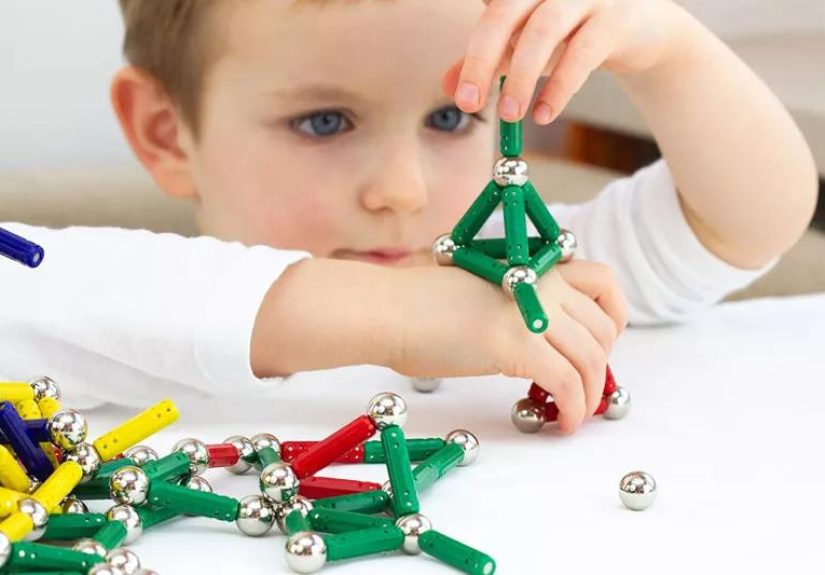
Magnet ingestions have increased with the popularity of tiny, high-powered rare-earth magnet sets. These magnets are deceptively small but incredibly strong. If a child swallows more than one magnetor a magnet and a metal objectthose pieces can attract each other through different loops of intestine, trapping tissue between them. This can cause bowel perforations, fistulas, and serious infections.
Step-by-Step: What to Do for Magnet Ingestion
- Count how many magnets are missing. If you can tell that more than one is gone, assume multiple magnet ingestion.
- Go to the emergency department immediately if:
- More than one magnet is missing, or
- A magnet and a metal object may have been swallowed, or
- You’re not sure how many are missing.
- Do not wait for pain or vomiting to show up. Damage may already be occurring silently.
- Call Poison Control or your pediatrician while you are en route for additional guidance.
What Happens at the Hospital for Magnets
- Your child will typically get X-rays from different angles to see how many magnets there are and where they are sitting.
- For multiple magnets or magnets stuck in the stomach or upper intestine, many guidelines recommend endoscopic removal or even surgery depending on location and symptoms.
- If a single magnet has clearly moved beyond the stomach and your child has no symptoms, doctors may choose close observation with repeated imaging to confirm it progresses through the gut.
Studies consistently show much higher rates of perforation and surgical complications with multiple magnets compared to a single magnet. That’s why “more than one magnet” is treated as an emergencyeven if your child still looks totally fine.
If Your Child Eats Small Toy Parts (Non-Magnetic, Non-Battery)
What about the classic, “My toddler swallowed a LEGO brick” scenario?
Many small, smooth toy parts that are not sharp, not toxic, and not batteries or magnets may simply pass through the digestive tract on their own, especially if they have already reached the stomach and your child has no symptoms. Clinical guidelines often support observation for low-risk objects, with instructions to return for new symptoms.
When You Still Need Medical Evaluation for Toys
- The object is large or has sharp edges.
- It contains lead, batteries, magnets, or unknown materials.
- Your child is in pain, vomiting, drooling, coughing, or refusing to eat.
- You’re not sure exactly what they swallowed.
At the hospital, doctors may order an X-ray (plastic doesn’t always show up, but some pieces do) or other imaging. In certain cases, a pediatric gastroenterologist may recommend an endoscopy to remove the objectparticularly if it’s stuck in the esophagus or stomach.
What to Expect During Evaluation and Treatment
Most foreign body ingestion evaluations follow a similar pattern:
- History and physical exam – The team asks what your child might have swallowed, when, and what symptoms they have.
- Imaging – Usually an X-ray, sometimes from more than one angle, to look for metallic objects and to distinguish batteries from coins.
- Observation vs. removal – Depending on the object, its location, and your child’s symptoms, the team may:
- Observe and repeat X-rays
- Perform an endoscopy to remove the object with a scope
- Rarely, perform surgery if there is perforation, obstruction, or failed endoscopic removal
Pediatric guidelines stress individualized decisions based on object type, size, location, and the child’s condition. Your care team will explain the risks and benefits of each option.
Prevention: Making Your Home Less “Snack-Like” for Toddlers
You can’t bubble-wrap a child (tempting, but no). You can, however, reduce the chance that they’ll snack on something dangerous.
Battery Safety
- Choose products with screwed-shut battery compartments, especially for toys and remotes.
- Store spare batteries high and locked away, not in drawers kids can access.
- Check household devices (remote controls, bathroom scales, key fobs, flameless candles, musical cards) regularly to make sure batteries are secure.
Magnet Safety
- Avoid buying loose high-powered magnet sets for homes with young children.
- Keep magnetic building toys, fridge magnets, and magnetic jewelry out of reach of toddlers, and check regularly for missing pieces.
Small Toy and Choking Hazard Safety
- Follow age labels on toys. If the box says 3+ and your child is 18 months old, they’re likely to test pieces with their mouth.
- Use a toilet paper roll test: anything that easily fits through the roll is too small for a child under 3.
- Teach older siblings to keep their tiny toys (marbles, beads, mini-figures) in separate containers and play with them in “little parts zones” away from younger kids.
Prevention really matters: pediatric foreign body ingestion reviews emphasize that caregiver education, child-safe product design, and safe storage are key to reducing these emergencies.
When to Call Your Pediatrician vs. the ER
It’s not always obvious whether to call your regular doctor, Poison Control, or 911. Use this rough guide (but when in doubt, choose the safest option):
Call 911 / Go to the ER if:
- A button battery may have been swallowed.
- More than one magnet is missing, or a magnet plus a metal object.
- Your child has trouble breathing, drooling, severe pain, or repeated vomiting.
Call Poison Control (1-800-222-1222 in the U.S.) if:
- You’re not sure what was swallowed but your child is stable.
- You’ve already gone to the ER and have questions during follow-up.
- You have questions about specific objects, substances, or home safety.
Call Your Pediatrician if:
- Your child swallowed a small, smooth object (not a battery or magnet), has no symptoms, and you were advised to observe at home.
- You need help interpreting ER discharge instructions or deciding whether to return for re-evaluation.
Remember: Online information (including this article) is educational, not a substitute for real-time medical advice from a licensed professional who can evaluate your child.
Real-Life Experiences: What Parents Learn When Kids Eat the Wrong Things
Stories from other families can make all this clinical guidance feel more realand help you spot risks before something happens. Here are a few composite experiences based on what pediatricians and emergency teams commonly describe.
The “Coin” That Wasn’t a Coin
A 2-year-old was playing on the living room floor while their parent folded laundry. The child suddenly started coughing, then settled down and went back to playing. Later, the parent noticed a small remote on the coffee table was missing its back and one battery. They assumed the child had swallowed a coingrandparents had said, “Kids swallow coins all the time.”
Thankfully, the parent mentioned the incident at a check-in call with their pediatrician, who immediately sent them to the ER. An X-ray showed the classic “double rim” sign of a button battery stuck in the esophagus, and an endoscopy team removed it quickly. The ENT specialist later explained that, had they waited another few hours, the burn could have gone through the esophagus and damaged nearby vessels.
Takeaway: If something that looks like a coin is missing, always consider a button battery until proven otherwise. Quick action can literally be life-saving.
The Magnet Beads That Seemed Harmless
In another case, a 6-year-old was fascinated with a set of tiny, rainbow-colored magnetic beads meant for adults. The child liked to string them into “necklaces” and “bracelets.” One day, a few beads went missing. No one panickeduntil, about a week later, the child developed intermittent belly pain and vomiting.
At the hospital, imaging showed several magnets clustered in the small intestine. During surgery, surgeons found that magnets in different loops of intestine were stuck tightly together, pinching the bowel walls and starting to create small holes. Because the family sought care when symptoms began, surgeons were able to repair the damage and avoid removing a large segment of bowel.
Takeaway: With magnets, the danger is often delayed but very real. Multiple magnets or a magnet plus metal should always be treated as an emergencyeven if your child seems fine at first.
The LEGO Brick That Turned Into a Teachable Moment
Not every story ends in surgery, and that’s worth hearing, too. A 3-year-old swallowed a smooth, single LEGO piece. They coughed once, then went back to playing and had no other symptoms. In the ER, the team determined the piece was already in the stomach, not a battery or magnet, and the child was completely comfortable.
The care team recommended watchful waiting with clear instructions: come back for any pain, vomiting, or changes in behavior. Over the next couple of days, the parents checked diapers andyeseventually found the LEGO brick making its final exit.
Takeaway: Some swallowed objects pass without drama, but you can’t assume that from home. Medical evaluation helps separate “we can safely watch this” from “we need to act quickly.”
Emotional Takeaways for Parents
Parents who’ve been through these scares often share similar reflections:
- They felt guilty (“How did I miss that battery compartment?”) until their doctors reminded them that even very vigilant parents can’t prevent every accident.
- They became super fans of Poison Control after experiencing how calm, practical, and non-judgmental the experts are on the phone.
- They made simple changes at homelocking up batteries, tossing high-powered magnet sets, reorganizing toys by age levelthat dramatically lowered the odds of round two.
- They realized that trusting their gut and seeking care early was the best gift they could give their child.
If your child has swallowed a toy, magnet, or battery, you’re likely feeling scared, overwhelmed, and maybe a little embarrassed. That’s normal. Focus on the steps you can take right nowcalling for help, getting to the ER, gathering information for the medical team. Later, you can regroup, adjust the environment, and turn a frightening experience into powerful prevention for your family and others.
Final reminder: This article is for education only and can’t replace in-person medical care. If you think your child may have swallowed something dangerous, seek emergency help immediately.