Table of Contents >> Show >> Hide
- Why an Upcycled Thrifted Dresser Is Worth the Hype
- How to Choose the Right Thrift Store Dresser
- How to Upcycle a Thrifted Dresser Step by Step
- Best Design Ideas for an Upcycled Thrifted Dresser
- Mistakes to Avoid During a Dresser Makeover
- Conclusion
- The Real Experience of Living With an Upcycled Thrifted Dresser
An upcycled thrifted dresser is proof that good furniture never really diesit just waits for someone with a screwdriver, a vision board, and a mild paint obsession. What looks like a scratched, wobbly, slightly suspicious chest of drawers at the thrift store can become a statement piece with personality, storage, and a story. That is the magic of the thrifted dresser makeover: you get the charm of vintage furniture, the satisfaction of a DIY project, and the thrill of knowing you paid “coffee table book money” for something that now looks custom.
Better yet, an upcycled thrifted dresser is not just about aesthetics. It is also about value, sustainability, and smart decorating. Instead of buying a flat-packed piece that may not survive one move and a strong opinion, you can revive a secondhand dresser made from sturdier materials and better craftsmanship. Add paint, stain, new hardware, or a creative drawer-front treatment, and suddenly that thrift store dresser becomes the piece people ask about the second they walk into the room.
Why an Upcycled Thrifted Dresser Is Worth the Hype
There are plenty of reasons this project has become a favorite among DIYers, decorators, and anyone who enjoys turning “meh” into “where did you get that?” The first is cost. A thrift store dresser is often far less expensive than a new dresser of similar size, and older pieces frequently have better bones. That means solid wood, stronger drawer boxes, and details that are much harder to find at budget furniture stores.
The second reason is style. A painted dresser or vintage dresser makeover can go in almost any direction. Want modern? Try a matte black finish with sleek brass pulls. Want cottage charm? Use a soft cream paint, lightly distress the edges, and swap in vintage-inspired knobs. Want a trendy custom look without the designer invoice? Add fluting, reeded trim, geometric paint blocking, wallpaper inside the drawers, or a two-tone finish with a natural wood top. A thrifted dresser is basically a blank canvas with storage.
Then there is the sustainability factor. Upcycling furniture keeps usable pieces in circulation longer and gives older items a second life instead of sending them to the landfill. It is decorating with a conscience, which is a very attractive trait for a dresser. Frankly, it is hard not to root for a piece that went from ignored in a thrift aisle to starring in your bedroom, entryway, or dining room.
How to Choose the Right Thrift Store Dresser
Not every thrifted dresser is a hidden gem. Some are hidden problems with drawers. The best makeover starts with choosing the right piece, and that means thinking beyond color and surface scratches.
Look for good bones
Solid wood is usually the prize. A dresser made from real wood is more forgiving during sanding, painting, and repairs. It can also handle multiple makeovers over the years. Check the back, underside, and drawer interiors. If the piece feels substantial and the wood grain looks natural rather than printed on like a fake mustache, that is a good sign.
Check the joinery and drawer action
Open the drawers and inspect how they are built. Dovetail joints are often a clue that the dresser was better made. Drawers should slide reasonably well, close properly, and not smell like a haunted attic wrapped in mildew. A little stickiness is fixable. A drawer that feels like it lost the will to live may not be worth the effort.
Inspect the damage honestly
Scratches, outdated hardware, ugly paint, and minor veneer wear are normal. Loose knobs, chipped finishes, and small gouges are also manageable. What should make you pause is major water damage, a badly warped frame, broken drawer tracks, severe structural wobble, or a smell that seems permanent. If repairs cost more than the dresser and your sanity combined, walk away.
Think about shape, not finish
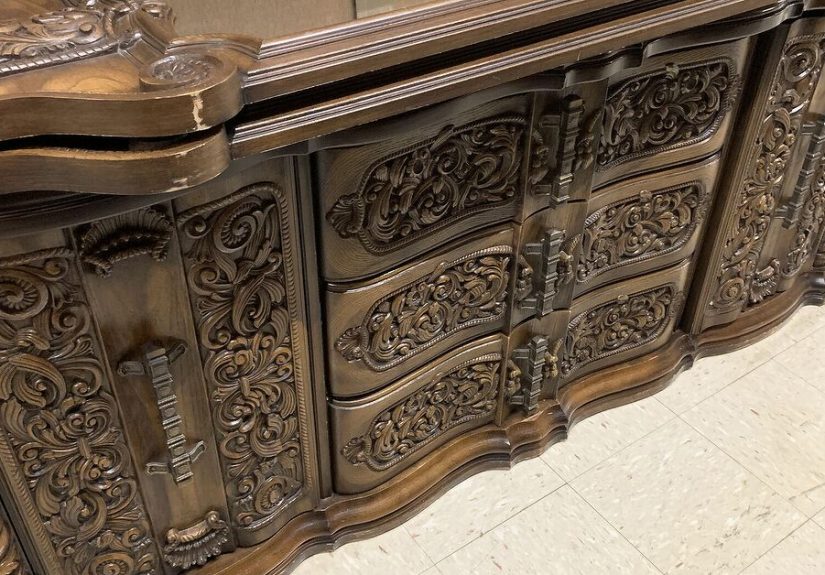
When shopping secondhand, ignore ugly paint colors and bad styling choices from previous decades. Focus on silhouette and proportions instead. Clean lines can become modern. Curved fronts can become elegant. Chunky traditional dressers can be updated into stylish storage with the right color, hardware, and legs. Try to picture the piece stripped of its current personality crisis.
How to Upcycle a Thrifted Dresser Step by Step
A great DIY dresser makeover is all about prep. This is the part nobody posts about as dramatically as the before-and-after shot, but it is what separates “beautiful custom piece” from “why is the paint peeling off in sheets?”
1. Clean everything first
Before you sand, paint, or dream too hard, clean the dresser thoroughly. Remove the hardware and take out the drawers. Use a degreaser or a wood-safe cleaner to get rid of built-up dirt, wax, polish, and mystery residue from past decades. Furniture holds onto grime like it is sentimental, and paint does not bond well to nostalgia grease.
2. Make repairs
Now is the time to tighten screws, reglue loose joints, fill dents, patch small holes, and fix drawer issues. Wood filler can smooth over surface imperfections, but do not try to fake structural stability with wishful thinking. If a leg is loose, fix it properly. If the drawer bottoms are sagging, reinforce them. A polished finish on a crooked dresser is still a crooked dresser.
3. Sand with purpose
You do not always need to strip a dresser to bare wood, but you usually do need to scuff the surface so primer and paint can grip. For already finished wood, a light to moderate sanding is often enough. If the finish is peeling, uneven, or heavy with old paint, you may need a more aggressive sanding schedule. Always remove dust thoroughly afterward with a vacuum, damp cloth, or tack cloth. Dust left behind will sabotage your finish faster than an impatient second coat.
4. Prime like you mean it
Primer is not the boring middle child of furniture flipping. It is the peace treaty between the old finish and your new vision. A good primer helps paint stick, improves coverage, and creates a more even color. If the dresser has stains, tannin bleed, or stubborn odors, choose a primer designed to block them. Skipping primer can work on some projects, but it is a gamble. Furniture has a long memory, and sometimes it likes to show it through your fresh paint.
5. Paint or stain for the look you want
Paint is the classic route for an upcycled thrifted dresser because it gives the biggest visual transformation. Use thin, even coats and allow proper drying time between them. A brush can help in carved details, while a small foam roller often gives a smoother finish on flat drawer fronts. Two coats are common. Three are sometimes needed, especially with lighter colors.
If you love wood grain, staining may be the better choice. A stripped and refinished top paired with painted drawers is a popular two-tone dresser makeover that feels timeless, warm, and custom. This approach works especially well on older solid-wood dressers with beautiful grain hiding under an unfortunate finish.
6. Protect the finish
Topcoat matters, especially on furniture that gets touched every day. Dressers deal with jewelry, keys, coffee mugs, and the occasional “I will just set this here for one second” disaster. A protective sealer helps guard against scuffs, moisture, and wear. Choose a finish level that suits your lookmatte for modern softness, satin for a balanced glow, or semi-gloss for a crisp, classic finish.
7. Upgrade the hardware
New hardware is one of the easiest ways to make a thrift store dresser feel intentionally designed. Swapping old knobs for brass pulls, matte black handles, ceramic knobs, or acrylic hardware can completely change the vibe. If the original hardware has character, do not toss it automatically. Cleaning and repainting old pulls can preserve charm while saving money.
Best Design Ideas for an Upcycled Thrifted Dresser
The beauty of a thrifted dresser makeover is that there is no single right answer. Your design can be subtle or dramatic, polished or playful.
Painted dresser with contrast
One of the most reliable ideas is contrast: dark body, light drawers; painted base, wood top; neutral frame, colorful drawer fronts. This makes the piece feel layered instead of flat.
Vintage dresser makeover with new legs
If the dresser feels visually heavy, replacing or adding legs can lighten the silhouette. Mid-century inspired tapered legs, bun feet, or modern metal legs can completely refresh the piece.
Textured drawer fronts
Fluted trim, cane webbing, wood appliqués, wallpaper, or stenciling can turn a plain dresser into a focal point. These details are especially effective on simple thrifted dressers that need texture more than color.
Soft, earthy paint colors
Sage green, warm white, dusty blue, charcoal, clay, and greige are popular because they feel current without trying too hard. Bold shades can also work beautifully, but earthy tones tend to age more gracefully than trend-of-the-minute neon experiments.
Mistakes to Avoid During a Dresser Makeover
The fastest way to ruin a good furniture flip is to rush it. Paint needs cure time. Primer needs to dry. Repairs need to hold. If you put drawers back too early, the finish can stick, scuff, or peel. The dresser will survive your impatience, but your ego may not.
Another common mistake is buying the wrong piece just because it is cheap. Cheap is not a bargain if the dresser is falling apart, smells terrible, or needs a level of repair better suited to a restoration documentary. It is smarter to spend a little more on a sturdy secondhand dresser that is easier to refinish.
One more thing: be careful with very old painted furniture. If you suspect the piece has an older finish, especially if it may date back decades, treat it cautiously. Avoid creating unnecessary dust until you know what you are dealing with, and use appropriate safety measures. A stylish dresser is great. A stylish dresser with questionable dust clouds is less charming.
Conclusion
An upcycled thrifted dresser is one of the smartest DIY projects for anyone who wants high style without the high price tag. It combines creativity, function, sustainability, and the unmatched satisfaction of saying, “Thanks, I made it better.” Whether you choose a sleek painted dresser, a natural wood restoration, or a bold furniture flip with custom details, the best results come from starting with a solid piece and giving the prep work the respect it deserves.
At the end of the day, a thrift store dresser makeover is not really about paint. It is about seeing potential where other people saw clutter. It is about turning a castoff into something useful, beautiful, and deeply personal. And honestly, that is a pretty great job description for a piece of furniture.
The Real Experience of Living With an Upcycled Thrifted Dresser
Here is the part people do not always mention in the before-and-after photos: living with an upcycled thrifted dresser feels different from living with a brand-new one. It has a little swagger. It feels earned. Even when the makeover is simple, the piece tends to carry more personality because you noticed it, rescued it, and made design choices that fit your home instead of just clicking “add to cart” and hoping for the best.
One of the most common experiences people have is surprisefirst at how much storage a thrifted dresser offers, and second at how much better it looks once it is cleaned up. A piece that seemed clunky in a fluorescent thrift store can look warm, stylish, and intentional under the softer light of a real bedroom or hallway. Suddenly, the drawers hold sweaters, table linens, office supplies, or craft materials, and the top becomes home to framed photos, a lamp, a catchall tray, or a stack of books that make you look suspiciously organized.
Another real experience is learning patience the hard way. Almost everyone who refinishes a dresser has a moment when they want to rush the last step. Maybe the paint feels dry, so the drawers go back in too soon. Maybe the new hardware gets installed before the surface is fully cured. Maybe the dresser is moved “just a little” and ends up with a fingerprint or a nick. Furniture flipping has a funny way of teaching restraint. The upside is that once you have done one dresser, you become much better at every DIY project after that. The piece becomes storage and a life lesson. Not bad for a thrift score.
There is also the experience of changing your mind halfway through. What starts as “I will just paint it white” can turn into “actually, maybe the top should be stained,” followed by “what if I add new pulls,” followed by “should this live in the entryway instead of the bedroom?” An upcycled thrifted dresser has a way of opening the door to more creativity than expected. It rarely stays a simple project. It becomes a styling decision, a room-refresh catalyst, and occasionally the reason you now own way too many paint swatches.
And then there is the satisfaction factor, which is very real. Guests notice these pieces. They ask where you found them. They assume they came from a boutique home store or a vintage dealer with strong opinions and limited hours. Getting to say “it used to be a thrift store dresser” is incredibly satisfying. It is the home-decor version of a glow-up montage.
Most of all, living with an upcycled dresser creates a stronger connection to your home. The piece feels less generic because it reflects your taste, your effort, and your ability to see potential. That may sound dramatic for a chest of drawers, but spend a weekend sanding, painting, sealing, and swapping hardware, and suddenly the dresser is not just furniture. It is proof that a home becomes more interesting when it is filled with things that have history, usefulness, and a little bit of reinvention.