Table of Contents >> Show >> Hide
- Why a Flagstone Firepit Works So Well in a Backyard
- Start With Safety Before You Start With Style
- Choosing the Best Location for a Flagstone Firepit
- Materials That Make Sense
- Design Ideas for a Flagstone Firepit Area
- How to Build a Simple Flagstone Firepit Setup
- Wood-Burning vs. Gas: Which One Fits a Flagstone Backyard Better?
- Maintenance Tips for Long-Term Good Looks
- What a Flagstone Firepit Adds to Backyard Living
- Experiences With a Flagstone Firepit for the Backyard
A flagstone firepit for the backyard has a special kind of charm. It is rugged without looking rough, elegant without trying too hard, and cozy in the way only real stone can be. Put one in the right spot, and suddenly your yard is not just a yard anymore. It becomes the place where marshmallows go to meet their destiny, where neighbors “just stop by” and somehow stay for two hours, and where chilly evenings become a lot more interesting.
But a good flagstone firepit is not only about looks. It also needs to be safe, durable, comfortable to gather around, and smartly placed within the landscape. The best backyard fire pit designs balance style and function: a stable base, heat-friendly materials, proper drainage, enough space for seating, and clear attention to local fire rules. In other words, beauty matters, but so does not accidentally turning your hydrangeas into a cautionary tale.
This guide walks through what makes a flagstone firepit work, how to plan one, what materials to consider, and how to design a backyard setup that feels timeless instead of trendy-for-five-minutes. Whether you want a simple DIY stone circle or a full flagstone patio with built-in seating, here is how to do it right.
Why a Flagstone Firepit Works So Well in a Backyard
Flagstone has long been a favorite in outdoor living spaces because it looks natural, handles the elements well, and pairs beautifully with plants, gravel, pavers, wood furniture, and garden paths. Unlike some materials that scream “brand-new patio project,” flagstone tends to settle into a yard visually. It looks like it belongs there.
That makes it a great choice for a backyard firepit. The varied shape, earthy colors, and textured surface give the area character. A round firepit surrounded by irregular flagstone can feel rustic and relaxed, while cut stone and tighter joints can create a more polished outdoor room. Either way, you get an inviting focal point with real visual weight.
There is also a practical side. Flagstone offers traction underfoot, works well for patios and stepping paths, and helps define a gathering zone around the fire. When homeowners want a fire feature that feels permanent rather than temporary, stone almost always wins the popularity contest.
Start With Safety Before You Start With Style
Before choosing stone color, patio chairs, or your future s’mores strategy, think about placement. A backyard firepit should sit on a level, stable surface and be well away from anything combustible. That includes the house, fences, sheds, dry grass, shrubs, overhanging branches, and the kind of patio umbrella that seems harmless until it becomes a headline.
In many places, local codes and fire guidance require minimum clearances, and regulations can vary by town, county, HOA, and burn season. Some areas restrict wood burning during drought or poor air-quality days. Others may limit open flames entirely or require spark screens, specific fuel types, or permits. Always check local regulations before building or lighting anything.
Safe use matters just as much as safe placement. Burn only dry, seasoned firewood if your pit is wood-burning. Avoid trash, construction scraps, painted lumber, pressure-treated wood, leaves, and yard waste. Keep a hose, bucket of water, sand, or extinguisher nearby. Never leave the fire unattended, and fully extinguish the embers before heading inside, even if your couch is calling your name louder than responsibility.
Choosing the Best Location for a Flagstone Firepit
Look for a Level, Open Spot
A flat area makes the entire project easier and safer. Uneven ground can lead to shifting stone, awkward seating, drainage problems, and that one chair that always rocks like it is auditioning for a storm scene. If your yard slopes, you may need excavation, grading, or a retaining solution before installing the firepit and surrounding patio.
Think About Wind and Smoke
A firepit can be cozy or annoying depending on where the smoke goes. Spend time in your yard at different times of day and note the prevailing wind. A spot that seems perfect at noon may blow smoke straight into the back door at dusk. Good placement can make the difference between an evening around the fire and an evening of everyone quietly repositioning their chairs every 90 seconds.
Plan for Traffic Flow
The best backyard fire pit ideas do not stop at the pit itself. Consider how people will walk to it, where drinks will be set down, how wood will be stored, and whether there is room for chairs to slide back comfortably. A flagstone path leading to the firepit or a larger flagstone patio around it can make the whole space feel intentional and welcoming.
Materials That Make Sense
There are two parts to think about: the firepit structure and the surface around it. Flagstone is often used for the patio, cap, or surrounding hardscape, while the actual fire chamber may include fire-rated brick, a metal liner, or heat-resistant stone products. That distinction matters because not every pretty stone is happy sitting next to intense heat for years.
If you are building a wood-burning firepit, use materials designed to handle high temperatures. Many DIY and pro builds rely on fire bricks or a steel liner inside the pit, then use stone or block as the visible exterior. This helps protect the outer structure, improve longevity, and reduce the chance of heat damage or cracking.
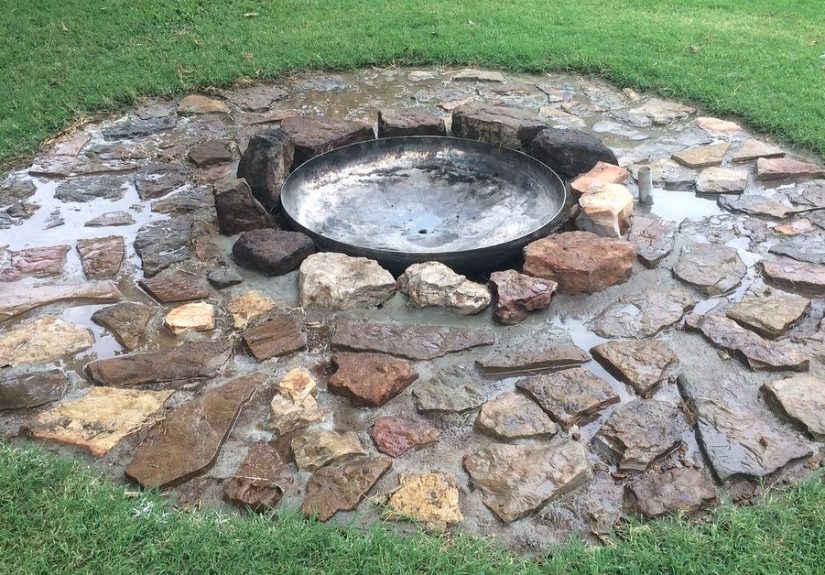
For the surrounding patio, flagstone is a standout choice. It can be dry-laid with sand or gravel-filled joints for a relaxed, natural look, or installed in a more formal pattern with tighter spacing. Choose thickness and installation methods that fit your climate, expected foot traffic, and overall design. If the patio will support heavy furniture or frequent use, invest in a strong, well-prepared base. Outdoor projects fail from below more often than above.
Design Ideas for a Flagstone Firepit Area
Classic Circular Layout
A round firepit with a circular or softly curved flagstone patio is the classic choice for a reason. It encourages conversation, makes seating easy, and looks balanced in most backyards. Adirondack chairs, gravel borders, and low plantings pair especially well with this layout.
Flagstone Patio With Built-In Seating
If you want a more permanent gathering zone, built-in stone seating walls can frame the firepit beautifully. This works especially well in medium to large yards where the firepit is part of a full outdoor living room. Add seat cushions, a few lanterns, and you are one string-light decision away from feeling extremely pleased with yourself.
Mixed Materials for a Custom Look
Flagstone combines well with gravel, concrete pavers, decomposed granite, steel edging, and natural boulders. A popular approach is to use a flagstone patio immediately around the firepit, then transition to gravel or lawn beyond it. This keeps the focal area durable and polished without making the whole yard feel overbuilt.
Garden-Framed Firepit
For a softer look, place the flagstone firepit area near ornamental grasses, low shrubs, or pollinator-friendly perennials. Just keep the plant material safely away from the flame zone. The contrast between rugged stone and lush planting creates a backyard that feels layered, natural, and genuinely lived in.
How to Build a Simple Flagstone Firepit Setup
A full custom masonry feature may require a professional, especially if you want gas lines, retaining walls, or integrated seating. But many homeowners can tackle a simple wood-burning backyard fire pit with a flagstone surround if they plan carefully.
1. Mark the Layout
Outline the firepit and patio area with marking paint, a hose, or string. Step back and make sure the scale works with your yard. Tiny pit in a giant yard? Underwhelming. Huge pit squeezed into a corner? Slightly gladiator arena.
2. Excavate and Prepare the Base
Remove sod and dig to the depth needed for your base materials and stone thickness. The surface should be level and compacted. Depending on the design, this may include gravel, paver base, sand, or a combination that supports drainage and long-term stability.
3. Build the Firepit Core
Install the fire-safe inner structure first. Many builds use a steel insert or fire brick interior with stone or block around the outside. Dry-fit the pieces before securing them so you can correct spacing and alignment early, while the project is still in the “promising” stage.
4. Lay the Flagstone Around It
Arrange the flagstone patio or surround so it feels balanced and comfortable to walk on. Maintain reasonably even joints, and cut stones where needed for a cleaner fit. Fill joints with sand, gravel, or the material appropriate for your installation style.
5. Finish the Space
Add seating, lighting, and a storage spot for dry firewood. A few practical extras go a long way: a spark screen, a metal ash bucket, side tables, and outdoor cushions that can survive actual weather instead of decorative optimism.
Wood-Burning vs. Gas: Which One Fits a Flagstone Backyard Better?
A wood-burning flagstone firepit has the classic crackle, smell, and campfire vibe many people want. It feels traditional, social, and undeniably atmospheric. But it also creates smoke, ash, and stricter safety concerns. It is the right fit for homeowners who love the ritual of building and tending a fire.
A gas firepit is cleaner and easier to start, and it can work beautifully within a flagstone patio design. If you entertain often or live where smoke is an issue, gas may be the more practical choice. It will not give you the full campfire experience, but it will give you quick warmth without sending someone home smelling like toasted cedar and questionable decisions.
The best option depends on your local regulations, your maintenance tolerance, and how you actually plan to use the space.
Maintenance Tips for Long-Term Good Looks
A flagstone firepit area is fairly low-maintenance, but not zero-maintenance. Sweep the patio regularly, remove ash once fully cool, and inspect the firepit for cracks, loose stone, or liner wear. Keep joints topped off if you use sand or gravel. Pull weeds before they get too ambitious. Clean up fallen leaves so they do not gather near the pit and become accidental kindling.
In cold climates, freeze-thaw cycles can be tough on outdoor stonework, especially if water collects under or between stones. That is why drainage and a proper base are not glamorous details; they are the boring heroes of the whole project. A cover can also help protect the pit when not in use.
What a Flagstone Firepit Adds to Backyard Living
The real magic of a flagstone firepit is not just the fire. It is what the fire changes. Suddenly the backyard gets used more often and later into the evening. People linger. Conversations stretch out. Kids ask for one more marshmallow and then somehow negotiate five. Even a modest yard feels more complete when it has a warm, grounded destination.
And from a design standpoint, few upgrades punch above their weight the way a well-planned firepit area does. It adds structure, texture, and personality to the landscape. It can be rustic, modern, cottage-style, desert-inspired, or classic American backyard. Flagstone plays nicely with all of it.
If you want a backyard feature that blends beauty, function, and year-round appeal, a flagstone firepit is one of the smartest choices you can make. Just build it with the same energy you want from the space itself: steady, welcoming, and not at all on fire in the wrong way.
Experiences With a Flagstone Firepit for the Backyard
People who add a flagstone firepit to the backyard often talk about the same surprise: they expected a nice-looking hardscape feature, but what they really got was a new routine. The space starts getting used in ways the rest of the yard never did. A plain patch of grass suddenly becomes the default place for coffee on cool mornings, conversation after dinner, and those spontaneous evenings when nobody planned anything except “let’s sit outside for a minute.” That minute rarely stays a minute.
One of the most common experiences is how natural flagstone changes the mood of the space. It does not feel as formal as poured concrete and it does not feel as temporary as a portable metal bowl on the lawn. The texture underfoot, the irregular shapes, and the earthy color variation make the area feel established from day one. Homeowners often find that the firepit seems to “anchor” the yard, especially when paired with gravel, low lighting, or a simple planting border.
Another recurring experience is that seating arrangement matters more than people think. Once the firepit is in place, families quickly learn whether they created enough elbow room, whether the chairs sit too far from the heat, or whether everyone is forced into that awkward half-squat because the seat walls looked great but were built a little too upright. The best backyard fire pit spaces usually evolve after the first few uses. People add side tables, move chairs wider apart, bring in better cushions, or create a path that keeps guests from crossing the lawn in the dark like cautious raccoons.
There is also the sensory side of the experience, and this is where a flagstone firepit really earns its keep. The stone holds visual warmth even when the fire is out. When the fire is going, the combination of flickering light, rough stone texture, and open sky creates an atmosphere that feels more expensive than it actually is. Meals become slower. Stories get longer. Even people who claim they are “not really outdoor people” tend to become very outdoor people once snacks and a good flame are involved.
Of course, not every experience is romantic. Some homeowners learn quickly that smoke direction is a ruthless editor of bad planning. Others discover that damp wood produces more frustration than ambiance. A few realize too late that placing a firepit too close to a walkway means every guest will use the edge stones as a footrest, intentionally or not. But that is part of the real-life value of the feature: it teaches what works. Over time, the setup gets smarter, more comfortable, and more personal.
In the end, the strongest experience tied to a flagstone firepit is not the build itself but the habit it creates. It turns the backyard into a destination. It gives the landscape a center of gravity. And long after the project is finished, the memory people keep is usually simple: the warmth, the laughter, the glow on the stone, and the feeling that home got just a little better after sunset.