Table of Contents >> Show >> Hide
- What Makes the Bruny Island Retreat So Special?
- A Tiny House With Big Architectural Brainpower
- How the Off-Grid Systems Actually Work
- Why Bruny Island Is the Perfect Setting
- What It Is Actually Like to Stay There
- Lessons the Tiny-House World Can Learn From This Cabin
- So, Is This the Ultimate Tiny House?
- Experience the Bruny Island Retreat: What a Stay Really Feels Like
- Final Thoughts
If tiny houses are supposed to prove that less can be more, the Bruny Island Retreat makes that argument with the confidence of someone wearing black turtlenecks in a room full of beanbag chairs. This little cabin in Tasmania is compact, clever, off-grid, and so visually disciplined it practically whispers, “Please stop buying decorative baskets.” It is the kind of retreat that makes you rethink what a vacation home should do. Instead of stuffing every square inch with trendy extras, it gives you light, timber, quiet, and just enough comfort to make wilderness feel civilized without turning it into a shopping mall with a view.
Often identified in architecture coverage as Bruny Island Hideaway and described elsewhere as the Bruny Island Retreat, the cabin sits on Bruny Island off Tasmania’s southeast coast. It was designed as a place to unplug from noise, clutter, and the exhausting modern hobby known as “being reachable.” The result is a tiny house that feels bigger than its footprint, warmer than its metal skin suggests, and smarter than many full-size homes that still can’t figure out where to put the vacuum cleaner.
For anyone fascinated by off-grid cabin design, minimalist interiors, sustainable living, or just plain gorgeous places to stay, this project is the stuff of tiny-house legend. It is not merely cute. It is purposeful. And that is exactly why it continues to captivate design lovers, travelers, and people who have typed “tiny cabin in the woods but make it chic” into a search bar at 1:14 a.m.
What Makes the Bruny Island Retreat So Special?
The short answer: restraint. The longer answer: this cabin was designed with a level of discipline that most houses only pretend to have. Built as a genuine off-grid retreat, the home turns limitation into style. Rather than fighting the remote site, the design leans into it. Solar power, rainwater collection, thoughtful orientation, and a compact footprint all work together to create a retreat that feels deeply connected to its landscape.
That landscape matters. Bruny Island is famous for dramatic coastline, native bushland, wildlife, and some extremely persuasive local food. It is the sort of place where a day might include a ferry ride, a windswept lookout, oysters, a coastal walk, and a wallaby sighting before dinner. In other words, the cabin is not stranded in nowhere. It is perfectly placed in somewhere memorable.
The retreat also avoids a mistake many tiny homes make: being small for the sake of being adorable. This one is small because the brief demanded focus. The cabin was created as a retreat for renewal, and that goal is evident in every move, from the built-in storage to the sleeping loft to the decks that pull the outdoors into daily life. Nothing feels accidental. Nothing feels like filler. Even the emptiness feels curated.
A Tiny House With Big Architectural Brainpower
One reason the Bruny Island Retreat stands out in the world of tiny houses is that it was not designed like a downsized suburban home. It was designed more like a finely made object. Architecture coverage has described the idea as creating a building that behaves like a piece of furniture, with most essentials built in. That design approach gives the cabin a sense of order that reads as luxurious rather than strict.
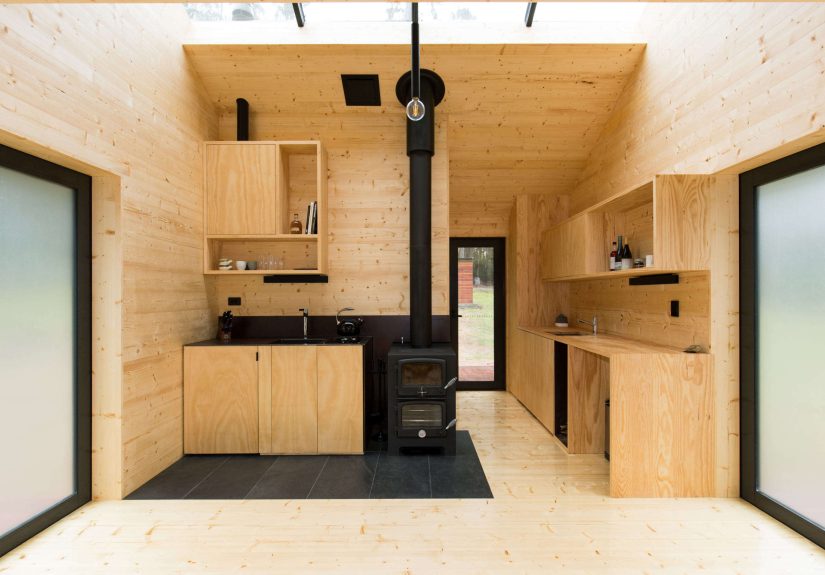
The inspiration behind the project is equally compelling. The cabin draws on Japanese-influenced minimalism, resulting in a space that values proportion, texture, light, and ritual over decoration. Instead of crowding the interior with visual noise, the design lets Baltic pine, carefully crafted joinery, and soft natural light do the heavy lifting. This is not minimalism in the cold, “sorry, the chair is conceptual” sense. It is minimalism that feels warm, tactile, and deeply livable.
That warmth is one of the cabin’s greatest tricks. From the outside, its corrugated metal and timber exterior looks hardy and practical, which it is. But step inside and the mood shifts. Timber cladding wraps the rooms in a soft glow. The compact layout feels calm rather than cramped. The ceiling height helps the interior breathe. And the connection to the decks gives the tiny footprint an elastic quality, as if the house takes a deep breath every time the doors slide open.
Small Footprint, Strong Personality
At around 28 square meters, or roughly 301 square feet, the retreat is undeniably small. But it never comes across as apologetic. The sleeping loft, integrated storage, and efficient kitchen are arranged with a confidence that makes the cabin feel intentionally edited. There is a difference between small and stingy, and this project absolutely understands the difference.
The low table and mattress in the loft are famously among the few non-built-in pieces. That detail says everything about the design philosophy. This is a house that wants to remove friction. You are not meant to spend your stay rearranging furniture, wondering where to set things down, or buying five more organizers in a panic. The architecture has already done the thinking for you.
How the Off-Grid Systems Actually Work
Calling something an off-grid cabin can sometimes mean “rustic, but with an Instagram account.” Here, the off-grid part is real. The Bruny Island Retreat uses solar panels, collects rainwater, and incorporates practical systems that allow it to operate independently in a remote setting. Underground water tanks help preserve the clean look of the site, while the roof works hard both aesthetically and functionally.
The cabin also uses a wood-fired oven for heat, with gas supporting key needs such as hot water and cooking. That combination is one of the reasons the retreat feels so grounded. It does not perform sustainability like a stage show. It applies simple, durable systems that make sense for the site. The house is efficient not because efficiency is fashionable, but because it is the smartest way to live lightly in a wild place.
Material choices reinforce that logic. Zincalume cladding and bushfire-conscious exterior materials help the home stand up to Tasmanian conditions, while double-glazed windows improve insulation and comfort. The result is a tiny cabin that is not pretending the environment does not exist. It respects the realities of sun, wind, weather, and fire risk. Good design, especially off-grid design, is never just about appearance. It is about survival wearing a handsome jacket.
The Outdoor Bath Everyone Ends Up Talking About
Yes, there is a hidden outdoor bath. Yes, it is as good as it sounds. And yes, it may be the detail that pushes this cabin from “beautiful” to “I suddenly understand why people move to remote islands.” Set into the deck on the more private side of the retreat, the bath turns an ordinary act into a miniature ceremony. It is a brilliant example of how luxury in a tiny house does not need to mean more stuff. Sometimes it just means one perfect experience, placed exactly where it belongs.
This is also where the cabin’s humorless seriousness ends, in the best possible way. Because however refined the architecture may be, a concealed deck bath under a wide Tasmanian sky is delightfully dramatic. It says: here is your bath, your sunset, your eucalyptus-scented air, and your chance to briefly imagine that your entire life has been leading up to this extremely photogenic soak.
Why Bruny Island Is the Perfect Setting
A cabin like this would be striking almost anywhere, but Bruny Island gives it a richer story. The island is reached by a short vehicle ferry from Kettering, south of Hobart, and once you arrive, the mood changes quickly. The pace slows. The roads become part of the adventure. The air feels cleaner. And the scenery begins showing off almost immediately.
Bruny is often celebrated for the Neck, the narrow isthmus linking North and South Bruny, as well as for beaches, cliffs, walking tracks, and wildlife. It is also known for a food scene that punches way above its weight, with oysters, cheese, honey, chocolate, and whisky frequently making appearances in travel guides. That combination of raw landscape and excellent produce gives the island a rare balance. It can feel rugged and indulgent in the same afternoon.
The retreat benefits from that contrast. You can spend a morning looking at sea views and windswept bushland, then return to a cabin that feels serene rather than showy. You can embrace the island’s wild character without giving up thoughtful design. This is the real magic of the Bruny Island Retreat: it lets nature remain nature. It does not flatten the landscape into a background image. It frames it, respects it, and occasionally invites you to stare at it from a bathtub like a very stylish field researcher.
What It Is Actually Like to Stay There
For travelers, the appeal is immediate. The cabin accommodates two guests, making it ideal for couples, solo escapes, writers, design nerds, and anyone who needs a reset that does not involve a conference lanyard. Reviews and booking descriptions consistently highlight the sense of seclusion, the minimalist interior, and the outdoor bath as a major highlight. Guests also note that the roads can be rough and unsealed, which only adds to the feeling that arrival is part of the ritual.
And that is an important point: this is not the kind of place you book if your dream trip involves valet parking and twelve pillow menu options. The Bruny Island Retreat is for people who enjoy atmosphere, silence, and architecture that changes the way they move through a day. You wake in a loft, descend a ladder, make coffee in a compact kitchen, slide open the doors, and suddenly the decks become your living room. The house teaches you a slower rhythm without ever lecturing you about wellness. Very considerate, frankly.
Even the bathroom has extra intelligence built into it. Design coverage has pointed out its dual role, including access that helps connect indoor comfort with outdoor use. That kind of problem-solving is what separates this retreat from a generic tiny rental. The space has been tuned, not merely decorated. It understands privacy, circulation, and how people actually inhabit a place over a weekend or longer.
Lessons the Tiny-House World Can Learn From This Cabin
The Bruny Island Retreat offers a few useful lessons for anyone interested in tiny homes, cabin rentals, or sustainable design.
1. Small spaces need a clear idea.
This cabin succeeds because it knows exactly what it is: a place of retreat, reconnection, and calm. It does not try to be a family home, an office tower, a party venue, and a yoga studio all at once.
2. Off-grid living works best when it is integrated.
Solar panels, rainwater collection, heating, and durable materials are not separate gimmicks here. They are part of the architecture from the beginning, which is why the house feels coherent rather than patched together.
3. Luxury is not about size.
Luxury can be a warm timber interior, a view framed just right, or an outdoor bath hidden in a deck. The retreat proves that experience often matters more than square footage.
4. Minimalism should still feel human.
The best thing about this cabin is that it never feels sterile. It is edited, yes, but still soft, warm, and welcoming. That is a harder balance to achieve than people think.
So, Is This the Ultimate Tiny House?
It has a strong case. The Bruny Island Retreat combines serious architectural thinking, off-grid practicality, and a setting that already feels cinematic before the sun even gets dramatic. It is small without being cramped, minimalist without being joyless, and sustainable without waving a giant eco-banner over your head. In the increasingly crowded world of tiny-house inspiration, that is rare.
More importantly, it feels honest. The cabin does not promise to transform your life in forty-eight hours. It simply gives you the conditions that modern life often fails to provide: quiet, beauty, warmth, intention, and enough distance from everyday chaos to hear your own thoughts again. For many people, that is more luxurious than another marble countertop ever could be.
If the goal of a great retreat is to make you feel both protected and profoundly awake to your surroundings, then this off-grid Tasmanian cabin absolutely nails it. It is not just a tiny house. It is a master class in how to live with less, feel more, and maybe come home wondering why your regular house contains so many unnecessary throw pillows.
Experience the Bruny Island Retreat: What a Stay Really Feels Like
You do not simply arrive at the Bruny Island Retreat. You ease into it. First comes the drive south from Hobart, then the ferry, then the gradual sense that the mainland has started to loosen its grip on your nervous system. By the time you are rolling along Bruny’s roads, watching bushland and coastline trade places outside the window, your brain has already begun doing less of that annoying tab-refresh thing.
Then the cabin appears, and the first impression is almost always the same: it is smaller than expected, sharper than expected, and far more intriguing than expected. It sits with confidence in the landscape, not trying to dominate it, not trying to cosplay as some rugged frontier fantasy. It looks composed. Calm. Like it has already figured out something you are still working on.
Inside, the shift is immediate. The timber interior softens everything. Light moves gently across the walls. The built-in elements make the whole place feel tidy in a way that is deeply satisfying, even if your own home currently contains a chair dedicated entirely to laundry. You notice how every zone has a purpose. There is room to sit, cook, read, wash, sleep, and stare out the door pretending you are in a very tasteful independent film.
Morning in the cabin feels especially good. You climb down from the loft, make coffee, and open the doors to let the air in. Suddenly the decks become part of the house. You hear birds, wind, maybe the faint rustle of trees, and that alone feels worth the trip. Breakfast becomes an event, not because it is fancy, but because you are eating it in a place that understands atmosphere.
By afternoon, the island starts making its own case for greatness. Maybe you head out to explore beaches, walking tracks, local producers, or lookouts. Maybe you spot wildlife. Maybe you do absolutely nothing, which in a retreat like this counts as a very respectable itinerary. That is part of the appeal: the cabin gives you permission to stop performing productivity in your leisure time.
And then there is the bath. At some point, usually around sunset, you realize you have the option to sink into warm water outdoors while the sky does its theatrical Tasmanian thing. This is the moment many stays would like to sell you, but the Bruny Island Retreat actually earns it. The outdoor bath is not a gimmick; it feels like the perfect final sentence to the day.
Night settles differently here, too. With less ambient light, more silence, and a real sense of remoteness, the cabin becomes wonderfully cocoon-like. The loft feels cozy. The timber feels warmer. The off-grid systems stop seeming like technical features and start feeling like part of the experience. You are not in a machine built to shield you from the world. You are in a shelter designed to let the world in at exactly the right level.
That is why people remember this place so vividly. It is not only beautiful in photos. It is beautifully sequenced in real life. The journey, the setting, the materials, the silence, the bath, the sleep, the morning light it all works together. Plenty of cabins are attractive. Very few are this intentional. And fewer still leave you wondering, on the ferry ride back, whether your best life might involve a smaller house, a bigger sky, and a lot less stuff.
Final Thoughts
The Bruny Island Retreat is the kind of tiny house that earns its hype. It does not rely on novelty alone, and it certainly does not need to shout. Its power comes from clarity: a small footprint, a strong architectural concept, off-grid intelligence, and a spectacular Tasmanian setting. For travelers, it offers a memorable stay. For designers, it offers a case study in restraint done right. For everyone else, it offers dangerous levels of inspiration and a very real temptation to declutter their life by about 70 percent.