Table of Contents >> Show >> Hide
- What Is the “Borax Challenge,” Exactly?
- Why People Fall for It (And Why It Spreads So Fast)
- What Borax Is Used for (Hint: Not Smoothies)
- What Happens If You Drink Borax or Laundry Detergent?
- What To Do If Someone Has Ingested Borax or Detergent
- How Platforms Handle “Dangerous Challenge” Content
- How to Talk to Teens (Without Turning It Into Forbidden Fruit)
- What Evidence-Based Alternatives Look Like
- Key Takeaway: Cleaning Products Are Not a Wellness Category
- Real-World Experiences: What People Run Into When Trends Turn Toxic (≈)
- SEO Tags
Somewhere between “life hack” and “please don’t do that,” the internet has invented yet another trend that
turns a cleaning product into a questionable wellness ritual. The so-called TikTok borax challenge
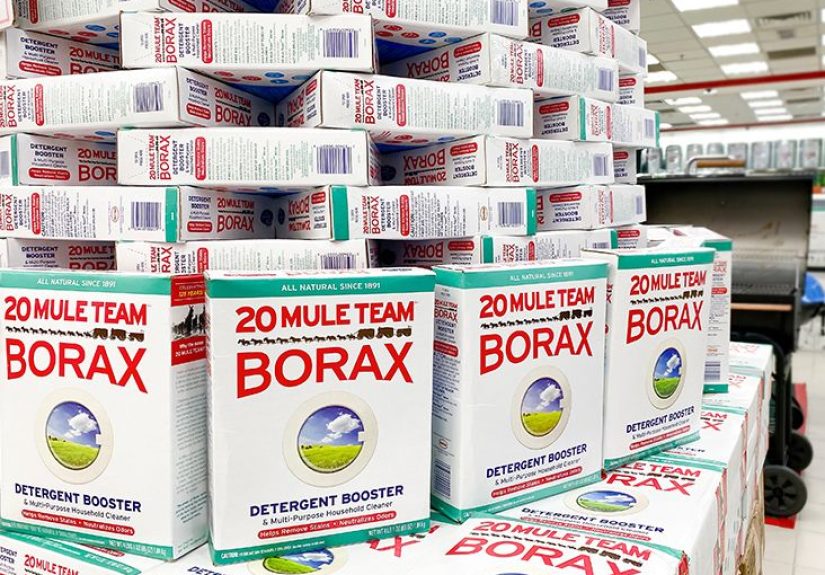
(often framed as “borax water” or “detox” content) pushes the idea that adding boraxan ingredient associated with
laundry boosters and household cleanersto a drink is a shortcut to feeling better.
Let’s be extremely clear: borax is not meant to be consumed. It’s not a supplement. It’s not a
“mineral cleanse.” It’s a laundry-adjacent chemical product that can make you sickand in serious cases,
land you in the emergency room.
This article breaks down what the borax challenge is, why it spreads, what borax does to the human body, and
what to do if someone has swallowed borax or laundry detergent. We’ll also talk about how to spot health
misinformation before it turns your kitchen into a chemistry lab.
What Is the “Borax Challenge,” Exactly?
The borax challenge is a social-media trend in which creators encourage viewers to ingest borax
(sometimes described as “a pinch in water,” “a detox drink,” or “a mineral boost”) and then claim it helps with
issues like inflammation, joint pain, fatigue, hormone balance, or a grab bag of vague “toxins.” Some posts also
blur the line between borax and laundry detergent, because borax is commonly marketed as a laundry booster and
is often found in household cleaning aisles.
A few important clarifications:
- Borax is a sodium borate compound. It may contain boron, but it is not the same thing as dietary
boron found naturally in foods. - “Natural” doesn’t mean “safe to drink.” Poison ivy is natural too. So are jellyfish.
- Household-grade products aren’t formulated for ingestion. Even when a substance has some regulated
uses in other contexts, that does not translate to “safe as a beverage.”
In plain terms: this trend takes something intended for cleaning and tries to rebrand it as a wellness hack.
That’s not biohacking. That’s body-whacking.
Why People Fall for It (And Why It Spreads So Fast)
1) It borrows the language of healthwithout the homework
Trends like this often wrap themselves in scientific-sounding words: “minerals,” “detox,” “inflammation,”
“alkalizing,” “parasites,” “mold,” “metabolic reset.” The phrases feel medical-ish, but they rarely come with
clinical evidence. The result is a shortcut illusion: you can “fix everything” with one ingredient you can buy
for cheap.
2) The confusion between borax, boron, and boric acid is a featurenot a bug
A common engine behind borax misinformation is word confusion:
- Boron is a trace element found in foods.
- Borax is a borate salt used in cleaning products.
- Boric acid is a different boron-containing compound often used in pest control and some topical products.
Creators may slide between these terms as if they’re interchangeable. They’re not. And when terminology gets
sloppy, safety usually goes with it.
3) TikTok rewards “watchable,” not “verified”
Short-form video platforms are optimized for engagement. A dramatic “before and after” story is more likely to
go viral than a careful explanation of toxicology. Add in the trend-chasing culture of challenges, and you get a
perfect storm: a risky behavior that spreads faster than corrections can keep up.
4) It’s part of a bigger ecosystem of health misinformation
The borax challenge isn’t an isolated weird moment. It’s connected to a broader network of “miracle cure”
narrativessometimes linked to supplement sales, affiliate links, paid communities, or wellness grifts that
thrive on distrust in mainstream medicine.
What Borax Is Used for (Hint: Not Smoothies)
Boraxoften labeled as sodium borate or sodium tetraborateis commonly used in household settings as:
- A laundry booster (for odor control, stain support, and water softening)
- A general household cleaner ingredient
- A component in some pest-control products
- A material in certain industrial processes (glass, ceramics, and more)
Notice what’s missing: “beverage enhancer.”
Some people interpret “it’s a mineral” as “it must be healthy.” But plenty of minerals are harmful when inhaled,
swallowed, or used in the wrong form. Human biology doesn’t grade on a curve just because something came from a
rock.
What Happens If You Drink Borax or Laundry Detergent?
Ingesting borax or laundry detergent can irritate and damage tissues in the mouth, throat, esophagus, and
stomach. It can also cause systemic effects depending on dose, concentration, and the person’s age and health.
Children are especially vulnerable.
Common symptoms reported with borate exposure
Medical references on boron/borate exposure describe symptoms such as:
- Nausea and vomiting
- Diarrhea and abdominal pain
- Dehydration (especially if vomiting/diarrhea are severe)
- Weakness, headache, or lethargy in more significant exposures
Severe cases can involve more serious complications, including kidney issues and shock. The risk is not just
“an upset stomach.” It’s a toxic exposure that can escalate.
Why “laundry detergent” makes this even riskier
Laundry detergentsespecially concentrated liquids and detergent podscan cause:
- Coughing, choking, or trouble breathing if the product is aspirated
- Significant irritation or burns (including eye injuries if splashed)
- Drowsiness or more severe symptoms in serious exposures
Detergent pods are notorious because they’re highly concentrated and can burst into the mouth. Adults can be
harmed tooparticularly older adults or people with cognitive impairment who might confuse pods with candy.
What To Do If Someone Has Ingested Borax or Detergent
If this is happening right now, don’t “wait and see” while TikTok comments debate whether it’s real. Treat it as
a poisoning exposure.
Immediate steps
- Call Poison Control in the U.S.: 1-800-222-1222. You can also use online poison help tools in
many cases. - Call 911 if the person collapses, has a seizure, has trouble breathing, or can’t be awakened.
- Don’t induce vomiting unless specifically instructed by a medical professional.
- If there’s product on skin or in eyes, rinse with running water and seek guidance quickly
(eye exposures can be urgent).
Helpful information to have ready
- The product name and ingredients (take a photo of the label if possible)
- Approximate amount involved (best estimateno hero math)
- The person’s age, weight (if known), and symptoms
- When it happened
Poison experts and clinicians can give you personalized instructions based on the exact exposurebecause
“I saw a comment that said drink milk” is not a medical plan.
How Platforms Handle “Dangerous Challenge” Content
Major social platforms publicly state they restrict or remove content that promotes dangerous acts or harmful
challenges. In practice, enforcement can be uneven: some videos are removed, some remain, and some are posted as
“debunks” that accidentally amplify the trend by repeating the keyword and showing the product.
If you see content encouraging ingestion of cleaning products:
- Report it using the platform’s safety tools.
- Don’t repost the original clip (screenshots and reaction videos can spread it further).
- Share safety info (Poison Control number, symptoms, and why it’s unsafe) without showing “how it’s done.”
How to Talk to Teens (Without Turning It Into Forbidden Fruit)
If you’re a parent, caregiver, teacher, or coach, the goal is to keep kids safe without accidentally marketing
the trend.
Use a “curious, not furious” opener
Try: “I saw some videos about people drinking cleaning products. Have you seen that? What are people saying
about it?” You’re looking for information, not a confession.
Explain the risk in human terms
Teens often respond better to practical outcomes than vague warnings. You can say:
“It can burn your throat and stomach, make you vomit for hours, and in bad cases hurt your kidneys or breathing.”
Keep it real, not theatrical.
Give them a shareable “exit line”
One reason challenges spread is social pressure. Help them rehearse an easy refusal:
“Nah, I’m not drinking laundry stuff. I like my organs.”
Teach the quick misinformation test
- Is it trying to sell something? Discount codes and “link in bio” are red flags.
- Is there real medical evidence? One influencer’s story is not a study.
- Would a poison expert approve? If not, that’s your answer.
What Evidence-Based Alternatives Look Like
A major reason people get pulled into trends like the borax challenge is they’re dealing with real symptoms:
chronic pain, inflammation, fatigue, or frustration after trying multiple treatments.
The answer isn’t “do nothing.” The answer is “do something that’s actually supported.”
If your goal is inflammation or joint pain
- Talk with a clinician about underlying causes and appropriate treatment options
- Consider evidence-based approaches like physical therapy, sleep support, and medically appropriate meds
- Be cautious with supplements“natural” does not guarantee safety or effectiveness
If your goal is “detox”
Your liver and kidneys already do that job full time. If you’re worried about exposure or symptoms, get medical
evaluation instead of DIY chemistry.
Key Takeaway: Cleaning Products Are Not a Wellness Category
The borax challenge is a modern remix of an old internet problem: repackaging harmful behavior as a “hack.”
Drinking borax or any laundry-associated product is not a health trendit’s a poisoning risk.
If you’ve seen this content, the best response is boring and effective:
don’t do it, don’t share it, report it, and save the Poison Control number.
Real-World Experiences: What People Run Into When Trends Turn Toxic (≈)
When a risky trend breaks out online, the experiences around it tend to follow a predictable arcone that looks
less like a “challenge” and more like a chain reaction.
First comes the curiosity stage. People see short videos claiming borax is a “mineral boost” and
assume it’s similar to trace nutrients. Comments like “My grandma used this” or “It’s natural” create a false
sense of safety, even though household borax products are labeled for cleaningnot consuming. In many cases,
viewers don’t see a dramatic immediate consequence in a clip, so they assume nothing bad happens.
Then come the “mild symptom” stories. Poison experts describe that nausea, vomiting, diarrhea,
and abdominal pain can occur with borate ingestion, and those symptoms often get minimized online as proof the
“detox is working.” In reality, when your body urgently tries to eject a substance, it’s not applauding your
wellness journeyit’s waving a red flag. People can also become dehydrated, especially if vomiting and diarrhea
continue.
Parents and caregivers often learn about the trend after the fact. A teen may try something
privately, or a younger child might accidentally ingest a product left within reach. That’s why poison-prevention
guidance emphasizes safe storage of cleaning products and quick action after an exposure. In the real world,
caregivers frequently describe the same panicked questions: “How much is dangerous?” “Should I make them throw up?”
“Do I go to the ER?” Poison Control exists for exactly this momentfast, expert, specific guidance.
Clinicians and poison specialists deal with the gray area that social media ignores. Online, the
trend is presented as one-size-fits-all: “tiny amount, big benefits.” But medical risk is personal and contextual:
age, body size, medical conditions, product formulation, and whether the substance was aspirated all matter. A
concentrated detergent exposure is not the same as a diluted one. A toddler is not the same as an adult. And a
person who starts coughing or wheezing after swallowing something may be dealing with airway irritation that
requires urgent evaluation.
Educators and youth leaders see the social mechanics. Challenges spread because they’re shareable,
and because participating can feel like belonging. The most effective prevention messages aren’t lecturesthey’re
practical tools: how to say no, how to spot a scammy “miracle cure,” and what to do if a friend already tried it.
In other words, the real-world experience of the borax challenge isn’t a quirky wellness experiment. It’s the same
pattern public health experts have seen with many viral “dares”: confusion, normalization, preventable exposures,
and then a scramble for credible guidance. The good news is that the boring responsedon’t ingest it, call Poison
Control if exposed, and report harmful contentactually works.