Table of Contents >> Show >> Hide
- Quick Picks: The 4 Best Air Purifiers in 2025
- How We Judged “Best” in 2025 (Without Falling for Marketing Math)
- Comparison Snapshot
- 1) Coway Airmega AP-1512HH Mighty
- 2) Blueair Blue Pure 211i Max
- 3) Levoit Core 400S-P
- 4) Winix 5500-2
- Buying Guide: How to Choose the Right Air Purifier (So You Don’t Buy Twice)
- FAQ
- Conclusion
- Real-World Experience: What Using These Purifiers Actually Feels Like (and the Mistakes People Make)
Indoor air has a special talent: it looks innocent while quietly holding onto yesterday’s cooking smells,
last week’s pollen, and whatever your dog dragged in from the backyard (emotionally or otherwise).
A good air purifier won’t solve every life problemyour group chat still willbut it can make your home
feel noticeably fresher, especially during allergy season, wildfire smoke events, renovations, or “why does
this room smell like onions forever?” moments.
In 2025, the best air purifiers aren’t the fanciest-looking towers with a spaceship vibe. They’re the ones
that move a lot of clean air (fast), fit your room size (honestly), and don’t punish your wallet with
constant filter replacements. Below are four standouts that kept showing up across major U.S. test labs,
consumer publications, and manufacturer performance dataplus what they’re actually good at in real homes.
Quick Picks: The 4 Best Air Purifiers in 2025
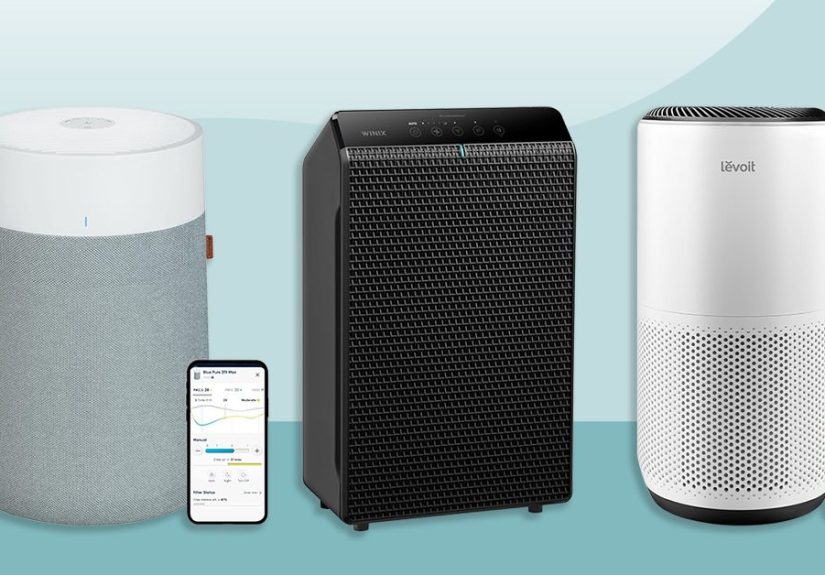
- Coway Airmega AP-1512HH Mighty Best overall balance of performance, size, and cost.
- Blueair Blue Pure 211i Max Best for large rooms and fast particle cleanup.
- Levoit Core 400S-P Best smart value (app control that’s actually useful).
- Winix 5500-2 Best value for odors + everyday “mystery air” (strong carbon stage).
How We Judged “Best” in 2025 (Without Falling for Marketing Math)
Air purifier brands love big room-size numbers. The catch is how they calculate them.
A more realistic benchmark is aiming for roughly 4–5 air changes per hour in the room you care about
(bedroom, nursery, main living space). That’s the difference between “technically filtering the air” and
“actually making the air feel better.”
Three metrics that matter more than hype
- CADR (Clean Air Delivery Rate): Higher CADR generally means faster cleaning for particles like smoke,
dust, and pollen. Match CADR to your room sizedon’t just buy the biggest fan you can afford and hope. - Filter type and depth: A HEPA-style setup is great for particles; activated carbon helps more with
odors and some VOCs. (More carbon = generally better odor control.) - Total ownership cost: Filters aren’t accessories; they’re the entire point. If replacements are pricey
or hard to find, you’ll end up with an expensive white box that “used to work great.”
A sizing shortcut that’s surprisingly useful
One practical rule of thumb used in public-health guidance: choose a purifier with a smoke CADR roughly
two-thirds of your room’s square footage (example: 150 sq ft room → ~100 CADR smoke). It’s not perfect,
but it keeps you from under-buying and then blaming the purifier for basic physics.
Comparison Snapshot
Numbers below prioritize realistic room sizing (the kind that makes a difference) and clear, published
performance specs. If you’re deciding between two models, start here.
| Model | Best For | Realistic Room Target | Smoke CADR | Noise Range | Filter Cadence (Typical) |
|---|---|---|---|---|---|
| Coway Airmega AP-1512HH Mighty | Most homes, daily allergies, steady performance | ~361 sq ft (higher air-change target) | 233 CFM | 24–53 dB | Carbon ~6 mo; HEPA ~1 yr |
| Blueair Blue Pure 211i Max | Large rooms, fast cleanup (smoke/dust/pollen) | ~674 sq ft (higher air-change target) | 435 CFM | 23–53 dB | Filter ~9 mo (usage-dependent) |
| Levoit Core 400S-P | Smart control, bedrooms + open living areas | ~358 sq ft (higher air-change target) | 231 CFM | 22–52 dB | Filter ~6–12 mo (usage-dependent) |
| Winix 5500-2 | Odors + everyday air quality on a budget | ~360 sq ft (AHAM verified room size) | ~232 CFM (estimated) | Varies by mode | HEPA periodic; carbon is washable |
Note: The Winix smoke CADR above is a reasonable estimate based on the brand’s published room-size calculation approach.
If you love exact numbers, think of it as “close enough for shopping,” not “engrave it on a trophy.”
1) Coway Airmega AP-1512HH Mighty
If air purifiers had a “most likely to be recommended by everyone’s cousin who did 40 hours of research”
award, the Coway Mighty would be polishing it daily. In 2025, it stayed popular because it’s the rare purifier
that hits the sweet spot: strong particle performance, compact footprint, sensible controls, and reasonable
filter maintenance.
Why it made the list
- Strong CADR for the size: Smoke CADR 233 CFM (with similarly high dust/pollen CADR).
- Quiet enough for real life: Low mode won’t dominate your room’s vibe.
- Practical filtration stack: Pre-filter for hair/dust clumps, carbon for odors, HEPA for fine particles.
- Eco/Auto behavior that’s actually useful: It can ramp up when the air gets gross and chill out later.
Where it shines in a real home
Put it where you live: bedroom if allergies keep you up, living room if you cook a lot, or near a litter box if your cat
is waging chemical warfare. It’s especially good for “normal chaos” airdust, pollen, mild smoke, and day-to-day
funkwithout requiring you to babysit settings.
Watch-outs
- Odors: It helps, but if your main problem is strong VOCs or heavy smoke events, you may want
more carbon (or a larger unit). - Room size math: It can cover bigger rooms on paper, but you’ll get the best results when you size it
for higher air-change targets.
2) Blueair Blue Pure 211i Max
The 211i Max is what you buy when you want a purifier to stop negotiating with the air and start winning. It’s built
for bigger spacesopen-plan living rooms, combined kitchen/dining areas, or that “loft” you thought would be romantic
until it turned into an echo chamber of cooking smells.
Why it made the list
- Very high CADR: Smoke CADR listed at 435 CFM (with equally strong dust/pollen numbers).
- Large-room confidence: Designed for big spaces at a realistic cleaning pace.
- Quiet for its power: It can move serious air without sounding like a leaf blower.
- Filter tracking: Usage-based reminders help you replace filters when it matters, not when a random timer feels dramatic.
Best use cases (aka: when it feels like magic)
If wildfire smoke or seasonal haze is common where you live, or if you have a large living area where smaller purifiers
just wave politely at the problem, the 211i Max is a strong upgrade. It’s also great for homes with pets because the
prefilter helps catch larger debris before it gets cozy inside the main filter.
Watch-outs
- Price: You’re paying for speed and scale.
- Placement matters: Give it breathing room so it can pull air from the whole space, not just the corner you tucked it into.
3) Levoit Core 400S-P
The Levoit Core 400S-P is for people who want clean air and convenience. In 2025, it stood out as a smart air purifier
that doesn’t require a tech support hotline to operate. You get useful app controls, an auto mode, and a strong CADR
for the moneywithout turning your living room into a science fair project.
Why it made the list
- Solid performance: CADR listed at 231 CFM, with AHAM-verified category ratings commonly published for smoke/dust/pollen.
- Smart controls: Scheduling, remote control, and monitoring are genuinely helpful (especially for bedrooms).
- Quiet enough for sleep: Low mode is friendly to light sleepers.
- Energy-conscious: Runs at a modest rated power for its output.
Where it shines
Bedrooms, apartments, and medium-to-large rooms where you want the purifier to adjust on its own. It’s also a great
option if you like automations: “Run harder when PM2.5 spikes during cooking, then calm down,” is a perfectly normal
thing to ask your appliances now. We live in the future. Please enjoy it responsibly.
Watch-outs
- Odors and VOCs: It has carbon, but serious odor issues usually need more carbon mass than
most mid-priced units provide. - Filter replacements: Don’t cheap out on random off-brand filters if you’re sensitive; consistency matters.
4) Winix 5500-2
The Winix 5500-2 is the “quietly competent” option that keeps earning fans because it delivers a lot for the price.
It’s especially popular with pet owners and anyone fighting odorsthanks to its washable carbon stagewhile still
packing true HEPA particle filtration for the stuff you can’t see but definitely feel.
Why it made the list
- Strong value proposition: Features you usually pay more for: sensors, auto mode, remote, and a legit carbon stage.
- Washable carbon filter: Helpful for odors (kitchen, pets, “old house vibes”).
- AHAM-verified room sizing: Published verified room size around 360 sq ft for meaningful cleaning.
- Optional plasma/ion feature: Present, but designed to be controllableimportant for people who prefer to disable ionization features.
Where it shines
This is a strong pick for a main bedroom, a medium living room, or a home officeespecially if you care about odor control
and don’t want to spend premium money. It’s also a good “first serious purifier” because it’s forgiving: you can set auto mode,
let the sensor do its thing, and still have manual control when you’re cooking or cleaning.
Watch-outs
- Ionizer sensitivity: Some people prefer zero ionization. If that’s you, choose models with the feature disabled or avoid it entirely.
- Not a substitute for ventilation: Like all purifiers, it helps with particles and some odorsnot carbon monoxide, not CO2, not “I burned the garlic.”
Buying Guide: How to Choose the Right Air Purifier (So You Don’t Buy Twice)
Step 1: Pick the room you care about most
Purifiers work best when you treat them like a room-specific tool. If you can only buy one, pick the space where you
spend the most uninterrupted time (often the bedroom). Clean sleep air is underrated until you have it.
Step 2: Size for real cleaning, not wishful thinking
If your room is 300 sq ft, a tiny purifier rated for “up to 900 sq ft” might technically circulate air, but likely not fast enough
to keep up with daily particle generation. Look for strong CADR numbers and realistic room targets at higher air-change goals.
Step 3: Decide whether your main enemy is particles, odors, or both
- Particles (allergies, smoke, dust): Prioritize CADR and HEPA filtration.
- Odors/VOCs: Prioritize activated carbon (and expect to replace it more often).
- Both: Get a balanced unit and run it consistentlypurifiers hate being “used only sometimes.”
Step 4: Avoid sketchy “ozone generator” claims
Stick with reputable brands and products designed to meet ozone emission limits in regulated markets. If a product’s vibe is
“this mysterious technology cleans everything,” that’s your cue to back away slowly while maintaining eye contact.
FAQ
Do air purifiers help with wildfire smoke?
Yesgood ones can reduce smoke particles in a room. For wildfire season, prioritize a high smoke CADR and run the purifier
consistently with doors and windows closed as needed. Bigger rooms benefit from higher CADR models (or multiple units).
Do air purifiers remove odors completely?
They can reduce odors, especially with activated carbon, but “complete removal” depends on the source and severity.
If the source keeps producing odor (cooking, litter box, paint), you’ll get better results by pairing purification with source control
and ventilation when possible.
Where should I place an air purifier?
Aim for open airflow: a few feet away from walls and furniture, not tucked behind a plant like it’s in time-out.
Put it near the center of the room or near the main pollutant source (kitchen-adjacent, near pet areas), depending on your goal.
Conclusion
The “best air purifier” in 2025 isn’t a single model for everyoneit’s the one that matches your room size and your main
air problem, then runs often enough to matter. If you want the safest all-around recommendation, the Coway Mighty is hard to beat.
If you need large-room power, the Blueair 211i Max brings serious speed. If you want smart features without paying luxury prices,
the Levoit Core 400S-P is a strong pick. And if you want a value-heavy workhorse that’s especially friendly to odor control,
the Winix 5500-2 deserves a spot on your shortlist.
Buy the right size, replace the filters on schedule, and run it consistently. Your lungs will not send you a thank-you card,
but you may notice you wake up less congestedand that’s basically a standing ovation in respiratory language.
Real-World Experience: What Using These Purifiers Actually Feels Like (and the Mistakes People Make)
Here’s what tends to happen after the honeymoon phasewhen the box is recycled, the purifier is humming in the corner,
and life is back to normal. First: people underestimate how much placement matters. You don’t need feng shui,
but you do need airflow. If the purifier is jammed between a couch and a curtain like it’s hiding from responsibility, it’s going to
clean the air in that one awkward nook and call it a day. The best real-world results come when the intake has space and the
clean-air outlet isn’t immediately bouncing off a wall and looping back in.
Second: the “auto mode illusion.” Auto mode is great, but sensors are usually better at particles than smells.
You can burn toast into a philosophical crisis and the purifier might respond instantlybecause particle levels spike.
But if your issue is VOCs from paint or that new-rug smell, a particle sensor may not fully capture what you’re annoyed by.
That’s when the models with decent carbon stages feel more satisfying. People often report that odor control is where budget
purifiers feel “fine” and better designs feel “oh wow, this room stopped smelling like last night’s dinner.”
Third: filter habits. The most common failure mode isn’t the motorit’s the human. Many folks run a purifier for months,
love it, then forget filters exist. Gradually, the airflow drops, the purifier gets louder, and performance slides. Then someone says,
“It doesn’t work anymore,” while the filter looks like it spent a weekend camping inside a dryer vent. Put a recurring reminder
on your phone or use app notifications if your purifier supports it. Replacing filters on time is the difference between a purifier
that “used to be great” and one that stays great.
Fourth: expectations during smoke events. During wildfire smoke or a heavy pollution day, people sometimes buy a purifier
that’s too small and expect it to do heroic things. It’s like bringing a small umbrella to a hurricane and being shocked you got wet.
In real homes, the winning approach is: close windows and doors as appropriate, run the purifier continuously, and size it to the
room you’re actually using. If you have an open floor plan, it can be smarter to purify one “clean room” strongly rather than
lightly purifying a whole house.
Fifth: the quiet factor at night. Many people think they want “silent,” but what they really want is “non-annoying.”
A low, steady fan sound can be easier to sleep with than a purifier that constantly ramps up and down like it’s auditioning for
a role in an action movie. In practice, lots of households set a purifier to a consistent mid-low speed overnight instead of full auto,
especially during allergy season. That steady operation is often enough to reduce morning congestion without waking anyone up.
Finally: the most underrated trick is simply matching the purifier to your daily routine. If cooking is your main trigger, place the unit
where it can catch particles and odors before they wander through the house like gossip. If sleep is the priority, put it in the bedroom
and run it consistently. And if pets are the issue, you’ll feel the biggest improvement when you pair the purifier with basic housekeeping:
vacuuming, brushing, and occasionally admitting the dog might not be “hypoallergenic” just because the breeder said so.