Table of Contents >> Show >> Hide
- The Easy Trick: Make a Rubbing Alcohol De-Icer Spray
- Why This Works (A Tiny Bit of Science, Without the Headache)
- Defroster Settings That Actually Clear Windows Faster
- What NOT to Do (Because Windshields Are Expensive)
- Pro Tips to Make the Spray Work Even Better
- What About Frost on the Inside of the Windshield?
- Prevention: The Real “Seconds” Move Starts the Night Before
- A Quick Morning Game Plan (Put It All Together)
- Conclusion: Clear Glass, Clear Conscience
- Extra: Real-World Experiences & Lessons (So You Don’t Have to Learn the Hard Way)
Winter mornings have a special talent: they make you late and humble. You’re dressed, you’re caffeinated, you’re ready to win the daythen you step
outside and your windshield looks like a frozen lasagna. You scrape. You sigh. You wonder if ice scrapers are secretly sponsored by Big Patience.
Here’s the good news: there’s a simple, science-backed “spray-and-go” trick that can melt thin frost fastoften in under a minuteand it uses something a lot
of households already have: rubbing alcohol. Pair it with the right defroster settings and a couple of smart habits, and you’ll spend less time
battling your car and more time being the kind of person who arrives places on purpose.
The Easy Trick: Make a Rubbing Alcohol De-Icer Spray
The fastest DIY de-icer for light-to-moderate frost is a simple mix of isopropyl (rubbing) alcohol + water. Alcohol has a much lower freezing
point than water, so it helps break up ice quickly and keeps the mixture from freezing in the bottle in typical winter conditions.
DIY De-Icer Recipe (the “Seconds” Spray)
- 2 parts rubbing alcohol (70% works; 91% works even better)
- 1 part water
- Optional: 1–2 tiny drops of dish soap (helps the spray spread more evenly)
Pour into a spray bottle, label it, and keep it somewhere it won’t turn into a sad ice cubeideally inside the cabin (not the trunk) so it’s
ready when you are.
How to Use It (Fast + Safe)
- Brush off loose snow first so you’re not making a slush smoothie on the glass.
- Spray the windshield (focus on the thickest frost lines and edges).
- Wait 20–60 seconds while the ice softens and breaks bond with the glass.
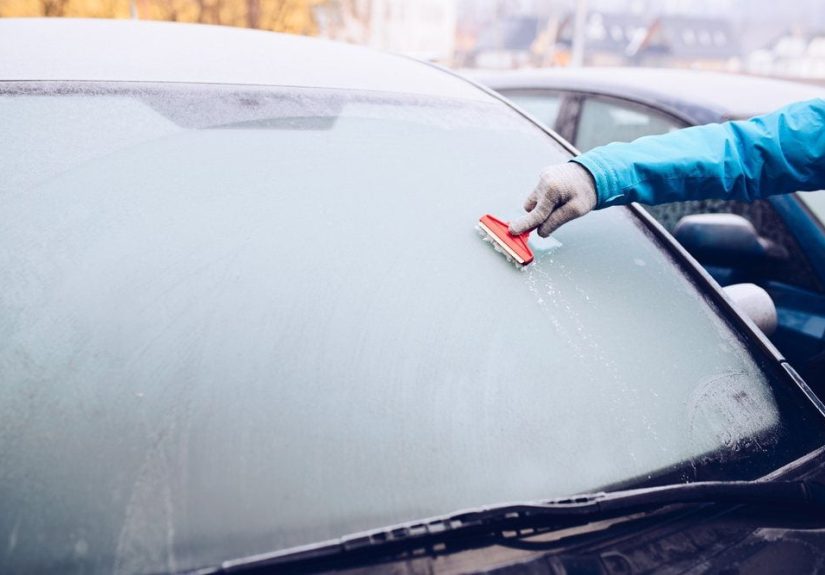
- Gently scrape with a plastic scraper or use the wipers once the surface is slushy (not crunchy).
- Finish with the car’s defroster to clear remaining haze and keep it from refreezing.
If your windshield looks like it belongs in an ice sculpture garden (thick, layered ice), this spray still helpsbut you’ll likely need more time,
a scraper, and the heater/defroster working together.
Why This Works (A Tiny Bit of Science, Without the Headache)
Frost forms when moisture in the air condenses and freezes on cold glass. Alcohol helps because it lowers the freezing point and slides into microscopic gaps
between ice and windshield, loosening the “stick.” Think of it like dissolving the relationship between the ice and your glass: “It’s not you… it’s chemistry.”
In real life: a light frost at 25°F might vanish quickly with one good spray. At 10°F with thicker ice, the spray accelerates the process, but heat + scraping
still matter. The win is speed: you’re not waiting for your engine to warm up just to start seeing out of the car.
Defroster Settings That Actually Clear Windows Faster
That little windshield icon on your dash isn’t decorative. Modern cars are designed to defog and defrost faster when you use the correct settingsespecially
because A/C dehumidifies the air even in winter.
The “Clear It Now” Setup (Front Windshield)
- Defrost/Defog mode: ON
- Fan: High
- Temperature: Warm to Hot (comfort matters, but warm air holds more moisture)
- A/C: ON (or let the car auto-engage it in defrost mode)
- Recirculation: OFF (use fresh air to reduce humidity buildup)
If you’re battling fog on the inside, cracking a window briefly can help equalize humidity and speed up clearing. Yes, it’s chilly. No, you
won’t perish. Probably.
What NOT to Do (Because Windshields Are Expensive)
Some “quick fixes” are quick… in the way that setting your hair on fire is a quick way to get a haircut.
Skip These Mistakes
- Do not pour hot water on the windshield. Rapid temperature change can crack glass, especially if there are tiny chips you can’t see yet.
- Don’t run wipers on dry, hard ice. It can tear the rubber and strain the mechanism.
- Don’t use metal tools. Metal scrapers and “creative” objects (spatulas, credit cards, your dignity) can scratch or chip glass.
- Don’t start driving with half-cleared windows. It’s unsafe, and in many places you can be ticketed for obstructed visibility.
Pro Tips to Make the Spray Work Even Better
1) Use a Stronger Alcohol When It’s Really Cold
If you have options, 91% isopropyl generally performs better than 70% in colder conditions. If all you have is 70%, keep the mix alcohol-heavy
(like the 2:1 ratio above) and store the bottle inside so it starts warmer.
2) Don’t Soak Rubber Seals Every Day
A quick spray on glass is fine, but avoid drenching door seals or repeatedly soaking wiper blades with alcohol. After you clear the windshield, use washer fluid
and wipers normally to rinse residual solution away.
3) Pair It With a Plastic Scraper for “Thick Ice” Days
The spray shines on frost and thin ice. On thick ice, it’s a force multiplier: spray, wait, scraperepeat once if needed. It’s faster and gentler than trying to
brute-force scrape everything dry.
What About Frost on the Inside of the Windshield?
Inside frost or heavy fog usually means moisture is trapped in your cabinwet floor mats, snow on shoes, a damp jacket, or even just breathing in a small sealed
space (humans are basically mobile humidifiers).
Fix Inside Fog/Frost Fast
- Turn on defrost + A/C and switch to fresh air (recirculation off).
- Fan high, then adjust down once it’s clear.
- Wipe the inside glass with a clean microfiber towel if needed (clean glass fogs less).
- Dry out the cabin: shake out floor mats, remove wet items, and keep snow from melting into your carpets.
Prevention: The Real “Seconds” Move Starts the Night Before
The absolute fastest defrost is the one you don’t have to do.
Simple Prevention Wins
- Use a windshield cover (or even a towel in a pinchjust make sure it won’t freeze to the glass).
- Park facing east if possible so morning sun hits your windshield earlier.
- Top off winter washer fluid rated for freezing temps.
- Maintain your wipers so they don’t smear slush like a paint roller.
A quick note on “vinegar sprays”: some drivers use a vinegar-and-water mix as a preventative treatment (applied before frost forms). It can help reduce
overnight frost in some conditions, but it’s not everyone’s favorite for smell, and you should avoid overspray on paint and sensitive surfaces. For rapid morning
de-icing, alcohol mixes are the more common go-to.
A Quick Morning Game Plan (Put It All Together)
Here’s a practical routine that balances speed, safety, and not looking like you’re auditioning for a winter survival show:
- Start the car and set defrost + A/C + fresh air right away.
- Brush off snow (roof includedfuture-you doesn’t want it sliding onto your windshield at the first stop).
- Spray the alcohol de-icer and let it work while the heater ramps up.
- Scrape gently or use wipers once it’s slushy.
- Check mirrors, lights, and windows before driving off.
Conclusion: Clear Glass, Clear Conscience
The rubbing-alcohol de-icer spray is one of those rare “internet tricks” that’s actually grounded in real-world chemistry and widely recommended by
winter-driving pros. Use the 2:1 alcohol-to-water mix, spray, wait a moment, and finish with smart defroster settings. Add a couple of prevention habits, and you
can turn the daily frost fight into a quick warm-up routinewithout risking cracked glass or shredded wipers.
Your mission isn’t just to remove ice. It’s to drive with full visibility, safely, and without starting your day in a feud with frozen water. Ice has already
had enough wins.
Extra: Real-World Experiences & Lessons (So You Don’t Have to Learn the Hard Way)
Winter defrosting advice sounds simpleuntil you’re actually standing in a driveway at 6:42 a.m., holding a scraper like it’s a medieval weapon, wondering how
frost got this personal. Here are some common “been there” scenarios that drivers run into, plus what tends to work best.
The Early-Shift Commute
A lot of early commuters do the same thing every morning: start the car, blast heat, and stare at the windshield as if eye contact will intimidate the ice.
The problem is that your engine needs time to warm up, and your windshield is basically a giant cold sponge for moisture. The quick win is doing two steps at
once: set defrost + A/C + fresh air immediately, then step outside and use the alcohol spray. By the time you’ve brushed snow off the hood and
roof, the spray has softened the frost and the defroster is pushing drier air. That’s when scraping becomes easy instead of rage-inducing.
The “I Only Cleared a Peephole” Mistake
Plenty of drivers have tried the “tiny cleared circle” method, especially when running late. It feels like a hack until you hit the first turn and realize
peripheral vision is important for things like… other cars. The better “fast” approach is to clear the full windshield plus at least the front
side windows and mirrors. The alcohol spray helps you do that quickly, and it keeps you from driving while half-blind.
The Inside-Fog Surprise
Sometimes you scrape the outside perfectly, hop in, and the inside fogs instantlylike your car is reenacting a dramatic sauna scene. This usually happens when
the cabin is humid: wet boots, melting snow, damp floor mats. In that moment, blasting heat alone can be slower than you’d expect because you’re still circulating
moisture. The fix most drivers end up loving is counterintuitive: turn A/C on (yes, even in winter) and switch recirculation off.
Crack a window for 10–20 seconds if conditions allow. It’s a quick humidity reset, and then the defroster clears the rest much faster.
The Delivery Driver Problem: Repeat Freezing
If you make multiple stops, your windshield can refreeze between deliveriesespecially if the glass never fully warmed and the wipers are pushing slush around.
This is where the spray bottle earns a spot in the cup holder. A quick mist on the edges (where ice loves to start) can prevent buildup from becoming a full sheet.
Pair that with decent winter washer fluid and wipers that aren’t torn or brittle, and you spend less time scraping at every stop.
The One You’ll Remember: Don’t Start a Thermal Shock Experiment
Almost every winter, someone tries hot water “just this once.” Sometimes it works. Sometimes the windshield cracks and the day gets a lot more expensive.
The best “experience-based” takeaway is boring but true: if you want speed and safety, use a chemical de-icer (DIY alcohol mix or store-bought) plus
proper defrost settings. Save hot water for teasomething that can’t crack and ruin your morning.
Bottom line: the fastest drivers aren’t the ones who scrape harder; they’re the ones who use the right combo of spray, airflow, and prevention. Winter will still
be winterbut you don’t have to give it 15 minutes of your life every morning.