Table of Contents >> Show >> Hide
- The Classic Origin Story: One Giant Smash
- The “Many Moonlets” Idea: How Smaller Moons Could Become One Moon
- Why a “Bunch of Smaller Moons” Might Actually Make Sense
- What the Simulations Say (and Where They Sweat a Little)
- What Evidence Would Support (or Reject) a Patchwork Moon?
- A Broader Clue: The Solar System Likes Making Little Moons
- So… Is Our Moon a “Frankenmoon” Made of Smaller Moons?
- Experiences: How to Feel the “Many Small Moons” Idea in Real Life (Without Needing a Spacesuit)
The Moon looks like one tidy, round roommate in Earth’s cosmic apartment. It keeps a steady schedule,
controls the tides, and photobombs basically every romantic movie ever made. But what if our Moon isn’t
a single “born in one moment” object at all?
There’s a scientific ideaoften called the multiple-impact or moonlet-merger hypothesisthat says
the Moon could be a stitched-together masterpiece: a final big Moon built from
several smaller moons that formed after a series of impacts, then slowly merged into one.
Think of it less like “one dramatic origin story,” and more like a long-running series with a surprisingly
satisfying finale.
The Classic Origin Story: One Giant Smash
For decades, the leading explanation for Moon formation has been the giant impact hypothesis.
In that version of events, a Mars-sized body (often nicknamed Theia) slammed into the early Earth.
The collision blasted hot material into orbit, forming a swirling disk of debris that eventually clumped together
to become the Moon.
Why scientists liked the giant impact theory
The giant impact idea checks a lot of boxes. It can help explain why the Moon is relatively large compared to
its planet, why it has a small iron core, and why it’s missing many easily vaporized materials (volatiles) compared
with Earth. It also fits a solar system that used to be a high-speed demolition derby.
The stubborn problem: the Earth-Moon “same-stuff” mystery
Here’s where the plot gets weird: Moon rocks brought back by Apollo missions look chemically and isotopically
extremely similar to Earth’s mantle rocks. If most of the Moon came from Theia, you’d expect more of a mismatchbecause
objects that form in different places often carry different isotopic “fingerprints.”
Scientists have proposed fixeslike intense mixing in a super-hot post-impact environment, or Theia forming close
enough to Earth that it shared similar building materials. But the Moon’s uncanny resemblance to Earth remains one of
the biggest reasons researchers keep exploring alternatives.
The “Many Moonlets” Idea: How Smaller Moons Could Become One Moon
Now for the twist: instead of one planet-sized collision, imagine multiple large impacts over millions of years.
Each impact kicks material into orbit. Each orbiting debris disk can condense into a moonleta smaller Moon.
Then, over time, those moonlets migrate and interact until some of them collide and merge, building a larger final Moon.
Step-by-step: a Moon built like a snowball
- Impact #1: Debris disk forms; a moonlet accretes in orbit.
- Quiet time: Tidal forces push the moonlet outward.
- Impact #2 (and beyond): Another disk forms; another moonlet appears.
- Orbital drama: Moonlets tug on each other, reshuffling orbits.
- Merger: Some moonlets collide at relatively low speeds and combine into a bigger moon.
- Repeat: Over many cycles, one “winner” Moon emerges.
In simulations described in major science coverage, it can take on the order of dozens of impacts and moonlets to end up with
a Moon like the one we have todaythough the exact number depends on assumptions about how efficiently moonlets merge.
Why a “Bunch of Smaller Moons” Might Actually Make Sense
The multiple-moons approach isn’t just a fun thought experiment. It’s aimed at real constraintsbasically the “rules”
the Earth-Moon system has to obey if a formation story is going to work.
1) It can naturally average out composition
If you build the Moon from many moonlets formed from Earth’s outer layers after different impacts, you’re repeatedly sampling
similar source material. Over time, the final Moon could end up looking more Earth-likebecause it’s literally assembled from
repeated Earth-adjacent debris disks rather than dominated by a single foreign impactor.
2) It doesn’t demand one “perfect” collision
A single-impact Moon sometimes requires a very specific set of impact angles, speeds, and spin states. The multiple-impact
concept spreads the job across many events. Instead of needing one legendary, once-in-a-solar-system bullseye, you can get there
through a more typical, messy growth historylike how planets are thought to form in general.
3) It gives angular momentum another route
The Earth-Moon system has a lot of angular momentum (spin + orbit). Some giant-impact scenarios struggle to match today’s value
without also predicting an Earth that spins like a blender on espresso. In a multiple-impact scenario, angular momentum can be
added and removed across many events, potentially making it easier to land near the system we see today.
What the Simulations Say (and Where They Sweat a Little)
Researchers have used computer simulations to test whether repeated impacts can form orbiting debris disks, whether those disks commonly
create moonlets, and whether moonlets can survive long enough to merge rather than getting flung away or smashed back into Earth.
The encouraging result: making moonlets may be surprisingly common in plausible early-Earth impacts.
The biggest “if”: do moonlets merge efficiently?
Here’s the part where scientists stop smiling and start talking faster: mergers aren’t guaranteed to be gentle. Two moonlets can collide
and combine, but they can also partially break apart, scatter debris, or change orbits in ways that prevent a clean merger chain.
Some newer work focuses specifically on the merger efficiency questionbecause if too much mass gets lost each time, you’ll never
grow a full-sized Moon.
In other words: the multiple-moonlet idea is plausible, but it depends on a realistic “stickiness” level for moonlet collisions
and on the tidal evolution behaving nicely enough to allow repeated mergers.
What Evidence Would Support (or Reject) a Patchwork Moon?
The Moon can’t exactly hand us a baby photo album. So scientists look for clues locked in chemistry, rock ages, and interior structure.
If the Moon formed through many stages, it might preserve subtle hints of that complex assembly.
Geochemical fingerprints: isotopes beyond oxygen
Oxygen isotopes are famous in this debate, but they’re not alone. Titanium, chromium, tungsten, sulfur, and more can help map where
material came from and how thoroughly it mixed. As measurement techniques improve, scientists can test whether the Moon is truly
an ultra-close match to Earth across many isotope systemsor whether there are small, meaningful differences that point to a more
complicated origin.
Interior structure: what’s inside matters
The Moon’s small core, mantle composition, and evidence for an early magma ocean all feed into formation models. Different origin stories
predict different thermal histories and layering. Modern datasetsfrom gravity mapping, seismic interpretation, and refined lab analysis of Apollo samples
keep tightening the boundaries on what could have happened.
Future sample return: the best receipts are rocks
New lunar missions and sample-return efforts can improve the picture, especially if we get pristine material from regions Apollo didn’t visit.
If moonlet mergers left any compositional “neighborhood differences” in the Moon, wider sampling could reveal them.
A Broader Clue: The Solar System Likes Making Little Moons
The idea of multiple small bodies merging into one isn’t exclusive to the Earth-Moon story. In other corners of the solar system,
researchers study small moons, contact binaries, and moonlet-like objects that appear to form through sequential collisions and reassembly.
Even asteroid systems can show how satellites might accrete, migrate, and merge over time.
These examples don’t prove Earth’s Moon formed the same waybut they do show that “small pieces turning into bigger companions” is
a pattern nature seems comfortable repeating.
So… Is Our Moon a “Frankenmoon” Made of Smaller Moons?
Maybe. The multiple-moonlet hypothesis is one of several serious attempts to explain the Moon’s biggest puzzle pieces at the same time:
its Earth-like chemistry, its orbit, its relatively small core, and the physics of early planetary collisions.
It also lives in a crowded neighborhood of ideas. Some researchers explore versions of the giant impact that involve extreme mixing, unusual impactor
composition, or different post-impact evolution. Others look at alternative structures like a synestiaa hot, vapor-rich, spinning mass
that could condense moon material in a different way.
The honest scientific answer is that Moon formation is still an active detective story. But the “bunch of smaller moons” concept earns attention because
it doesn’t require one magical collision. It says the Moon could be the product of Earth’s long, chaotic childhoodbuilt in chapters, not a single sentence.
Experiences: How to Feel the “Many Small Moons” Idea in Real Life (Without Needing a Spacesuit)
You don’t need a supercomputer or a PhD to get a hands-on sense of what “a Moon made of moonlets” means. The fun part about this hypothesis is that it connects
giant, abstract physics to experiences you can actually havestaring at the Moon, visiting a museum, or even messing around with simple models.
1) Go outside and watch the Moon with “assembly eyes”
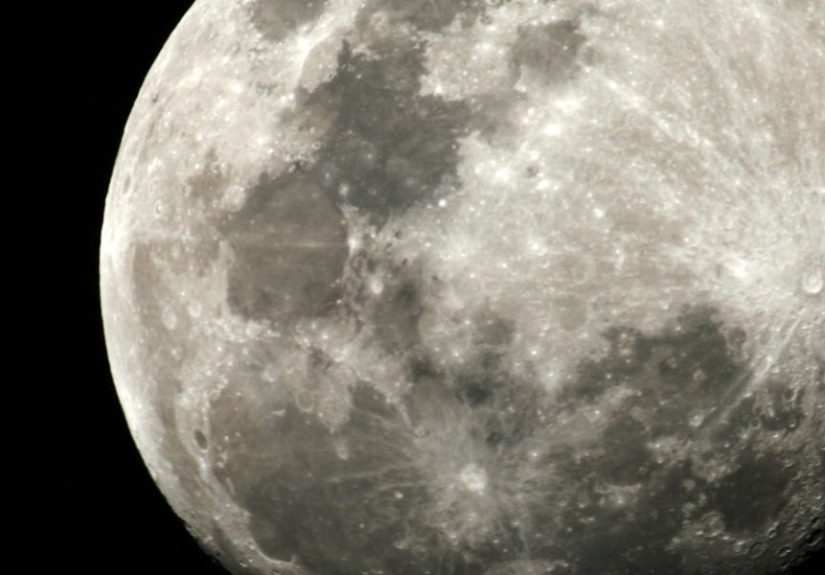
The next time the Moon is brightespecially around first quarter when shadows make surface features popspend ten minutes scanning the edge between light and dark.
Craters overlap older craters. Lava plains (the dark maria) flood low areas. The surface is a visible record of many events layered over time. While craters
and moonlet mergers aren’t the same process, the mindset is similar: the Moon is not “one moment,” but an accumulation of history. Thinking in sequences makes the
multiple-moons idea feel less weird and more like a natural extension of how the solar system behaves.
2) Try a tabletop “moonlet merger” model
Grab a shallow bowl (your “Earth”), pour in a handful of small beads or dry rice (your “debris”), and gently swirl. You’ll see clumps form, break, and reform.
Now imagine scaling that up: gravity replaces your hand, heat replaces friction, and time stretches from seconds to millions of years. The model is imperfect, but
it teaches a key lessonsystems don’t need one clean event to produce one big outcome. Repeated small additions can build something stable that looks “inevitable” in hindsight.
3) Visit a planetarium or science museum with a mission
Planetariums and space exhibits often present the giant impact theory as the headline. Next time, look for the footnotes: do they mention unresolved puzzles like
Earth-Moon isotopic similarity? Do they talk about competing models? Museums are great at showing how science actually works: not as a list of final answers,
but as a set of models competing to explain the same evidence. That’s exactly where the moonlet-merger idea livesright at the edge where evidence is strong,
but interpretation is still evolving.
4) Make the hypothesis personal: a “cosmic family tree” thought experiment
Imagine each moonlet as a “cousin” moonborn from a different impact, at a different time, with slightly different proportions of material. If those moonlets merged,
the final Moon would be a family reunion in spherical form. Ask yourself: if you blended multiple batches of cookie dough made from the same pantry, would the cookies
end up tasting similar? Probably. If one batch came from a totally different pantry, you’d notice. That’s the core logic scientists are exploring with isotopes:
did the Moon’s “ingredients” come from mostly the same place, repeatedly, or from a single dramatic outsider?
5) Track lunar phases and tides for a month
The Moon isn’t just a rock; it’s a gravitational partner. Keep a simple log: Moon phase, where it is in the sky, and (if you live near the coast) the timing of
higher and lower tides. This doesn’t prove a moonlet origin, but it anchors the concept that the Moon’s orbit and interaction with Earth are fundamental constraints.
Any Moon formation model has to end with a Moon that behaves like the one you’re watchingsteady, influential, and dynamically “locked in” with Earth.
After a month of paying attention, the Moon starts to feel less like a decoration and more like a system. And once you think of it as a system, the idea that it
could have been assembled through multiple steps stops sounding like science fiction and starts sounding like… science doing what it always does: finding the most
realistic way to build today’s world from yesterday’s chaos.