Table of Contents >> Show >> Hide
- Meet “Charlie”: A Catfish With a Clearance Level
- What the CIA Publicly Says Charlie Could Do
- Why Water Samples Can Be Intelligence (Yes, Really)
- How a Robotic Fish Actually “Passes” as a Fish
- Charlie’s Place in the CIA’s “Nature-Inspired” Spy Lore
- Was Charlie a Real Spy or a Very Expensive Science Fair Project?
- Modern Underwater Surveillance: Charlie’s Descendants Are Everywhere
- Why Charlie Still Matters (Even If You’re Not a Spy)
- Experience Add-On: The “Real-World” Lessons People Take From Spy-Fish Stories
- Conclusion: The Spy Fish That Swam Into History
Somewhere in an alternate universe, James Bond is leaning over a koi pond in a tuxedo, whispering, “Talk to me, fish.”
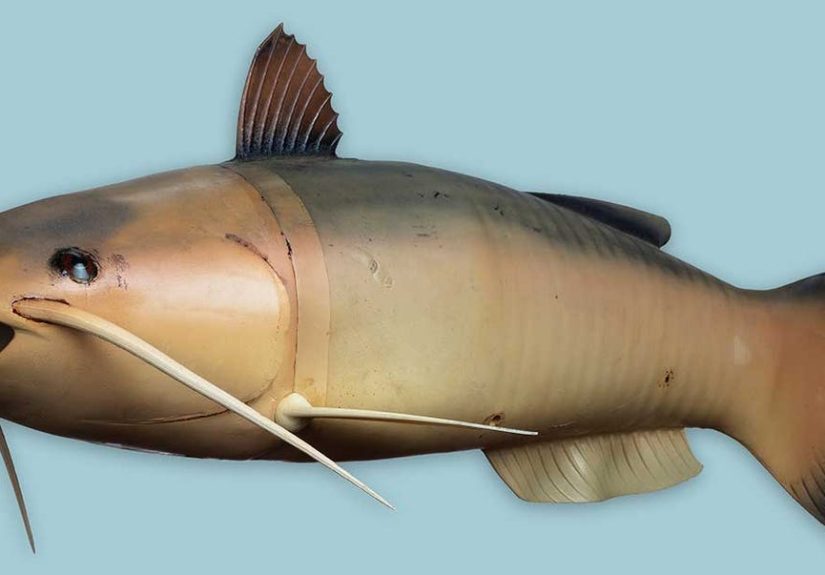
In our universe, the CIA once did something arguably weirder (and definitely more real): it built a robotic catfish
nicknamed “Charlie.” Not a drone with propellers. Not a spy satellite. A fish. A catfish. A catfish with a job.
The best part? The CIA doesn’t present Charlie as a myth or a rumorit’s displayed as a historical artifact associated with
the Agency’s science-and-technology work, with a straight-faced description that reads like a mechanic’s checklist for an
underwater creature that absolutely does not exist in nature. The official purpose, as publicly described: collect water
samples without being detected. The vibes, however, are unmistakably “spy gadget meeting aquarium décor.”
Meet “Charlie”: A Catfish With a Clearance Level
Charlie is often described as a robotic catfish developed in the 1990san unmanned underwater vehicle (UUV) shaped like a fish.
It wasn’t meant to win any beauty contests (catfish rarely do), but it was meant to blend in and move in a way that wouldn’t
scream “HELLO I AM A GOVERNMENT MACHINE.” That’s the core gimmick of biomimicry: if you can’t hide it perfectly, make it look
like it belongs.
Why a catfish, specifically?
Catfish are a classic choice if your goal is “present, common, unremarkable.” They live in rivers and lakes, they’re not
exotic, and they don’t come with the glamorous reputation of, say, a shark. Nobody points dramatically at the water and yells,
“A catfish! How suspicious!” In other words: it’s the perfect disguise for a device that’s trying to be ignored.
Also, catfish have a body shape that’s convenient for hiding hardware. A robotic fish needs internal volume for buoyancy
control, electronics, communications, and power. Catfish are basically nature’s “spare room” fishwide-bodied enough to conceal
the things that make robots… robots.
What the CIA Publicly Says Charlie Could Do
The CIA Museum’s description of Charlie is surprisingly specific about the engineering blocks, while staying politely vague
about the “where” and “why” of any actual deployment. According to the CIA’s public artifact write-up, Charlie was created to
collect water samples without being detected and was developed by the CIA’s Office of Advanced Technologies and Programs as a
way to study aquatic robotics. The Agency lists design goals like speed, endurance, maneuverability, depth control, navigational
accuracy, autonomy, and communications statusbasically, everything you’d want if you were inventing a fish that has deadlines.
Inside the fish: it’s more submarine than sushi
Public descriptions note that Charlie’s body contained a pressure hull, a ballast system, and a communications system, while the
propulsion system lived in the tail. Translation: the main body was the “safe room” for sensitive components, while the tail did
the swimming work. Control was described as wireless line-of-sight via a radio handsetmeaning this wasn’t an ocean-crossing
robot with its own underwater GPS destiny, but more of a “get in, get the sample, get out” demonstrator.
Size-wise, Charlie is described as roughly 61 cm (about 24 inches) long. That’s big enough to house meaningful hardware,
but small enough to remain plausibly “just a fish,” especially in murky water where visibility is already doing you the favor of
not being too nosy.
Why Water Samples Can Be Intelligence (Yes, Really)
At first glance, “collect water samples” sounds like the least glamorous spy mission imaginable. It’s not exactly a car chase.
It’s barely even a brisk walk. But water can carry clueschemical signatures and trace byproductsthat reveal activity near
sensitive sites.
Environmental chemistry as a quiet tell
Depending on location, water can pick up indicators of industrial processes, fuel residues, unusual metals, and other chemical
“breadcrumbs.” If you’re trying to understand what’s happening at a facility that doesn’t welcome visitors, sampling nearby
waterways can sometimes provide indirect evidence of operations. It’s the intelligence equivalent of smelling smoke and
concluding someone is grilling… or attempting to hide the fact that they’re grilling.
The nuclear angle (often suggested, rarely confirmed)
Some popular histories have speculated that covert water sampling could be useful near nuclear-related sites, since water can
provide hints about reactor activity, cooling systems, or contamination. That said, public sources tend to treat this as an
informed guess rather than a confirmed mission brief. In classic Charlie fashion, the CIA gives you enough information to see
the outlineand leaves the punchline classified.
How a Robotic Fish Actually “Passes” as a Fish
Here’s the thing about fish: they are extremely good at being fish. They’ve had a few hundred million years of practice.
Meanwhile, a robot fish has to do it with engineering, batteries, and the stubborn refusal of water to cooperate with your plans.
Buoyancy is not optional
If a robot fish is too buoyant, it pops to the surface like a rubber duck with ambition. Too heavy, and it becomes a very
expensive rock. That’s where ballast systems come inletting the vehicle adjust buoyancy and maintain depth. Public descriptions
of Charlie explicitly mention ballast, which is a strong hint that the designers were solving the most important underwater
problem: staying where you intend to be, not where physics intends to put you.
Propulsion in the tail: nature’s design, engineering’s headache
Fish swim by pushing water with flexible motion, often through tail beats that create thrust efficiently and quietly. Replicating
that motion with mechanical components is harder than it looks, especially if you want it to appear natural. A propulsive tail
lets the body remain comparatively stableuseful if the body houses sensors, sample containers, and communications gear that do
not enjoy being shaken like a maraca.
Line-of-sight control: stealth with a catch
Public descriptions note a line-of-sight radio handset for control. That implies practical constraints: the operator likely had
to be close enough to maintain a reliable signal, which limits range and adds operational complexity. But it also suggests Charlie
was, at least in part, a feasibility study and technology demonstratorproving a concept that could later evolve into more
autonomous underwater surveillance technology.
Charlie’s Place in the CIA’s “Nature-Inspired” Spy Lore
Charlie doesn’t exist in a vacuum (or an aquarium). The CIA has publicly acknowledged that animalsand animal look-alikeshave
played roles in intelligence history. Sometimes that meant actual animals trained or used in unusual ways; sometimes it meant
devices shaped like animals to move through environments without drawing attention. Charlie sits firmly in the second category:
an engineered mimic.
From “spy birds” to spy gadgets
The broader pattern is simple: if your environment is full of living things, disguising a tool as one of those things can reduce
suspicionat least long enough to do the job. In that sense, Charlie is less “cartoon spy fish” and more “camouflage strategy
with fins.”
Was Charlie a Real Spy or a Very Expensive Science Fair Project?
The most honest answer is: the public record doesn’t fully settle it. Multiple mainstream accounts describe Charlie as a CIA-built
robotic catfish meant to collect water samples and explore UUV feasibility, while also acknowledging that details about missions
(if any) remain undisclosed. Some write-ups frame it as “used” for intelligence collection; others treat it as primarily a
technology demonstrator whose operational history is unclear. Either way, Charlie’s existence proves something important:
the Agency was actively experimenting with underwater robotic disguise and sampling concepts.
And that, honestly, is the real headline. Even if Charlie never “went on a mission,” building it forced the team to solve the
exact problems you’d have to solve for covert underwater work: quiet motion, stable depth control, communications, navigation,
and a payload that can do something usefullike collecting a sample.
Modern Underwater Surveillance: Charlie’s Descendants Are Everywhere
Today’s underwater robotics world includes everything from torpedo-shaped autonomous vehicles to bio-inspired robots that swim
with flexible fins. Militaries, researchers, and industry all have reasons to care: inspection, mapping, reconnaissance,
environmental monitoring, and yessurveillance. Charlie belongs to an earlier era of that story, when the idea itself was still
being tested with real hardware and real hydrodynamics.
What’s changed since the 1990s?
Three big upgrades define modern underwater systems compared to early prototypes like Charlie:
better batteries, better onboard computing, and better autonomy. That means longer missions, less dependence on a nearby operator,
and smarter behaviors when underwater conditions don’t match the plan. Meanwhile, biomimicry remains attractive because it can be
quieter and less visually obvious than conventional propellers.
Why Charlie Still Matters (Even If You’re Not a Spy)
Charlie is a perfect symbol of how intelligence work often looks in the real world: less trench coat, more engineering tradeoffs.
The “spy” part isn’t always about dramatic confrontationit’s about collecting small, reliable signals that help answer a bigger
question. Sometimes that signal is a photo. Sometimes it’s a radio intercept. Sometimes it’s a water sample collected by a fish
that absolutely, positively should not have a communications system.
Charlie also illustrates a broader truth about technology: prototypes are powerful even when they’re imperfect. Building a weird
thing teaches you what you can’t learn from diagrams alonelike how water punishes optimism, how mechanical systems behave in
real environments, and how quickly “in theory” turns into “oh no” once you press the start button.
Experience Add-On: The “Real-World” Lessons People Take From Spy-Fish Stories
If you spend time around engineers, robotics hobbyists, or even museum folks who preserve intelligence artifacts, you’ll notice a
funny pattern: the “robotic catfish” story lands because it feels both absurd and familiar. Absurd because it’s a fish with
hardware. Familiar because every ambitious technical project has that exact energysomeone says, “What if we made this
work?” and everyone else either laughs or starts sketching.
One common experience people report after seeing Charlie (or reading about it) is a sudden respect for the problem of moving in
water quietly. On land, machines can be disguised with paint, casing, and clever shapes. Underwater, motion itself is a giveaway.
A stiff, jerky swim pattern can look “off” even to casual observersbecause humans, despite not being fish, are surprisingly good
at noticing when an animal doesn’t move like it should. In robotics circles, you’ll often hear the phrase “the uncanny valley,”
usually about faces. Charlie suggests there’s also an uncanny valley for fins.
Another experience: realizing how much “boring” physics drives the whole outcome. People love to imagine spy tech as a single
magical gadget, but underwater vehicles live or die by buoyancy, stability, and control. The public mention of a ballast system
is the giveaway that this wasn’t just a shell with a propeller. Anyone who has ever tried to keep a DIY submarine level in a
bathtub learns the same lesson fast: if you can’t control depth and trim, you can’t control the mission. That’s not glamorous,
but it is foundationallike learning that a sports car still needs tires.
People also tend to have a “wait, water samples are intelligence?” momentand that’s an educational win. In environmental work,
sampling is routine: you test for pollutants, bacteria, metals, and chemical changes. In a national security context, that same
logic can point toward patterns of activity. The experience here is less about learning a specific secret and more about learning
a mindset: intelligence gathering often looks like careful measurement, repeated collection, and patient analysis. If you’ve ever
watched a detective show and wondered why someone would obsess over tiny details, water sampling is the real-world version of that
obsessionjust with more lab equipment and fewer dramatic soundtracks.
A different kind of experience shows up in ethics conversations. When people encounter “spy-animal” storieswhether real animals
in historical programs or animal-shaped devicesthey often ask the same questions: What’s the line between clever and creepy?
Who decides what’s acceptable? Charlie, as a machine, sidesteps some concerns that arise with using living animals, but it still
raises the bigger issue of surveillance in shared environments. Museum artifacts tend to spark this kind of reflection because
they make abstract debates tangible. It’s one thing to discuss “covert collection”; it’s another to look at a fish-shaped robot
and realize that collection can be designed into almost any form factor.
Finally, there’s the “prototype humility” experiencesomething engineers know in their bones. Even highly resourced organizations
build experimental tech that may never be deployed exactly as envisioned. But the attempt creates reusable knowledge: materials
choices, sealing methods, propulsion concepts, and control strategies that carry forward. People who build things often come away
from Charlie’s story thinking less about whether that fish did a mission and more about what the next generation of the
idea could do. In that sense, Charlie becomes a symbol of iterative innovation: you build the weird fish today so a more capable
underwater system exists tomorrow. History is full of inventions that started as “Why would anyone do that?” and ended as “Why
didn’t we do that sooner?”
So even if you’re not in intelligence, Charlie offers a surprisingly relatable takeaway: ambitious projects live at the edge of
ridiculousness. The trick is to let the ridiculous idea get tested by reality. Sometimes reality says “no.” Sometimes reality
says “not yet.” And sometimes reality says, “Congratulations, you’ve invented a catfish that can collect water samples without
being detected.” Which is a sentence that should probably not existbut here we are.
Conclusion: The Spy Fish That Swam Into History
Charlie is a reminder that innovation doesn’t always arrive as a sleek rectangle with a logo. Sometimes it arrives as a robotic
catfish with a pressure hull, ballast system, and tail propulsionbuilt to solve a very specific problem in a very specific
environment, where looking ordinary can matter more than looking impressive.
Whether you view Charlie as a serious piece of Cold War–era (and post–Cold War–era) engineering, a quirky museum artifact, or the
punchline to a spy joke, it highlights something true: intelligence collection is limited only by physics, creativity, and what
people are willing to design. And if the CIA was willing to design a fish… well, let’s just say your smart doorbell feels a lot
less surprising now.