Table of Contents >> Show >> Hide
- What Is an Analog Bag, Exactly?
- Why the Analog Bag Works Better Than “I Should Really Use My Phone Less”
- Why Making Time for Hobbies Actually Matters
- What to Put in an Analog Bag
- How to Build an Analog Bag in 10 Minutes
- Mistakes That Turn a Great Idea Into a Dusty Tote of Guilt
- Who Benefits Most From an Analog Bag?
- What the Analog Bag Experience Actually Feels Like in Real Life
- Conclusion
If your hobbies have been tragically buried under work, errands, notifications, and the irresistible urge to “just check one thing” on your phone, welcome. This article is for the people who once loved sketching, journaling, knitting, reading, puzzling, doodling, scrapbooking, or simply sitting still for five consecutive minutes without opening six apps and somehow ending up watching a video about an emotional support goose.
The analog bag is one of the smartest low-effort organization trends to come out of the internet lately, which is funny because its whole purpose is to help you spend less time on the internet. The idea is simple: keep a bag filled with screen-free hobbies and easy, portable creative activities so you can reach for something tactile and enjoyable instead of defaulting to your phone. It is part organization trick, part habit design, part gentle intervention for your attention span.
And unlike those grand life overhauls that demand a color-coded planner, a 5 a.m. wake-up time, and the personality of a Navy SEAL, this one is refreshingly reasonable. An analog bag does not ask you to become a whole new person. It just makes it easier to be the version of yourself who still has hobbies.
What Is an Analog Bag, Exactly?
An analog bag is exactly what it sounds like: a tote, pouch, backpack, or basket stocked with non-digital activities you genuinely enjoy. Think journals, crossword books, watercolor supplies, a novel, an embroidery hoop, colored pencils, knitting needles, cards, stationery, stickers, a sketchbook, or a tiny project you can pick up without preparation. The keyword here is accessible. Your hobby materials are already gathered, already visible, and already ready to use.
That matters more than it sounds. A lot of people do not lack hobbies because they are lazy, boring, or secretly one notification away from becoming a lizard. They lack hobbies because the setup friction is absurdly high. The paints are in one drawer, the brushes are in another, the notebook disappeared sometime around Thanksgiving, and the crochet project now lives in a mystery bag that may also contain old receipts and one pen that has emotionally checked out.
The analog bag solves that by putting your offline hobbies in one place. It turns leisure into something you can start in seconds instead of something you must first excavate like an archaeologist of your own good intentions.
Why the Analog Bag Works Better Than “I Should Really Use My Phone Less”
1. It reduces friction
Most habit problems are not moral failures. They are design failures. The phone is easy. It is always charged, always nearby, and always offering a reward. Your hobbies, meanwhile, may be hidden in a closet behind tax papers and the yoga mat you keep meaning to use. So of course the phone wins.
The analog bag changes the environment. Instead of requiring motivation, planning, and a scavenger hunt, it lowers the startup cost. You can sit on the couch, open the bag, and begin. That tiny reduction in effort is huge. People often think they need more discipline when what they really need is a lower barrier to entry.
2. It gives your brain a better default option
Many people do not pick up their phones because they have a deep philosophical commitment to scrolling. They do it because they are bored, tired, waiting, overstimulated, under-stimulated, procrastinating, avoiding, or standing in a line that appears to be governed by medieval rules. The phone becomes the automatic filler.
An analog bag gives you another default. Instead of “open phone, disappear into the algorithm, resurface 47 minutes later with no memory of why,” the sequence becomes “open bag, do a crossword, make a sketch, read 10 pages, write a postcard.” Same need for stimulation. Better outcome.
3. It works with behavior science, not against it
Behavior design experts often note that habits happen when motivation, ability, and a prompt line up. That is the real genius of the analog bag. It builds all three into one system. You are motivated because the activities are personally appealing. Ability is high because the materials are simple and ready. The bag itself acts as the prompt because it is visible and easy to grab.
In other words, the analog bag is not magic. It is just smart. And honestly, smart is better than magic because smart can survive Tuesday afternoon.
4. It protects hobby time from perfectionism
One reason adults abandon hobbies is that they quietly turn them into performance reviews. Suddenly your little watercolor session needs to produce a frame-worthy landscape, your knitting must become a family heirloom, and your journal somehow needs to rival a Pulitzer-winning memoir. Very relaxing. No notes.
The analog bag nudges hobbies back toward play. It encourages smaller, lower-stakes activities that you can do in real life, in ordinary windows of time, without setting up a studio or waiting for the perfect mood. It reminds you that hobbies are allowed to be enjoyable before they are impressive.
Why Making Time for Hobbies Actually Matters
This trend is not just cute; it is grounded in something real. Research has linked hobbies and enjoyable leisure activities with better mood, lower stress, and improved well-being. Some studies suggest that people who regularly engage in hobbies report fewer depressive symptoms and greater happiness. Others connect enjoyable leisure with better psychological and even physical markers of health. That does not mean your crossword puzzle is a miracle cure or that embroidery is now basically a kale smoothie. It means meaningful leisure is not fluff. It supports mental health, resilience, and quality of life.
There is also a screen-time angle here. When more of your free time gets absorbed by passive scrolling, other healthy behaviors can get crowded out: movement, sleep, creativity, face-to-face connection, and the restorative feeling of doing one thing at a time. An analog bag does not require a dramatic digital detox. It simply helps you reclaim little pockets of time that would otherwise vanish into the glowing rectangle.
That is a big deal. Hobbies are not just decorative personality accessories. They are one of the ways adults stay curious, calm, expressive, and pleasantly unhinged in a charming way rather than a doomscrolling way.
What to Put in an Analog Bag
The best analog bag is not the prettiest one on social media. It is the one you will actually use. Start with activities that are portable, low-mess, and easy to begin. You do not need to pack your entire craft store origin story into one tote.
Good analog bag ideas for most people
A paperback or short story collection, a journal and good pen, a crossword or Sudoku book, colored pencils, a sketchbook, a mini watercolor set, knitting or crochet supplies, a deck of cards, letter-writing materials, sticker books, a small puzzle book, embroidery, a pocket camera, or a simple travel game all make sense.
Choose “easy to start,” not “best self fantasy”
Pack the hobby you do when you are tired, not the one your imaginary hyper-disciplined alter ego does in an aesthetically lit cabin. If you love reading but never use your fancy calligraphy set, put the novel in the bag. If you doodle constantly, include markers. If you like making lists, a notebook counts. Yes, it counts. We are not snobs here.
Create categories inside the bag
A smart setup includes three kinds of items: focus tools like reading or puzzles, creative tools like drawing or journaling, and comfort tools like a favorite pen, tea sachet, or small item that makes the ritual feel inviting. Think of it as your portable anti-scroll kit.
How to Build an Analog Bag in 10 Minutes
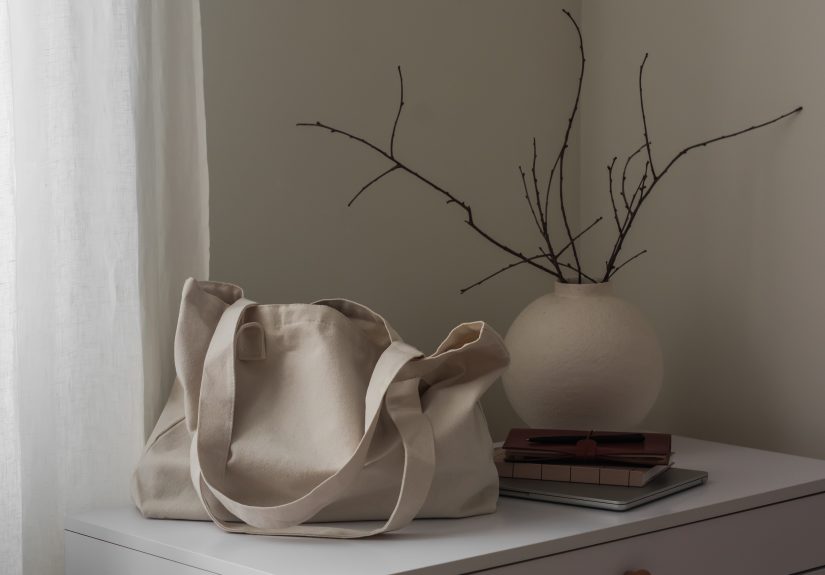
First, pick a container you already own. A canvas tote is great, but a backpack, zip pouch, basket, or reusable grocery bag works just fine. The point is not to become a bag influencer. The point is to make your hobbies easy to reach.
Next, choose three to five activities. Do not overpack. A stuffed bag of ambitious supplies can become weirdly stressful. Keep it simple enough that opening it feels relaxing, not like preparing for a six-week artist residency.
Then, place the bag where your phone habit usually happens: next to the couch, by your bed, near the front door, in the car, or beside the chair where you collapse after work and stare into the middle distance while deciding whether you are hungry, tired, or just spiritually Wi-Fi dependent.
Finally, make it visible. Visibility is underrated. If your analog bag lives in a closet, it becomes a nice idea. If it lives where you can see it, it becomes a prompt.
Mistakes That Turn a Great Idea Into a Dusty Tote of Guilt
Packing hobbies that require too much setup
If your bag contains twelve elaborate projects, three fragile tools, and a small emotional support easel, you have gone too far. The best analog bag activities are grab-and-go.
Using it as a shopping excuse
You do not need to spend a bunch of money to begin. In fact, starting with what you already own is often better because familiarity makes follow-through easier. The goal is more hobby time, not a fresh round of consumer optimism.
Confusing leisure with self-improvement homework
If every item in your bag feels productive, educational, optimizing, enriching, and spiritually aligned, congratulations, you have accidentally built a second job. Include things that are playful and satisfying, not just worthy.
Expecting dramatic life change in 24 hours
The analog bag works because it shifts repeated moments, not because it delivers one cinematic transformation. Small pockets of offline time add up. Five pages here, a sketch there, ten minutes of knitting while waiting for pasta water to boil. That is the whole point. Hobbies return in slices before they return in blocks.
Who Benefits Most From an Analog Bag?
Busy parents can use one during pickup lines, sports practice, or the weird in-between moments when there is not enough time to do something major but enough time to scroll themselves into irritability. Remote workers can use one as a post-work transition so the brain stops thinking the laptop and the couch are the same location. Commuters can use one on trains, in waiting rooms, and during lunch breaks. Travelers can build a compact version that replaces random phone time with reading, journaling, or a portable craft.
It is also a great strategy for people who miss being creative but feel rusty. When hobbies disappear for a long time, restarting them can feel emotionally louder than it should. The analog bag makes the re-entry smaller and kinder. No grand identity speech required. Just unzip, choose, begin.
What the Analog Bag Experience Actually Feels Like in Real Life
The experience of using an analog bag is not dramatic at first, which is exactly why it works. It usually begins in a very ordinary moment. You are on the couch after dinner. You are tired but not ready for bed. Your hand reaches for your phone out of pure muscle memory. Then you spot the tote sitting beside the chair and think, “Fine, I’ll just look in here for a second.” That is the moment the whole system earns its keep.
You pull out a crossword book, or a little sketchpad, or the novel you have been “meaning to start” for two months. You tell yourself you will do five minutes. That is another reason the analog bag works: it feels small enough to begin without negotiation. Nobody has to light a candle, optimize a playlist, and enter a new era. You just start.
Then something mildly miraculous happens. Your brain, which was previously ricocheting around like a shopping cart with one bad wheel, settles down. The task in front of you is finite. It has edges. It does not contain notifications, targeted ads, ten tabs, or a comment section full of people arguing with an article about soup. It is just one thing. Your breathing evens out. Time stops feeling chopped into tiny digital confetti.
People often notice that analog hobbies create a different kind of attention. Reading a few pages in a physical book feels calmer than reading on a phone because there is no easy side quest into email, headlines, texts, weather, and somehow your eighth search of the day for a lamp you do not need. Knitting feels soothing because your hands are occupied and your mind gets a rhythm to follow. Drawing or coloring can feel surprisingly absorbing even if your artistic ability tops out at “competent cloud.”
The analog bag also changes the texture of waiting. Waiting rooms become reading time. Kids’ activities become journaling time. A slow Sunday afternoon becomes puzzle time instead of accidental three-hour scrolling time. Even road trips feel different when you have cards, notebooks, and little games within reach. Boredom starts turning back into possibility instead of a trigger for screen reflex.
Another common experience is rediscovering old parts of yourself. The person who used to love writing letters. The one who liked collecting weird magazine clippings. The one who always wanted to learn embroidery or keep a nature journal. The bag makes those identities easier to revisit because the tools are right there, quietly waiting instead of accusing you from a neglected drawer.
And no, every session will not be magical. Sometimes you will still pick up your phone. Sometimes the bag will sit untouched for a week because life gets loud. But when you come back to it, the restart is easy. That is the beauty of the system. It does not punish inconsistency. It simply keeps the door open.
Over time, the experience becomes less about “being better” and more about feeling more like yourself. A little more curious. A little less scattered. A little less likely to end the night wondering where your evening went. That is not a small shift. In adult life, that is huge.
Conclusion
The analog bag is such a compelling organization trick because it solves a modern problem with an old-fashioned answer: keep good things close. It does not try to shame you out of screen time or turn hobbies into a productivity contest. It just makes your better options easier to start.
If you want to make time for hobbies, do not wait for a perfect schedule, a clearer month, a cleaner house, or a version of yourself who suddenly becomes immune to digital distraction. Build a small system that works in the life you have now. Put your favorite offline hobbies in one place. Keep them visible. Make the first step tiny. Let creativity be convenient for once.
Your phone will still be there. The algorithm will survive without you. But your hobbies? They would love a ride in the tote bag.