Table of Contents >> Show >> Hide
- The record, in plain English: 64 MW through a gearbox (yes, really)
- Gearbox 101: what a geared turbofan is actually doing
- UltraFan: the engine concept built around efficiency (and one giant fan)
- How do you even test something like this?
- So what does this record actually change?
- The engineering headaches (because nothing this cool is easy)
- How this compares to other paths: geared fans vs. open fans vs. “keep improving what works”
- What’s next for the UltraFan gearbox story?
- Experience Section: of “What It Feels Like” Around a Record-Breaking Gearbox
- Conclusion
If you’ve ever wondered what “jet engine progress” looks like in real life, sometimes it’s not a sleeker nacelle or a fancy wingletit’s a
hunk of metal the size of a small sofa quietly doing something absurdly difficult: taking city-level power and turning it into smooth,
reliable rotation for a fan bigger than some studio apartments.
Rolls-Royce’s UltraFan program hit one of those “only engineers clap at this” milestones when its Power Gearbox (PGB) reached
87,000 horsepower (64 megawatts) on a test rigan aerospace power record that’s basically a mic drop in the world of gears,
bearings, oil systems, and stress calculations that ruin weekends.
The record, in plain English: 64 MW through a gearbox (yes, really)
A turbofan gearbox sounds like something you’d find in a repair shop next to a stack of tires. The UltraFan’s gearbox is… not that.
It’s designed to transmit huge amounts of power from the turbine at the back of the engine to the fan at the frontwhile surviving the full
menu of aviation chaos: takeoff heat, climb power, cruise endurance, turbulence, throttle transients, vibration, and the occasional “why is
that noise happening now?” moment.
Why 64 MW is a big deal (and not just because it’s a big number)
At a high level, the record matters for one reason: a gearbox that can reliably handle this much power makes very large geared turbofans possible.
And very large geared turbofans are one of the most direct routes to better fuel efficiency without asking airlines to reinvent physics.
The UltraFan gearbox hit that power level during testing at Rolls-Royce’s Dahlewitz site near Berlin. In other words: this wasn’t a concept sketch,
it was a real test article turning real torque on a real rig, pushing the limits of what an aerospace gearbox is expected to tolerate.
Gearbox 101: what a geared turbofan is actually doing
In a conventional “direct-drive” turbofan, the fan and the low-pressure turbine are mechanically linked so they spin together. That’s simple and proven,
but it forces a compromise: the turbine wants to spin fast for efficiency, while the fan typically wants to spin slower to avoid tip-speed losses, noise,
and aerodynamic headaches.
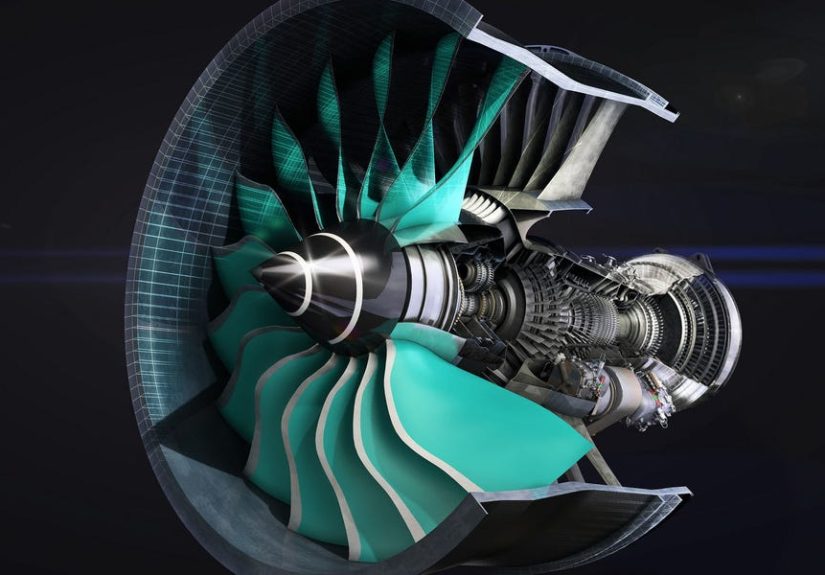
Enter the geared architecture: a reduction gearbox sits between turbine and fan, letting each rotate at a speed that makes it happiest.
The turbine can scream along at high RPM; the fan can take a more relaxed, efficient pace. Everybody winsexcept the gearbox, which now has to do
the rotational equivalent of carrying a grand piano down the stairs every day for decades.
Planetary gears: “planets” that don’t get weekends off
Rolls-Royce describes the UltraFan Power Gearbox as a planetary design. If you’re picturing the solar system, you’re not totally wrong:
in a planetary gear set, multiple “planet” gears share load while rotating around a central “sun” gear. The advantage is massive torque capacity in a compact package.
Rolls-Royce has emphasized just how intense those loads areeach “planet” gear is engineered to carry extraordinary forces. That’s the core of why this
gearbox record matters: it signals the system can transmit extreme power without turning itself into an expensive glitter bomb.
UltraFan: the engine concept built around efficiency (and one giant fan)
The gearbox record is not a party trickit’s a keystone for UltraFan’s broader mission: a step-change in efficiency and sustainability for future widebody and
potential narrowbody applications. UltraFan is designed as a scalable technology family, aimed at a wide thrust range for next-generation aircraft.
The “big fan, small core” strategy
UltraFan features a very large fanRolls-Royce has publicly highlighted a 140-inch fan diameter for the demonstrator concept.
Why do engine makers chase bigger fans? Because moving a large mass of air a little bit (high bypass) is typically more efficient than moving a smaller mass
of air a lot (high jet velocity). It’s the difference between pushing a shopping cart smoothly versus firing a leaf blower and hoping it counts as propulsion.
UltraFan’s geared system helps enable a very high bypass ratio approach (Rolls-Royce has discussed figures around the mid-teens for UltraFan concepts).
Higher bypass generally improves propulsive efficiency and can reduce perceived noiseespecially when paired with careful aerodynamics and tip-speed control.
Efficiency and emissions: what Rolls-Royce is targeting
Rolls-Royce has positioned UltraFan as delivering major efficiency gains compared with earlier Trent generations, and also as a platform for emissions improvements.
The demonstrator is intended to prove a suite of technologies that can migrate into existing engine families over timenot just a one-off science fair project.
UltraFan testing has also been tied closely to Sustainable Aviation Fuel (SAF). Rolls-Royce has run key stages of UltraFan demonstrator testing using
100% SAF, underscoring the strategy: pair cleaner fuels with more efficient engines to reduce lifecycle emissions without waiting for a single
miracle technology to solve everything.
How do you even test something like this?
“We tested the gearbox” sounds simple until you imagine the checklist. At these power levels, the gearbox isn’t just rotatingit’s managing heat, oil flow,
gear mesh dynamics, bearing loads, vibration, and micro-deflections that can cascade into real problems if your tolerances aren’t bulletproof.
Dahlewitz: where the gearbox earned its bragging rights
Rolls-Royce’s Dahlewitz facility has been central to PGB testing. Beyond raw horsepower runs, the program has used specialized rigs to validate endurance and reliability,
because a gearbox doesn’t get credit for one heroic pullit gets credit for not complaining after thousands of them.
One particularly telling detail: Rolls-Royce has described using an “attitude rig” that simulates in-flight conditions such as takeoff, climb, banking, and descent.
That’s a reminder that aircraft gearboxes don’t live in a neat, upright lab. They live on wings, through maneuvers, across temperature gradients, with loads that shift
in ways your car’s transmission never has to consider.
Testbed 80: the engine-level reality check
Gearbox testing is necessary, but an engine is a system. That’s why UltraFan demonstrator testing has taken place at Rolls-Royce’s Testbed 80 facility in Derby,
which the company describes as the world’s largest and smartest indoor aero-engine testbedcapable of monitoring over 10,000 parameters and capturing vibration
data at extremely high sampling rates.
In 2023, Rolls-Royce announced UltraFan had completed its first tests at Testbed 80 and later that year achieved a successful run to maximum power,
a crucial step in proving that the gearbox, fan system, and core can behave like one coherent machine under full conditionsnot just in isolated component glory.
So what does this record actually change?
Aviation doesn’t hand out trophies for “most powerful gearbox” just to decorate a lobby. The real impact is downstream:
higher bypass geared turbofans can reduce fuel burn, which reduces operating cost and carbon emissions per seat-mile.
For airlines, fuel is a major expense. For passengers, efficiency improvements often show up as longer range, better economics, and quieter operations.
Fuel burn: why airlines care (even when jet fuel prices are behaving… temporarily)
A gearbox-enabled architecture supports higher propulsive efficiency, and Rolls-Royce has stated UltraFan is designed to deliver strong efficiency improvements over earlier Trent generations.
Even single-digit percentage gains are meaningful in commercial service; double-digit improvements become strategic.
There’s also a pragmatic climate point here: SAF is likely to be more expensive than conventional jet fuel in the near term. The cleaner the fuel, the more airlines will
appreciate an engine that needs less of it to do the same work.
Noise and passenger comfort: the underrated win
Gearboxes aren’t just about efficiency. When the fan can rotate at a more optimal (often lower) speed, tip-related noise can improve. Combine that with aerodynamic refinements
and you can get quieter departuressomething communities around airports notice immediately, even if they never learn what a “planet gear” is.
The engineering headaches (because nothing this cool is easy)
If you’re wondering why every engine maker didn’t just do “the super gearbox thing” decades ago, the answer is reliability and physics. At these powers, the gearbox must manage:
- Thermal loads: gear mesh and bearings generate heat; oil has to remove it consistently across flight phases.
- Contact stress: enormous torque produces extreme pressures where gear teeth meet.
- Vibration and dynamics: small deflections can change load sharing; noise and wear can spike if the system isn’t balanced.
- Lubrication integrity: oil delivery has to be rock-solidair bubbles and starvation are not “fun quirks.”
- Maintainability: airlines love innovation, but only if it doesn’t turn maintenance into a scavenger hunt.
Why durability matters more than the headline number
A gearbox record is impressive, but the real standard is boring: do it safely, repeatedly, predictably, and with a maintenance profile airlines can live with.
Rolls-Royce’s emphasis on endurance hours, reliability validation, and full-system test campaigns is the part that should make operators pay attention.
How this compares to other paths: geared fans vs. open fans vs. “keep improving what works”
The propulsion world is exploring multiple routes to lower emissions:
Geared turbofans (the “optimize everything” approach)
Pratt & Whitney’s geared turbofan family helped mainstream the idea that gearboxes can belong in big commercial engines. Rolls-Royce is pushing the geared concept into
very large thrust classes with UltraFan-scale hardware and a gearbox designed for eye-watering power.
Open fan / unducted concepts (the “propulsive efficiency on steroids” approach)
Open fan concepts promise big efficiency gains by running very high bypass without a traditional ductbut they bring integration challenges like noise, blade-out considerations,
and airframe compatibility. Rolls-Royce’s UltraFan path keeps the familiar ducted architecture while still chasing a large efficiency jump through gearing, advanced aerodynamics,
and materials.
Incremental upgrades (the “don’t break the airline” approach)
A key UltraFan storyline is transferability: technologies proven in the demonstrator can be migrated into current Trent engine families.
That matters because airlines don’t replace fleets overnight. The fastest emissions reductions often come from improving what’s already flyingthen pairing those improvements
with increased SAF use.
What’s next for the UltraFan gearbox story?
The gearbox power record is a milestone, not a finish line. The next chapters are about turning test success into repeatable production capability, long-life durability,
and integration into future aircraft programs. UltraFan’s scalability is central here: proving the architecture at large scale can support both future widebody and potential
narrowbody needs, depending on what airframers and airlines demand in the 2030s.
In other words, this gearbox didn’t just set a recordit helped validate a propulsion strategy: use gearing to unlock higher bypass efficiency at big-engine scale,
then combine that with SAF and other technology upgrades to chip away at aviation’s carbon footprint without sacrificing range or reliability.
Experience Section: of “What It Feels Like” Around a Record-Breaking Gearbox
Nobody “casually” experiences a 64-megawatt aerospace gearbox. But people do experience the ripple effectsengineers, test crews, airline planners, even aviation nerds
who can spot a fan blade shape from a grainy photo and then immediately start an argument online (with love).
1) The test-campaign vibe: equal parts science and stubbornness
Talk to anyone who’s been around large engine testing (or read enough engineer interviews to feel like you have), and a pattern emerges:
the vibe is calm on the outside, ferociously detailed on the inside. The “record” moment is rarely a Hollywood countdown. It’s more like:
a long sequence of carefully staged runs, endless instrumentation checks, oil sampling, vibration trending, and a lot of staring at plots that look like modern art.
And when it finally happenswhen the gearbox hits that headline numbernobody throws confetti into the test cell. The celebration is subtler:
a few smiles, maybe an exhausted fist bump, then someone says, “Okay, now let’s inspect everything.” Because the real question isn’t “Did it do it once?”
The real question is “Did it do it clean?”
2) The “mechanical sympathy” lesson you learn fast
Big rotating machines teach mechanical sympathy the way a hot stove teaches caution. A gearbox at this power level is not forgiving.
People who work around these systems develop a sixth sense for what “normal” looks likehow a vibration signature should trend, how oil temperature should stabilize,
how sound changes when a component is settling in versus when something is about to make your day very expensive.
That’s why the attitude rig detail is so relatable: engineers want to stress the gearbox the way the aircraft will stress it. Banking loads, transient throttles,
thermal swingsthese are the real world. The “experience” here isn’t a joyride; it’s a philosophy: don’t let the sky be the first place you discover a problem.
3) For aviation fans: the moment you realize the gearbox is the star
Most people think the fan is the headline. It’s big. It’s loud. It’s photogenic. But spend time with the UltraFan story and the gearbox becomes the main character.
The fan is the visible proof of high bypass ambition; the gearbox is the enabling technology that makes that ambition practical.
There’s also a fun mental shift: once you understand why gearing matters, you start spotting “gearbox logic” everywhere. Car transmissions, wind turbines,
industrial compressorsit’s all the same principle: let each part run at its best speed, then use gears to connect them. UltraFan is that principle,
scaled up to a level where the tolerances feel almost unfair.
4) The passenger experience you’ll never attribute to a gearbox (but should)
If geared architectures help reduce fuel burn and noise, passengers feel it as “a quieter takeoff” or “a newer airplane that seems smoother.”
Nobody gets off a flight and says, “Amazing planetary gear load sharing, 10/10.” But the benefitslower noise footprints, better economics for routes,
and the ability to run cleaner fuels more effectivelycan shape what flights exist, how often they run, and how airports coexist with communities.
So yes, a gearbox record sounds niche. But it’s one of those niche things that quietly rearranges what’s possible. The glamorous future of flight sometimes
looks like a composite fan blade. Sometimes it looks like SAF. And sometimes it looks like a gearbox that can handle enough power to make your neighborhood’s
entire electrical panel feel insecure.
Conclusion
Rolls-Royce’s record-setting UltraFan Power Gearbox is more than a headline number. It’s proof that geared architectures can scale into the highest-power classes,
enabling very large, high-bypass ducted turbofans that target major efficiency gainsespecially when paired with 100% SAF capability and advanced core technologies.
In the race to make aviation cleaner without sacrificing global connectivity, this is the kind of “unsexy” breakthrough that moves the needle.