Table of Contents >> Show >> Hide
- Jump to a monastery
- What makes a monastery “incredibly isolated”?
- 10 Incredibly Isolated Monasteries (and why they’re worth the trek)
- 1) Paro Taktsang (Tiger’s Nest), Bhutan
- 2) Phugtal (Phuktal) Monastery, Ladakh (India)
- 3) Skellig Michael, Ireland
- 4) Sümela Monastery, Turkey
- 5) St. Catherine’s Monastery, Sinai (Egypt)
- 6) The Meteora Monasteries, Greece
- 7) Debre Damo Monastery, Ethiopia
- 8) Katskhi Pillar Monastery, Georgia
- 9) St. George of Choziba, Wadi Qelt (West Bank)
- 10) Christ in the Desert Monastery, New Mexico (USA)
- How to visit remote monasteries without being “that tourist”
- Experience Notes: What It Feels Like to Seek Out Isolated Monasteries (500-ish words)
- Conclusion
If your idea of “getting away from it all” involves more than just turning your phone to airplane mode, you’re in the right place.
Around the world, monks and nuns have built monasteries in locations that make “remote” feel like an understatementclifftops, deserts,
sea crags, and rock pillars that look like they were designed by a landscape architect with a dramatic streak.
These sites weren’t chosen to win “Best View” awards (though, yes, they absolutely would). Isolation has long been part of monastic life:
fewer distractions, more silence, more space for prayer, study, and the kind of introspection that doesn’t fit neatly into a calendar invite.
Today, many of these remote monasteries welcome respectful visitorsjust don’t expect a valet.
What makes a monastery “incredibly isolated”?
“Isolated” can mean different things. Sometimes it’s geography: a monastery perched on a cliffside or tucked into a canyon where the road
gives up and hiking takes over. Other times it’s climate: deserts and high mountains that discourage casual drop-ins. And often it’s intention:
monastic communities historically sought solitude as a practical way to live their spiritual commitmentssilence, simplicity, and fewer worldly
distractions (including, but not limited to, traffic).
In many traditionsChristian (Orthodox, Catholic, Coptic), Buddhist, and othersdistance from cities also served as protection during unstable
periods. But the deeper theme is consistent: remote monasteries are built for a different pace of life, where the landscape itself
becomes part of the practice.
10 Incredibly Isolated Monasteries (and why they’re worth the trek)
1) Paro Taktsang (Tiger’s Nest), Bhutan
Clinging to a cliff above the Paro Valley, Tiger’s Nest is the kind of cliffside monastery that makes your camera roll feel
underqualified. The site is tied to Guru Padmasambhava (a foundational figure in Himalayan Buddhism), with tradition placing a sacred meditation
cave here; the monastery complex was later built around that cave in the late 1600s. At roughly 3,120 meters (about 10,240 feet) in elevation,
the journey is as memorable as the destinationthin air included.
- Isolation factor: sheer cliffside + mountain altitude
- Why it stands out: sacred caves, dramatic setting, deep pilgrimage significance
- Visitor vibe: part hike, part hush, part “wow, people built this here?”
2) Phugtal (Phuktal) Monastery, Ladakh (India)
Phugtal is famously built around a natural cave, forming a honeycomb-like cluster on a rock face in the Zanskar region. For years, reaching it
meant traveling into a high Himalayan valley and continuing on foot; even supplies were traditionally carried by pack animals in warmer months.
The monastery is associated with the Gelug school of Tibetan Buddhism and is often dated to the early 15th century in its current organized form,
though the cave’s spiritual associations are described as much older.
- Isolation factor: remote valley + cliff-cave architecture
- Why it stands out: built into a cave; “hidden in plain sight” on a rock wall
- Modern reality: environmental pressures and access changes are increasingly part of the story
3) Skellig Michael, Ireland
Skellig Michael is a rugged rock island off Ireland’s coast, home to an early medieval monastic settlement that feels like the edge of the map.
The remains include stone “beehive” huts and steep stone steps that climb to a windswept spiritual outpost. Its isolation helped preserve itand
also keeps access limited, typically to calmer-season windows. Yes, it’s also known as a Star Wars filming location, but the real plot twist
is that people chose this place for quiet.
- Isolation factor: open Atlantic + seasonal access limitations
- Why it stands out: preserved monastic ruins; UNESCO recognition; seabird kingdom energy
- Respect note: fragile sitetreat it like a museum made of wind and history
4) Sümela Monastery, Turkey
Built into a steep cliff in the Pontic Mountains near Trabzon, Sümela looks like it was pasted onto the rock by a very confident architect.
Often dated to the late 4th century in tradition, it became famous for its setting and artworkespecially frescoes. The monastery has undergone
major restoration and has reopened in recent years after closures for safety and conservation work. Even with visitors today, it still reads as
a place designed to be difficult to reach on purpose.
- Isolation factor: cliffside in a mountainous national-park landscape
- Why it stands out: dramatic rock-church complex + fresco heritage
- Travel reality: access can change with conservation and rockfall precautions
5) St. Catherine’s Monastery, Sinai (Egypt)
At the foot of Mount Sinai in a stark desert landscape, St. Catherine’s is often described as the oldest continuously inhabited Christian
monastery still functioning for its original purpose. Founded in the 6th century, it has been a crossroads of faith, scholarship, and survival.
It’s also known for a remarkable collection of manuscripts and texts that have drawn scholars for generationsproof that “isolated” doesn’t mean
“uninfluential.”
- Isolation factor: desert remoteness + mountain setting
- Why it stands out: ancient continuity; major manuscript heritage
- Today: its cultural status and surrounding lands have remained a topic of public attention
6) The Meteora Monasteries, Greece
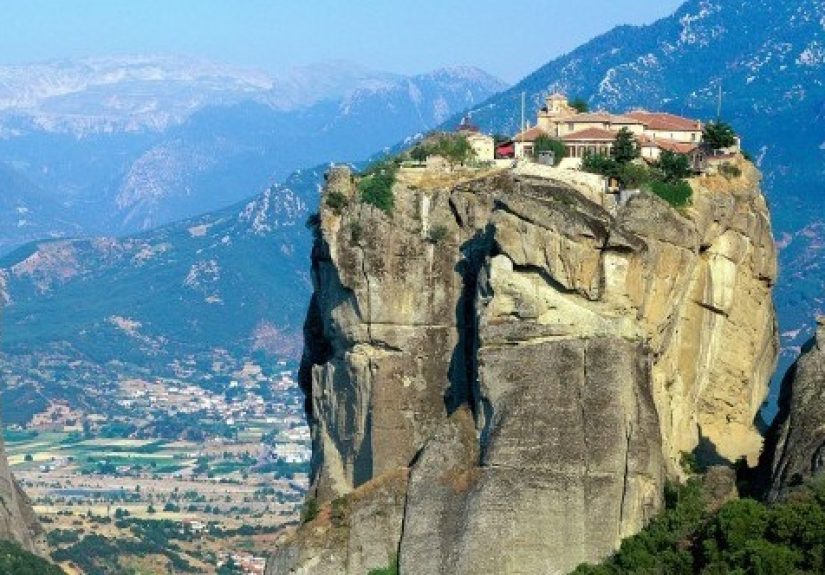
Meteora’s monasteries sit atop towering rock formations that look like nature tried to build skyscrapers out of stone. Historically, reaching them
involved ladders, ropes, and netsbecause nothing says “contemplative life” like being winched up a cliff. Only a handful of monasteries remain active
today, and modern stairs and bridges have made access safer, but the original logic is still visible: elevation as separation, and separation as focus.
- Isolation factor: vertical rock summits + limited buildable space
- Why it stands out: iconic “suspended” landscape; living Orthodox tradition
- Then vs. now: once rope-and-net access; now engineered pathways
7) Debre Damo Monastery, Ethiopia
Debre Damo is famous for its plateau-top seclusionreached in part by being hoisted up via ropes in traditional practice. Accounts often describe it
as one of Ethiopia’s ancient Christian sites, connected to early monastic history in the region. The physical isolation isn’t just dramatic; it’s
protective, preserving a sense of continuity in a place where the horizon is wide and the route is intentionally narrow.
- Isolation factor: sheer-sided plateau + rope ascent tradition
- Why it stands out: emblem of Ethiopian monastic perseverance
- Visitor reality: access may be restricted and culturally specificplan with respect
8) Katskhi Pillar Monastery, Georgia
Katskhi Pillar is a 40-meter limestone monolith topped with a small churchessentially a spiritual treehouse for adults who take solitude very seriously.
The site echoes the ancient “stylite” tradition (holy people living on pillars), and modern monastic life has revived interest in this astonishing perch.
Access is typically restricted; even when you can’t climb it, standing below it is enough to understand the point: the world is down here, prayer is up there.
- Isolation factor: a literal pillar of rock with limited access
- Why it stands out: stylite tradition made architectural
- Fun fact energy: it looks unrealand yet, it’s very real
9) St. George of Choziba, Wadi Qelt (West Bank)
Built into the cliffs of Wadi Qelt between Jerusalem and Jericho, this monastery hangs over a desert gorge like it’s refusing to participate in gravity.
The area has attracted monastic communities since early Christian centuries, and the monastery’s story includes cycles of founding, destruction, and rebuilding.
The settingrock, sun, silence, and a ribbon of greenmakes the spiritual logic feel visible: step away from the world, and the mind gets louder (in a useful way).
- Isolation factor: desert canyon cliffs + historic hermit landscape
- Why it stands out: living monastery in a dramatic biblical geography
- Visitor vibe: quiet awe, plus the occasional “how did they build this?” whisper
10) Christ in the Desert Monastery, New Mexico (USA)
Not all isolated monasteries are medieval or overseas. Christ in the Desert is a Benedictine community in a canyon along the Chama River in northern New Mexico.
Founded in the 20th century, it’s remote by design: a modern monastic retreat where the landscape helps set the tone. Visitors often come for
liturgy, retreats, and the rare luxury of hearing absolutely nothing… and realizing that’s actually the point.
- Isolation factor: canyon setting + distance from town conveniences
- Why it stands out: contemporary monastic life in the American Southwest
- Good to know: hospitality exists, but it’s monastic hospitalitynot a resort package
How to visit remote monasteries without being “that tourist”
Isolated monasteries are often active religious communities, not just scenic backdrops. A few guidelines go a long way:
dress modestly, speak softly, ask before photographing people, and follow posted rules (especially in fragile cliffside sites).
If a space is closed, it’s closedmystery is part of the aesthetic. Also: don’t treat silence like a problem to solve.
Let it do what it does.
Experience Notes: What It Feels Like to Seek Out Isolated Monasteries (500-ish words)
Visiting an isolated monastery is a strange kind of time travel. Not because you suddenly start speaking in ancient proverbs (though it wouldn’t be the weirdest
thing that happens), but because the pace changes. The road narrows, the signal fades, and your braindeprived of its usual “check notifications” loopstarts
noticing things it normally bulldozes right past. Wind. Stone. Footsteps. Your own thoughts doing cartwheels.
The approach is often half the experience. A climb toward Tiger’s Nest, a boat ride toward Skellig Michael, a winding route into a desert canyon like Wadi Qelt
these journeys have a built-in filter. People who don’t really want to be there usually turn around early. Everyone else keeps going, fueled by curiosity,
stubbornness, or the quiet hope that a spectacular view might rearrange something inside them.
Then you arrive, and the first surprise is how practical these places are. Yes, they’re beautiful. Yes, they’re dramatic. But they’re also built for daily life:
meals, prayer, work, study. Even the most gravity-defying monastery still needs water, storage, and a way to keep the roof from arguing with the weather.
In places like Meteora or Sümela, you can almost feel the engineering choicesstairs cut into rock, walls nested into cliffseach one a compromise between
“we want solitude” and “we also want to survive Tuesday.”
The second surprise is the soundscape. Isolation doesn’t always mean silence. Sometimes it means wind that never stops talking, waves that refuse to whisper,
or bells that carry across a valley like they’re trying to remind the world what time it is. In deserts, quiet can feel enormouslike the air itself has
extra room. In mountains, the silence comes in layers: distant birds, a far-off footfall, then nothing, then your own breathing as the loudest noise in the room.
The third surprise is how your attention changes. You start reading the environment the way people used to: the angle of sun on stone, the smell of incense
drifting out of a chapel, the way prayer flags or hanging lamps move with the breeze. You might notice that your usual “content brain” wants to label everything
immediatelyhistory fact! photo opportunity! caption idea!and then, if you let it, that impulse relaxes. You become less interested in owning the moment and more
interested in being inside it.
And finally, you leave with a new appreciation for why remote monasteries exist at all. Isolation isn’t only about escaping people. It’s about creating conditions
where the inner life has fewer interruptions. Whether you’re religious or not, it’s hard to stand in a place built for contemplationon a cliff, in a canyon,
on an island that feels like the last page of the earthand not feel something shift. Even if the only thing that shifts is your willingness to sit quietly for
five minutes without reaching for your phone like it’s a life raft.
Conclusion
The world’s most isolated monasteries prove a simple truth: when people want stillness badly enough, they’ll build iton cliffs, in deserts, on pillars, and
on islands battered by sea spray. These places aren’t isolated because they’re forgotten. They’re isolated because they’re focused. And in a noisy world,
that kind of focus is its own form of wonder.