Table of Contents >> Show >> Hide
- What Exactly Is Red White Blue Flag Bunting?
- The Respectful Way to Display Patriotic Bunting
- Where Red White Blue Flag Bunting Looks Best
- Materials That Survive Summer Like a Champ
- Picking the Right Size (So It Doesn’t Look Awkward)
- How to Hang Patriotic Bunting Without Losing Your Mind
- Care, Cleaning, and Storage (So It Lasts Past One Holiday)
- Design Ideas That Look Polished (Not Like a Clearance Bin Exploded)
- Common Mistakes to Avoid
- A Quick (Surprisingly Cool) Note on “Bunting” in American History
- Real-World Bunting Experiences: What People Learn After Hanging It
- Conclusion
There are two kinds of patriotic decorators: the “one tiny flag in a flowerpot” minimalist and the
“my porch is basically a parade float” enthusiast. Red, white, and blue flag bunting is the friendly
middle groundclassic, cheerful, and surprisingly versatile. It’s also the secret weapon for people
who want their house to say “Happy Fourth!” without screaming “I bought the entire seasonal aisle.”
In this guide, you’ll learn what red white blue flag bunting actually is, how to hang it the respectful way,
how to choose the right materials for your climate, and how to keep it looking crisp from Memorial Day to Labor Day.
Expect practical tips, a little history, and a few “please don’t do this” warnings delivered with love.
What Exactly Is Red White Blue Flag Bunting?
“Bunting” can mean a couple of things in American decorating talk:
- Pleated fan bunting (also called a “patriotic fan”): a semi-circle or scalloped fan,
usually with a blue star field at the top and red-and-white stripes below. - Swag bunting: a long drape that hangs in soft curves across a porch rail or fence line.
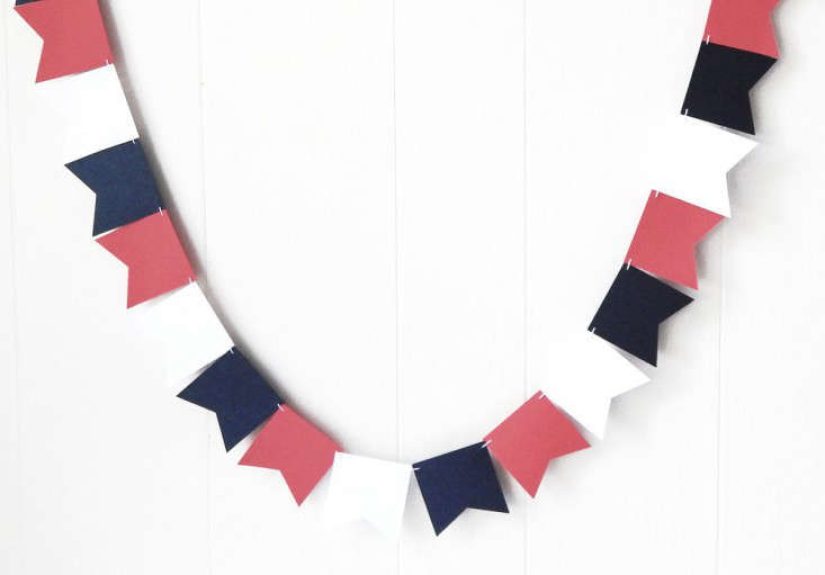
- Pennant bunting: a string of triangles (fun, casual, more “block party” than “town hall”).
The key point: bunting is decoration. It’s meant to evoke the American flag’s colors and spirit without
using an actual U.S. flag as party décor. In fact, traditional U.S. flag etiquette specifically recommends
bunting (not the flag itself) for platform fronts, speaker’s desks, and general decorationbecause the flag
is a symbol, not a table runner.
The Respectful Way to Display Patriotic Bunting
If you remember one rule, make it this: blue goes on top. Proper patriotic bunting is arranged
with blue above, white in the middle, and red below. That orientation shows up in official
etiquette guidance and is repeated across veteran and civic organizations for a reason: it keeps the symbolism
consistent and prevents the accidental “oops, I hung it upside down” moment.
Bunting vs. the U.S. Flag: Don’t Swap Them
The U.S. flag shouldn’t be used as drapery, festooned, or drawn back in folds. If you’re decorating a railing,
stage front, float, or balcony, bunting is the correct tool for the job. Think of bunting as the flag’s
well-dressed cousin who came to celebratenot to be sat on, spilled on, or stapled into a shape it never agreed to.
Where “Blue on Top” Matters Most
- Porch rails and balcony fronts (fans or swags)
- Stages, podiums, and speaking platforms (classic bunting use)
- Parade routes (fences, barriers, reviewing stands)
- Community events like Memorial Day ceremonies and Fourth of July gatherings
Bonus etiquette-friendly tip: If your bunting is close to the ground, hang it high enough that it won’t drag,
snag, or become the neighborhood dog’s new favorite cape.
Where Red White Blue Flag Bunting Looks Best
Bunting works because it creates strong horizontal “celebration lines.” It frames your home like a photo,
except the photo is of your porch, and the subject is “America, but make it welcoming.”
Top Spots for Maximum Impact
- Under windows: a row of pleated fans instantly adds charm (and looks great in photos).
- Across porch railings: swags soften hard lines and make the entrance feel festive.
- Along rooflines or eaves: lighter swags can visually stretch a small façade.
- On fences and gates: perfect for backyard cookouts and neighborhood gatherings.
Specific Example Layouts
Want an easy formula? Try one of these:
- Classic Colonial: three pleated fans under the porch roofline + one full-size U.S. flag on a staff.
- Apartment Balcony: one centered fan bunting + two small planters with red and white flowers.
- Backyard Party: pennant bunting from fence to pergola + a swag across the drink table (not the actual flagever).
Materials That Survive Summer Like a Champ
Bunting isn’t one-size-fits-all, especially outdoors. Sun, wind, humidity, and surprise rain can turn flimsy fabric
into a sad, frayed spaghetti noodle. Choose materials based on how and where you’ll display it.
Outdoor Favorites: Polyester and Nylon
For outdoor bunting, you’ll commonly see polyester and nylon because they handle
weather better than most cotton options. Polyester is often favored for toughness and longevity, especially in
harsher sun and wind. Nylon is lighter and can look vibrant and “floaty,” but may not last as long in punishing conditions.
Indoor or Short-Term Display: Cotton
Cotton has a classic, traditional look and a softer drape, which can be gorgeous for indoor events, covered porches,
or short holiday weekends. Outdoors for long periods, cotton is more prone to weather wear, fading, and moisture issues,
unless you’re using heavier, higher-quality cotton.
Construction Details That Matter (A Lot)
- Canvas header: adds strength where hooks or clips grab.
- Brass grommets: resist rust and make hanging easier (and less rage-inducing).
- Double-stitched seams: helps prevent tearing in wind.
- Colorfast dyes: your “blue” shouldn’t fade into “mysterious grayish regret.”
Picking the Right Size (So It Doesn’t Look Awkward)
Bunting looks best when it’s sized to the architecture. Too small and it looks like you ran out of enthusiasm.
Too big and it can swallow your porch like a patriotic curtain.
Common Sizes You’ll See
- Pleated fan bunting: often around 3 ft x 6 ft for a bold porch statement.
- Rail swags: sold in lengths that match typical porch spans, sometimes with tie points every few feet.
- Pennant strings: variable lengths, usually meant for party zones rather than architectural alignment.
A Simple Measuring Trick
For swags, measure the full length of the area (say, the porch rail). Then decide how much “dip” you want.
A gentle look uses a shallow curve; a festive look uses deeper swoops. As a practical rule, plan attachment points
every 2–3 feet for outdoor swags so wind doesn’t turn the fabric into a flapping audition tape.
How to Hang Patriotic Bunting Without Losing Your Mind
Hanging bunting is easy until it’s not. The goal is secure attachment that doesn’t damage your home and doesn’t
let the wind remix your décor into modern art.
Best Hardware Options
- Outdoor-rated hooks: great for repeated seasonal use.
- Zip ties: fast and sturdy for railings (snip off cleanly when done).
- Suction cup hooks: surprisingly useful for windows and glass doors.
- Removable adhesive strips/clips: good for short-term setups if the surface allows it.
Wind-Proofing Tips (Because Summer Loves Drama)
If your bunting keeps flipping up like it’s trying to wave at airplanes, add extra anchor points.
Clip or tie the lower edge discreetly at intervals. Some decorators use small rings/clips at the bottom edge and
run a thin line through them to stabilize the fabric without making it look “tied down.”
Surface-by-Surface Quick Guide
- Wood porch rail: small hooks or zip ties through grommets.
- Vinyl rail: zip ties work well; avoid drilling if you can.
- Brick: use outdoor-rated adhesive hooks for short-term, or masonry-friendly mounting for permanent hooks.
- Windows: suction hooks + grommets/loops is the low-drama method.
Care, Cleaning, and Storage (So It Lasts Past One Holiday)
Most bunting looks its best when it’s treated like seasonal décornot a year-round sunbathing contestant.
If you want it to last, give it a little TLC.
During the Season
- Bring it in during storms if possibleespecially high wind.
- Keep it dry; wet fabric stored while damp can develop mildew or weird smells.
- Check attachment points every few days if it’s windy.
End-of-Season Storage
Make sure the bunting is clean and fully dry. Smooth folds (or lightly iron if the material allows),
then store it in a breathable container in a climate-controlled spot. Translation: not the leaky shed where
spiders host their annual convention.
Design Ideas That Look Polished (Not Like a Clearance Bin Exploded)
The best patriotic porches have one thing in common: they edit. Bunting is a strong visual element, so let it be
the star and keep supporting décor simple.
Easy Pairings
- White flowers + blue planters + a small red accent (ribbon, lantern, cushion).
- Warm string lights for evening gatherings (especially if you’re flying a flag at night and want the area well-lit).
- Natural textures (wicker, wood, jute) to keep the look classic instead of cartoonish.
Color Balance Rule
If bunting supplies the biggest chunk of red/white/blue, don’t repeat those colors everywhere else at full intensity.
Add neutralswhite, tan, navy, natural woodso your bunting doesn’t feel like it’s arguing with your furniture.
Common Mistakes to Avoid
1) Hanging It Upside Down
If the red stripe is on top, it’s time for a quick bunting flip. Remember: blue, white, red from top to bottom.
2) Using an Actual U.S. Flag as Decoration
Draping the flag across a railing might feel patriotic, but it’s not the respectful approach. Bunting exists
specifically so you can decorate without turning a national symbol into a throw blanket.
3) Skipping Extra Anchor Points Outdoors
Outdoor bunting needs more than two hooks and a prayer. Add attachment points so it holds shape and doesn’t whip around.
4) Leaving It Up Until It Looks Tired
Faded, frayed bunting doesn’t read “vintage Americana.” It reads “this has survived three summers and is seeking retirement.”
If it’s damaged, replace ityour porch deserves better.
A Quick (Surprisingly Cool) Note on “Bunting” in American History
The word “bunting” isn’t just decoration slangit’s tied to real flag-making fabric history. The famous Star-Spangled Banner
(the huge flag that flew over Fort McHenry and inspired the national anthem) was made with wool bunting for the stripes and
blue field, plus cotton for the stars. So yes: when you hang bunting today, you’re using a term connected to how early flags
were literally constructedonly now it’s less “wartime garrison flag” and more “neighbors coming over for burgers.”
Real-World Bunting Experiences: What People Learn After Hanging It
Talk to anyone who decorates for Memorial Day or the Fourth of July and you’ll hear the same story arc:
excitement, optimism, a tiny argument with gravity, and thenfinallyporch glory. Bunting looks effortless in photos,
but the “effortless” part usually happens after you’ve learned a few real-life lessons.
The first lesson is that wind has opinions. A calm morning can trick you into thinking two hooks are enough.
Then a breeze shows up and your bunting starts behaving like a sail. The fix most homeowners discover is simple:
add anchor points every couple of feet, especially along long railings. Once bunting is stabilized, it stops flipping and
starts draping the way you imaginedclean swags, tidy pleats, and fewer surprise acrobatics.
The second lesson is that the right hardware is a mood enhancer. People often start with whatever is in the junk drawer:
random string, maybe a bent paperclip (we’ve all had a moment). But the setups that last through the holiday weekend use
purpose-built hooks, sturdy zip ties, or outdoor clips that don’t pop off when the temperature rises. For windows,
suction hooks become a fan favorite because they’re fast, removable, and don’t leave your glass looking like it lost a fight with tape.
Lesson three: measure first, feel patriotic second. Many “my bunting looks weird” problems come down to scale.
Too few fans under a wide porch roof can look sparse; too many can feel crowded. People who measure their spacingthen align bunting
with porch columns or window centersend up with a look that feels intentional. It’s the difference between “decorated” and “designed.”
Another common experience: realizing that sunlight is the slowest, quietest vandal. Bunting left in direct sun for weeks
can fadeespecially deep blues. Homeowners who want their bunting to last often treat it like seasonal décor: up for the holiday window,
then stored clean and dry. The bunting stays brighter, the fabric stays stronger, and next year doesn’t require an emergency run to the store
the night before guests arrive.
Finally, there’s the emotional payoff people don’t always expect. Bunting has a way of turning ordinary moments into little traditions:
kids pointing at the stars, neighbors waving on evening walks, a front porch that suddenly feels like a gathering place. For families,
it becomes part of the rhythm of summerhang the bunting, fire up the grill, watch fireworks, take the same photo every year.
It’s décor, sure, but it’s also a small ritual that says, “We’re here, we’re together, and we’re celebrating.”
Conclusion
Red white blue flag bunting is one of the easiest ways to make a home feel festive, welcoming, and unmistakably
“summer holiday ready.” Choose weather-smart materials, size it to your space, hang it securely (blue on top!),
and store it properly so it stays sharp for future celebrations. Keep it tasteful, keep it respectful, and let
bunting do what it does best: make your porch look like the opening scene of a feel-good small-town Fourth of July movie.