Table of Contents >> Show >> Hide
- Know Your Grout Before You Try to Protect It
- The First Week: Cure Like You Mean It
- Clean New Grout the Right Way (Without Weakening It)
- Sealing Grout: A Raincoat, Not a Suit of Armor
- Don’t Grout Corners Like It’s 1997
- Protecting Grout in Showers and Wet Areas
- Protecting Grout on Floors and High-Traffic Zones
- A Simple Maintenance Plan (That You’ll Actually Follow)
- Troubleshooting: When Grout Doesn’t Look Right
- Real-World Experience: What People Learn After the “Perfect Install” (500+ Words)
- Experience #1: “We sealed… but the grout still got darker in the shower.”
- Experience #2: “Our kitchen grout looked tired fastthen we changed one habit.”
- Experience #3: “We used grout in the corners because it matched better. It cracked.”
- Experience #4: “We sealed the grout and got a weird film on the tile.”
- Experience #5: “The grout was fine… until we cleaned it with the wrong thing.”
- Conclusion: Protecting Grout Is a Process, Not a Product
Fresh tile is one of life’s underrated joys. The lines are crisp, the surface is shiny, and everything looks so
clean you briefly consider banning shoes, pets, and gravity. Then reality taps your grout on the shoulder:
grout is porous, it can stain, and it will happily collect whatever your household throws at itcoffee,
shampoo, spaghetti sauce, or the mysterious “sticky” that appears in kitchens for no clear reason.
The good news: protecting grout after installation isn’t complicated. It’s a short, smart sequencecure,
clean, seal (sometimes), and maintaindone in the right order, with the right products, and without the
classic mistake of “I panicked and scrubbed it with whatever was under the sink.”
Know Your Grout Before You Try to Protect It
Grout protection starts with one simple question: what type of grout did you install? The
care plan changes depending on whether your grout is cement-based, epoxy, or pre-mixed “ready to use.”
When people say “grout,” they often mean “all grout.” Your grout politely disagrees.
1) Cementitious grout (most common)
Cement-based grout is durable, affordable, and very popularwhich is another way of saying it’s
in millions of homes quietly absorbing tiny amounts of life. Cementitious grout is naturally porous, so it’s
the most likely to benefit from a penetrating sealer and a gentle cleaning routine.
2) Epoxy grout
Epoxy grout is far less absorbent and highly stain-resistant. In many cases, it doesn’t need sealing
at all. (If a contractor tries to sell you grout sealer for epoxy grout, ask what, exactly, the sealer is supposed
to soak into. Then enjoy the silence.)
3) “Ready-to-use” premixed grouts (urethane/acrylic blends)
These can be very stain resistant, but they still have their own cure times and cleaning rules. Always
follow the manufacturer’s instructionsespecially for early cleaningbecause the wrong cleaner too soon
can cause haze, tackiness, or discoloration.
A quick reality check: grout isn’t waterproof
This matters most in showers and wet areas. Even if you seal cement grout, sealing helps with stains
and maintenance; it doesn’t magically turn grout into a waterproof wall. Your shower’s waterproofing
should be behind the tile (membranes, pans, proper details), not “wishful thinking + grout sealer.”
The First Week: Cure Like You Mean It
Protection begins the moment the grout is installed, because the early cure window is when grout is most
vulnerable. “Cure” doesn’t just mean “it feels dry.” Cement grout gains strength as it hydrates, and curing
times depend on product type, temperature, humidity, airflow, and how aggressively the area is used.
Practical protection timeline (typical, but always verify your product)
| Time After Grouting | What to Do | What to Avoid |
|---|---|---|
| First 24 hours | Keep it calm: light foot traffic only if permitted; ventilate; keep it dry. | Soaking, mopping, aggressive scrubbing, harsh cleaners. |
| 24–72 hours | Gentle wipe-downs; remove light haze carefully; continue ventilation. | Heavy traffic, dragging furniture, wet mats sitting on grout lines. |
| 48–72 hours (common sealing window for cement grout) | If your grout is cement-based and you’re sealing, many products allow sealing now. | Sealing over damp grout or residual haze. |
| Up to 7+ days | Use normally with caution; keep showers as dry as practical between uses. | Harsh chemicals; prolonged standing water; steam cleaning “because TikTok.” |
| Longer cure notes | Some grouts specify extended protection from immersion and delayed routine cleaning. | Assuming all grouts behave the same. |
If you only remember one thing from the timeline: don’t trap moisture under a “protective” layer.
Sealing or heavy cleaning too early can lock in dampness, cause blotchiness, or interfere with curing.
Clean New Grout the Right Way (Without Weakening It)
Fresh grout usually needs two kinds of cleaning: (1) the “right after install” cleanup to remove residue,
and (2) the “post-cure” cleanup to remove haze and get the surface photo-ready. The trick is doing both
without over-washing the joints.
Prevent the #1 rookie move: too much water
Over-washing during cleanup can pull pigment and cement from the joints, causing weak grout, uneven
color, and shallow joints. Use a well-wrung sponge, rinse frequently, and work in small sections. If you’re
DIYing, pretend water is expensive.
Grout haze: patient beats aggressive
Many haze problems get worse because someone attacks the tile like it personally offended them. Start
with the gentlest method that works:
- Step 1: Dry buff with a microfiber towel once the surface firms up.
- Step 2: Light damp wipe (well-wrung) to lift remaining film.
- Step 3: If haze persists, use a manufacturer-approved haze remover at the right time in the cure.
Be extra cautious with acidic cleaners on cement groutespecially early. Acids can etch cementitious
grout and weaken it, which is the opposite of “protecting.” If you use any specialty cleaner, follow the
label exactly and rinse as directed.
Pick the “boring” cleaner for routine care: neutral pH
For ongoing maintenance (and especially after sealing), choose a neutral pH cleaner designed for tile
and grout. Strong acids or strong alkalis can reduce a sealer’s effectiveness and shorten its lifespan.
Neutral cleaners are the unsung heroes of grout that stays good-looking.
What about vinegar? You’ll see it recommended online, and in some situations it can help on certain tile
surfacesbut it’s risky on unsealed, weakened, or deteriorating grout, and it’s not appropriate for many
natural stones. If you’re protecting grout long-term, a purpose-made neutral cleaner is the safer default.
Sealing Grout: A Raincoat, Not a Suit of Armor
Sealing is one of the most effective ways to protect cementitious grout from stains and make cleaning
easier. But sealing isn’t magic, and not all grouts need it.
Do you need to seal? Use this quick decision guide
- Cement-based grout in kitchens, entryways, bathrooms: sealing is usually a very good idea.
- Epoxy grout: typically does not require sealing.
- High-performance “stain resistant” cement grouts: may not require sealing, but sealing can still add
protection depending on use (think: teenagers + spaghetti). - Glazed ceramic/porcelain tile surfaces: don’t “coat the tile” unless the sealer product specifically
says it’s appropriate; most of the benefit is in the grout lines.
Penetrating vs. topical sealers
Most modern grout protection relies on penetrating (impregnating) sealers. They soak into grout and
help repel water and stains while staying breathable. Topical sealers sit on top like a finish; they can
add sheen but may wear unevenly or peel in wet or high-traffic areas.
For most homes, a quality penetrating sealer is the practical choiceespecially in showers and kitchens.
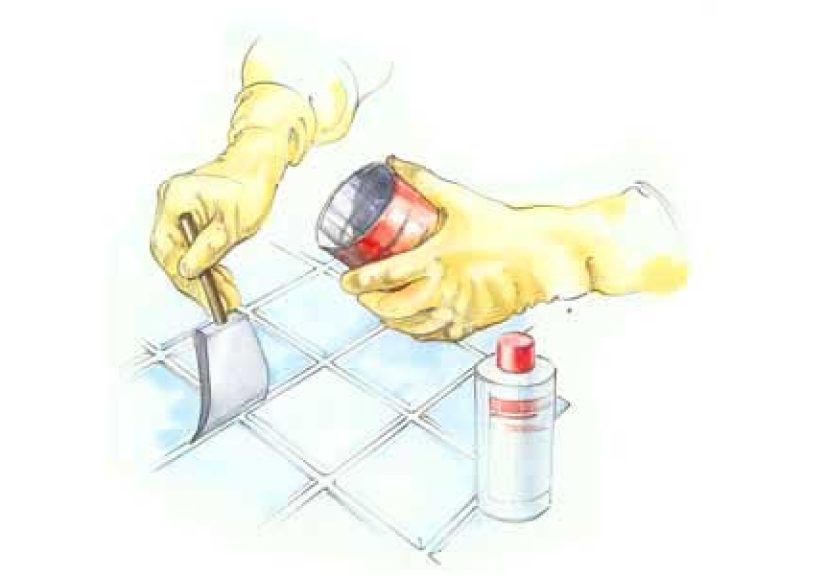
How to apply grout sealer without making a mess
- Wait for proper cure. Many sealers for cement grout recommend waiting around 48–72 hours after
grouting, but always follow your grout and sealer instructions (some systems call for longer protection
before routine cleaning or water exposure). - Get the surface truly clean. Remove haze, dust, and soap residue. Sealer over grime = “sealed-in grime.”
- Make sure everything is dry. If you cleaned recently, allow sufficient dry time before sealing.
- Apply carefully to grout lines. Use a small foam brush, sponge, or roller applicator. Work in small
areas so you can control dwell time and cleanup. - Let it dwell (soak) as directed. This is where the sealer does its job.
- Wipe off excess from tile. Don’t leave residue to dry on the tile surface unless the product is
designed for it. Residue can become a stubborn film. - Apply a second coat if needed. Many sealers build protection with two coats, especially on porous grout.
- Protect during cure. Keep the area dry and avoid heavy use until the sealer’s cure window passes.
Pro tip: if you’re sealing a shower, do it when you can give it a real dry window. Sealing at 10 p.m. and
showering at 6 a.m. is a classic “I technically did it” moveand a great way to get disappointing results.
Don’t Grout Corners Like It’s 1997
If you want grout to stay intact, you have to respect movement. Corners, changes of plane (wall-to-wall,
wall-to-floor), and transitions are stress points. Using rigid grout in these areas often leads to cracking.
The tile industry commonly recommends flexible sealant (like 100% silicone) at changes of plane.
Why it matters for protection
A cracked corner joint can let water and grime settle where it’s hardest to clean. It also turns your
“fresh install” into a “why is this already failing” situation. Color-matched silicone exists for a reason:
it moves with the building and protects the joint.
Protecting Grout in Showers and Wet Areas
Wet areas are where grout protection pays off the mostand where unrealistic expectations cause the most
frustration. The goal is to reduce staining, slow soap scum buildup, and make cleaning easier.
Small daily habits that keep grout looking new
- Squeegee the walls (or towel-dry) after showersless moisture = less soap scum and mildew.
- Run the fan long enough to clear humidity (not just “during the shower”).
- Don’t store bottles on the floor where they trap water around grout lines.
- Clean little, often with a neutral pH cleaner instead of infrequent chemical warfare.
What to do if mildew shows up anyway
Mildew loves moisture and slow drying. First fix airflow and drying habits. Then use a cleaner designed
for mold/mildew that is compatible with your tile and grout type. Rinse thoroughly, and avoid mixing
cleaners (especially anything with bleach and anything acidic).
Protecting Grout on Floors and High-Traffic Zones
Floors fail differently than showers. You’re battling grit, oils, and abrasionplus the occasional “dropped
taco” event. Protection here is a combination of sealing (when appropriate) and practical prevention.
Entryways, kitchens, mudrooms: the “grout stress test”
- Use mats at doors to reduce grit that acts like sandpaper.
- Felt pads under chair legs prevent micro-scratches and joint wear.
- Wipe spills quicklyespecially oils, wine, coffee, and tomato sauce.
- Mop smart: a neutral cleaner and a well-wrung mop beats soaking the floor.
When to re-seal
Resealing frequency depends on traffic and cleaner choice. A simple “water drop test” helps: if water
darkens the grout quickly instead of beading, your sealer may be wearing out. High-traffic areas often need
more frequent resealing than a guest bath that gets used twice a month.
A Simple Maintenance Plan (That You’ll Actually Follow)
Here’s a realistic plan that protects grout without turning your weekends into a grout-themed lifestyle.
- Weekly: quick clean with a neutral pH tile-and-grout cleaner; rinse if the label says so.
- Monthly: check corners/changes of plane; spot-clean soap scum or kitchen grease buildup.
- Seasonally: do a deeper clean (still grout-safe); inspect for cracks, pinholes, or gaps.
- As needed: reseal cement grout when the water test shows reduced repellency, or after deep cleaning that may strip sealers.
Troubleshooting: When Grout Doesn’t Look Right
Problem: blotchy or uneven color
Uneven color often traces back to uneven drying, too much water during cleanup, inconsistent mixing, or
sealing too early. Give it time to fully dry and cure before assuming it’s permanent. If it persists, consult
the grout manufacturer for corrective options.
Problem: cracking at corners
This is usually movement at a change of plane. Remove loose grout and replace with a flexible, color-matched
sealant designed for wet areas.
Problem: stained grout in one “high-drama” spot
Kitchens and shower corners are repeat offenders. Clean with a grout-safe cleaner, rinse well, and consider
a second coat of penetrating sealer (after the area is fully dry). If stains are deep, a grout colorant can be a
reset buttonjust treat it like a coating system and follow prep rules carefully.
Real-World Experience: What People Learn After the “Perfect Install” (500+ Words)
The most helpful grout advice usually shows up after someone lives with the tile for a few weeks. Not
because the installation was badbecause real life is relentless. Below are common “field notes” from
homeowners and installers that can save you from the greatest hits of grout regret.
Experience #1: “We sealed… but the grout still got darker in the shower.”
This is one of the biggest expectation traps. Cement grout can darken when wet because it’s porous, and a
penetrating sealer mainly slows absorption and helps repel stainsit doesn’t stop all moisture movement.
In daily use, the win is that the grout dries faster, cleans easier, and stains less. People who see long-term
success in showers usually do two things: they improve drying (fan + squeegee) and they avoid harsh cleaners
that chew through sealers. The moment drying improves, mildew and “perma-damp” corners often improve too.
Experience #2: “Our kitchen grout looked tired fastthen we changed one habit.”
Kitchens are not gentle places. Cooking oils, foot traffic, and grit can turn light grout into “vintage beige”
in a hurry. A common turning point is switching from random cleaners to a neutral pH cleaner and adopting
a quick wipe routine for spills. One specific example: oil splatters near a stove. If those sit overnight, they
migrate into unsealed grout. People who keep grout looking new near cooking zones often keep a microfiber
cloth handy and wipe the floor edges the way they wipe countertopslittle effort, big payoff.
Experience #3: “We used grout in the corners because it matched better. It cracked.”
Corners crack because buildings move. Even a tiny shift between wall planes can fracture rigid grout. The
common “fix that finally works” is using color-matched 100% silicone at changes of plane. Yes, silicone can
discolor over time if it’s constantly wet or exposed to harsh cleaners. But when people pair silicone with
good ventilation and gentle cleaning, it holds up better and stops the repeating crack-repair cycle.
Experience #4: “We sealed the grout and got a weird film on the tile.”
This usually happens when excess sealer dries on the tile surface. The best prevention is applying sealer
precisely (small brush/roller), working in manageable sections, and buffing/wiping excess before it dries.
In practice, people who get the best results treat sealing like detailing a car: controlled application, then
a clean towel finish. If a residue does happen, most sealers have label-approved methods to remove haze
(often involving re-wetting with sealer and buffing, or using a compatible cleaner). The biggest lesson:
“More sealer” isn’t always “more protection” if it’s left sitting on the tile.
Experience #5: “The grout was fine… until we cleaned it with the wrong thing.”
The damage pattern is familiar: someone uses an acidic cleaner, an aggressive bleach routine, or a harsh
degreaser repeatedly. The grout starts looking rougher, then stains faster, then becomes harder to clean.
The people who reverse this trend usually do a reset: deep clean with a grout-appropriate product, rinse,
let the area dry thoroughly, then re-seal cement grout if sealing is appropriate. After that, they stick to
neutral pH maintenance most of the time and reserve “strong stuff” only for special situationsand only if
the product is compatible with the tile and grout system.
Conclusion: Protecting Grout Is a Process, Not a Product
If grout protection had a slogan, it would be: cure first, clean gently, seal smart, maintain simply.
Give grout the time it needs to harden, avoid harsh cleaners that weaken cement or strip sealers, use a
penetrating sealer when it makes sense, and handle corners like the movement zones they are. Do that, and
your grout won’t just look good for the “after photo”it’ll look good when you’re living on it.