Table of Contents >> Show >> Hide
- The Photographer’s Mission (And Why Libraries Win Every Time)
- What Makes a Library “Beautiful” Through a Lens?
- Stop One: America’s “Look Up” Reading Rooms
- Stop Two: Modern Marvels (Marble, Glass, and a Little Bit of Robot Magic)
- Stop Three: Europe’s Book Cathedrals (Where the Ceilings Are Basically Showing Off)
- Stop Four: Futuristic Libraries That Don’t Feel Like Sci-Fi Props (Even Though They Could)
- What the Photographer “Found” (Beyond the Obvious Beauty)
- How to Visit (and Photograph) Beautiful Libraries Without Becoming the Main Character
- Extra : Field Notes From a Library Photography Pilgrimage
- Conclusion
The assignment sounded simple on paper: travel the world, photograph beautiful libraries, and try not to get shushed into another dimension.
In reality, it was a passport-stamping scavenger hunt through marble halls, floating staircases, glowing reading rooms, and the occasional
architectural flex so dramatic it deserved its own curtain call.
Libraries are already magical without the camera. Add a lens, and they become full-on stage sets: symmetry, light, texture, silence, and
stories stacked floor to ceiling. Some feel like cathedrals for curiosity. Others look like they were designed by a committee of
minimalist astronauts. And everywhereeverywherethere’s a shared promise: this beauty isn’t just for the VIPs. It’s for anyone who walks in.
The Photographer’s Mission (And Why Libraries Win Every Time)
A good library photo doesn’t just show books. It shows beliefa city’s belief in learning, a university’s belief in research, a community’s
belief in shared space. That’s why photographers keep coming back to these “temples of knowledge,” often shooting them empty so the architecture
can speak without interruption.
In projects by architectural and fine-art photographers (think the library-focused work of people like Thibaud Poirier and Candida Höfer),
libraries are treated like portraits: calm, centered, quietly intense. The goal isn’t to document a room. It’s to reveal a feeling:
you’re standing inside something larger than your own to-do list.
What Makes a Library “Beautiful” Through a Lens?
After weeks on the road, the photographer’s notes started to repeat. Not as clichésmore like patterns that showed up in every country,
every style, every century.
1) Light that behaves like a character
Old libraries soften daylight to protect paper and ink; modern libraries weaponize daylight to make spaces feel open, civic, and alive.
Either way, light tells you what the building values: preservation, welcome, focus, awe.
2) Geometry that makes your brain purr
Libraries love strong lines: long aisles, repeating arches, stacked balconies, spiraling paths. These create natural leading lines and
vanishing pointsthe kind that make viewers stop scrolling and go, “Wait… what is that place?”
3) Silence you can almost see
The best library photographs capture quiet without needing to say the word. Empty chairs. Lamps glowing over oak tables. A ceiling mural
hovering like a calm sky. You can practically hear a page turning from three zip codes away.
Stop One: America’s “Look Up” Reading Rooms
The photographer started in the U.S., partly for logistics and partly because American libraries are experts at mixing grandeur with
democratic purpose. These spaces don’t whisper, “You don’t belong.” They whisper, “Pull up a chair.”
The Library of Congress (Thomas Jefferson Building), Washington, D.C.
If you’ve ever wanted to feel like a tiny, determined human standing inside an artwork about knowledgethis is the place.
The Jefferson Building’s Great Hall is a full sensory experience: mosaics, columns, painted details, and symbolism everywhere you look.
Then comes the Main Reading Room, where towering figures representing branches of thought and learning turn the room into a circular
manifesto: knowledge matters, and it’s worth building something spectacular to hold it.
New York Public Library (Rose Main Reading Room), New York City
The Rose Main Reading Room is famous for a reason. It’s long enough to feel like a runway for ideas, with a ceiling painted in luminous sky tones
and rows of lamps that make studying look like a movie scenebecause it is a movie scene, frequently.
After its restoration and reopening, the space became an even clearer symbol of what public luxury can look like:
not velvet ropes, just beauty you can sit down in.
Boston Public Library (Bates Hall), Boston
Bates Hall is a masterclass in “quiet confidence.” The long reading room, the barrel-vaulted ceiling, the steady rhythm of lamps and tables
it all says: you don’t need fireworks when your architecture already feels like a deep breath.
Photographing it is about patience: wait for the room’s symmetry to settle, and the shot almost composes itself.
George Peabody Library, Baltimore
Some rooms don’t have an “upper level.” They have vertical drama. The Peabody’s stack room rises in tiered cast-iron balconies up to a skylight,
turning book storage into a theatrical set. It’s both elegant and slightly unbelievablelike someone dared an architect to design a library
that looks like it could host an opera about footnotes.
Stop Two: Modern Marvels (Marble, Glass, and a Little Bit of Robot Magic)
Next came the libraries that prove “beautiful” doesn’t have to mean “old.” Modern library design often focuses on transparency, flexible use,
and smart storagebecause the goal isn’t just to house books. It’s to serve people.
Beinecke Rare Book & Manuscript Library, Yale (New Haven, Connecticut)
From the outside, the Beinecke looks like a minimalist treasure vault. The facade uses translucent marble panels that filter daylight,
protecting rare materials while bathing the interior in a warm glow. Inside, the glass-enclosed book tower feels like a sacred centerpiece:
a literal monument to preservation. Photographing the Beinecke is about restraintsimple framing, clean lines, and letting the material do the talking.
Joe and Rika Mansueto Library, University of Chicago (Chicago)
Under an airy glass dome, the reading room feels light and calmthen you remember the plot twist: much of the collection lives underground
in a high-density automated storage and retrieval system. Materials are fetched by robotic cranes, often within minutes.
The photographer called it “the most serene sci-fi I’ve ever seen,” which might be the nicest thing anyone has ever said about infrastructure.
Seattle Central Library (Seattle)
Seattle’s Central Library is a reminder that libraries can be bold without becoming cold.
The glass-and-steel exterior makes the building look like a faceted lantern, and inside, features like the continuous “Books Spiral”
turn browsing into a physical journey. For photography, it’s a playground of diagonals, reflections, and unexpected color and scale.
Stop Three: Europe’s Book Cathedrals (Where the Ceilings Are Basically Showing Off)
In Europe, the photographer found libraries that feel like time machines with excellent lighting. Many were built to signal status and scholarship,
and they still doexcept now you don’t need a title or a powdered wig to appreciate them.
Trinity College Dublin (The Long Room), Dublin
The Long Room is iconic: a sweeping hall lined with dark wood and history, often described with the kind of reverence usually reserved for
masterpieces. The photographer’s favorite detail wasn’t the grand view, thoughit was the repeating arches that pull your eye forward,
like the room is gently insisting you keep going, keep learning.
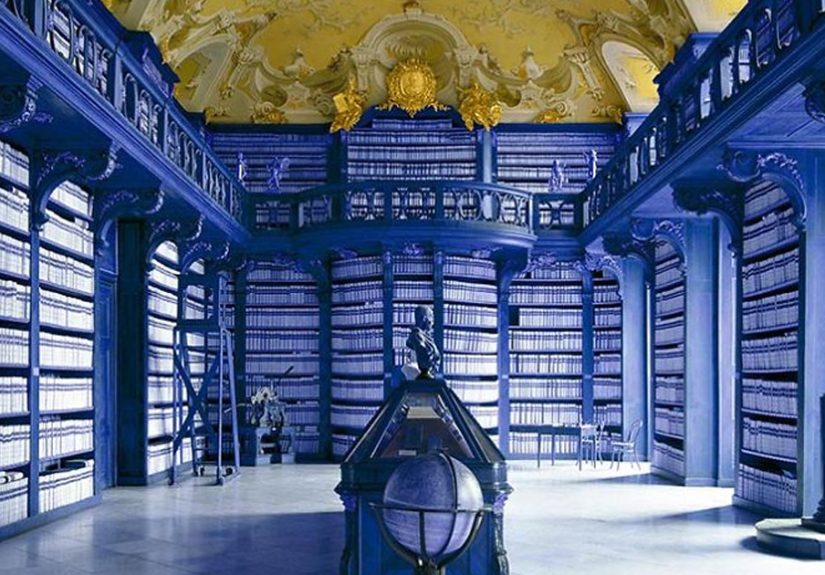
Admont Abbey Library, Austria
If a library could wear a crown, Admont would try it on and then pretend it’s “no big deal.”
It’s celebrated for late Baroque artistry, with ceiling frescoes, sculptural details, and a hall that seems designed to make visitors
whisper “wow” even when they’re alone. The photographer’s note here: “Compose for the ceiling. The ceiling is the plot.”
Biblioteca Joanina, University of Coimbra (Coimbra, Portugal)
Baroque beauty, gilded shelves, and a secret security team: bats. Yesbats. At night, colonies have been known to help control insects
that might otherwise damage old books and manuscripts. It’s one of the most poetic examples of “library preservation” the photographer encountered:
a historic space protected by nature’s tiny night shift.
Stop Four: Futuristic Libraries That Don’t Feel Like Sci-Fi Props (Even Though They Could)
Modern libraries aren’t trying to compete with the internet. They’re doing something the internet can’t: creating a real, shared place where
people can learn side by side. And the best ones feel optimisticlike the future might be okay if we keep building spaces like this.
Stuttgart City Library (Stuttgart, Germany)
From the outside, it’s a crisp cube. Inside, it opens into a bright, multi-story atrium that feels almost meditative.
The photographer loved how the building uses repetition and negative spaceminimalism that doesn’t feel empty, just intentional.
It’s the kind of place that makes even your thoughts stand up straighter.
Dokk1 (Aarhus, Denmark)
Dokk1 is often cited as a model for the “library as community hub,” with open spaces designed for far more than reading:
meetings, events, kids’ areas, and civic life. One charming detail that stuck with the photographer is the bell feature associated with new births
in the cityan architectural reminder that libraries don’t just store stories; they celebrate new ones being born.
What the Photographer “Found” (Beyond the Obvious Beauty)
After all the flights, early mornings, and tripod setups, the photographer’s biggest takeaway wasn’t a list of pretty ceilings.
It was a set of surprisingly practical truths about why libraries endure.
- Beauty is a strategy. Grand spaces draw people in, and once you’re inside, learning becomes easier to choose.
- Old libraries teach patience; new libraries teach possibility. One honors what survived. The other invites what could happen next.
- The best libraries are designed for humans, not just books. Great seating, clear wayfinding, welcoming light, and spaces that encourage both focus and community.
- Silence isn’t the pointattention is. Whether hushed or lively, libraries are built to help you notice what matters.
How to Visit (and Photograph) Beautiful Libraries Without Becoming the Main Character
Libraries are generous spaces, but they’re not photo studios. The photographer followed a simple code:
ask first, move slowly, and remember that someone is always having a serious day at a nearby table.
Respect the rules
Some libraries limit photography, tripods, flash, or certain areas entirely. Treat restrictions as part of the story, not an obstacle.
A great photo is never worth disrupting a working public space.
Work with what the room gives you
If the light is dim, embrace it. If the room is busy, shoot details. If the big wide shot isn’t possible, photograph the craft:
the lamp glow, the stair rail, the spine of an old atlas, the way daylight hits a marble wall.
Capture the “library feeling”
The most memorable images weren’t always the grandest. Sometimes it was a single desk lamp beside a worn chair,
quietly saying, “Sit down. You can start here.”
Extra : Field Notes From a Library Photography Pilgrimage
The thing nobody tells you about photographing libraries is that your calendar becomes a comedy of manners. You learn to pack like a minimalist,
walk like you’re gliding, and communicate almost entirely through polite nods. In airports, your camera bag is treated like a small pet:
always with you, never checked, quietly judged by strangers who assume you’re either very important or very confusing.
The days start early because libraries have their own rhythms. In the morning, the air feels clean and expectant, like the building is stretching
before the public arrives. That’s when the light is most cooperativesoft, angled, and dramatic without trying too hard. You set up near a doorway
(if tripods are allowed; if not, you become one), and you watch the room wake up. Lamps click on. Staff walk through with the calm competence of
people who know where everything is, including the things nobody else can find. The first readers arrive with coffee and determination, carrying
the quiet urgency of people who came to make progress on something real.
In historic libraries, the experience is almost physical. The scent of old paper and polished wood can feel like stepping into a memory you never had.
The floors creak in a way that makes you oddly proud of themlike, yes, floor, you’ve been supporting learning for centuries and you deserve recognition.
Your job as a photographer is to translate that feeling without turning it into a postcard. You frame the shot, notice a ceiling fresco you somehow
missed five minutes ago, and adjust again. The building keeps offering details like it’s testing whether you’re paying attention.
Modern libraries feel different, but no less emotional. There’s a hum of technology and openness: spaces designed for tutoring, collaboration,
workshops, and whatever tomorrow’s version of “research” becomes. Photographing these places is about angles and reflectionsglass against sky,
stairs floating like punctuation, the geometry of shelving that looks engineered for both efficiency and wonder. In some buildings, you can practically
hear the architect saying, “We can make this welcoming,” and then proving it with light, seating, and generous lines of sight.
Across countries and styles, the most surprising part is how consistent the human experience is. People enter libraries differently than they enter
most places. They lower their voices. They look up. They slow down. Even the most casual visitor tends to behave as if the space matterswhich is the
whole point. By the end of the trip, the photographer’s best photos weren’t just “pretty rooms.” They were images of public trust: beautiful spaces
built on the idea that learning is worth sharing. And that’s what he found, reallynot just libraries, but proof that the world still makes room
for quiet, for curiosity, and for starting over with a fresh page.
Conclusion
The photographer came home with memory cards full of arches, domes, skylights, and shelves that seemed to stretch into infinity. But the real
souvenir was simpler: libraries are one of the few places left that combine beauty with purpose and then hand you the key for free. Whether you’re
standing under a Baroque ceiling, inside a marble-lit rare book vault, or beneath a glass dome while robots fetch books below, the message stays the same:
knowledge belongs to everyoneand it deserves a space worthy of the idea.