Table of Contents >> Show >> Hide
- Why We Love Job Interview Horror Stories
- 30 Of The Worst Job Interviews (That Are Weirdly Entertaining)
- 1. The Interviewer Who Was 45 Minutes Late… Then Rushed You
- 2. The “We’re Like a Family, You Don’t Need Weekends” Pitch
- 3. The One Where the Interviewer Clearly Didn’t Read the Resume
- 4. The Candidate Who Brought Their Mom
- 5. The Tech Test That Turned Into Tech Support
- 6. The “You Should Be Grateful to Be Here” Speech
- 7. The Panel of Seven People, Zero Smiles
- 8. The Interview Conducted Entirely in Acronyms
- 9. The “Unlimited Overtime” Surprise
- 10. The Candidate Who Answered a Phone Call Mid-Interview
- 11. The Coffee Shop “Interview” Where No One Showed Up
- 12. The “Mystery Salary” Game
- 13. The Whiteboard Coding Test… With No Marker
- 14. The “Are You Planning to Have Kids?” Question
- 15. The Interviewer Who Ate Lunch the Entire Time
- 16. The “We Need a Rockstar, Ninja, Unicorn” Listing
- 17. The Candidate Who Bad-Mouthed Every Former Boss
- 18. The “We Don’t Really Know What This Role Is” Meeting
- 19. The Interviewer Who Used the Wrong Company Name
- 20. The “Surprise Group Interview” Ambush
- 21. The Manager Who Bragged About High Turnover
- 22. The Candidate Who Brought Their Pet (Yes, Really)
- 23. The “Tell Me a Joke” Test
- 24. The Zoom Call With the Mystery Extra Person
- 25. The “We Need You to Start Tomorrow” Demand
- 26. The Candidate Who Tried to Secretly Use AI
- 27. The “We Don’t Believe in Training” Philosophy
- 28. The Office Tour That Accidentally Revealed Everything
- 29. The “We’re Still Figuring Out Payroll” Comment
- 30. The Candidate Who Walked Out (And Never Looked Back)
- What These Trainwrecks Teach Us About Interviews
- Bonus: Real-World Experiences and Takeaways From Terrible Interviews
- Conclusion: Laugh, Learn, and Trust Your Gut
Everyone has “that one job interview” living rent-free in their brain. You know the one:
the bizarre question, the terrible recruiter, the tech disaster, or the moment when your
brain simply packed its bags and left the room. Job interviews are supposed to be formal,
polished gateways to opportunity. In reality, they’re often awkward improv shows where no
one remembers their lines.
What makes job interview horror stories so addictive is that they’re universal. Career blogs,
Reddit threads, and social media are full of people swapping tales of awkward small talk,
wild red flags from companies, and candidates who self-destructed in record time. These
stories are funny nowbut they also teach us a lot about how hiring works, what
interview red flags look like, and how both sides can do better.
Inspired by that “only on the internet” Bored Panda energy, here are 30 of the most
entertaining “worst job interview” scenariosplus the lessons hidden underneath the chaos.
Why We Love Job Interview Horror Stories
Interview horror stories are the workplace version of campfire tales. They let us laugh at
our own mistakes, feel less alone in our anxiety, and sometimes realize, “Oh, it wasn’t me,
that employer was actually the problem.” Recruiters and hiring managers share them too:
from totally unprepared candidates to people who treat interviews like therapy sessions,
they’ve seen everything.
On the flip side, candidates are increasingly vocal about
interview red flags from employersthings like vague job descriptions,
unrealistic expectations, or hiring managers who brag about “family-like culture” and
unlimited overtime. These stories remind us that an interview is a two-way street: you’re
not just being evaluated, you’re also evaluating whether you actually want to work there.
So grab a snack, mentally clutch your resume, and let’s walk through 30 gloriously awful,
surprisingly educational worst job interviews.
30 Of The Worst Job Interviews (That Are Weirdly Entertaining)
1. The Interviewer Who Was 45 Minutes Late… Then Rushed You
The candidate arrived 10 minutes early. The interviewer arrived 45 minutes late, iced coffee
in hand, and opened with: “We run a really fast-paced environment here, so I’ll need you to
keep your answers short.” The interview lasted eight minutes. No apology, no context, just
speed-round chaos.
Lesson: Chronic lateness with zero acknowledgment is a strong sign of how your
time will be treated if you join.
2. The “We’re Like a Family, You Don’t Need Weekends” Pitch
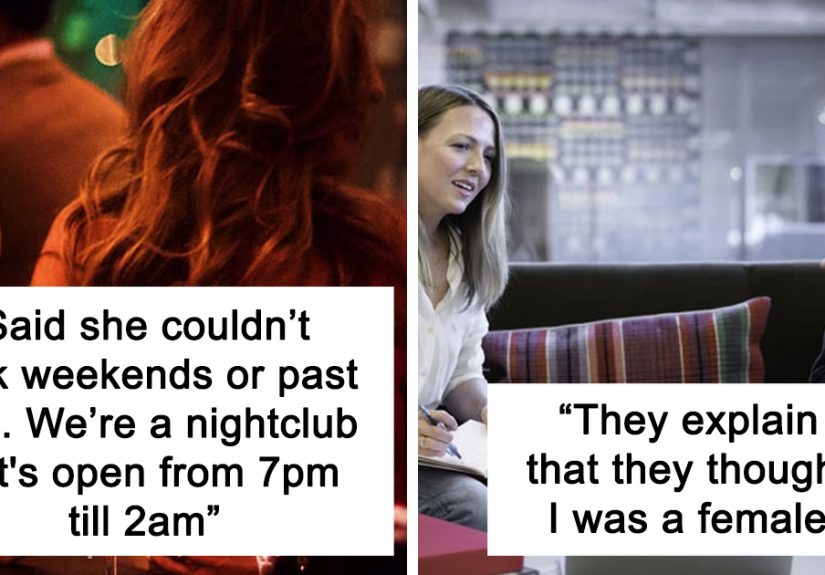
Halfway through what seemed like a normal interview, the hiring manager proudly explained
that the team “often works Saturdays and Sundays without extra pay” because “we’re like a
family here.” When the candidate asked about work-life balance, the manager replied,
“Honestly, if you need that, this probably isn’t for you.”
Lesson: When “family” means “no boundaries,” believe them and run.
3. The One Where the Interviewer Clearly Didn’t Read the Resume
The interviewer enthusiastically asked, “So, do you have any experience with Excel?” The
candidate had literally taught an advanced Excel course for three yearsand it was the first
bullet on their resume. They pointed this out. The interviewer blinked, said “Oh,” and moved on.
Lesson: If the company won’t invest five minutes reading your background, it may
not invest much in your growth either.
4. The Candidate Who Brought Their Mom
For an entry-level role, a nervous candidate showed up… with their mother. Not only did Mom
sit in the lobby, she also tried to walk into the interview room and introduce herself as
“his life coach.” The recruiter had to gently ask her to wait outside.
Lesson: Support systems are great. Bringing them into the interview room? Not so great.
5. The Tech Test That Turned Into Tech Support
A candidate for a developer role was given a laptop that wouldn’t turn on. After 20 minutes
of troubleshooting the company’s hardware, the interviewer said, “Wow, you’re really wasting
time here,” as if the candidate had personally invented the power issue.
Lesson: A broken process can tell you more than any “company values” slide deck.
6. The “You Should Be Grateful to Be Here” Speech
Before a single question was asked, the hiring manager declared, “We had hundreds of
applicants, so we picked you at random just to see if you’d be good enough.” The rest of the
conversation sounded less like an interview and more like a lecture on “kids these days.”
Lesson: Respect is not a signing bonus. If they can’t fake it in an interview, it’s
probably worse inside.
7. The Panel of Seven People, Zero Smiles
The candidate walked into a conference room to find seven people lined up shoulder-to-shoulder,
laptops open, staring silently. No introductions, no small talk, just rapid-fire questions
for an hour. One panelist never looked up from their screen.
Lesson: If you feel like you’re on trial instead of in a conversation,
that culture may not be collaborative.
8. The Interview Conducted Entirely in Acronyms
“So, this role is 60% KPI on ARR, 20% OKR on MQL, and you’ll sync with the GTM pod on CRO
uplift. Cool?” the manager said. When the candidate asked them to clarify a term, the
manager sighed and replied, “We really need someone who already understands our world.”
Lesson: If they can’t explain what they do in human language, they may not know either.
9. The “Unlimited Overtime” Surprise
The job posting bragged about “competitive pay” and “flexibility.” During the interview, it
came out that everyone worked 10–12 hours a day, six days a week, with no overtime pay and
“occasional” all-nighters that were actually weekly.
Lesson: Ask very specific questions about hours, overtime, and expectations.
10. The Candidate Who Answered a Phone Call Mid-Interview
Right after a question about time management, the candidate’s phone rang. Instead of silencing
it, they answered and said, “Hey, I’m in an interview, what’s up?” They proceeded to chat for
a full minute while the interviewer stared in disbelief.
Lesson: If you won’t respect the interviewer’s time, you probably won’t get the job.
11. The Coffee Shop “Interview” Where No One Showed Up
A candidate was asked to meet at a café instead of the office. They arrived early, bought a
drink, and waited. And waited. After 40 minutes, they emailed the recruiterwho replied,
“Oh, that role’s on hold. Didn’t anyone tell you?”
Lesson: Communication is a basic professional courtesy, not a luxury.
12. The “Mystery Salary” Game
The candidate politely asked about the salary range. The hiring manager laughed and said,
“Let’s first see if you’re good enough for us.” After three rounds of interviews, they
finally shared a number far below market.
Lesson: Transparency around pay is a sign of respect. If they dodge it, be cautious.
13. The Whiteboard Coding Test… With No Marker
For a technical role, the interviewer led the candidate to a whiteboard and asked them to
diagram a system. There was no marker. After a solid minute of searching, the interviewer
shrugged and said, “Well, just talk it through.” Meanwhile, they scribbled vague notes on
a Post-it and looked dissatisfied.
Lesson: If the tools are a mess, it may reflect how projects are run.
14. The “Are You Planning to Have Kids?” Question
In a painfully inappropriate moment, a manager asked a young candidate, “Do you plan on
having children soon? We’ve had bad luck with people going on leave.” The candidate ended
the interview, thanked them for their time, and reported the incident.
Lesson: Illegal or invasive questions are a flashing red sign to protect yourself and walk away.
15. The Interviewer Who Ate Lunch the Entire Time
The interviewer showed up with a takeout box, spent the entire conversation chewing, and
occasionally mumbled questions with a mouth full of food. At the end, they asked,
“So, do you have any questions for me?” The candidate’s only question was, “Can I go now?”
Lesson: You deserve someone’s full attention when you’ve prepared and shown up.
16. The “We Need a Rockstar, Ninja, Unicorn” Listing
The job ad asked for a “rockstar ninja unicorn” willing to “wear many hats” and “crush
impossible goals.” In the interview, the manager confirmed that the role was actually three
full-time jobs with one salary and no support staff.
Lesson: Buzzwords often hide unrealistic expectations. Decode them early.
17. The Candidate Who Bad-Mouthed Every Former Boss
When asked why they left previous roles, the candidate spent 10 minutes listing how
“incompetent” and “toxic” all past managers were. By the fourth story, the interviewer
couldn’t help wondering what the common denominator was.
Lesson: Criticizing everyone you’ve worked with is a fast track to rejection.
18. The “We Don’t Really Know What This Role Is” Meeting
The candidate met with three different people, each describing a completely different job.
One thought it was sales, one thought it was marketing, and one thought it was IT. When the
candidate asked who they’d report to, nobody was sure.
Lesson: If the company can’t define the role, you’ll probably be blamed for whatever goes wrong.
19. The Interviewer Who Used the Wrong Company Name
The hiring manager repeatedly referred to “our brand at BlueTech,” but the company was
called BrightTech. When the candidate gently corrected them, they laughed it off and kept
saying the wrong name.
Lesson: Preparation goes both ways. Sloppiness in small details can hint at bigger issues.
20. The “Surprise Group Interview” Ambush
The candidate thought they were attending a one-on-one. When they arrived, they were put in
a room with eight other candidates and asked to “compete” by pitching ideas in front of one
another with zero warning.
Lesson: Group interviews without transparency can be a sign the company cares more about
pressure than fit.
21. The Manager Who Bragged About High Turnover
“We only keep the strongest people,” the manager said proudly. “Most new hires quit within
a few months, but that’s how we know this isn’t for everyone.” The candidate quietly added
this to their mental “nope” list.
Lesson: High turnover is rarely a flex.
22. The Candidate Who Brought Their Pet (Yes, Really)
A candidate showed up with a small dog in a bag, unannounced. Ten minutes into the
conversation, the dog escaped, sprinted around the office, and had to be bribed with snacks
back into the carrier.
Lesson: Unless it’s clearly a pet-friendly workplaceand you’ve asked in advanceleave your furry friends at home.
23. The “Tell Me a Joke” Test
The interviewer randomly demanded, “Tell me a joke that would impress our CEO.” The
candidate froze, then dead-panned, “Why did the candidate cross the road? To get away from
bizarre interview questions.” They didn’t get the jobbut they got a great story.
Lesson: Off-the-wall questions can show whether a company values gimmicks over substance.
24. The Zoom Call With the Mystery Extra Person
During a virtual interview, a black box labeled “Listener” appeared in the participant list.
When the candidate asked who it was, the interviewer said, “Oh, that’s just someone from
another department. Don’t worry about it.” The “Listener” never spoke or turned on their camera.
Lesson: Transparency about who’s in the roomvirtual or notis basic respect.
25. The “We Need You to Start Tomorrow” Demand
After a single half-hour chat, the manager said, “We love you. Can you start tomorrow?” When
the candidate explained they needed to give notice, the manager responded, “Loyalty to your
current employer is a red flag for us.”
Lesson: How they expect you to leave your current job is how they’ll treat you when you leave theirs.
26. The Candidate Who Tried to Secretly Use AI
In an online technical interview, the candidate kept looking down and typing furiously. Their
answers arrived in oddly perfect paragraphs. When the interviewer asked them to walk through
their reasoning step by step, everything fell apart.
Lesson: Tools can help you practice, but live interviews still require your own brain.
27. The “We Don’t Believe in Training” Philosophy
The candidate asked about onboarding. The manager proudly replied, “We hire self-starters.
If we have to train you, we hired the wrong person.” The company also expected results in
the first week.
Lesson: No training plus high pressure is a recipe for burnout, not brilliance.
28. The Office Tour That Accidentally Revealed Everything
On the way to the interview room, the candidate noticed multiple desks completely emptywith
half-packed boxes still sitting there. One employee whispered, “Are you the new person?
Wow, that was fast,” then quickly turned back to their screen.
Lesson: Believe what you see in the office, not just what you hear in the interview.
29. The “We’re Still Figuring Out Payroll” Comment
At a small startup, the founder casually mentioned, “Sometimes payroll is a little late,
but everyone here is super passionate, so they don’t mind.” The candidate minded. A lot.
Lesson: Passion does not pay rent. Late paychecks are dealbreakers.
30. The Candidate Who Walked Out (And Never Looked Back)
In one now-viral story, a candidate stood up mid-interview after a string of disrespectful
comments and said, “I don’t think this is a good fit for either of us,” then left. They later
found a much better role elsewhereand still get messages from friends saying, “I wish I’d
done that in my bad interview.”
Lesson: You’re allowed to end an interview that crosses your boundaries.
What These Trainwrecks Teach Us About Interviews
Underneath the comedy, these stories highlight real patterns. Career experts and recruiters
constantly emphasize that job interviews are as much about fit and values as they
are about skills. Red flagson both sidesmatter.
- For candidates: Lack of respect for your time, vague roles, toxic pride in
overwork, and evasiveness about salary are all serious warning signs. - For employers: Showing up late, being unprepared, asking inappropriate questions,
or treating candidates like they’re easily replaceable hurts your brand and scares away the
very people you want to hire. - For everyone: Preparation, clarity, and basic courtesy go further than any
trick question or “gotcha” test ever will.
The interviews that go best tend to feel like structured conversations: questions are fair,
expectations are clear, and both sides can imagine working together without dread. If your
interview feels like a horror movie, that’s data you can use.
Bonus: Real-World Experiences and Takeaways From Terrible Interviews
If you scroll through long threads of job interview horror stories, a few themes emerge.
Whether it’s a Bored Panda list, a Reddit discussion, or a career advice column, people keep
bumping into the same issues again and again: disrespect, misalignment, and a total mismatch
between what’s promised and what’s actually happening on the ground.
One common experience people share is the “too good to be true” posting that falls apart in
the interview. On paper, the role sounds perfect: flexible hours, growth opportunities,
supportive leadership. In the interview, though, you discover that “flexible hours” actually
means “always on call,” “growth opportunities” means “we don’t have a clear career ladder,
but please take on extra work,” and “supportive leadership” means “you’ll get feedback when
something goes wrong.” The story usually ends with the candidate walking away, grateful they
saw the cracks early.
Another recurring experience: interviews that turn into stress tests instead of conversations.
Candidates describe panels that interrupt every answer, rapid-fire questions designed to
catch them off guard, or case studies that have nothing to do with the actual job. While a
bit of challenge is normal, consistently adversarial interviews often signal a culture where
people are pitted against each other rather than supported.
People also talk about interviews that expose deeper cultural problems. Maybe the interviewer
casually jokes about “not hiring dramatic people” while describing an obviously chaotic team.
Maybe they dismiss concerns about diversity, brush off questions about burnout, or proudly
explain that “we only keep people who can handle pressure” without defining what “pressure”
means. These stories are funny laterbut in the moment, they’re a wave of realization that
says, “This isn’t my place.”
On the candidate side, many share their own cringe-worthy mistakes that turned into learning
moments: rambling for five minutes without answering the question, oversharing personal
drama, forgetting the company name, or freezing when asked about a project and then
remembering it 10 minutes later. The interviews felt like disasters at the time, but they
became the reason those candidates practiced more, researched better, and learned to pause
before speaking.
Perhaps the most powerful shared experience is the moment someone realizes they’re allowed to
say “no.” The older stories often feature people staying through painfully bad interviews
because they think they “have to.” Newer stories increasingly end with candidates walking out,
declining offers, or writing polite messages saying, “After thinking it over, I don’t believe
this role is the right fit.” The more these experiences are shared, the more normal it becomes
to treat yourself as someone with agencynot just someone hoping to be picked.
In the end, the worst job interviews are strangely useful. They sharpen our instincts, clarify
our boundaries, and remind us that hiring is a relationship, not a favor. If you’ve had a
terrible interview, you’re in good companyand someday, it’ll probably be one of your best
stories.
Conclusion: Laugh, Learn, and Trust Your Gut
Job interviews will probably never be completely painless. There will always be awkward
moments, nervous jokes, and at least one question you wish you’d answered differently. But
when you hear about truly awful interviewsthe ones with missing paychecks, bragged-about
burnout, or deeply inappropriate questionsyou’re reminded of something important:
you are allowed to choose, too.
Laugh at the chaos, learn from the red flags, and go into your next interview with a simple
rule: if the situation feels wrong, believe yourself. The right job won’t require you to
ignore your instincts, your boundaries, or your basic need to be treated like a human being.