Table of Contents >> Show >> Hide
- Quick Refresher: What Is My Own Private Idaho About?
- Why This Movie Still Matters
- Ranking the Essential Elements of My Own Private Idaho
- Where My Own Private Idaho Ranks in Queer Cinema
- Key Opinions on Common Debates
- How It Stacks Up Against Other River Phoenix and Keanu Reeves Films
- Tips for First-Time (and Repeat) Viewers
- Experiences and Impressions Around My Own Private Idaho
- Final Verdict: Where I Rank My Own Private Idaho
When people talk about cult classics and queer cinema milestones,
My Own Private Idaho tends to drift into the conversation like Mike Waters
on an empty Idaho highway slowly, dreamily, and then all at once.
Released in 1991 and directed by Gus Van Sant, it’s part road movie, part Shakespeare remix,
part love story, and part fever dream about two street hustlers trying very hard
not to admit how lonely they really are.
In this article, I’ll break down my own My Own Private Idaho rankings and opinions
from performances and scenes to themes and place in queer film history.
Think of it as a slightly obsessive fan guide mixed with a critic’s notebook.
No gatekeeping, just one long, honest look at why this movie still hits so hard
decades later.
Quick Refresher: What Is My Own Private Idaho About?
My Own Private Idaho follows Mike Waters (River Phoenix), a vulnerable,
narcoleptic street hustler, and Scott Favor (Keanu Reeves), the mayor’s rebellious son
slumming it on the streets of Portland before he “grows up” and returns to his wealthy life.
Together they drift through the Pacific Northwest, Idaho farmlands, and even Rome,
chasing money, family, and some version of love or belonging that never quite materializes.
The movie is loosely inspired by Shakespeare’s Henry IV plays,
real-life Portland hustlers Van Sant met, and a swirling mix of personal and cultural references.
It’s a film that refuses easy labels:
it’s a queer movie, an arthouse road movie, a tragic romance, and a snapshot
of early ’90s alternative culture all in one.
Why This Movie Still Matters
Over the years, My Own Private Idaho has picked up a reputation that goes way
beyond being “that indie movie with young Keanu Reeves and River Phoenix.”
It’s widely regarded as a cornerstone of New Queer Cinema,
a wave of early 1990s films that told queer stories with more honesty,
grit, and experimentation than mainstream Hollywood would touch at the time.
Critics have long praised the film’s emotional depth and its bold, fractured structure.
On major review aggregators, it holds strong scores and regularly appears on lists of the
best queer films of all time and the best Keanu Reeves movies.
For many viewers especially LGBTQ+ viewers it’s become a reference point:
not just a movie you watch, but a movie you sort of carry around with you afterward.
Ranking the Essential Elements of My Own Private Idaho
Instead of ranking the film against every movie ever made, I’m ranking the things
inside the film that make it unforgettable the performances, ideas, and moments
that keep people revisiting it decades later.
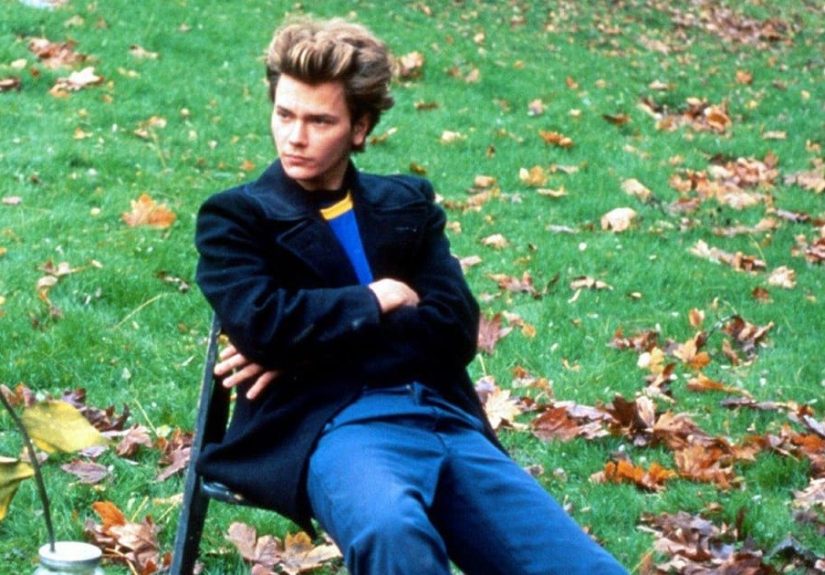
#1 River Phoenix as Mike Waters
The top spot in any My Own Private Idaho rankings has to go to
River Phoenix’s performance as Mike. This is not negotiable.
Phoenix plays Mike as a soft-spoken, emotionally exposed drifter who keeps
falling asleep at the worst possible moments because of his narcolepsy.
He’s constantly on the edge of consciousness, of poverty, of heartbreak.
The legendary campfire scene, where Mike quietly confesses his love to Scott,
is one of those moments that ends up in acting highlight reels for a reason.
Phoenix reportedly rewrote parts of that scene himself, and you can feel that personal,
lived-in quality in every pause and half-smile. It’s tender, awkward, heartbreaking,
and painfully believable. If you only remember one thing from the movie, it’s probably this.
#2 Keanu Reeves as Scott Favor
Keanu Reeves gets ranked second here, not because he’s any less important,
but because Scott is written to be emotionally guarded where Mike is open.
Scott is the rich kid burning down his “bad boy” phase before he puts on
a suit and steps into the straight, respectable life waiting for him.
Reeves plays Scott with a mix of charisma and chill detachment.
He’s likable, but also deeply frustrating; you understand why Mike loves him,
and you also sense from the beginning that Scott will never give Mike what he truly wants.
In fan and critic lists of the best Keanu Reeves films,
My Own Private Idaho consistently sits near the top because it shows
a quieter, more introspective side of him that blockbuster roles rarely demand.
#3 The Road-Movie Structure and Narcoleptic Time Jumps
Third place goes to the film’s structure. Van Sant uses the road-movie format
like an emotional map of Mike’s inner life. We’re always moving from Portland
to Idaho to Italy and back again but Mike doesn’t really “arrive” anywhere.
Instead, his narcoleptic episodes literally cut up time: he blacks out in one place
and wakes up somewhere else, as if the world keeps changing while he’s stuck in the same emotional loop.
This fragmented style can be disorienting, but that’s the point.
The film makes you feel how unstable Mike’s life is.
In terms of My Own Private Idaho opinions, this is one of those
love-it-or-hate-it choices. For me, it’s a bold way of turning a medical condition
into a visual and narrative language.
#4 The Shakespeare-and-Street-Hustlers Mash-Up
One of the most debated aspects of the movie is the decision to borrow heavily
from Shakespeare’s Henry IV plays, especially in the scenes involving
Bob Pigeon and the street kids. Suddenly, everyone’s talking in stylized,
Elizabethan-inflected language in a dingy Portland flophouse. It’s weird,
theatrical, and not always “naturalistic,” and that’s exactly why it works for some viewers.
I rank this element just below the performances, because even if you’re not
a Shakespeare fan, the mash-up underlines one of the film’s key ideas:
these hustlers are not disposable background characters.
They’re as worthy of epic, dramatic treatment as kings and princes.
Scott’s storyline as the disobedient son who eventually rejects his old life
for power and respect mirrors Prince Hal’s transformation almost beat for beat.
#5 The Visual Style and Sense of Place
Visually, My Own Private Idaho is a mood.
From the desolate Idaho highways to the grungy, rain-soaked streets of Portland,
the film feels both specific and dreamlike. Van Sant lingers on lonely landscapes,
abandoned buildings, and motel rooms that look like they’ve seen too much.
The cinematography leans into natural light and offbeat compositions.
Combine that with the iconic image of Mike collapsing on an empty road,
and you understand why this movie sticks in people’s visual memory,
not just their emotional one. As a piece of cult cinema,
it’s instantly recognizable from a single frame.
#6 The Supporting Weirdos and Found Family
The film’s supporting cast Bob Pigeon, Hans, the other hustlers, even the strange
characters they meet on the road brings chaotic energy that keeps the movie from
sinking into pure sadness. They’re funny, tragic, and sometimes ridiculous,
but they form a kind of accidental, makeshift family around Mike and Scott.
In my personal ranking, they’re essential to the movie’s emotional texture.
Without them, the film would be almost unbearably lonely; with them, it becomes
a story about how people who have nothing still manage to create community out of scraps.
#7 The Ending and Emotional Aftertaste
Finally, we have the ending which I won’t spoil in detail for anyone who
wandered in here without seeing the film. Let’s just say it’s not neatly resolved,
and it leaves Mike exactly where the film has been telling us he would end up all along:
stranded between hope and abandonment.
Some viewers find the ending devastating; others see it as oddly peaceful.
My opinion lands in the middle: it’s heartbreaking, but honest.
My Own Private Idaho isn’t a movie about fixing things.
It’s a movie about acknowledging how hard it is to be seen, loved,
and safe when you’re living on the margins.
Where My Own Private Idaho Ranks in Queer Cinema
When you look at lists of the best LGBTQ+ movies,
My Own Private Idaho shows up again and again.
Critic polls, streaming guides, and LGBTQ+ film histories frequently include it
as a defining work of queer cinema, especially from the early ’90s indie scene.
It doesn’t just rank highly because it has queer characters;
it ranks highly because it treats their inner lives with seriousness and style.
Mike isn’t a side character or a tragic footnote.
His love for Scott is the emotional center of the story,
and the film never mocks or diminishes it.
In my personal queer-cinema rankings,
My Own Private Idaho sits in that top tier with films that changed
how people think about LGBTQ+ storytelling not just in terms of representation,
but in how experimental and strange those stories are allowed to be.
Key Opinions on Common Debates
Is This Keanu Reeves’s Best Dramatic Performance?
Is it his “best” ever? Depends on what you love Keanu for.
If your heart belongs to John Wick or The Matrix,
this might not dislodge them. But as a pure dramatic role
young, vulnerable, slightly cruel, and totally charismatic
Scott Favor is absolutely top-tier Keanu.
In most Keanu Reeves movies lists,
My Own Private Idaho usually lands in the top ten,
often top five. Personally, I’d rank it as one of his most
interesting performances, even if not his most iconic.
Is the Narrative Too Fragmented?
If you like your movies with clean three-act structures,
Idaho might test your patience. The jumps in time,
the narcolepsy fades, the shifts into Shakespearean dialogue
they can feel messy on a first watch.
My opinion: the fragmentation is part of the magic.
The movie isn’t trying to be a neat puzzle; it’s trying to feel
like a memory incomplete, looping back on itself,
and warped by longing and regret. If you let go of the need for perfect clarity,
the structure starts to feel emotionally right, even when it’s narratively loose.
Is It a Love Story, a Tragedy, or Both?
The safest answer is “both,” but that feels like a cop-out,
so here’s my ranking: it is first and foremost a tragedy
that happens to be wrapped around a love story.
Mike’s love for Scott is real and pure in a way that almost hurts to watch.
The tragedy is that Scott is unwilling or perhaps unable
to fully return that love. The class divide, the pressure of family legacy,
and Scott’s own self-preservation instinct all push him toward a life
where Mike can’t follow. The emotional devastation comes not from a big,
explosive betrayal, but from quiet, deliberate abandonment.
How It Stacks Up Against Other River Phoenix and Keanu Reeves Films
For River Phoenix, My Own Private Idaho is often cited as one of his
greatest performances, if not the greatest.
He’d already shown his talent in films like Stand by Me and
Running on Empty, but Mike Waters lets him push further into
vulnerability and improvisation. It’s the kind of role that makes people say,
“We lost him way too soon,” and not just as a cliché.
For Keanu Reeves, this film occupies a very specific place:
the “I’m a serious actor, actually” corner of his filmography.
Alongside movies like Dangerous Liaisons and some of his quieter dramas,
My Own Private Idaho shows that he can do introspective,
emotionally complicated roles when given the space.
If I were making a combined ranking of their careers,
this movie would sit in the top three for Phoenix and comfortably top ten for Reeves.
It’s a unique overlap of two careers, captured before either of them became
the kind of larger-than-life figures we think of today.
Tips for First-Time (and Repeat) Viewers
- Don’t expect a traditional plot. Go in for the mood and characters first; the story reveals itself sideways.
- Pay attention to the quiet moments. The campfire scene, the silences, and the lingering glances matter more than big speeches.
- Be okay with questions. Not everything is explained, and that’s part of the experience.
- Rewatch if you can. The second viewing often feels like a different movie, especially once you know where Mike ends up.
Experiences and Impressions Around My Own Private Idaho
One of the reasons My Own Private Idaho opinions vary so wildly
is that people come to it at very different points in their lives.
It’s not just a movie you casually throw on in the background;
it tends to intersect with your own experiences of identity, friendship,
class, or queerness in surprisingly personal ways.
Some viewers first encounter the film as teenagers or college students
exploring queer cinema for the first time. For them, Mike’s quiet confession
by the fire can feel like a mirror that terrifying, exhilarating moment
when you finally say out loud what you’ve been feeling for ages.
The fact that Scott’s response is complicated and not conventionally romantic
gives the scene a bittersweet honesty. It’s not wish fulfillment;
it’s closer to the awkward, half-hearted comfort you might actually get in real life.
Others discover My Own Private Idaho through Keanu Reeves,
expecting action-hero vibes and instead ending up in a slow, strange,
emotionally heavy film about street hustlers and abandoned kids.
That mismatch can be jarring, but it’s also part of the movie’s appeal.
It shows a different side of an actor many people only know from big franchises,
and it nudges viewers toward independent and queer films they might not have
explored otherwise.
There are also viewers who connect most with the film’s sense of
rootlessness and dislocation. You don’t have to be a hustler or queer
or narcoleptic to understand what it feels like to be emotionally homeless
to walk through your life feeling like there’s no one place or person
you fully belong to. Mike’s endless drifting, his patchwork “family,”
and his fixation on Scott can resonate with anyone who has ever clung to
the wrong person simply because they felt like the safest available option.
On rewatches, many people report that their sympathies shift.
At first, they may be furious with Scott for leaving Mike behind
and to be clear, that anger is understandable.
But later, some viewers start to see Scott as someone also trapped by
his circumstances: class expectations, family pressure, and the fear of
being openly associated with a world he’s been told he must eventually renounce.
The film doesn’t excuse him, but it complicates him, which is more interesting.
Film students and cinephiles often share a different kind of experience:
they fall in love with the movie’s form. They talk about the way
Van Sant uses landscape, jump cuts, still-photo tableaux, and surreal imagery
to make you feel time stretching and collapsing.
For them, My Own Private Idaho is as much about cinematic language
as it is about the characters. It becomes a text to dissect, quote, and
screen in late-night marathons with friends.
Across all these experiences, one thing stays consistent:
very few people feel neutral about this film.
You might adore it, you might be baffled by it,
you might argue with friends for hours about the ending
but it’s almost never just “fine.” That, in itself,
is a mark of a true cult classic.
Final Verdict: Where I Rank My Own Private Idaho
So, where do my own My Own Private Idaho rankings and opinions land?
- As a queer film: firmly in the top tier essential viewing.
- As a River Phoenix performance: at or near the very top.
- As a Keanu Reeves performance: one of his most quietly powerful roles.
- As a road movie: messy, poetic, and unforgettable.
- As a piece of ’90s indie cinema: a defining text.
It’s not a movie that tries to please everyone,
and that’s exactly why it continues to matter.
My Own Private Idaho feels like what it’s about:
a little lost, a little broken, and still somehow beautiful
in the way it keeps going, even when it doesn’t know exactly where it’s heading.