Table of Contents >> Show >> Hide
- Why Hollywood Keeps Forcing Romances Into Everything
- 10 Movies With Shoehorned Romances That Made No Sense
- 1. Star Wars: The Rise of Skywalker – Rey and Kylo Ren
- 2. The Hobbit Trilogy – Tauriel and Kili
- 3. The Chronicles of Narnia: Prince Caspian – Susan and Caspian
- 4. Avengers: Age of Ultron – Bruce Banner and Natasha Romanoff
- 5. The Godfather Part III – Mary and Vincent
- 6. Hancock – Hancock and Mary
- 7. Pearl Harbor – Rafe, Evelyn, and Danny
- 8. Rogue One: A Star Wars Story – Jyn and Cassian (Almost)
- 9. The Transformers Franchise – Sam and Whoever the Camera Likes
- 10. Power Rangers (2017) – Jason and Kimberly
- Why Forced Romances Annoy Viewers So Much
- How to Spot a Shoehorned Romance From a Mile Away
- What It Feels Like Watching a Movie With a Shoehorned Romance
- Final Thoughts
You’re watching an intense battle, a high-stakes heist, or a deeply emotional family drama and thenout of nowheretwo characters who have barely made eye contact decide they’re soulmates. The music swells, someone kisses someone, and the audience collectively thinks: …huh? Welcome to the world of shoehorned movie romances, where Hollywood insists every story needs a love subplot, even when the plot is clearly screaming, “I’m good, thanks.”
In this article, we’ll look at why studios keep forcing romance into movies, break down some of the most famously unnecessary romantic subplots, and talk about what it actually feels like sitting in a theater watching chemistry-free people pretend they’re in love. Spoiler: it’s awkward. Very awkward.
Why Hollywood Keeps Forcing Romances Into Everything
Before we call out specific movies, it helps to understand why forced romances keep happening. Industry commentary and film criticism point to a few recurring reasons:
- Four-quadrant appeal: Studios still believe adding a love story makes a movie more “universal” and attractive to all demographics, even if the genre doesn’t really ask for it.
- Marketing expectations: Trailers love close-ups of almost-kisses and dramatic confessions. A romance arc is easy marketing shorthand for “emotion.”
- Fear of “cold” leads: Executives sometimes worry that if the hero doesn’t have a love interest, they’ll come off boring or unrelatable. So a romance gets stapled on late in the writing process.
- Legacy formulas: For decades, the default Hollywood formula has been: hero + villain + love interest. A lot of scripts still follow that template even when it doesn’t fit.
- Fan-service over story: Once social media gets involved, studios may try to satisfy vocal shippers or trending “will they/won’t they” conversations, even if the script never properly builds toward that relationship.
The result is a long list of movies with shoehorned romances that made no sensefilms that might have been stronger, tighter, or simply less cringe if they’d trusted the main story to carry the emotional weight.
10 Movies With Shoehorned Romances That Made No Sense
1. Star Wars: The Rise of Skywalker – Rey and Kylo Ren
The “Reylo” kiss at the end of The Rise of Skywalker is one of the most cited examples of a romance that feels more like a last-second decision than an organic development. Critics and fan polls often mention that the trilogy never consistently builds a healthy romantic arc between the two; if anything, their dynamic is framed as antagonistic, tragic, or at best morally complicated. Then, in the final minutes, we suddenly get a big, dramatic kiss that feels less like emotional payoff and more like the movie trying to cash in on fanfiction energy.
Did they care about each other? Yes. Did the story clearly communicate a romantic bond that earns that kiss? Not really. Many viewers argue it undercuts the themes of identity, redemption, and found family and replaces them with a quick “see, there was a romance!” button.
2. The Hobbit Trilogy – Tauriel and Kili
Peter Jackson’s Hobbit trilogy stretched a relatively short novel into three long movies and then decided, “You know what we need? A forbidden cross-species romance.” Enter Tauriel, an original elf character, and Kili, one of Thorin’s company. On paper, there are interesting ideas about prejudice, connection, and empathy. On screen, though, the romance often feels like it exists mainly to justify more slow-motion reaction shots and emotional music.
Fans and critics have pointed out that the love triangle with Legolas does little for the core story about greed, power, and the corruption of Thorin. Instead, it frequently stalls the pacing and pulls focus from Bilbo, the supposed main character. The Kili–Tauriel plot plays like an entire mini-series awkwardly jammed into a story that didn’t ask for it.
3. The Chronicles of Narnia: Prince Caspian – Susan and Caspian
In C.S. Lewis’s books, Susan and Caspian are not romantically involved. The film adaptation decided to change that, giving them flirtatious banter and a goodbye kiss. While some viewers liked the idea of Susan exploring a first crush, long-time fans felt the movie was inventing a romance that clashed with the tone and spiritual symbolism of the source material.
The subplot doesn’t build to anything substantial, either; Susan returns to her world, Caspian stays behind, and the main story about faith, leadership, and courage would be identical with or without their brief fling. That’s textbook “shoehorned romance.”
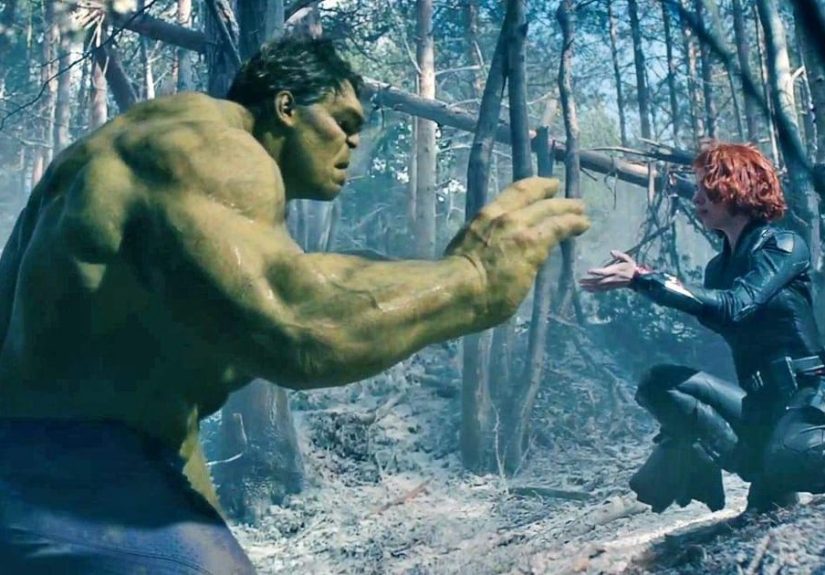
4. Avengers: Age of Ultron – Bruce Banner and Natasha Romanoff
The MCU has plenty of romantic pairings, but the Bruce–Natasha arc in Age of Ultron is regularly cited as one of the most forced. Critics note that their “beauty and the beast” setup appears with very little groundwork: suddenly Natasha is the only one who can calm the Hulk, and they’re having heart-to-heart conversations about running away together.
The controversial “monster” conversation, where Natasha links her inability to have children with feeling monstrous, muddles character logic and tone even more. Many viewers felt the romance reduced Natasha’s complexity to “the woman who wants a simpler life with a man,” and didn’t fit Bruce either, whose arc is usually about control, guilt, and identity. The chemistry isn’t the problem; the script’s lack of buildup is.
5. The Godfather Part III – Mary and Vincent
The Godfather saga is about power, family, crime, and the cost of trying to control fate. So naturally, Part III decides to throw in a romance between cousins. Mary (Michael Corleone’s daughter) and Vincent (Sonny’s illegitimate son) share a love story that many critics and audiences found deeply uncomfortable and dramatically unnecessary.
Film analysis often argues that their relationship distracts from the more compelling themes: Michael’s remorse, the Vatican intrigue, and the crumbling of the Corleone empire. Instead of adding emotional layers, the romance mostly adds a constant sense of, “Wait, is this supposed to be okay?”
6. Hancock – Hancock and Mary
Hancock starts as a darkly comedic superhero story about a self-destructive hero learning accountability. Halfway through, it veers into a mystical soulmate plot: Hancock and Mary are ancient divine beings whose powers weaken when they’re together. There’s an interesting mythos hiding in there, but the romantic aspect feels like it belongs in a different movie.
The twist reshapes the tone and derails the original premise about public perception and personal redemption. Critics often note that the movie would likely be tighter and more satisfying if it focused on Hancock’s growth instead of trying to cram in a tragic immortal lovers subplot.
7. Pearl Harbor – Rafe, Evelyn, and Danny
Ask people what they remember about Pearl Harbor and you’ll often hear some version of: “The love triangle dragged the whole thing down.” The attack itself is staged with massive spectacle, but the movie spends a huge amount of time on a melodramatic romance between two pilots and a nurse.
While war films often use relationships to humanize the stakes, many viewers felt this triangle treated the historical tragedy as a backdrop for soap-opera drama. The romance doesn’t deepen our understanding of the event; it just elongates the runtime and dilutes the impact of the historical narrative.
8. Rogue One: A Star Wars Story – Jyn and Cassian (Almost)
To its credit, Rogue One mostly avoids a full-blown romance. Still, the final momentsJyn and Cassian holding each other as the world endshave sparked debate. Some viewers read it as platonic solidarity; others see it as the remnants of a romance the filmmakers considered but wisely toned down.
Early drafts reportedly leaned more into the love-story angle, which would likely have felt rushed considering how little personal time Jyn and Cassian actually get. As it stands, the film hovers right on the edge of a forced romance, demonstrating how even a hint of “we should make this romantic” can feel out of place if the story hasn’t earned it.
9. The Transformers Franchise – Sam and Whoever the Camera Likes
In multiple Transformers movies, the human romantic subplots exist mostly to give the camera an excuse for slow-motion glamor shots. The relationships rarely influence the Cybertronian conflict in any meaningful way. Instead, they lean on clichés: awkward nerd + impossibly cool girl, bickering that magically turns into love, and dialogue that sounds like it was written on the way to set.
These romances don’t so much develop as they do appear, like product placement for heterosexuality. You could cut most of them and lose almost nothing importantexcept a few minutes of lingering close-ups on people who clearly have more chemistry with the explosions than with each other.
10. Power Rangers (2017) – Jason and Kimberly
The 2017 reboot of Power Rangers gets some praise for grounding the characters and treating their struggles seriously. Then it hints at a romance between Jason and Kimberly that never fully materializes or pays off. There’s a deleted kiss, some flirty moments, and… that’s about it.
Critics and fans have noted that the pseudo-romance doesn’t add much to the story of misfit teenagers learning to trust each other and save the world. If anything, it undercuts the team-focused dynamic by nudging two Rangers into a half-baked “maybe” relationship that the movie doesn’t have time to explore.
Why Forced Romances Annoy Viewers So Much
So what makes a shoehorned romance different from a well-earned love story? Film critics and fans repeatedly call out the same problems:
- No buildup: Characters who barely interact suddenly sharing a kiss in the third act is a classic symptom.
- Contradictory characterization: A romance that ignores everything we know about the characters just to hit a story beat feels fake.
- Pacing issues: Cutting away from an intense battle, mystery, or heist so two people can whisper about their feelings can absolutely kill momentum.
- Reduced agency: Female characters especially get flattened into “the love interest,” losing depth they might otherwise have had.
- Tonal whiplash: Gritty crime drama + Hallmark-style confession scene = audience confusion, not emotional resonance.
In other words, the problem isn’t romance itself. When done well, romantic subplots can give stories heart and stakes (think Han and Leia, or the central couple in a well-crafted rom-com). The problem is when romance is treated like a checkbox rather than a relationship that grows naturally from the characters and plot.
How to Spot a Shoehorned Romance From a Mile Away
If you’re a writer, critic, or just a movie fan who likes to yell at the screen, here are some easy tells that a romance might be forced:
- The movie tells you it’s romantic but never shows why. Characters declare love without shared experiences that justify it.
- The love interest could be replaced by a house plant. If the character has no goals, flaws, or agency beyond “support the hero,” that’s not a romance; it’s set dressing.
- The relationship doesn’t affect the plot. Removing the romance wouldn’t change the story’s outcome, only the runtime.
- Big moments come out of nowhere. A kiss, confession, or breakup happens just because the movie is ending, not because of a clear emotional progression.
- Everybody else in the movie seems more interesting. When side characters have richer dynamics than the “main couple,” the romance often feels like an obligation.
Once you start noticing these patterns, you’ll see them everywherefrom massive blockbusters to low-budget dramas trying too hard to be “relatable.”
What It Feels Like Watching a Movie With a Shoehorned Romance
Let’s talk about the actual viewer experience, because that’s where shoehorned romances really do their damage. You’re sitting in a theater, fully invested in the main conflict. Maybe it’s a rebellion against a galactic empire, a quest through Middle-earth, or a desperate race against time to stop a disaster. Your brain is locked in. Your popcorn is half gone. Your heart rate is up.
Then the movie taps you on the shoulder: “Hey, real quick, what if these two people you barely know kissed?” Suddenly the tension drains out of the room. The score softens, the lighting changes, and the characters start delivering lines that sound like they were lifted from a generic romance template. You can almost hear the story’s spine creak under the weight of a subplot it never asked for.
A lot of viewers describe the feeling as secondhand embarrassment. It’s like watching two coworkers flirt at a meeting that definitely should’ve been an email. You’re not mad at the idea of romance; you’re just painfully aware that it doesn’t belong here, right now, with these people.
Streaming has made this even more obvious. At home, people freely pause, scroll, or check their phones during scenes that don’t matter. When the forced romance scenes are exactly where your audience decides to answer texts, that’s a sign the emotional core isn’t landing. Many fans openly admit they skip the awkward romantic beats on rewatches and go straight back to the main plot.
There’s also a representation angle. Audiences who are aromantic, asexual, or simply tired of every story centering around coupledom often say shoehorned romances feel like the narrative equivalent of someone insisting, “You’ll understand when you meet the right person.” It turns what could be a rich variety of relationshipsfriendships, found family, mentorshipsinto yet another reminder that romance is treated as the default “endgame,” even when it doesn’t fit the characters.
On the flip side, when a movie doesn’t stuff in an unnecessary love story, people notice in a good way. Viewers praise films that let male and female leads remain platonic partners, co-leaders, or rivals. They celebrate stories that prioritize character growth, moral choices, or world-building over the obligatory “do they kiss?” moment. Ironically, in a media landscape oversaturated with romance, restraint feels fresh.
For writers and filmmakers, the lesson from all these “what were they thinking?” romances is pretty simple: audiences are paying attention. They remember when a relationship earns its big emotional payoffand when it’s clearly there because somebody in a boardroom said, “We need more love in act three.” Respect the characters, respect the story, and the romance (if there is one) will feel like a gift, not a studio note.
Final Thoughts
Movies with shoehorned romances that made no sense are frustrating, not because viewers hate love stories, but because we love good love stories. When romance grows naturally out of character and conflict, it can elevate everything around it. When it’s slapped on top like glitter glue, it just highlights the cracks underneath.
From Rey and Kylo to Tauriel and Kili, from awkward superhero pairings to random blockbuster flirtations, the message is clear: not every story needs a couple, and not every pair of attractive leads needs to kiss. Sometimes the bravest, most modern storytelling choice is to let characters share respect, loyalty, or friendshipand leave the forced romance on the cutting-room floor where it belongs.