Table of Contents >> Show >> Hide
- Why the Minimalist vs. Maximalist Debate Matters Right Now
- Minimalist vs. Maximalist: What Is the Real Difference?
- Take Our Quick Quiz to See Where You Land
- Your Results
- How to Decorate Based on Your Result
- Mistakes to Avoid No Matter Where You Land
- What This Looks Like in Real Rooms
- Experiences From Both Ends of the Style Spectrum
- The Bottom Line
Some people walk into a room and immediately think, “This space needs less stuff, better storage, and maybe one beautiful lamp that costs more than my first car.” Other people walk into the same room and think, “This place is begging for velvet, wallpaper, a vintage tiger figurine, and at least one gallery wall that says, ‘I have stories.’” If that sounds familiar, welcome to the great design personality test of our time: minimalist vs. maximalist.
The funny thing is, most of us are not living at either extreme. We say we love minimalist design, but we also keep a stack of coffee table books, framed vacation photos, and a candle collection that could survive a minor blackout. Or we claim maximalist style in theory, then spend an hour removing three throw pillows because the sofa suddenly feels like it has an emotional support system.
That is exactly why this interior design style quiz matters. It is not about forcing you into a label. It is about helping you understand what kind of home feels right to you. Do you crave calm, order, and breathing room? Do you love bold color, layered texture, and rooms that feel like a personal museum? Or are you part of the growing crowd that wants a little bit of both?
Why the Minimalist vs. Maximalist Debate Matters Right Now
For years, minimalist home decor dominated mood boards, real estate listings, and social feeds. White walls, streamlined furniture, clean lines, hidden storage, and carefully edited styling became the unofficial language of “good taste.” There was a reason for that. Minimalist interiors can feel calm, functional, and easy to maintain. They also photograph beautifully, which never hurts when the internet is involved.
But then something shifted. People started wanting homes that felt warmer, more personal, and less like a waiting room at a luxury spa. Maximalist design gained fresh energy, but not in a random, “buy every patterned pillow and hope for the best” kind of way. The new maximalism is more thoughtful. It is about storytelling, collecting, mixing, layering, and showing a little personality instead of hiding behind a perfect beige sofa.
That does not mean minimalism is over. Not even close. Today’s minimalist style has simply softened. It often includes natural materials, warmer neutrals, tactile fabrics, and a stronger focus on comfort. Meanwhile, maximalism has become more edited and intentional. In other words, the design world is slowly admitting what many homeowners already know: a home can be both functional and expressive.
Minimalist vs. Maximalist: What Is the Real Difference?
Minimalist Style in a Nutshell
Minimalist design is rooted in simplicity, function, and restraint. It tends to favor uncluttered layouts, clean silhouettes, neutral palettes, and pieces that earn their place. In a minimalist home, empty space is not a decorating failure. It is part of the design. The room breathes. Your eye rests. Your side table is not carrying fourteen tiny objects for moral support.
Common features of minimalist interiors include:
- Simple furniture with clean lines
- Neutral or muted color palettes
- Thoughtful storage and less visible clutter
- Quality-over-quantity decorating
- Natural light and open space
Maximalist Style in a Nutshell
Maximalist home decor takes the opposite route. It embraces richness, layering, color, pattern, texture, and objects with personality. A maximalist room is rarely shy. It tells you who lives there before anyone says a word. Books, art, collected pieces, textiles, antiques, souvenirs, bold wallpaper, and dramatic lighting all have a seat at the table.
But good maximalism is not chaos. It still relies on curation, repetition, and balance. The difference is that instead of creating calm through subtraction, maximalist style creates interest through addition.
Common features of maximalist interiors include:
- Layered colors, prints, and materials
- Statement art and collected decor
- Mixing old and new pieces
- Rooms that feel personal, expressive, and lived-in
- Decorating choices driven by emotion as much as function
The Third Lane: Minimal-Maximalism
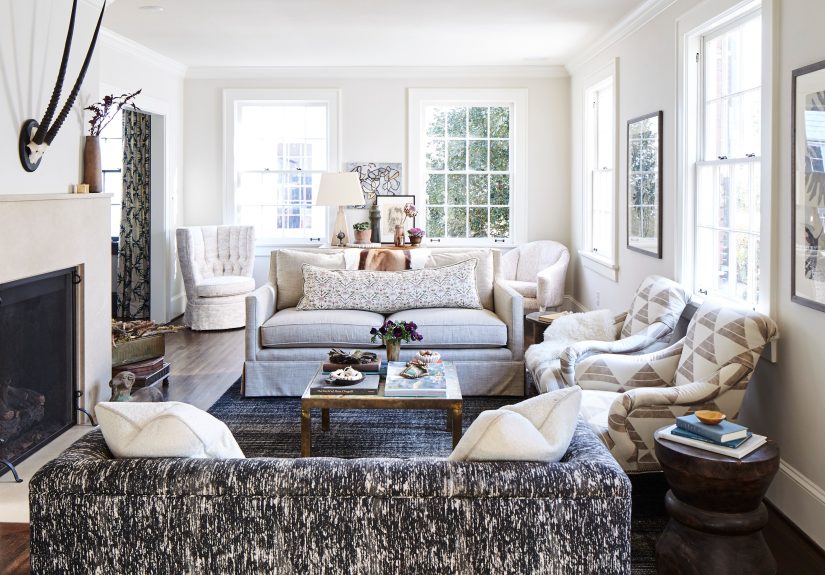
Here is where things get interesting. A lot of people are not purely minimalist or purely maximalist. They prefer a neutral base, but they still want character. They like visual interest, but not visual chaos. They appreciate editing, but not sterility. This middle ground is often called minimal maximalism, and it may be the most realistic design lane of all.
Think soft walls, streamlined furniture, and roomy layouts paired with one fearless wallpaper, a stack of art books, sculptural lighting, vintage finds, or a shelf full of meaningful objects. It is the “I like peace, but make it interesting” category.
Take Our Quick Quiz to See Where You Land
Grab a piece of paper, your Notes app, or the back of that receipt you swore you were not going to keep. For each question, give yourself:
- 1 point for mostly A answers
- 2 points for mostly B answers
- 3 points for mostly C answers
-
Your ideal living room feels:
A. Open, airy, and calm
B. Cozy, balanced, and personal
C. Bold, layered, and full of surprises -
When shopping for decor, you usually choose:
A. One timeless piece you can use for years
B. A mix of practical staples and expressive accents
C. Something unusual that makes you gasp a little -
Your dream color palette is:
A. White, beige, black, taupe, and soft earth tones
B. Warm neutrals with a few richer accents
C. Jewel tones, saturated hues, and “why yes, that is chartreuse” -
How do you feel about open shelving?
A. Great, as long as almost nothing is on it
B. Useful for a few books, ceramics, and meaningful objects
C. A glorious stage for books, art, plants, and tiny treasures -
Your walls should be:
A. Clean and mostly bare
B. Selectively styled with a few favorite pieces
C. An opportunity for gallery walls, paint, wallpaper, or all three -
When guests visit, you want them to say:
A. “Wow, this feels so peaceful.”
B. “This feels warm and pulled together.”
C. “This place is amazing. I don’t know where to look first.” -
Your relationship with sentimental objects is:
A. I keep only the most meaningful ones
B. I keep a curated selection
C. Are we talking about my framed ticket stubs, inherited lamp, and vintage postcards? Because yes -
Your ideal bedroom looks like:
A. Crisp bedding, clean surfaces, quiet colors
B. Soft texture, subtle pattern, a little personality
C. Layered textiles, dramatic headboard, mood lighting, and at least one thing with fringe -
If you spot an empty corner, your instinct is to:
A. Leave it empty so the room can breathe
B. Add one plant, chair, or lamp
C. Create a full vignette with art, a side table, books, and maybe a leopard-print cushion -
Your decorating philosophy is closest to:
A. Less is more
B. Enough is enough, but a little more could be fun
C. More is more, if it is done with purpose
Your Results
10–14 Points: You’re a Minimalist
You thrive in spaces that feel edited, functional, and serene. You probably prefer furniture that works hard, colors that do not yell at you before coffee, and rooms where every item has a reason to exist. You are not boring. You simply understand that visual peace is a luxury. Your version of self-care may be a clear countertop and a sofa that is not buried under decorative chaos.
15–22 Points: You’re a Balanced Curator
You are the design equivalent of a person who orders a classic black outfit and then adds one excellent ring. You like structure, but you also like soul. You want a home that looks polished without feeling impersonal. This is where minimal maximalism shines. You are probably happiest with a neutral foundation, thoughtful layering, and a few standout elements that make the room feel like yours.
23–30 Points: You’re a Maximalist
You believe a home should speak up. You like rooms with texture, personality, and stories hiding in every corner. You are drawn to color, pattern, collected objects, vintage pieces, and decor that sparks conversation. Your challenge is not finding personality. You have that in abundance. Your challenge is giving all that beauty enough structure so the room reads as intentional rather than “estate sale meets craft night.”
How to Decorate Based on Your Result
If You’re a Minimalist
Focus on quality materials, calming color palettes, and smart storage. Choose fewer pieces, but make them count. A minimalist home does not need to feel cold. Bring in wood, linen, stone, boucle, wool, and other tactile materials to add warmth. Let the architecture, light, and proportions do some of the heavy lifting.
Best decorating moves for minimalists:
- Invest in fewer, better pieces
- Use texture instead of clutter for depth
- Keep surfaces mostly clear
- Stick to a restrained palette with one or two subtle accents
- Choose decor that is both beautiful and useful
If You’re a Maximalist
Go bold, but stay intentional. Repetition is your best friend. Repeat colors across art, textiles, and accessories so the room feels connected. Mix patterns, but vary the scale. Pair a large floral with a smaller stripe or geometric print. Let one or two elements lead the room, then build around them. Maximalist design works best when it feels curated rather than accidental.
Best decorating moves for maximalists:
- Start with a strong anchor, like wallpaper, art, or a statement sofa
- Layer texture as much as color
- Group collections so they feel edited
- Use contrast to keep the room dynamic
- Remember that “more” still needs rhythm and balance
If You’re Somewhere in the Middle
You have range, which is a lovely way of saying you are allowed to love a quiet room and a dramatic lamp at the same time. Start with a calm base: streamlined furniture, comfortable silhouettes, and a cohesive palette. Then add life through art, books, textiles, collected objects, and meaningful details. This is often the easiest style to live with because it combines practicality with personality.
Best decorating moves for balanced curators:
- Use neutrals as a backdrop, not a personality replacement
- Add one or two statement moments per room
- Mix modern pieces with vintage or handmade finds
- Keep clutter low, but do not strip the room of character
- Let your home evolve instead of forcing a one-style-only rule
Mistakes to Avoid No Matter Where You Land
Do not decorate for the algorithm. A home should work for your life, not just your camera roll.
Do not confuse empty with intentional. Minimalism without warmth can feel sterile.
Do not confuse busy with beautiful. Maximalism without editing can feel exhausting.
Do not copy a style label too literally. You are not required to live inside a design stereotype.
Do not ignore how a room functions. Even the prettiest space loses points when you cannot find a place to put your coffee.
What This Looks Like in Real Rooms
In a minimalist living room, you might see a low-profile sofa, a sculptural chair, a soft rug, and a restrained palette with maybe one black accent or a beautiful piece of wood furniture. In a maximalist living room, you might see layered rugs, patterned curtains, books stacked everywhere, collected art, and lighting that deserves its own introduction.
In the bedroom, a minimalist might choose crisp white bedding, one bedside book, and a simple pendant light. A maximalist might mix prints, add a dramatic wallpaper, stack the bed with textured pillows, and somehow make a tasseled throw look like a completely reasonable life choice. In the kitchen, a minimalist may prefer concealed appliances and clean counters, while a maximalist may happily display ceramics, brass accents, cookbooks, and open shelves full of personality.
Experiences From Both Ends of the Style Spectrum
I have known the kind of person who feels physically lighter after clearing a room. They fluff two pillows, align the coffee table book with military precision, and suddenly the whole space feels like a deep exhale. There is something deeply satisfying about that kind of order. You can hear yourself think. You can find your keys. You can sit on the sofa without negotiating with six decorative cushions that have absolutely no plans to support your back. Minimalist rooms often create a sense of control and calm, especially during busy seasons of life. When the world feels noisy, a pared-back space can feel like the visual equivalent of turning your phone to silent.
And yet, there is an entirely different kind of joy in walking into a home that feels collected and alive. A maximalist room can feel like meeting someone through their objects. There are books with bent spines, art picked up on trips, inherited furniture, layered textiles, odd little sculptures, and colors that clearly were not chosen by fear. These spaces can feel deeply human. They invite curiosity. They make guests wander. They often spark stories, because every object seems to have one. A good maximalist home does not just look decorated. It looks inhabited in the best possible way.
The most relatable experience, though, is living between the two. Maybe you want the peacefulness of minimalist design, but your life includes kids, hobbies, travel souvenirs, or a deep and lasting attachment to ceramic bowls for no practical reason. Maybe you love maximalist rooms online, but after one day in a highly patterned guest room, you start craving a nap in a beige cloud. That tension is normal. In fact, it is useful. It helps you build a home that reflects your real habits instead of an imaginary version of yourself.
Some people discover they are minimalists in shared spaces and maximalists in private ones. Their living room is edited and calm, but their office looks like a delightful creative storm. Others keep the architecture simple and let the styling do the talking. Some start as strict minimalists, then slowly add color and collected pieces as they get more confident. Others begin as fearless maximalists and eventually learn the beauty of negative space. Style is not static. It changes as your routines, priorities, and sense of self change.
That is why the best takeaway from this quiz is not a rigid label. It is permission. Permission to like clean lines and bold art. Permission to keep a neutral sofa and pair it with a wildly patterned chair. Permission to stop apologizing for loving empty space, or for loving rooms that look like they have a pulse. Your home does not need to pass a trend test. It needs to feel right when you walk in, drop your bag, and think, “Yes, this is mine.”
The Bottom Line
If you landed on minimalist, maximalist, or somewhere gloriously in between, the goal is the same: create a home that reflects how you want to live. Minimalist interiors can deliver calm, clarity, and function. Maximalist interiors can deliver depth, joy, and personality. Hybrid spaces can offer the best of both. The trick is not choosing the trendiest label. It is choosing the style language that makes your home feel honest, comfortable, and unmistakably yours.
So take the quiz, tally your score, and then decorate accordingly. And if your result is “I want a serene room with one dramatic lamp and a suspicious number of art books,” congratulations. You are probably a very normal person with excellent taste.