Table of Contents >> Show >> Hide
- Where the 32-inch iMac rumor started
- What we actually know right now
- Why a 32-inch iMac still makes sense
- Why Apple may keep delaying it
- What a 32-inch iMac would probably look like if it ever ships
- Should you wait for the rumored 32-inch iMac?
- The real verdict on those 32-inch iMac rumors
- Real-world experiences behind the rumor: why people keep caring
- Conclusion
If Apple rumors were a product line, they would be on the M27 chip by now. And few rumors have shown more stubborn staying power than the idea of a 32-inch iMac. It keeps popping up, disappearing, and then returning like that one friend who says, “I’m just stopping by for five minutes,” and somehow is still on your couch three hours later.
So what is actually going on here? Is Apple secretly building a giant all-in-one desktop for creative pros and big-screen loyalists? Or is this just the tech world’s favorite recurring fantasy?
The short version is this: the 32-inch iMac rumors are not pure fiction, but they are also nowhere close to a confirmed product. The smarter way to read them is as a sign that Apple has at least explored a larger all-in-one Mac, while its public product strategy still leans heavily toward the 24-inch iMac on one side and modular setups like Mac Studio plus a separate display on the other.
That matters because the difference between “Apple tested it” and “Apple is shipping it soon” is huge. In Apple terms, that gap can be measured in years, canceled prototypes, strategic pivots, and probably several color palette debates in a very minimalist conference room.
Where the 32-inch iMac rumor started
The larger iMac chatter did not appear out of nowhere. It built up in layers, which is exactly why the story feels both believable and frustrating.
First came reports that Apple was exploring a larger-screen iMac after shifting the line to the colorful 24-inch Apple silicon redesign. That mattered because Apple later made a point of saying it was not making a new 27-inch Apple silicon iMac. In other words, Apple shut the door on one size, but it did not completely lock the entire “bigger iMac” room.
Then came a more specific rumor: a 32-inch iMac with mini-LED, possibly aimed at a higher-end or “iMac Pro”-style audience. That version of the story was exciting because it sounded logical. A 32-inch panel would appeal to creative users. Mini-LED would give Apple a premium display story. And a more powerful chip would help bridge the gap between the cheerful family-room iMac and the more serious desktop machines in Apple’s Mac lineup.
On paper, that combination made sense. In reality, the timeline never really held together. Rumors pointed to windows like late 2024 or 2025, and then 2025 came and went without a 32-inch iMac launch. Once that happened, the rumor shifted from “incoming product” to “still possible, but don’t clear your desk yet.”
That is an important distinction. When a rumored launch window slips once, it can happen for lots of reasons. When it slips repeatedly, it usually means one of two things: either the product is proving hard to finish, or Apple has decided it is not urgent enough to move to the front of the line.
What we actually know right now
If you strip away the speculation, the current iMac picture is pretty simple.
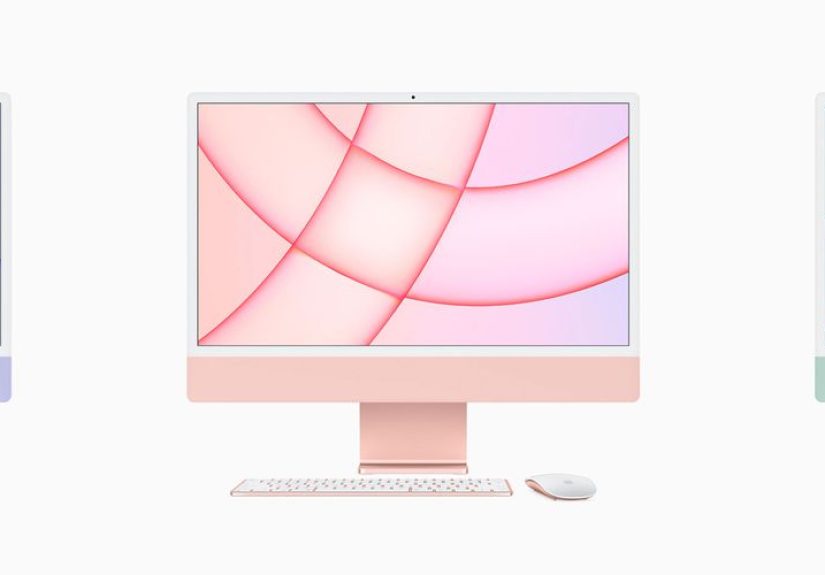
Apple’s mainstream iMac is a 24-inch model. It has the colorful design Apple introduced in the Apple silicon era, and the latest version brought the M4 chip, more memory at the base level, a better camera setup, and some quality-of-life upgrades. It is a polished desktop for people who want an all-in-one Mac that looks good, takes up less space, and does not require a separate monitor shopping expedition.
What Apple has not done is replace the old Intel 27-inch iMac with a direct Apple silicon successor. That absence is the reason the rumor mill never cools down. There is still a visible gap between the current 24-inch iMac and the kind of larger, more powerful all-in-one machine many long-time iMac users want.
The latest 2026 reporting makes the situation even more interesting. The near-term chatter is mostly about a refreshed standard iMac, not a confirmed giant iMac. In other words, the recent signals point more toward “Apple is still iterating on the regular iMac” than “surprise, here comes the 32-inch monster.”
That does not kill the big-screen rumor, but it does cool it off. A lot.
So the cleanest summary is this: Apple may still be interested in a larger iMac concept, but there is no announced product, no official timeline, and no reason to treat a 32-inch launch as imminent.
Why a 32-inch iMac still makes sense
There is a real audience for it
The desire for a larger iMac is not just nostalgia talking. Plenty of people genuinely prefer an all-in-one desktop with a big screen. Video editors, photographers, designers, developers, finance professionals, and even general home-office users often want more room than a 24-inch display provides.
And yes, external monitors exist. But not everybody wants a separate display, a separate desktop, extra cables, and a desk that suddenly looks like it is auditioning for a minor role in a sci-fi movie.
Apple loves display quality and density
A larger iMac would also fit Apple’s long-standing obsession with sharp displays. A 32-inch class screen opens the door to a premium resolution and a more immersive workspace. Conceptually, it would let Apple build the kind of desktop that says, “This is for people who do serious work,” without forcing them into a modular setup.
That is why the rumor has always sounded plausible. It matches a real market need and a familiar Apple design instinct.
It would give the iMac line a halo model
Right now, the iMac is elegant and approachable, but it is not the aspirational Mac desktop for pro buyers. A 32-inch version could change that. It could give Apple a premium all-in-one centerpiece again, something that feels closer in spirit to the old 27-inch iMac and iMac Pro.
In branding terms, that would be powerful. It would tell the market that the iMac is not just the pretty family Mac. It can still have ambition.
Why Apple may keep delaying it
The modular Mac strategy is already working
This is probably the biggest reason to stay skeptical. Apple already has a clean answer for customers who want more power and more screen: buy a Mac Studio or Mac mini and pair it with a separate display. That strategy is flexible, profitable, and easier to scale across different buyers.
A larger iMac would be exciting, but it could also complicate Apple’s desktop lineup. If you launch a premium all-in-one, you risk stealing attention from Mac Studio, separate displays, and possibly even some laptop-plus-monitor workflows.
From Apple’s perspective, modular desktops solve a lot of problems. Users can upgrade the computer without replacing the screen. Apple can sell displays separately. And the product ladder becomes easier to explain, at least in a tidy spreadsheet that no customer will ever see.
Big all-in-ones are harder to position
A 32-inch iMac would not be cheap. The moment you combine a high-end chip, a premium large display, strong thermals, upgraded speakers, and pro-level ports, you are building a very expensive machine.
At that point, Apple would have to answer a tricky question: why should a buyer choose this over a Mac Studio and a premium external display? If the answer is only “because it is cleaner and prettier,” that may be enough for some people, but maybe not enough to justify the engineering effort and product overlap.
The desktop market is not Apple’s hottest battlefield
Apple sells a lot of laptops. That is where the biggest consumer demand usually lives. All-in-one desktops, especially expensive ones, are a narrower category. Even if Apple likes the idea of a larger iMac, it may keep getting bumped behind more urgent products.
That would explain the rumor pattern perfectly: genuine internal exploration, but slow progress because other devices keep winning the priority contest.
What a 32-inch iMac would probably look like if it ever ships
Now for the fun part: educated guessing without tumbling into fan-fiction.
If Apple eventually releases a 32-inch iMac, the most sensible version would likely be a more professional desktop rather than a scaled-up version of the colorful entry model. Think darker finishes, slimmer bezels, more ports, higher memory ceilings, and a display built for serious creative work.
A premium panel is almost a must. Whether that means mini-LED, another advanced backlighting approach, or a future display technology, Apple would need the screen to feel like the product’s headline feature. A giant iMac with a merely “pretty good” display would miss the point.
The chip question is also revealing. A larger iMac makes more sense with a Pro- or Max-class chip than with a standard base chip. Otherwise, it becomes a very expensive way to browse email on a beautiful screen. That is not impossible, but it would be a strange use of Apple’s lineup.
It would also almost certainly need better thermal design, stronger I/O, and more memory headroom than the mainstream iMac. That is why so many rumors naturally drift toward “iMac Pro” territory. Once you make the screen that large, buyers will expect the rest of the machine to level up too.
Should you wait for the rumored 32-inch iMac?
For most people, no.
If you need a desktop now, buying based on rumors is usually a bad move, and this rumor is especially slippery. There is no announced launch event, no official product page, and no reliable near-term sign that Apple is about to unveil a 32-inch iMac.
If you want the clean all-in-one experience today, the 24-inch iMac is the actual product that exists. If you want more power or more screen space, Apple’s current answer is a modular one: a Mac Studio or Mac mini paired with a larger display. That setup is less romantic than a giant iMac, but it is real, available, and much easier to plan around.
The only people who might reasonably keep waiting are those who are perfectly happy to keep their current machine for a while longer and who specifically want a large all-in-one Apple desktop, not a separate-box setup. Even then, it should be treated as a preference, not a prediction.
In plain English: hope for it if you want, but do not organize your next purchase around it.
The real verdict on those 32-inch iMac rumors
The most sensible conclusion is that the 32-inch iMac rumors are built on something real enough to keep surviving, but not real enough to behave like an actual launch roadmap.
Apple clearly understands the appeal of a bigger all-in-one Mac. The old 27-inch iMac left behind loyal users. The rumor sources did not invent that demand. But Apple’s behavior tells a different story: for now, it seems more comfortable selling a 24-inch iMac to mainstream buyers and steering larger-screen customers toward modular desktops and premium monitors.
So yes, a 32-inch iMac remains plausible. No, it does not look imminent. And if Apple ever does ship one, it will probably be positioned as a more premium, more professional machine than the current iMac rather than a simple supersized family desktop.
Until then, the 32-inch iMac remains what it has been for a while now: the most believable Apple rumor you still probably should not shop around.
Real-world experiences behind the rumor: why people keep caring
What makes the larger iMac rumor so durable is not just the reporting. It is the lived experience around Apple desktops. There is a whole group of users who never really moved on emotionally from the old 27-inch iMac. They may have upgraded other devices, changed jobs, moved apartments, and replaced phones half a dozen times, but they still look at the current 24-inch iMac and think, “That is nice, but it is not my iMac.”
For those users, the issue is not raw performance alone. It is workflow comfort. A larger display changes the way you work. You can keep more panels open, compare documents side by side, edit a timeline without feeling cramped, or simply sit back a bit farther and still feel immersed. Once you get used to that kind of space, downsizing can feel less like a design choice and more like moving from a kitchen island to a cutting board balanced on a stool.
There is also the emotional appeal of the all-in-one format. Some people genuinely do not want a modular setup, even if it makes sense on paper. They do not want to choose a display, match cables, decide on monitor arms, or troubleshoot which box is responsible for which issue. They want one elegant machine that lands on a desk, powers on, and looks intentional. That is where the iMac still has magic. It makes a workspace feel finished in about thirty seconds.
Then there is the opposite experience: users who gave up waiting. Many people who once hoped for a bigger iMac have already moved to a Mac Studio or a MacBook Pro with a high-end monitor. Functionally, a lot of them are better off. They get more flexibility, more performance options, and a clearer upgrade path. But even some of those users still admit they would be tempted by a well-executed 32-inch iMac. Why? Because convenience has a value that spec sheets are bad at measuring.
Offices feel this tension too. In creative studios, front desks, small businesses, and home offices, the iMac still has aesthetic pull. It says organized, modern, and premium without screaming for attention. A larger model would fit beautifully in spaces where people want serious screen real estate without the visual clutter of separate components. In those environments, an all-in-one is not just a computer. It is part of the room.
And that is really the experience behind this rumor. It lives at the intersection of practicality and desire. On one hand, Apple already offers powerful alternatives. On the other, none of those alternatives quite replace the feeling of a large, elegant, single-piece desktop that just belongs on a desk. That gap between “available” and “wanted” is where the 32-inch iMac rumor keeps breathing.
So when people keep asking whether Apple will finally make one, they are not only chasing specs. They are chasing a type of computing experience that feels simpler, calmer, and a little more luxurious. In a market full of capable machines, that kind of feeling still matters. Maybe more than Apple likes to admit.
Conclusion
The best way to understand the 32-inch iMac rumor is to treat it as a credible possibility, not a current product plan. Apple has left enough breadcrumbs to make the idea believable, but not enough to make it actionable for buyers today.
If you are waiting for a giant all-in-one Mac, you are not crazy. You are just betting on a category Apple has not fully committed to yet. If you need something now, buy for the lineup Apple actually sells. If you enjoy following the rumor cycle, keep the popcorn ready. This one may still have another season left.