Table of Contents >> Show >> Hide
- Why Make Half a Box of Mac and Cheese?
- Half-Box Mac and Cheese Ingredients (Quick Math That Actually Works)
- How to Prepare Half a Box of Macaroni and Cheese: 7 Steps
- Step 1: Split the Box (Pasta + Cheese) Before You Turn On the Stove
- Step 2: Boil the Water in a Medium Saucepan
- Step 3: Cook the Macaroni Until Tender (But Not Mushy)
- Step 4: Drain the Pasta (Do Not Rinse)
- Step 5: Add Butter First and Let It Melt
- Step 6: Add Milk and Half the Cheese Powder, Then Stir Well
- Step 7: Taste, Adjust, and Serve Immediately
- Common Mistakes When Making Half a Box (and How to Fix Them)
- Easy Flavor Upgrades (Without Turning It into a 14-Ingredient Project)
- Storage and Reheating Tips for Half-Box Mac and Cheese
- Experience Section: What Real Kitchens Teach You About Making Half a Box of Mac and Cheese (Extended)
- Conclusion
Sometimes you want mac and cheese, but you do not want a full pot of it staring into your soul from the stove, demanding to be eaten at midnight. That’s where this guide comes in. If you’ve ever wondered how to prepare half a box of macaroni and cheese without ending up with dry noodles, orange soup, or a cheese-powder math crisis, you’re in the right kitchen.
This article breaks the process down into 7 simple steps, with practical tips for texture, flavor, storage, and reheating. It also includes common mistakes, easy upgrades, and a long real-world experience section at the end so you can avoid the “why is this weirdly gluey?” stage and go straight to creamy comfort.
Why Make Half a Box of Mac and Cheese?
Preparing half a box of macaroni and cheese is perfect when you’re cooking for one, making a quick side dish, feeding a picky eater, or trying not to turn dinner into “leftovers for three days and one slightly regretful breakfast.” It also helps with portion control and reduces food waste.
The key is not just halving the pasta. You also need to scale the liquid and fat properly, and (most importantly) divide the cheese powder as evenly as possible. That’s what keeps the sauce creamy and balanced.
Half-Box Mac and Cheese Ingredients (Quick Math That Actually Works)
Different brands vary, so always check your package directions first. But if you’re using a standard boxed macaroni and cheese similar to the classic 7.25-ounce style, this half-box method works beautifully.
What You’ll Need for Half a Box
- 1/2 box dry macaroni (about half of the pasta in the box)
- 1/2 cheese sauce packet (or half the cheese powder)
- 2 tablespoons butter or margarine
- 2 tablespoons milk (whole milk gives a richer result, but any milk works)
- 3 to 4 cups water for boiling (3 cups is the exact half of many standard directions)
- Optional: 1 to 3 tablespoons reserved pasta water for texture adjustments
Tools
- Medium saucepan
- Colander or strainer
- Measuring spoons/cups
- Spoon or silicone spatula
- Small bowl (helpful for splitting cheese powder neatly)
How to Prepare Half a Box of Macaroni and Cheese: 7 Steps
Step 1: Split the Box (Pasta + Cheese) Before You Turn On the Stove
Start by dividing the dry macaroni into two equal portions. Then divide the cheese powder packet into two equal portions as well.
This sounds easy until you realize cheese powder is basically edible neon dust and suddenly you’re negotiating with the packet like it’s a chemistry lab. Here are the easiest ways to split it evenly:
- Best method: Pour the cheese powder into a small bowl and divide it by weight with a kitchen scale.
- Good method: Spread it out and visually split it into two equal piles.
- Quick method: Fold the packet gently and pour half by eye (works, but accuracy may vary).
Store the unused half of the dry pasta and cheese powder in separate airtight containers or sealed bags for next time.
Step 2: Boil the Water in a Medium Saucepan
Add about 3 to 4 cups of water to a medium saucepan and bring it to a boil. Using slightly more water than the exact half measurement is fine if your pan is roomy enough it helps the pasta move freely and cook more evenly.
Once the water is boiling, add the half portion of macaroni. Stir right away so the noodles don’t clump together in a dramatic blob at the bottom of the pan.
Step 3: Cook the Macaroni Until Tender (But Not Mushy)
Cook the macaroni for about 7 to 8 minutes, stirring occasionally. The goal is tender pasta with a little structure left, not a pot of soft orange confetti.
If you like firmer noodles, start checking around the 6-minute mark. If you prefer ultra-soft mac, go closer to 8 minutesbut don’t wander off to “check one email” unless you enjoy accidental pasta wallpaper paste.
Pro tip: Before draining, reserve 1 to 3 tablespoons of the pasta water. That starchy water can help loosen the sauce later without making it watery.
Step 4: Drain the Pasta (Do Not Rinse)
Drain the cooked macaroni in a colander, then return it to the saucepan. Do not rinse it.
Rinsing washes away surface starch that helps the cheese sauce cling to the noodles. In other words, rinsing can make your sauce slide around like it’s on vacation.
Step 5: Add Butter First and Let It Melt
Add 2 tablespoons butter or margarine to the hot macaroni and stir until melted. Coating the pasta first helps create a richer, smoother texture and makes the sauce mix more evenly.
If the noodles cooled down while draining, place the pan over low heat for 15–30 secondsjust enough to help the butter melt. Keep the heat low to avoid scorching.
Step 6: Add Milk and Half the Cheese Powder, Then Stir Well
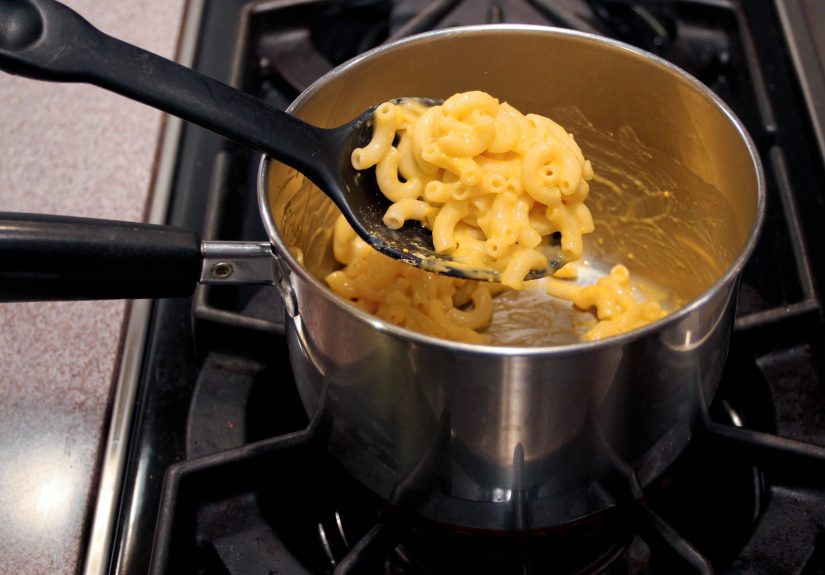
Add 2 tablespoons milk and your half portion of cheese powder. Stir thoroughly until the sauce becomes smooth and coats the macaroni.
If the sauce looks too thick, add a splash of reserved pasta water (start with 1 tablespoon). If it looks too thin, let it sit for 30 to 60 seconds and stir againthe sauce usually thickens as it cools slightly.
This is the moment when patience pays off. Stiring well makes a big difference. Lumpy powder pockets are not a personality trait; they’re a mixing problem.
Step 7: Taste, Adjust, and Serve Immediately
Taste your mac and cheese and adjust the texture if needed:
- Too thick? Add a teaspoon or two of milk or pasta water.
- Too thin? Let it rest 1 minute; stir again.
- Needs more flavor? Add a pinch of black pepper, garlic powder, or a tiny handful of shredded cheddar.
Serve it right away while it’s hot and creamy. Boxed mac and cheese thickens as it sits, so “I’ll plate it in ten minutes” often turns into “Why is this spoon standing upright?”
Common Mistakes When Making Half a Box (and How to Fix Them)
1) Uneven Cheese Powder Split
This is the #1 half-box problem. If you use too little powder, the flavor is weak. Too much, and it gets salty or gritty. Fix it by adding liquid in tiny amounts and stirring thoroughly. Next time, measure more carefully.
2) Too Much Milk
People often eyeball “half” and accidentally pour a lot more. The sauce gets thin fast. Let it sit briefly so the starch can thicken it, or add a little extra shredded cheese.
3) Overcooked Pasta
Mushy pasta absorbs too much sauce and turns soft fast. Start checking early and drain as soon as it’s tender.
4) High Heat While Mixing the Sauce
High heat can make cheese sauces separate or tighten up. Mix on low heat (or off heat) and only warm gently if needed.
Easy Flavor Upgrades (Without Turning It into a 14-Ingredient Project)
A half box of mac and cheese is already a comfort-food win, but a few simple additions can make it taste more “I meant to do that” and less “college survival mode.”
Quick Add-Ins
- Extra cheese: A small handful of cheddar, mozzarella, Gouda, or pepper Jack
- Creaminess boost: A spoonful of sour cream or cream cheese
- Savory depth: A tiny bit of white miso (start very small)
- Texture: Toasted breadcrumbs or crispy onions on top
- Protein: Leftover chicken, tuna, or a carefully cooked egg stirred in (cook thoroughly)
- Seasoning: Black pepper, smoked paprika, garlic powder, onion powder
Keep the upgrades small when making only half a box. You’re seasoning a snack-sized portion, not catering a football party.
Storage and Reheating Tips for Half-Box Mac and Cheese
If you made a little extra or intentionally saved some, store leftovers safely:
- Refrigerate promptly (don’t leave it sitting out too long).
- Use a covered container.
- Reheat gently with a splash of milk or water to bring back the creamy texture.
- Heat thoroughly before eating.
Mac and cheese tends to firm up in the fridge, so reheating with a little liquid and stirring halfway through makes a huge difference.
Experience Section: What Real Kitchens Teach You About Making Half a Box of Mac and Cheese (Extended)
If there’s one thing people learn quickly from making half a box of macaroni and cheese, it’s this: the recipe is simple, but the texture is unforgiving. A full box gives you a little wiggle room. A half box? It notices everything. Too much milk, too little butter, pasta cooked one minute too longit all shows up immediately.
One of the most common real-life experiences is the “late-night half-box success story.” Someone is hungry, doesn’t want a full meal, and remembers there’s a box in the pantry. They split the pasta, eyeball the cheese powder, and suddenly discover that half a box is actually the ideal comfort-food serving. Not too much, not too littlejust enough to feel fed without waking up the next morning to a pot of leftovers that now resembles construction adhesive.
Another very normal experience: the “oops, I used the same amount of milk as a full box” moment. This happens because the full-box measurement (often 1/4 cup) is easy to remember, and muscle memory takes over. The result is a loose, soupy sauce that looks alarming at first. The good news is that it can often be rescued by letting it rest for a minute, stirring well, and adding a bit of extra cheese. Many home cooks learn this once and then never forget it again. It becomes a kitchen rite of passage.
Then there’s the cheese-powder division drama. People tend to assume “half the packet” will be obvious. It is not. Cheese powder is fluffy, static-prone, and weirdly persuasive. In real kitchens, many cooks end up with one strong, salty batch and one pale, under-seasoned batch later in the week. After that, they start using a small bowl, a spoon, or a scale. This is usually the exact moment someone levels up from casual snacker to competent mac-and-cheese engineer.
Another practical experience shows up when cooking for kids. Half a box is excellent for a child-sized lunch, but children often care deeply about texture. If the sauce is too thick, they call it “sticky.” If it’s too thin, they call it “weird.” Adults may call this “feedback.” The easy solution most people discover is to save a spoonful of pasta water and use it after mixing. That tiny adjustment often creates the glossy, smooth texture kids and adults both like.
People also learn that pan size matters more than expected. A tiny pan can cause boil-overs and sticky pasta. A giant pot makes a small portion cook unevenly and can dry out faster while mixing. A medium saucepan is the sweet spot for a half-box batch. It gives you enough room to stir without slinging orange sauce across the stove like modern art.
Reheating teaches another lesson. Half-box mac and cheese that was creamy yesterday can become stiff in the fridge. Many people think it’s “ruined,” but it usually just needs gentle heat and a splash of milk. Stirring halfway through reheating transforms it back into something enjoyable. After a few tries, most cooks realize that boxed mac and cheese is less about strict perfection and more about small adjustments.
The biggest experience-based takeaway? Half a box of macaroni and cheese is one of the best low-effort, high-comfort meals you can master. Once you get the ratios down, it becomes a reliable move for busy weekdays, quick lunches, after-school snacks, and those evenings when your energy level is somewhere between “make dinner” and “eat cereal over the sink.” And honestly, that’s a culinary superpower.
Conclusion
Learning how to prepare half a box of macaroni and cheese is all about ratio control, gentle heat, and a little stirring patience. Use half the pasta, half the cheese powder, and half the milk and butter, then adjust the texture with a splash of pasta water or milk if needed. Follow the 7 steps above and you’ll get a creamy, satisfying bowl every timewithout overcooking, over-seasoning, or overcommitting.
Whether you’re making a quick lunch, a cozy side dish, or a midnight comfort bowl, this method keeps things simple, fast, and delicious. Small batch, big payoff.