Table of Contents >> Show >> Hide
- Why grass seed struggles on hard dirt
- Quick reality check: are you fixing a patch or building a lawn?
- Tools and materials that actually make a difference
- Step-by-step: how to plant grass seed on hard dirt (and win)
- Step 1: Choose the right seed for your region and timing
- Step 2: Do the “screwdriver test” and fix the real problem
- Step 3: Clear and roughen the surface (seed hates a smooth skating rink)
- Step 4: Break compaction (pick one method)
- Step 5: Add organic matter (the secret sauce for hard dirt)
- Step 6: Create a smooth, firm seedbed (yes, firm)
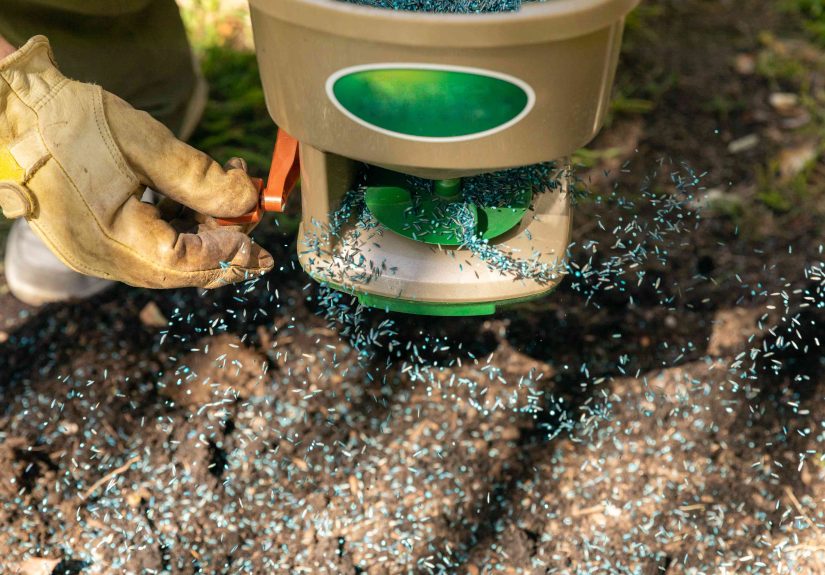
- Step 7: Spread the seed evenly (two-pass method)
- Step 8: Get seed-to-soil contact (the step most people skip)
- Step 9: Mulch lightly to protect moisture (especially on hard dirt)
- Step 10: Water like a pro (moist, not marshy)
- Step 11: First mow and early care (don’t scalp your baby grass)
- Hard dirt “cheat codes” when you can’t till
- Common mistakes (and how to fix them fast)
- FAQ: quick answers that save lawns
- Mini checklist: the “don’t mess this up” summary
- Real-world experiences and lessons (the part nobody tells you)
- References (numbered citations)
Hard dirt is basically nature’s way of saying, “No thanks, I’m full.” It’s compacted, crusty, and usually
about as welcoming to tiny grass seedlings as a parking lot. But here’s the good news: you can plant
grass seed on hard dirt and get it to growyou just have to stop treating the ground like it’s already soil.
This guide walks you through the exact steps to turn “hardpan disappointment” into an actual lawn: how to break
compaction, improve seed-to-soil contact, pick the right seed, and nail the watering schedule so your grass sprouts
and survives (instead of ghosting you after day three).
Why grass seed struggles on hard dirt
Grass seed isn’t dramatic, but it does have standards. On hard, compacted dirt, a few things go wrong fast:
- Water runs off instead of soaking in, so seed dries out.
- Air can’t move through tight soil, and roots can’t push into it.
- Seed can’t “hug” the soiland without that contact, germination drops.
- A crust forms after rain or watering, trapping seedlings under a hard shell.
Translation: if you simply toss seed on hard dirt and hope for magic, you’ll mostly be feeding birds and growing
your frustration.
Quick reality check: are you fixing a patch or building a lawn?
The approach depends on how much area you’re seeding:
-
Small patch (under ~100 sq ft): You can loosen by hand (garden fork, steel rake),
add compost/topsoil, and seed successfully. -
Large area: Rent help (core aerator, dethatcher/scarifier, slit seeder, or rototiller),
or you’ll be out there reinventing CrossFit.
Tools and materials that actually make a difference
You don’t need a garage full of gear, but you do need the right basics:
- Steel rake (not the floppy leaf rake) and a garden fork
- Core aerator rental (for big areas) or a manual aerator for small ones
- Compost (or compost + screened topsoil blend)
- Grass seed that matches your climate + sun
- Spreader (drop or rotary) for even coverage
- Starter fertilizer (optional, best guided by a soil test)
- Straw mulch (straw, not hay) or an erosion blanket on slopes
- Sprinkler + timer (watering is not where you “wing it”)
Step-by-step: how to plant grass seed on hard dirt (and win)
Step 1: Choose the right seed for your region and timing
Seed choice matters more on tough soil because you want a grass that establishes reliably.
In much of the U.S., lawns fall into two big categories:
-
Cool-season grasses (common in the North/Upper Midwest/parts of the Transition Zone):
tall fescue, Kentucky bluegrass, perennial ryegrass, fine fescues.
Best seeding window is typically late summer to early fall. -
Warm-season grasses (common in the South): bermudagrass, zoysia, centipede.
Seeding is usually best in late spring to early summer when soils are warm.
Hard-dirt-friendly picks: tall fescue (deep-rooting, forgiving) and perennial ryegrass
(quick germination) are often easier for beginners in cool-season regions. On warm-season lawns, bermuda can
establish from seed (with warmth and sun), while some warm-season grasses are more commonly established by sod or plugs.
If you’re unsure, check your state university extension recommendations for your ZIP code.
Step 2: Do the “screwdriver test” and fix the real problem
Push a screwdriver into the dirt after a normal watering or rainfall:
- If it slides in 3–4 inches: compaction may be moderateyou can work with it.
- If it barely goes in: you’re dealing with serious compaction (hardpan behavior).
If water puddles or runs off quickly, you’ll need aeration + organic matter, not just seed.
Step 3: Clear and roughen the surface (seed hates a smooth skating rink)
Remove rocks, sticks, construction debris, and any crusted layer. Then roughen the surface:
- For small areas, rake aggressively with a steel rake to scratch up the top layer.
- For larger areas, use a dethatcher/scarifier pass or a light tilling pass if you’re renovating from bare dirt.
You want a surface with tiny grooves and texture so seed can settle in, not bounce off like popcorn.
Step 4: Break compaction (pick one method)
Option A: Core aeration (best for existing yards or big compacted areas)
- Run a core aerator over the area (multiple passes help on severe compaction).
- Leave the soil plugs on the surface; they break down and help topdressing settle.
Option B: Loosen and amend by hand (best for patches)
- Use a garden fork to loosen 3–4 inches deep, rocking it back slightly to open channels.
- Rake out clods so you don’t create a “lumpy mattress lawn.”
Option C: Slit seeding/overseeding equipment (best for “hard dirt that won’t behave”)
-
A slit seeder (seed slicer) cuts grooves and drops seed into the soilexcellent for hard ground where raking
alone won’t incorporate seed well. - This is especially useful when you’re seeding into compacted soil and need mechanical seed-to-soil contact.
Step 5: Add organic matter (the secret sauce for hard dirt)
Compacted dirt usually lacks organic matter, which is what helps soil hold moisture, drain properly, and let roots breathe.
Spread about 1–2 inches of compost over the area and work it into the top few inches where possible.
For existing lawns, core aerate first, then topdress with compost so it filters into the holes.
Important: If you’re tempted to “fix clay” by mixing in sanddon’t. In many cases, that can create
an even worse, brick-like mess. If you’re bringing in new soil, match texture as closely as possible to what you already have,
or add it as a layer instead of aggressively mixing incompatible textures.
Step 6: Create a smooth, firm seedbed (yes, firm)
Here’s a weird lawn truth: grass seed likes a seedbed that’s firm but not compacted.
You want the surface level enough to mow later, but firm enough that seed doesn’t sink too deep.
A classic test: walk across the area. Your footprints should be visible, but not deepthink “light impression,” not “mud audition.”
If the soil is fluffy, lightly rake, water, and/or roll to settle it.
Step 7: Spread the seed evenly (two-pass method)
Measure the area and follow the seeding rate on the bag. Then apply seed in two passes:
- Half the seed going north–south
- Half the seed going east–west
This helps you avoid bald stripes and “accidental zebra lawn.”
Step 8: Get seed-to-soil contact (the step most people skip)
Seed must contact soil to germinate well. After spreading:
- Lightly rake so seed is incorporated about 1/8 to 1/4 inch deep.
- Press seed in with the back of a rake, a lawn roller, or by gently tamping small patches.
If seed is sitting on top of hard dirt like sprinkles on a cupcake, it’s not “planted”it’s just “present.”
Step 9: Mulch lightly to protect moisture (especially on hard dirt)
A thin layer of straw mulch helps hold moisture, reduce erosion, and protect seed from birds and sun.
Keep it lightyou should still see some soil through it. On slopes or windy spots, consider an erosion control blanket
designed for seeding.
Step 10: Water like a pro (moist, not marshy)
Watering is where most new lawns succeed or fail. The goal is consistent moisture at the surface while seeds germinate:
-
Days 1–14 (typical): light watering 2–3 times per day to keep the top layer moist.
Stop before puddles form or water runs off. - After germination: water less often but a bit deeper to encourage roots to chase moisture downward.
Early morning watering is ideal. Midday is backup (hot but sometimes necessary). Night watering can increase disease risk if the surface stays wet too long.
Step 11: First mow and early care (don’t scalp your baby grass)
Mow for the first time when grass reaches roughly 3–4 inches and the soil is firm underfoot.
Use a sharp blade and remove only the top third of the leaf. Avoid heavy traffic until the lawn has been mowed a couple of times.
If you used starter fertilizer, follow label directions. If you didn’t, that’s okayhealthy soil prep and correct watering are usually the bigger levers on hard dirt.
Hard dirt “cheat codes” when you can’t till
Sometimes you can’t rip up the yard, or you’re working around tree roots, irrigation lines, or rental rules.
In those cases, use a strategy that improves contact without deep soil work:
Cheat code #1: Core aerate + compost topdress + overseed
This combo is popular because it reduces compaction and creates micro-pockets for seed and moisture. Aerate first, spread seed,
then topdress lightly with compost so seed gets nestled in without being buried.
Cheat code #2: Slit seeding for “soil that refuses to cooperate”
Slit seeders cut shallow grooves and drop seed into them. It’s one of the most reliable methods for compacted ground because it
solves the #1 problem: seed-to-soil contact.
Cheat code #3: Use an erosion blanket on slopes
Hard dirt plus slope equals runoff. A biodegradable blanket holds seed in place and keeps the surface evenly moist long enough
for seedlings to anchor.
Common mistakes (and how to fix them fast)
Mistake: “I watered a lot once a day”
On hard dirt, once-a-day watering often means the top dries out between sessions. Fix it by switching to shorter, more frequent
watering during germination.
Mistake: “The seed washed away”
Fix: roughen the surface more, rake seed in, press it down, and use light straw or an erosion blanket. Also reduce watering intensityno blasting.
Mistake: “Birds ate everything”
Fix: press seed into soil, add light mulch, and avoid leaving seed exposed on the surface.
Mistake: “Nothing sprouted, so I added more seed”
Before you reseed, diagnose: was the soil consistently moist, was seed incorporated, and were temperatures right for your grass type?
More seed on the same hard surface usually just repeats the same disappointment.
FAQ: quick answers that save lawns
Can I just throw grass seed on hard dirt?
You can, but it’s usually a waste. Seed needs contact with soil and typically should be incorporated very shallowly. On hard,
compacted surfaces, mechanical incorporation (raking in, slit seeding, or aggressive aeration) makes a major difference.
How long does grass seed take to germinate?
It depends on the species and conditions. Typical ranges (with proper moisture and temperature) include:
- Perennial ryegrass: ~5–10 days
- Tall fescue: ~7–12 days
- Fine fescues: ~7–14 days
- Kentucky bluegrass: ~14–30 days
- Seeded bermudagrass: ~10–30 days
Should I use topsoil on hard dirt?
If your “dirt” is basically subsoil or construction fill, adding screened topsoil or compost can be a game-changer.
Even a thin layer improves moisture retention and makes it easier to rake seed in. Compost is especially helpful for structure and water management.
When can I use weed killer?
In general, avoid pre-emergent herbicides around seeding time because they can stop grass seedlings too.
For post-emergent products, wait until the new grass is established (often after multiple mows) and follow the product label.
Mini checklist: the “don’t mess this up” summary
- Loosen/roughen the surface (hard dirt needs texture).
- Fix compaction (core aeration, fork loosening, or slit seeding).
- Add organic matter (compost helps water and roots).
- Seed evenly in two directions.
- Rake in shallow (about 1/8–1/4 inch) and press for contact.
- Mulch lightly.
- Water lightly and often until germinationthen transition to deeper watering.
- First mow high with a sharp blade; don’t scalp.
Real-world experiences and lessons (the part nobody tells you)
Here’s what tends to happen in actual yardswhere sprinklers miss corners, dogs have opinions, and “hard dirt” is sometimes
code for “the builder left me with compressed fill and a dream.” These experience-based lessons can save you from the most common
hard-dirt lawn fails.
Lesson 1: The top inch is the battlefield. People often focus on deep soil work (which is helpful), but the
make-or-break zone is the surface layer. On hard dirt, that top inch dries fast and crusts easily. Homeowners who succeed usually
do two things: they roughen the surface so water and seed settle in, and they protect it with a light mulch layer.
If your seedbed surface turns shiny and sealed after watering, you’ve basically made a tiny asphalt layer. A quick, gentle raking can
reopen the surface without destroying seedlingsjust be careful and use a light touch.
Lesson 2: Watering “a lot” is not the same as watering “right.” Many people water once a day for 20 minutes and
wonder why nothing sprouts. On hard dirt, long watering sessions often cause runoff, puddling, or seed driftespecially if the surface
wasn’t roughened enough. The better approach (and the one people report works) is short cycles that keep the surface damp. If you have a timer,
breaking watering into quick bursts is like giving the soil repeated chances to absorb instead of panic-flooding it.
Lesson 3: The “pretty” seedbed isn’t always the best seedbed. A lot of folks want the soil perfectly smooth
like a putting green. But ultra-smooth hard dirt increases runoff and makes it harder for seed to settle. A slightly textured, lightly
grooved surface usually performs better. Think “crumbly chocolate cake,” not “ceramic tile.”
Lesson 4: Compost is the quiet hero. People who struggle with hard dirt often notice a pattern: the few spots that
germinate best are where there’s a little organic matternear garden beds, under trees with leaf litter, or in areas that got topdressed
previously. Adding compost mimics that natural advantage. And it’s not just nutrientsit’s moisture buffering. On a hot day, compost can
help the surface stay evenly damp long enough for seedlings to finish germinating.
Lesson 5: Expect uneven germinationand don’t panic. Even when you do everything right, some grasses germinate faster
than others (especially in mixes). Many homeowners see green sprouts in one week and assume the bare spots are a failurethen they dump more seed.
Two weeks later, they’ve created a crowded patch that fights itself for light and water. A smarter move is to wait through the full germination window
for your slowest species (often Kentucky bluegrass), then touch up only truly bare areas.
Lesson 6: Traffic damage is sneakier than you think. The first few weeks are fragile. Walking across newly seeded hard dirt can
press seed too deep in some areas and expose it in others. If you must cross it (sprinkler repositioning, pets, life), try to use the same path
consistently and keep it minimallike you’re tiptoeing past a sleeping cat that will absolutely judge you if you wake it.
Lesson 7: The best “reseeding” is usually better prep, not more seed. When a hard-dirt seeding fails, the fix is rarely
“throw more seed.” Successful second attempts typically improve one or two fundamentals: they aerate first, they add compost/topsoil, they rake in
seed shallowly, and they adjust watering frequency. Once those are corrected, the exact seed brand matters less than the environment you’re creating
for germination.
If you take nothing else from these experiences, take this: hard dirt isn’t a dead endit’s just a signal that the soil needs structure and
moisture management first. Make the surface welcoming, keep it evenly moist, and give seedlings time. Grass is persistent… once you stop
making it audition for survival reality TV.
References (numbered citations)
- Two-pass seeding and shallow raking/covering guidance.
- Pressing seed into soil and straw mulching to protect moisture.
- Why seed-to-soil incorporation matters on hard/compacted soils (and mechanical options).
- Organic matter/topsoil improvement concepts for establishment.
- Watering frequency guidance for newly seeded areas (keep moist, avoid puddling).
- Timing and best window concepts for seeding/overseeding.
- Typical germination time ranges by turf species.
- Notes on soil texture continuity and cautions about sand/clay mixing.