Table of Contents >> Show >> Hide
- Why Make Your Own Pumpkin Purée?
- Pick the Right Pumpkin (and Skip the Jack-o’-Lantern)
- What You’ll Need
- Method 1: Roasting (Best Flavor, Best “I Cook Now” Energy)
- Method 2: Steaming (Smoother Color, Cleaner Flavor)
- Method 3: Microwave Shortcut (When You Need Pumpkin Purée and Also Your Life Back)
- How to Roast the Seeds (Because You Already Did the Hard Part)
- Troubleshooting: Fix Common Pumpkin Purée Problems
- Food Safety and Storage
- How to Use Pumpkin Purée (Beyond Pie)
- Pumpkin Purée vs. Pumpkin Pie Filling
- FAQ
- Conclusion
- Real-Life Kitchen Experiences: The Good, the Messy, and the Delicious
If you’ve ever stared at a can of pumpkin purée and thought, “Surely I can do this with a real pumpkin and a little confidence,”
you are correct. You can. And the reward is a bowl of silky, fragrant, real-deal pumpkin goodness that tastes like fall and feels like
you’re the kind of person who owns matching kitchen towels on purpose.
This guide walks you through the best ways to make pumpkin purée at home (roasting, steaming, and a quick microwave option),
plus how to fix watery purée, how to store it safely, and how to use it in everything from pie to pancakes.
Why Make Your Own Pumpkin Purée?
Let’s be clear: canned pumpkin is convenient, consistent, and honestly pretty great. Homemade pumpkin purée is differentnot always
“better,” but definitely more you. Here’s what you gain:
- More flavor control: Roasting gives you deeper, caramel-y notes; steaming keeps it clean and mellow.
- Texture control: You can strain it thick for baking or keep it looser for soups and sauces.
- Less mystery, more pumpkin: You choose the variety, the freshness, and the vibe.
- Bonus snacks: You get seeds. Roasted pumpkin seeds are basically the confetti cannon of home cooking.
Pick the Right Pumpkin (and Skip the Jack-o’-Lantern)
The biggest “why does my purée taste like watery sadness?” problem is using the wrong pumpkin. Those huge carving pumpkins are
built for porch charisma, not dessert.
Best pumpkins for purée
- Sugar pumpkin / pie pumpkin: Small, sweet, and less stringy. The classic choice.
- Cheese pumpkin: Beige and squat with a dense, rich interior (also excellent for purée).
- Other winter squash (optional but amazing): Butternut and kabocha can make exceptionally thick, sweet purées.
How much pumpkin do you need?
Rough guideline: a small pie pumpkin (about 2–3 pounds) often yields around 2 cups of purée. Bigger pumpkins yield more,
but the texture can swing wildly depending on the variety and how watery it is.
What You’ll Need
- Sturdy chef’s knife (pumpkins laugh at flimsy knives)
- Cutting board (preferably one that doesn’t slide like a hockey puck)
- Spoon for scooping seeds
- Baking sheet (for roasting) or a steamer setup (for steaming)
- Food processor or blender
- Fine-mesh strainer and/or cheesecloth (optional, but clutch for thick baking purée)
- Airtight containers or freezer bags
Method 1: Roasting (Best Flavor, Best “I Cook Now” Energy)
Roasting concentrates flavor and reduces moisture. Translation: your purée tastes richer and behaves better in pies, breads, and muffins.
Step-by-step roasted pumpkin purée
- Heat the oven: Preheat to 375–400°F.
Line a baking sheet with parchment or foil for easy cleanup. - Wash and cut: Rinse the pumpkin and pat dry. Carefully cut it in half from stem to bottom.
If it’s stubborn, poke it a few times and microwave it for 2–3 minutes to soften the skin slightly, then try again. - Scoop the seeds: Use a spoon to scrape out seeds and stringy bits. (Save the seeds if you want to roast them.)
- Roast: Place the halves cut-side down on the baking sheet.
Roast until the flesh is very tender and a fork slides in easilytypically 35–60 minutes for small pumpkins,
and longer for larger ones. - Cool: Let the pumpkin sit until you can handle it without inventing new swear words.
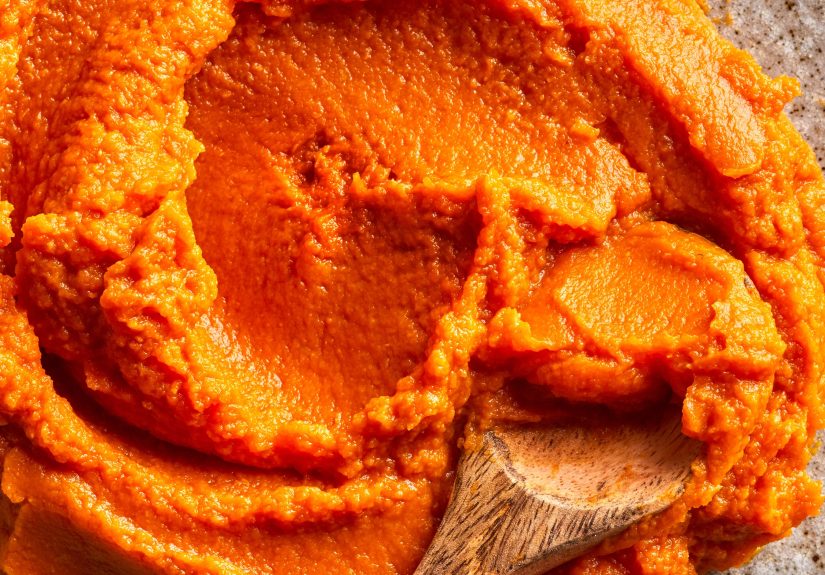
- Scoop and purée: Scoop the soft flesh from the skin into a food processor or blender and blend until smooth.
Scrape down the sides as needed.
Pro move: make it bakery-thick
Homemade purée can be wetter than canned, especially if your pumpkin had a lot of water to begin with.
If your goal is pumpkin pie that slices cleanly instead of doing a slow-motion slump, thicken it:
- Strain: Spoon purée into a fine-mesh strainer lined with cheesecloth. Let it drain 30–60 minutes.
- Stovetop reduce: Simmer purée in a saucepan over low heat, stirring often, until thicker (usually 10–15 minutes).
- Paper towel trick (quick): Blot the top gently with paper towels to remove surface moisture.
Method 2: Steaming (Smoother Color, Cleaner Flavor)
Steaming is great if you want a bright, pure pumpkin flavor with less caramelization. It can also be faster if you’re working with chunks.
Step-by-step steamed pumpkin purée
- Peel and cube: Cut pumpkin into manageable wedges. Peel the skin (a sturdy vegetable peeler helps), then cube.
- Steam: Place cubes in a steamer basket over simmering water. Cover and steam until very tender, about 15–25 minutes.
- Drain well: Let the cubes sit in the basket for a few minutes so excess water escapes.
- Purée: Blend until smooth. If it’s watery, strain or reduce as described above.
Method 3: Microwave Shortcut (When You Need Pumpkin Purée and Also Your Life Back)
Microwaving won’t give you the roasted depth, but it’s a legit option for small pumpkins when speed matters.
- Halve the pumpkin and scoop out the seeds.
- Place cut-side down in a microwave-safe dish with a splash of water.
- Microwave in 4–6 minute bursts until tender (time varies widely by size and microwave power).
- Cool, scoop, and blend until smooth.
How to Roast the Seeds (Because You Already Did the Hard Part)
- Rinse seeds to remove stringy pulp, then pat very dry.
- Toss with a little oil and salt (and maybe paprika, cinnamon sugar, or chili powder).
- Roast at 300–325°F, stirring occasionally, until crisp and goldenusually 15–30 minutes depending on seed size.
Troubleshooting: Fix Common Pumpkin Purée Problems
“My purée is watery.”
Very common. Different pumpkins hold different amounts of water, and steaming adds extra moisture if you don’t drain thoroughly.
Fix it by straining with cheesecloth or simmering to reduce. For baking, thicker is almost always better.
“It’s stringy and won’t blend smooth.”
This can happen with larger pumpkins or undercooked flesh. Roast/steam longer until truly soft. Then blend longer.
If it’s still stringy, press it through a fine-mesh sieve for a smoother texture.
“It tastes bland.”
Homemade purée is unsweetened and unspiced, so it can taste mild on its own. That’s normal.
Roasting adds more flavor than steaming. Also, salt is your friendjust a tiny pinch can wake up the flavor in savory recipes.
“It turned out grainy.”
Graininess is usually a variety issue (some pumpkins are fibrous), or the blender didn’t fully break down the flesh.
Try a food processor, blend longer, or sieve it.
Food Safety and Storage
Pumpkin is a low-acid food, so treat homemade purée like any cooked vegetable: cool it promptly and store it correctly.
Cooling and refrigerating
- Cool quickly: Spread purée in a shallow container so it cools faster.
- Refrigerate promptly: Don’t let it sit out for hours “because it’s cozy.”
- Use within a few days: For best quality, plan to use it within 3–4 days.
Freezing (the best way to preserve pumpkin purée)
Freezing keeps quality high and avoids the safety issues associated with canning mashed foods.
Here are freezer-friendly options:
- Portion in 1-cup amounts: Perfect for baking recipes.
- Freeze in ice cube trays: Great for smoothies or small add-ins; transfer frozen cubes to a freezer bag.
- Flatten freezer bags: Seal purée in a zip-top freezer bag, press flat, and freeze like a thin sheet (stacks neatly).
For best flavor and texture, use frozen purée within about 3 months.
It can remain safe longer if frozen continuously, but quality slowly drops.
A quick note about canning
If you’ve seen vintage instructions for canning pumpkin purée: modern food-safety guidance does not recommend home canning mashed or puréed pumpkin.
The texture is too dense for reliable heat penetration in home canning conditions. If you want shelf-stable pumpkin at home,
the safer approach is canning cubes (then purée after opening) or simply freezing the purée.
How to Use Pumpkin Purée (Beyond Pie)
Think of pumpkin purée as a gentle, naturally sweet “body builder” for recipes. It adds moisture, color, and cozy flavor.
Sweet ideas
- Pumpkin pie: Strain or reduce purée first if it’s watery.
- Quick breads and muffins: Swap in pumpkin purée for some oil or butter in certain recipes (expect a denser crumb).
- Pancakes and waffles: Stir a few spoonfuls into batter with cinnamon and vanilla.
- Overnight oats or yogurt: Mix with maple syrup and warm spices for a fall breakfast situation.
Savory ideas
- Soup: Pumpkin purée + broth + aromatics = weeknight comfort.
- Pasta sauce: Blend with garlic, sage, and a little cream or cashew milk.
- Chili thickener: A scoop adds body and subtle sweetness.
- Mac and cheese upgrade: Stir in purée for color and extra veg points.
Pumpkin Purée vs. Pumpkin Pie Filling
Pumpkin purée is just cooked, blended pumpkin (or winter squash). Pumpkin pie filling is a sweetened, spiced mixture meant to be
“open-and-pour” for pies. They are not interchangeable without adjustmentspie filling already contains sugar and spices, and it’s
not ideal for savory recipes.
FAQ
Can I substitute homemade pumpkin purée for canned?
Yesgenerally 1:1 by volume. The catch is moisture: homemade purée often contains more water than canned.
If your recipe is sensitive (like pie), strain or reduce homemade purée first.
Do I have to peel the pumpkin before roasting?
Nope. Roast it skin-on and scoop the flesh after. The peel practically waves goodbye once the pumpkin is tender.
Why does my purée look lighter than canned?
Color varies by variety. Roasting can deepen color a bit, but some pumpkins are naturally pale and still taste great.
Don’t judge your purée by its Instagram potential.
Conclusion
Making pumpkin purée is one of those kitchen projects that feels fancy but is basically: cook pumpkin, blend pumpkin, resist eating it
straight from the bowl like a raccoon who found a treasure.
Roast for deeper flavor, steam for a cleaner profile, strain if it’s watery, and freeze portions so Future You can casually whip out
pumpkin muffins in March like it’s the most normal thing in the world.
Real-Life Kitchen Experiences: The Good, the Messy, and the Delicious
The first time you make pumpkin purée, it’s easy to assume it’ll be a calm, wholesome experiencesoft music, golden light,
maybe a tasteful sweater. In reality, it often starts with you squaring up to a pumpkin that appears to have been doing deadlifts.
My best advice? Treat the cutting step like a tiny safety meeting. A stable cutting board, a sharp knife, and patience will save you
from the “why is this gourd winning?” moment.
Once the pumpkin is split and seeded, things get satisfying fast. Roasting is where the magic happens:
the kitchen starts smelling like warm autumn and mild optimism. You’ll also notice that roasting cut-side down is quietly brilliant.
The flesh steams in its own little pocket, the skin keeps it contained, and when it’s done, the peel lifts off so easily you’ll wonder
why you ever bought pre-cut anything. The only downside is waiting for it to cool, because your brain will insist it’s safe to handle
after two minutes. It is not. Pumpkin retains heat like it’s guarding secrets.
Texture surprises are normal. Some pumpkins purée into velvet immediately; others act like they’re auditioning to be spaghetti.
If you hit a stringy batch, don’t take it personally. Blend longer, scrape down the sides, and if necessary, push it through a fine sieve.
It’s a little extra effort, but the payoff is the kind of smoothness that makes pies look bakery-level.
The funniest part is how quickly your standards change: after you’ve strained purée once, you start thinking,
“Maybe I should strain everything.” (Do not strain chili unless you want a new hobby called Regret.)
Watery purée is another classic. The first time it happens, you’ll think you ruined it. You didn’t.
Some pumpkins simply contain more water, and steaming can add to that if the cubes don’t drain well.
Straining is the easiest fixline a strainer with cheesecloth, dump the purée in, and let gravity do the work.
You can also gently simmer it to evaporate excess moisture, which makes the flavor more concentrated too.
After you do this once, you’ll start noticing how much baking is basically “managing water in different forms.”
Freezing is where homemade pumpkin purée turns into a practical superpower. The first time, you’ll probably freeze it in one big container,
then realize you’ve created a pumpkin brick that requires planning permission to use. Portioning is the secret.
Freezing in 1-cup scoops is ideal for baking, while ice cube trays (or mini muffin tins) are perfect for smoothies, oatmeal,
or quick sauce add-ins. Once frozen solid, the cubes pop out and store neatly in bags, and suddenly you’re the person who can add pumpkin
to a weekday breakfast without committing to a full-scale pumpkin operation.
And the best part? Homemade pumpkin purée tends to make you more playful in the kitchen. You’ll throw a spoonful into pancake batter,
swirl it into yogurt, add it to soup for body, or stir it into mac and cheese just to see what happens.
It’s not about being fancyit’s about having an ingredient that feels cozy and versatile, ready whenever you want your food to taste like
a soft blanket and a good playlist.