Table of Contents >> Show >> Hide
- Why Some Cats Look Like They Were Designed, Not Born
- 10 Cats That Got Famous For Their Iconic Markings
- 1) Venus, the internet’s original “two-faced” superstar
- 2) Quimera, the fluffy chimera look with a perfect color divide
- 3) Narnia, the split-faced heartthrob who literally passed the vibe along
- 4) Hamilton the Hipster Cat, the mustache that launched a thousand captions
- 5) Mostaccioli, the Freddie Mercury mustache cat
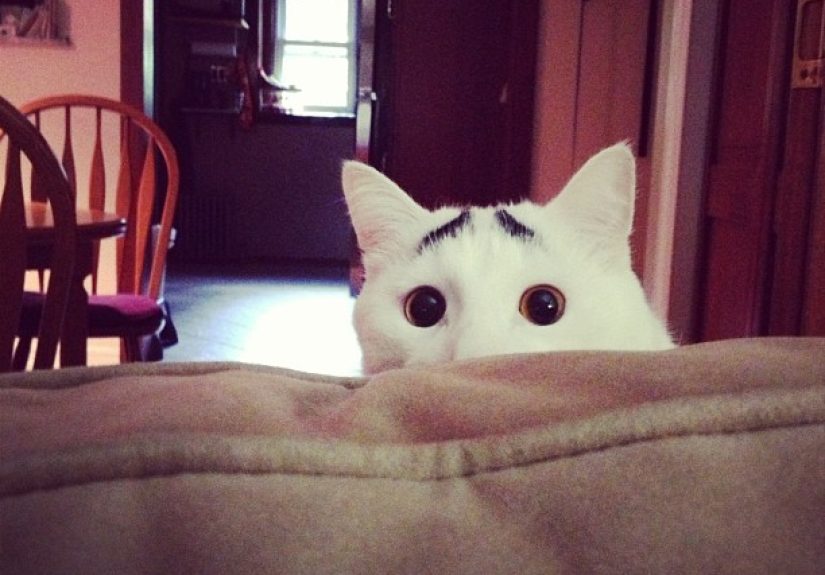
- 6) Sam, the eyebrow cat who looks permanently intrigued
- 7) Boy, the “Zorro” cat with the superhero mask
- 8) Socks, the tuxedo White House cat
- 9) Morris the Cat, the orange tabby advertising legend
- 10) Choupette, the glamorous colorpoint with “fashion cat” energy
- What Makes These Markings So Magnetic?
- How to Capture Your Cat’s Markings Like a Pro (Without Annoying Them)
- Closing Thoughts: The Fur Pattern Is the Hook, the Cat Is the Star
- : The Real-Life Joy of Meeting Cats With Signature Markings
- SEO Tags
Some cats become famous because they’re tiny chaos gremlins who can open doors. Others because they look permanently unimpressed with humanity.
And then there are the marking legendsthe cats whose fur patterns are so perfectly placed you’d swear a stylist had a tiny lint roller
and a vision board.
The internet loves a good “Did Mother Nature do that on purpose?” moment. A split-color face that looks airbrushed. A tuxedo coat that screams
“formal dinner at 7, zoomies at 7:03.” A mustache that belongs in a jazz club. These cats didn’t just show up cutethey showed up with
branding.
Below are 10 real cats who captured attention largely because of their unforgettable fur markingsplus the quick science behind how patterns happen,
and why your own cat might be one photo away from fame (or at least from becoming your phone’s entire camera roll).
Why Some Cats Look Like They Were Designed, Not Born
Cat coat patterns are basically genetics doing improv. Pigment genes decide “what color,” pattern genes decide “where,” and development decides
“how chaotic do we want to get today?” That’s how you end up with everything from classic tabby stripes to bold white patches, to coats that look
like they were painted in two separate appointments.
A few pattern terms you’ll see in this list:
- Tabby: The familiar stripes, swirls, or spotsoften with that iconic “M” on the forehead. Tabby isn’t a breed; it’s a pattern.
- Tuxedo / bicolor: Black-and-white (or other two-color) coats created by white spotting genes that “turn off” pigment in some areas.
- Calico / tortoiseshell: Patchwork coats tied to the X chromosome. Most are female because of how X-linked coat color works and how
cells randomly “choose” which X chromosome to use in different patches. - Chimera or mosaic-like looks: Rare cases where a cat may show a dramatic split pattern that can happen through unusual early development
events (sometimes involving more than one cell line). In plain English: it can look like two cats politely agreed to share one body. - Colorpoint: Lighter body with darker “points” (face, ears, paws, tail). Temperature-sensitive pigment is doing the heavy lifting here.
The fun part: markings don’t just look coolthey create instant facial “expressions.” A dark patch can become an eyebrow. A white stripe becomes a smirk.
A perfectly placed mask can turn a random housecat into a tiny vigilante with a fan base.
10 Cats That Got Famous For Their Iconic Markings
1) Venus, the internet’s original “two-faced” superstar
Venus became famous because her face looks split down the middle: one side dark, one side lighter and orange-toned, paired with mismatched eye colors.
The result is so striking that she’s been covered as a “mystery” cat by major outlets and held up as a pop-culture example of how wild coat genetics can look.
Her fame isn’t just “pretty cat” fameit’s “wait, is that real?” fame, which is basically the internet’s love language.
2) Quimera, the fluffy chimera look with a perfect color divide
Quimera’s face is famously divided into two dramatically different halvesone with orange striping and the other darkplus different eye colors that crank
up the “how is this legal?” factor. The contrast continues beyond her face, so it’s not just a lucky camera angle; it’s a full-body pattern that reads
like a work of art. Quimera’s look became viral partly because it’s rare, partly because it’s symmetrical enough to feel unreal, and partly because fluff
makes everything look more dramatic (scientific fact, probably).
3) Narnia, the split-faced heartthrob who literally passed the vibe along
Narnia’s face looks cleanly divided into two colorsan elegant “line down the middle” effect that made him internet-famous. What pushed his story into
headline territory was that he later fathered kittens whose colors echoed his two-tone look in an almost storybook way: one kitten dark, one lighter.
Even if the exact biological “why” behind his split look is debated in pop coverage, the visual impact is undeniable: he’s the kind of cat people describe
as “unfair” while quietly setting him as their lock screen.
4) Hamilton the Hipster Cat, the mustache that launched a thousand captions
Hamilton’s signature feature is his bold, dark mustache markingclean, centered, and so confident it basically arrives before he does. He rose to fame
during peak “mustache era” internet culture, but his look stuck because it’s genuinely distinctive and surprisingly expressive. Coverage about Hamilton
often highlights his rescue background and the way a single standout marking can turn a shy kitten into a recognizable face across social platforms.
If you’ve ever thought, “My cat needs a brand,” Hamilton is Exhibit A.
5) Mostaccioli, the Freddie Mercury mustache cat
Mostaccioli’s black-and-white face includes a mustache marking that made people do a double takeand then a full-on “Is that Freddie Mercury… as a cat?”
moment. She gained attention and press coverage because the marking is so perfectly placed it reads like a costume, except it’s just her fur doing its thing.
The best part is how the mustache changes her whole “persona” in photos: serious in one shot, comedic in the next, always photogenic.
6) Sam, the eyebrow cat who looks permanently intrigued
Sam became famous for eyebrow-like markings that give him a perpetually curious, slightly dramatic expressionlike he’s reacting to your life choices in real time.
Once his photos circulated online, the comparisons to famous “eyebrow faces” rolled in, and mainstream coverage followed. Sam is proof that markings don’t
just decorate a cat; they can create an instantly readable character. His eyebrows don’t need dialogue. They are the dialogue.
7) Boy, the “Zorro” cat with the superhero mask
Boy’s dark eye-area marking looks like a classic mask, which is why he went viral with “Zorro” comparisons. The pattern is crisp enough that people assume
it’s stageduntil they see him move and realize, nope, that’s the real coat. Media coverage leaned into the fun of it (because obviously), and the mask look
became the hook that made people stop scrolling. If your cat ever looks like a fictional character, congratulations: you are now a full-time content creator.
8) Socks, the tuxedo White House cat
Socks wasn’t internet-famous in the modern sense (no ring light, no “link in bio”), but he became a cultural icon as a presidential pet with a classic
tuxedo patternblack coat, white “socks,” and an extremely camera-ready face. The tuxedo look helped make him instantly recognizable in photos and
appearances. Socks is a reminder that bold, high-contrast markings have always played well with audienceswhether the platform is social media or national news.
9) Morris the Cat, the orange tabby advertising legend
Morris became famous as the long-running 9Lives mascotan orange tabby whose classic stripes and big “I have opinions” energy made him instantly memorable.
Orange tabbies are common, but Morris turned the pattern into a signature by showing up everywhere: commercials, packaging, pop culture references, and decades
of brand history. He’s a case study in how a familiar marking can still become iconic when paired with a consistent personaand a camera that loves you back.
10) Choupette, the glamorous colorpoint with “fashion cat” energy
Choupette, Karl Lagerfeld’s famous cat, is known for her pale coat and darker pointsespecially her face and earsplus striking blue eyes. The colorpoint
pattern reads as instantly elegant, which made her an easy fit for the fashion world’s obsession with “aesthetic.” Her look became part of the legend:
a cat who doesn’t just live luxuriously, but looks luxuriously designed. Sometimes markings don’t say “street cat.” Sometimes they say “front row at Chanel.”
What Makes These Markings So Magnetic?
Visually, high-contrast markings are sticky for the human brain: we love symmetry, strong lines, and “face features” we can interpret. A mustache or eyebrow
patch becomes a shortcut to personality. A split face becomes a built-in plot twist. Even classic patternstabby stripes, tuxedo coats, colorpointscan become
iconic when the pattern lands in a perfectly recognizable way.
And there’s an emotional angle, too. These markings often make cats feel like characters, not just pets. We remember “the cat with eyebrows” or “the Zorro cat”
even if we forget names. The pattern becomes a nickname, and the nickname becomes a story people want to share.
How to Capture Your Cat’s Markings Like a Pro (Without Annoying Them)
- Use window light: A bright window (not direct harsh sun) shows texture and color without flash glare in the eyes.
- Get down to their level: The best “marking shots” happen when the camera meets the face straight on.
- Photograph the “signature angle”: Split-face cats look wild head-on; mustache cats look best in three-quarter view; tabbies pop in side light.
- Brush for contrast: A quick grooming can make dark markings look richer and whites look cleanerespecially in tuxedo coats.
- Let the cat lead: The fastest way to ruin a perfect photo is to chase it. Sit. Wait. Become the furniture. Great art requires sacrifice.
Closing Thoughts: The Fur Pattern Is the Hook, the Cat Is the Star
Markings might be what makes people pause mid-scroll, but personality is what makes them stay. The best “famous marking” cats combine a one-in-a-million look
with the very relatable energy of: “Yes, I’m gorgeous. No, you may not touch my belly.” Whether your cat is a dramatic chimera look-alike or a humble tabby
with perfect eyeliner, the real magic is that every coat tells a storysometimes in stripes, sometimes in patches, and sometimes in a mustache that should
honestly have its own agent.
: The Real-Life Joy of Meeting Cats With Signature Markings
If you’ve ever met a cat with standout markings in real life, you know the experience is oddly theatrical. You don’t just see a catyou see a “character”
entering the scene. The first time someone points and says, “Look at his eyebrows!” or “That one has a heart on its chest!” the room’s mood changes
immediately. People start talking in softer voices. Phones appear out of thin air. Even folks who claim they’re “not really cat people” lean in like they’re
inspecting a museum exhibit titled Nature Accidentally Nailed It.
The funniest part is how quickly markings become a social icebreaker. At shelters, you’ll hear complete strangers narrating a cat’s “backstory” based purely
on fur placement: “Oh, this one is definitely a professor,” or “That mask? He’s a little criminal, I can tell,” or “This tuxedo cat looks like he’s about
to host a fancy dinner party and then knock the centerpiece off the table.” Markings give people permission to imagine, and imagination makes adoption floors
feel less intimidating and more hopeful.
There’s also something quietly reassuring about the variety. Cats don’t come in a single aesthetic. Some look like soft watercolor paintings. Some look like
bold graphic design. Some show up with a perfectly outlined nose that makes their face look permanently surprised. And because those patterns are accidental,
they feel like tiny proofs that the world can still produce delightful surprises. It’s hard to be completely cynical while staring at a cat whose fur
resembles a cartoon mustache. Your brain can try, but the mustache wins.
People who live with “signature marking” cats often describe the same pattern: the markings catch attention first, but the day-to-day life is what makes the
relationship stick. The mustache cat is still going to sprint down the hallway at 2 a.m. The split-face beauty is still going to sit in the one spot you
just cleaned. The tuxedo cat will still act like a butler until the food arrivesand then act like a gremlin if it’s late. The markings make them memorable
to outsiders, but to the person who loves them, the markings become part of a larger, familiar face: the one that greets them at the door, supervises every
household task, and somehow makes the couch feel like home.
And if you’re trying to capture that magic in photos, here’s the secret nobody admits: the best pictures usually happen when you stop trying so hard.
You set your phone down for a second, and that’s when your cat finally turns and offers the exact “signature look” that made you fall in loveeyebrows,
mustache, mask, stripes, all of itlike they’re saying, “Fine. You may document my greatness. Briefly.”