Table of Contents >> Show >> Hide
- Meet “Red Dragon”: What You’re Actually Growing
- The 5 Site Questions That Prevent Most Problems
- Light: The “Bright Shade” Sweet Spot
- Soil: Drainage First, pH Second, Perfection Never
- Planting Red Dragon in the Ground: Step-by-Step
- Watering: The Most Important Skill You’ll Learn
- Leaf Scorch: Why the Tips Turn Brown (and How to Stop It)
- Fertilizing: Feed Lightly, If at All
- Pruning and Training: The Art of Doing Less
- Container Growing: Red Dragon on Patios, Decks, and Small Spaces
- Common Pests and Diseases (Without the Drama)
- Design Ideas: Where Red Dragon Looks Like a Million Bucks
- Troubleshooting: Quick Symptom-to-Solution Guide
- Hands-On Experiences: What Actually Worked (and What Didn’t)
- Conclusion
If you’ve ever looked at a Red Dragon Japanese maple and thought, “That tree has better hair than I do,” you’re not alone.
Acer palmatum ‘Red Dragon’ is the laceleaf, weeping, red-foliaged show-off of the garden worlddramatic, elegant,
and (thankfully) not nearly as high-maintenance as it looks… as long as you get a few basics right.
This guide walks you through how to plant, water, feed, prune, and troubleshoot Red Dragon so it keeps that rich color and
graceful shape for years. No fluff, no plant-parent guiltjust practical care, plus a “what I learned the hard way” section at the end.
Meet “Red Dragon”: What You’re Actually Growing
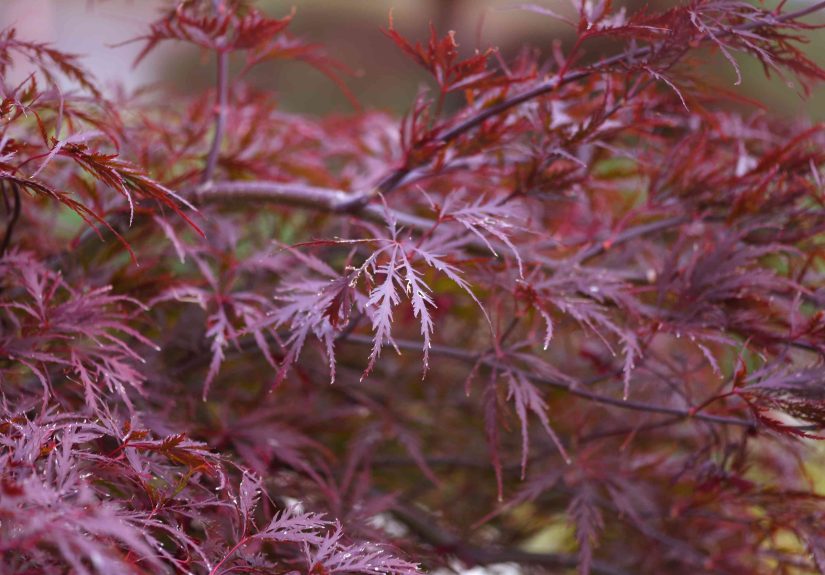
Red Dragon is a laceleaf Japanese maple (a dissectum type), meaning its leaves are finely cut like tiny botanical snowflakes and its
branches naturally cascade into a mounded, weeping form. The big reason people choose it: it tends to hold deeper red tones well
through summer compared with many other laceleaf red maples, then finishes with a bright fall show.
Expect slow-to-moderate growth. In many landscapes it matures around 6–8 feet tall and can spread wideoften
10–15 feet over timedepending on graft height, pruning, and site conditions. If yours is grafted “high” on a standard,
it may look more like a little umbrella on a trunk; if grafted low, it can become a flowing mound.
In the U.S., Red Dragon is commonly grown in USDA Zones 5–8. If you’re on the warm end of that range, your success
depends heavily on afternoon shade and steady moisture. If you’re on the cold end, winter wind protection matters more than you’d think.
The 5 Site Questions That Prevent Most Problems
Red Dragon problems usually aren’t mysterious diseasesthey’re “my tree is mad about where I put it” issues. Ask these before you dig:
- Does it get hot afternoon sun? Morning sun is fine; harsh afternoon sun often leads to leaf scorch.
- Is it protected from wind? Dry wind + sun = crispy leaf edges.
- Does water drain quickly here? Soggy soil invites root rot and stress.
- Will it get reflected heat? South-facing walls, pavement, and rock can cook the canopy.
- Can you water easily the first year? Consistent moisture is the difference between thriving and merely surviving.
Light: The “Bright Shade” Sweet Spot
The best lighting for Red Dragon is often described as morning sun + afternoon shade or dappled light all day.
Think “understory tree with good sky view,” not “full blazing sun next to the driveway.”
Too much shade can reduce color intensity and slow growth. Too much sunespecially in hot inland summerscan brown the leaf margins.
Your goal is bright, gentle light that helps maintain color without dehydrating the leaves.
Soil: Drainage First, pH Second, Perfection Never
Red Dragon prefers soil that’s well-drained, evenly moist, and rich in organic matter. Slightly acidic is ideal,
but the non-negotiable is drainage. If water sits where you plan to plant, your tree will spend its life doing the plant equivalent of wearing wet socks.
Quick soil reality check
- If you have heavy clay: amend broadly with compost (not just the hole) and consider planting slightly high.
- If you have sandy soil: add organic matter and plan to water more often.
- If you have alkaline soil: focus on compost and mulch; don’t wage chemical war unless a soil test says you must.
Planting Red Dragon in the Ground: Step-by-Step
When to plant
In most U.S. regions, the best times are fall (after the heat breaks) or spring (after hard freezes).
Avoid planting right before a heat wavenew roots + hot sun is a rough first impression.
How to plant (without accidentally sabotaging it)
- Dig wide, not deep. Make the hole about 2–3 times the width of the root ball, but only as deep as the root ball.
- Find the trunk flare. You want the point where the trunk widens into roots to be visible at the soil surface.
Planting too deep is a slow-motion problem. - Set it slightly high if drainage is questionable. A couple inches high is better than a couple inches low in marginal sites.
- Backfill with native soil + compost. You’re blending, not creating a “luxury potting soil bathtub” that holds water.
- Water thoroughly to settle. Slow, deep watering removes air pockets and starts root-to-soil contact.
Mulch like you mean it
Mulch is Red Dragon’s best friend because its roots are relatively shallow. Apply 2–3 inches of mulch in a wide ring,
but keep it a few inches away from the trunk so the bark stays dry and healthy. Think “mulch donut,” not “mulch volcano.”
Watering: The Most Important Skill You’ll Learn
Red Dragon likes consistent moisture, especially during establishment. That does not mean constantly wet soil; it means
the root zone shouldn’t swing between “bone dry” and “swamp.”
The first year watering rhythm
- Week 1–2: Water deeply every few days (more often in heat, less in cool weather).
- Month 1–3: Deep water 1–2 times a week, adjusting for rain and temperature.
- Remainder of year one: Deep water weekly during dry spells; check soil moisture before watering.
The simplest test: push your finger a couple inches into the soil near (not on top of) the root ball. If it’s dry, water. If it’s moist, wait.
Deep, slow watering encourages roots to grow outward instead of hovering near the surface like they’re afraid of commitment.
Winter watering (often overlooked)
In many climates, dry winter periods can stress Japanese maples. If the ground isn’t frozen and you’ve had a long dry stretch,
a slow soak helps prevent winter desiccationespecially for trees exposed to wind.
Leaf Scorch: Why the Tips Turn Brown (and How to Stop It)
Leaf scorch is the most common complaint with Japanese maples. It typically shows up as browning at leaf edges or between veins,
often during hot, dry, windy weatherespecially when soil moisture is low. Red-leaf Japanese maples are known to be more prone to scorch in tough conditions.
How to prevent scorch
- Give afternoon shade (or at least protection from the hottest 12–4 PM sun).
- Block dry wind with fencing, shrubs, or smart placement.
- Mulch widely to cool soil and reduce evaporation.
- Water deeply and consistently during heat spellsdon’t “sip” water daily; soak it when needed.
- Avoid reflected heat from pavement, bright walls, and rocks.
If your tree already scorched
Don’t panic-prune it into a stump. Scorched leaves don’t usually mean the tree is dying; they mean it had a rough week.
Keep the root zone evenly moist, maintain mulch, and protect it from additional stress. Many trees push healthy growth the next season once conditions improve.
Fertilizing: Feed Lightly, If at All
Red Dragon isn’t a heavy feeder. In fact, over-fertilizing can cause excessive, tender growth that scorches more easily and attracts pests.
A better strategy is to improve soil gradually with compost and mulch.
A sensible feeding plan
- Year 1: Skip fertilizer. Focus on watering and mulching.
- Year 2+: If growth is weak and leaves look pale, use a light, slow-release, balanced fertilizer in early spring.
- Always: Avoid high-nitrogen “lawn food” drifting into the root zone.
Pruning and Training: The Art of Doing Less
Red Dragon’s natural form is the whole point, so pruning is mostly about health and gentle shaping.
Your main goals are to remove dead/damaged wood, prevent rubbing branches, and keep airflow moving through the canopy.
When to prune
Many growers do major structural pruning in late winter while dormant. Light shaping can also be done during the growing season.
Avoid aggressive pruning in late summer or fall, when new growth may not harden off before cold weather.
How to prune a weeping laceleaf
- Start with dead, damaged, diseased woodremove it anytime you notice it.
- Remove crossing branches that rub and create wounds.
- Thin selectively so light and air reach the interior (don’t “shear” it like a hedge).
- Lift the canopy slowly if you want clearance underneathtake a little each year.
Pro tip: step back often while pruning. It’s easy to get “one more snip” tunnel vision and accidentally turn your maple into a sad umbrella
that looks like it lost a fight with a lawn mower.
Container Growing: Red Dragon on Patios, Decks, and Small Spaces
Red Dragon is well-suited to containers because it grows slowly and stays relatively compact. Container success is mostly about drainage, watering,
and winter root protection.
Container essentials
- Pot size: Choose a stable, wide pot with drainage holes. Upsize gradually; don’t jump from a 1-gallon to a 25-gallon overnight.
- Soil mix: Use a high-quality potting mix amended with pine bark fines for airflow and drainage.
- Watering: Containers dry out faster. In summer heat, you may water every 1–3 days depending on pot size and exposure.
- Fertilizer: Very light feeding in spring, or a compost top-dress. Less is more.
Overwintering potted Red Dragon
The top of the tree can handle cold better than the roots in a pot. In colder areas, protect the container by moving it to an unheated garage or shed,
grouping pots together, insulating the pot with burlap, or “plunging” the pot into mulch/soil for the winter so roots don’t experience extreme freeze-thaw cycles.
Common Pests and Diseases (Without the Drama)
Japanese beetles
Japanese beetles can chew laceleaf maples into a “skeletonized” look (the veins remain, the leaf tissue disappears). The good news:
in many cases, the damage is mostly cosmetic on established trees. Start with low-impact controls: hand-pick early in the morning into soapy water,
reduce plant stress with proper watering, and avoid over-fertilizing (lush growth is basically a neon sign for pests).
Aphids and soft scale
These pests can cause sticky honeydew and sooty mold. A strong spray of water can knock aphids off; horticultural oil (used correctly and at the right time)
can help with scale. Don’t rush to harsh treatmentshealthy maples often outgrow minor pest issues.
Verticillium wilt
This soil-borne disease can affect maples and may cause dieback or branch-by-branch decline. There’s no simple cure, so prevention and stress reduction matter:
avoid moving contaminated soil, sanitize pruning tools, prune out dead wood, and keep the tree vigorous with good watering and modest nutrition.
Root rot
If your tree looks stressed and the soil stays wet, drainage is the first suspect. Improve drainage, redirect downspouts, and avoid planting in low spots.
A maple that’s “drowning slowly” can’t absorb nutrients well, which makes every other problem look worse.
Design Ideas: Where Red Dragon Looks Like a Million Bucks
Red Dragon shines as a focal point because the form does most of the decorating for you. A few placements that look intentional (even if you’re winging it):
- Near a patio or entry where you can appreciate the leaf texture up close.
- As a soft contrast against evergreens (boxwood, yew, holly) that make the red foliage pop.
- In a woodland edge with ferns and shade perennialsjust avoid digging aggressively over its shallow roots.
- Beside water or stone where the cascading form reflects beautifully.
Troubleshooting: Quick Symptom-to-Solution Guide
| What You See | Most Likely Cause | What to Do |
|---|---|---|
| Brown, crispy leaf edges in summer | Leaf scorch (heat/wind/drought stress) | Increase deep watering, add mulch, provide afternoon shade, reduce wind exposure |
| Yellowing leaves + soggy soil | Poor drainage / early root issues | Improve drainage, redirect water sources, avoid watering until soil begins to dry |
| Leaves look “lacey” in a bad way | Japanese beetles | Hand-pick, reduce stress, consider targeted controls only if severe |
| Sticky residue on leaves, black film | Aphids/scale + sooty mold | Rinse foliage, encourage beneficial insects, use horticultural oil as appropriate |
| One branch wilts/dies back suddenly | Possible verticillium wilt or localized stress | Prune out dead wood, sanitize tools, reduce stress; consult local Extension if it progresses |
Hands-On Experiences: What Actually Worked (and What Didn’t)
After growing Red Dragon in a few different situations, I’ve learned it’s not a “difficult” treeit’s just extremely honest. Treat it well and it’s gorgeous.
Ignore its preferences and it will send you strongly worded messages in the form of crispy leaves.
The first lesson was about microclimates. I once planted a Red Dragon where it technically got “partial sun,” which sounded perfect… until I realized
that “partial sun” included a blast of reflected heat from a pale fence and a concrete walkway. The tree survived, but every July it looked like it tried to toast
marshmallows with its own foliage. The fix wasn’t magic fertilizerit was moving a shade structure so it got protection during the hottest part of the day, then
widening the mulch ring and switching from quick watering to slow, deep soaks. The next summer, the leaf edges still browned a little in extreme heat, but the tree
kept far more of its color and didn’t look perpetually offended.
The second lesson was about watering psychologymine, not the tree’s. When people see a Japanese maple wilt or scorch, they often respond by watering
lightly every day (because it feels helpful). Red Dragon usually prefers the opposite: water less often but more deeply, then let oxygen back into the soil as it
dries slightly. Once I started checking soil moisture with the “two-inch finger test,” I stopped guessingand the tree stopped acting like a diva.
Containers taught me the third lesson: winter is a root problem. Above-ground branches can handle plenty of cold, but roots in pots experience harsher
freeze-thaw cycles. The best winter I ever gave a potted Red Dragon wasn’t indoors in a warm room (bad ideait can break dormancy early). It was in an unheated garage
where temperatures stayed cold but steady. I watered lightly only when the mix was dry, and the tree woke up in spring like it had a spa weekend instead of a survival
movie.
The fourth lesson: mulch solves more than it gets credit for. A wide mulch ring kept the root zone cooler, reduced water stress, and cut down on weed
competitionwithout me having to disturb shallow roots with a hoe. The only “rule” I follow religiously: keep mulch away from the trunk. Mulch piled against bark can
cause rot and invite pests, which is the landscaping version of leaving wet towels on a wood floor and acting surprised later.
Finally, pruning taught me patience. The best-looking Red Dragons I’ve seen were never “shaped” aggressively; they were guided. I’ve had the most success
pruning in late winter for structure (when you can see the branching clearly), then doing tiny touch-ups during the growing season only if neededdead twigs, rubbing
branches, or a stray shoot that ruins the weeping lines. When in doubt, I stop, step back, and remind myself: it’s a maple, not a topiary poodle.
Conclusion
Red Dragon Japanese maple rewards gardeners who focus on the basics: bright shade, excellent drainage, consistent deep watering,
and minimal, thoughtful pruning. If you treat leaf scorch as a site-and-water signal (not a personal failure), keep the root zone protected with mulch,
and avoid overfeeding, you’ll get a long-lived, richly colored accent tree that makes your yard look curatedeven if you’re still Googling “what is this weed” twice a week.